️ Apple HOF (May 2026): Stopping Podcast Hijacking
Apple Podcasts Connect accepted any public RSS feed as proof of ownership without verifying the email address in the feed's owner tag. An attacker could therefore claim a legitimate podcast, manage it, and add paid subscriptions to divert revenue.

medium.com
Published on medium.com
Bug Bounty
The full write-up lives on its author's site
It belongs to its author, so we link to it rather than copy it. The other two tabs are our own rewrites, checked against it.
Context
Apple Podcasts Connect is the portal where a creator links a podcast to their Apple account, manages the show and can attach paid Apple Podcasts subscriptions to it. One of the ways to add a show is to hand the platform the show's public RSS feed: the platform reads the feed, checks that it is technically well formed, and links the show to the submitting account.
A podcast RSS feed carries an <itunes:owner> tag that declares the email address of the show's owner. That tag is the natural place to look when you want to prove that whoever submits a feed is the person behind it. The report describes a business logic flaw in which no verification email or token challenge was sent to the declared owner address.
Setup
The write-up does not describe any special tooling, test accounts or versions. The only preconditions it states are:
- A public podcast RSS feed URL, for example taken from a podcast directory or from the creator's own site.
- An Apple Podcasts Connect account, used to submit that feed through the normal "Add a show with an RSS feed" flow.
No request captures, headers or payloads are shown in the report; the reproduction is described at the level of the user interface.
Finding it
The submission flow validated the feed's technical structure (artwork, tags) but never verified the identity behind the <itunes:owner> email address. In other words, the platform checked that the feed was technically valid and then trusted the ownership claim inside it without any challenge to the person submitting it. Nothing in the process tied the submitter to the address declared in the feed.
Exploitation
Step 1: Find a target feed
Locate a public podcast RSS feed URL, for example from a podcast directory or from the creator's site. The report gives no further preconditions for this step.
Step 2: Start the submission
Log into Apple Podcasts Connect and select "Add a show with an RSS feed".
Step 3: Submit the target's feed
Provide the target's RSS URL to the flow.
Step 4: Pass the technical validation
The system validates the feed's technical structure (artwork, tags) and passes it.
Step 5: The flaw
No verification email or token challenge is sent to the address declared in the <itunes:owner> tag.
Step 6: The show is linked
The show is approved and permanently linked to the attacker's account.
Step 7: Monetise or manage
From that point the attacker can manage the show, including adding paid Apple Podcasts subscriptions to it.
Root cause
The weakness is missing ownership validation. The platform verified that the RSS feed was technically valid but completely ignored whether the person submitting it actually owned the email address declared inside it. It trusted the data without verifying the identity behind it.
The <itunes:owner> email is a value the platform trusted without verifying the identity behind it. Treating a value from that document as proof of ownership, rather than as a claim to be challenged, is the mistake. The existing technical validation of artwork and tags did not stop this.
Impact
The report lists three consequences, all conditional on the attacker first getting a victim's feed accepted through the flow:
- Content hijacking: attackers could steal and republish existing shows.
- Revenue theft: attackers could illicitly add paid subscriptions to someone else's content.
- Audience confusion: duplicate or fake versions of shows could mislead listeners and bypass regional publishing restrictions.
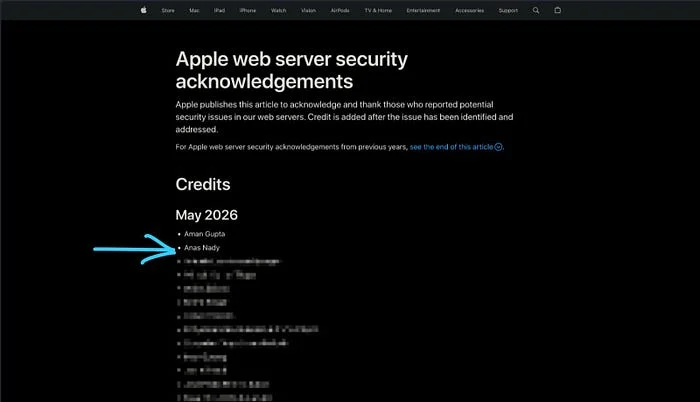
All of this could happen without the real creator's consent. Apple, for its part, classified the impact as a business logic issue rather than a critical infrastructure threat, and the report was ultimately deemed ineligible for a bounty. The Apple Security Team did acknowledge the fix and added the researcher to the Security Hall of Fame.
Fix
Apple updated the show submission workflow. Before a show can be linked to an account, the system now sends a mandatory verification email (or token-based challenge) to the address listed in the <itunes:owner> tag. The researcher tested the change and confirmed the fix successfully blocked unauthorised claims.
Variants to test
- Other feed-driven ownership claims. Any platform that imports a public feed, sitemap or manifest and grants control based on an owner or contact field inside it. A positive result is the resource being linked to your account with no message ever reaching the declared owner address.
- Token challenge bypasses. Where a verification step exists, try submitting a feed whose owner address you do control, then swapping the feed content or the owner tag afterwards. A positive result is the linked show reflecting the new owner data without a fresh challenge.
- Re-claim after release. Release a show from your account and immediately re-submit the same feed from a second account. A positive result is the second account being linked without verification, which would show the check is only applied on first claim.
- Duplicate submissions. Submit the same feed from two accounts. A positive result is two accounts holding management rights over one show.
- Monetisation paths. After a successful claim, check whether paid subscription features become available on the hijacked show. A positive result is the monetisation controls appearing for an account that never proved ownership.
What happened, in plain words
Apple Podcasts Connect is a website where a podcast creator connects their show to their Apple account. From there they can manage the show and, if they want, attach paid Apple Podcasts subscriptions to it, so listeners can pay for extra content.
One way to add a show is to give the platform the show's public RSS feed. An RSS feed is an XML document that lists a podcast's episodes and details. Podcast apps read it to know what episodes exist and where the audio files live. The feed is public by design: anyone with the URL can open it in a browser.
A podcast RSS feed also contains a tag called <itunes:owner>, which declares the email address of the show's owner. A tag here just means a labelled piece of data inside the XML file, like a field on a form. That owner email is the natural place to look if you want to prove that whoever submits a feed is really the person behind the show.
The researcher found that Apple Podcasts Connect sent no verification email or token challenge to the declared owner. Anyone could submit any public feed and claim full ownership of the show. The platform checked that the feed was technically well formed, then trusted the ownership claim inside it without sending a verification email or token challenge to the declared owner. This kind of mistake is called a business logic flaw: the software does what it was programmed to do, but the rules it follows are wrong. Nothing crashes and no technical bug appears; the process itself is missing a step.
With that gap, an attacker could hijack legitimate podcasts, duplicate their content, and add paid subscriptions, all without the real creator's consent.
The image is the header of the write-up: the title "Apple HOF (May 2026): Stopping Podcast Hijacking", the author's name, the reading time and the date, with the line "A concise tale of missing verification, content theft, and a swift resolution."
The pieces involved
Before walking through the steps, here are the parts of the story in everyday terms.
- Apple Podcasts Connect is the dashboard, a web page you log into with an Apple account. Think of it as the back office for a podcast: it is where the show is registered and managed.
- An RSS feed is like a public noticeboard listing a show's episodes. Anyone can walk up and read it. Because it is public, anyone can also copy its address (the URL) and hand that address to someone else.
- The
<itunes:owner>tag is a line inside that noticeboard saying "this show belongs to this email address". It is a claim written on a public document, not a proof of identity, in the same way that writing a name on a parcel does not prove you own the parcel. - A verification email or token challenge is the usual way to turn a claim into proof. The platform sends a message to the declared address with a link or a code (the token). Only someone who can read that inbox can complete the step. A token is simply a one-time secret string that proves you received the message.
- A business logic flaw is a mistake in the rules of a process rather than in the code's mechanics. A comparison: a bank counter that asks for your account number but never asks for ID. The clerk follows the procedure perfectly, yet the procedure lets the wrong person withdraw money.
Setting up
The write-up does not describe any special tools, test accounts or software versions. The only things it says you need are:
- A public podcast RSS feed URL, for example taken from a podcast directory or from the creator's own site.
- An Apple Podcasts Connect account, used to submit that feed through the normal "Add a show with an RSS feed" flow.
The report shows no captured requests, no HTTP headers and no payloads. The reproduction is described at the level of what you see and click on screen, which is why a beginner can follow it.
Finding it
The submission flow checked the feed's technical structure, meaning the artwork and the tags, but never checked the identity behind the <itunes:owner> email address. In other words, the platform confirmed the feed was technically valid and then trusted the ownership claim inside it, without any challenge to the person submitting it.
Nothing in the process tied the submitter to the address declared in the feed. The check on artwork and tags confirmed the feed was well formed, but it did not establish who owned the show.
Exploitation
Step 1: Find a target feed
Locate a public podcast RSS feed URL, for example from a podcast directory or from the creator's site. The report gives no further preconditions for this step. The report gives no further detail on this step.
Step 2: Start the submission
Log into Apple Podcasts Connect and select "Add a show with an RSS feed". This is the ordinary path for adding a show with an RSS feed.
Step 3: Submit the target's feed
Provide the target's RSS URL to the flow. The target's RSS URL is submitted to the flow.
Step 4: Pass the technical validation
The system validates the feed's technical structure (artwork, tags) and passes it. This validation does not establish who owns the show.
Step 5: The flaw
No verification email or token challenge is sent to the address declared in the <itunes:owner> tag.
Step 6: The show is linked
The show is approved and permanently linked to the attacker's account.
Step 7: Monetise or manage
From that point the attacker can manage the show, including adding paid Apple Podcasts subscriptions to it. The attacker can manage the show, including adding paid Apple Podcasts subscriptions to it.
Root cause
The weakness is missing ownership validation. The platform verified that the RSS feed was technically valid but completely ignored whether the person submitting it actually owned the email address declared inside it. It trusted the data without verifying the identity behind it.
The <itunes:owner> email is a value the platform trusted without verifying the identity behind it. Treating a value from that document as proof of ownership, rather than as a claim to be challenged, is the mistake. The existing technical validation of artwork and tags did not stop this.
A useful comparison is a hotel receptionist who accepts a booking change because the caller can read out the guest's name from the public guest list. The name is real and the list is genuine, but reading it proves nothing about who is calling.
Impact
The report lists three consequences, all conditional on the attacker first getting a victim's feed accepted through the flow:
- Content hijacking: attackers could steal and republish existing shows.
- Revenue theft: attackers could illicitly add paid subscriptions to someone else's content.
- Audience confusion: duplicate or fake versions of shows could mislead listeners and bypass regional publishing restrictions.
All of this could happen without the real creator's consent. Apple classified the impact as a business logic issue rather than a critical infrastructure threat, and the report was ultimately deemed ineligible for a bounty. The Apple Security Team did acknowledge the fix and added the researcher to the Security Hall of Fame.
Fix
Apple updated the show submission workflow. Before a show can be linked to an account, the system now sends a mandatory verification email (or token-based challenge) to the address listed in the <itunes:owner> tag. The researcher tested the change and confirmed the fix successfully blocked unauthorised claims.
In plain terms, the platform now asks the declared owner to prove they can read their own inbox before handing over the keys. That single step closes the gap, because an attacker holding a public feed URL still cannot read the victim's email.
Variants to test
These are follow-up ideas for anyone who wants to look for the same class of mistake elsewhere. Each one describes what to try and what a positive result would look like.
- Other feed-driven ownership claims. Any platform that imports a public feed, sitemap or manifest and grants control based on an owner or contact field inside it. A positive result is the resource being linked to your account with no message ever reaching the declared owner address.
- Token challenge bypasses. Where a verification step exists, try submitting a feed whose owner address you do control, then swapping the feed content or the owner tag afterwards. A positive result is the linked show reflecting the new owner data without a fresh challenge.
- Re-claim after release. Release a show from your account and immediately re-submit the same feed from a second account. A positive result is the second account being linked without verification, which would show the check is only applied on first claim.
- Duplicate submissions. Submit the same feed from two accounts. A positive result is two accounts holding management rights over one show.
- Monetisation paths. After a successful claim, check whether paid subscription features become available on the hijacked show. A positive result is the monetisation controls appearing for an account that never proved ownership.
Glossary
- Apple Podcasts Connect: Apple's web portal where a creator links a podcast to their Apple account, manages the show and can attach paid subscriptions.
- RSS feed: a public XML file describing a podcast and its episodes, which podcast apps read to display the show.
- XML: a text format that uses tags to label pieces of data, such as
<itunes:owner>. - Tag: a labelled field inside an XML document, like a field on a form.
<itunes:owner>: the tag in a podcast feed that declares the email address of the show's owner.- URL: the address of a resource on the web, such as a feed's location.
- Business logic flaw: a mistake in the rules a process follows, rather than in its mechanics; the software works as programmed but the procedure is wrong.
- Ownership validation: checking that the person making a claim really is the owner, for example by contacting the declared address.
- Verification email: a message sent to a declared address to confirm that the person submitting a claim can read that inbox.
- Token challenge: a step where a one-time secret string must be presented to prove receipt of a message.
- Attacker-controlled input: data that an attacker can freely set or copy, such as a value in a public document.
- Technical validation: checking that a file is well formed, for example that artwork and tags are present and correct.
- Content hijacking: taking control of someone else's show and republishing or managing its content.
- Revenue theft: redirecting money, here through paid subscriptions, away from the rightful creator.
- Security Hall of Fame: a public list where a company credits researchers who reported valid security issues.
- Bounty: a payment some companies make to researchers for valid security reports; this report was deemed ineligible for one.




