How I earned 60K+ from private program
The author found several vulnerabilities in a private program: an OAuth2 redirect_uri bypass on a secondary login endpoint, a subdomain takeover via an expired domain, an XSS filter bypass using an object tag with an event handler, and an account takeover through HTTP parameter pollution in the password reset flow. These allowed stealing OAuth codes, taking over a subdomain, executing JavaScript to steal cookies, and resetting other users' passwords.
 Published on medium.com
I am not a security researcher that you often come across in the security community. I am Siva.
The full write-up lives on its author's site
It belongs to its author, so we link to it rather than copy it. The other two tabs are our own rewrites, checked against it.
Context
Siva Krishna Samireddi (@le4rner) describes a private bug bounty engagement against an Indian company that asked not to be named publicly, referred to throughout as redacted.com. The company runs a number of applications across various subdomains and uses OAuth2 to implement authentication to all of those apps. The report covers four findings: an open redirect in an OAuth2 flow, a subdomain takeover, an XSS filter bypass against Akamai WAF, and an HTTP parameter pollution account takeover in a forgot password flow. The author notes that the 60k figure in the title is in INR, not USD, and that the platform record lists a bounty of 880.00 USD.
The author frames the target selection as a deliberate choice: rather than hunting only on HackerOne, he searched for bug bounty programs that were not on HackerOne, or at least not in the eyes of the community, using the following search:
intext:"Responsible Disclosure Policy"
Many of the results were already on HackerOne; the company he finally chose was not disclosed publicly at its request.
Setup
The report does not describe specific tool versions. The tools and preconditions it mentions are:
- Burp Suite, used to inspect logs and to intercept and tamper with requests.
- VirusTotal, used to enumerate subdomains of redacted.com.
- An account on the retail user panel of one subdomain, created by the researcher before testing the forgot password functionality.
- A mailbox at yopmail.com, used as the attacker-controlled address in the HPP test.
The target environment consists of multiple apps on subdomains, all authenticated through OAuth2, with at least one subdomain sitting behind an Akamai WAF.
Finding it
OAuth2 open redirect
The first thing the author tried was the standard OAuth2 test: replacing redirect_uri with http://evil.com. The response was:
The redirect_uri is not registered with client
So the author went back to the Burp logs. The usual OAuth authorisation endpoint looked like this:
https://sub.redacted.com/oauth2/authorize?param=X&redirect_uri=https://sub.redacted.com/?code=
While reading the logs he noticed a second OAuth2-related endpoint, of the form:
The second endpoint was /oauth2/login rather than /oauth2/authorize. Changing the redirect_uri on this endpoint worked.
Subdomain takeover
Using VirusTotal, the author searched redacted.com and obtained a list of subdomains. He then checked the alias of every subdomain and found one pointing at somedomain.com, which was an expired domain. The main page of that domain carried an email address inviting contact to buy it.
XSS filter bypass
A subdomain reflected parameters on the page. Injecting HTML content rendered it on the page, and inserting JavaScript into the parameter produced a response showing the script executing.
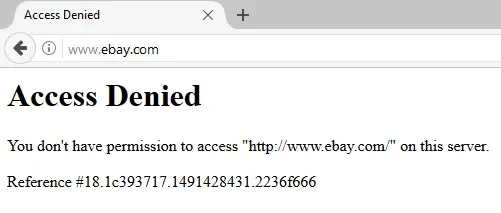
The screenshot shows the response where the injected JavaScript ran; the author captions it "Response. Btw it's not ebay.com :P". From the behaviour he deduced the site was using an Akamai WAF. He could not find published bypasses relevant to his case, so he tested different vectors and reached the following conclusions about what the vector must not contain:
- Keywords:
Javascript,alert,confirm,prompt, event handlers. - Parentheses.
- Native method calls such as
document.cookie().
HPP in forgot password
One subdomain hosts an application with a retail user panel. All retail users can log in there and do things. The author created an account and, before logging in, decided to test the forgot password functionality. He turned on Burp intercept mode to tamper with the data. The first test was the usual one: adding a header to see whether the reset link would be rewritten to the attacker's host.
X-Forwarded-Host: test.com
The reset link was not modified to test.com/token. The request had a single parameter:
email=[redacted]
Exploitation
Step 1: open redirect via /oauth2/login
With the second endpoint identified in the Burp logs, the author changed the redirect_uri on /oauth2/login and this time it worked. The report does not show the exact value used, only that changing redirect_uri on that endpoint succeeded where the same change on /oauth2/authorize had been rejected. He reported it immediately and received a quick response from the team; the next day he was awarded some 13k, his first bounty.
Step 2: subdomain takeover
After finding the expired domain behind one of the subdomains, the author emailed the address on its main page asking the price of the subdomain. The reply was:
Man! I had breakup with my girl and I need a ring to give her and get her back in my life! How much can you give?

The screenshot shows that email exchange. The author reported the dangling subdomain to the program and they credited some more amount to his account.
Step 3: XSS filter bypass
After the conclusions above, the author researched the problem and found a vector that bypassed the filter. He gives it as follows, noting that if you come across Akamai WAF, this vector may bypass it:
The vector avoids the blocked keywords, parentheses and native method calls such as document.cookie(), using the onafterscriptexecute handler instead. Instead it uses the onafterscriptexecute handler on an <object> element with window['location'] and document['cookie']. The result sends the victim's cookies to the attacker's host. The author stresses that this allows cookie stealing directly rather than a simple alert(1), and recommends using this kind of proof of concept. He reported it and was paid for it as well.
Step 4: HPP account takeover
With the single email parameter in the forgot password request, the author performed HTTP parameter pollution by sending the parameter twice:
email=[redacted]&email=[redacted]
The reset link arrived in both mailboxes: the victim's and the attacker's. The author states that in this way he was able to compromise all the retail users selling on the website. The program paid him the highest amount for this issue.
Root cause
- Open redirect. The
/oauth2/authorizeendpoint validatedredirect_uriagainst registered clients and rejectedhttp://evil.comwith "The redirect_uri is not registered with client". The/oauth2/loginendpoint, discovered in the Burp logs, accepted a changedredirect_uriwhere/oauth2/authorizehad rejectedhttp://evil.com. - Subdomain takeover. A subdomain's DNS alias pointed at a domain that had expired and was no longer controlled by the company, leaving the subdomain claimable by whoever acquired that domain.
- XSS filter bypass. The Akamai WAF blocked a keyword list (
Javascript,alert,confirm,prompt, event handlers), parentheses and native method calls such asdocument.cookie(). The application still reflected the parameter into the page without adequate output encoding, so a vector that avoided those patterns executed. The defence was a blocklist of syntax rather than context-aware encoding of the reflected value. - HPP account takeover. The forgot password handler accepted a duplicated
emailparameter and a reset link arrived in both mailboxes. The application did not reject the duplicatedemailparameter. TheX-Forwarded-Hostheader had no effect on the reset link, so host header rewriting was not the issue here.
Impact
- Open redirect. An attacker could craft an OAuth2 link on
/oauth2/loginwhoseredirect_uripointed anywhere, which in an OAuth flow can be used to leak the authorisation code to an attacker-controlled host. The report shows the redirect was accepted but does not show a full code-theft chain. - Subdomain takeover. Control of a subdomain of the target company was available to anyone willing to buy the expired domain.
- XSS. Script execution in the context of the vulnerable subdomain, used here to steal cookies by sending them to an attacker host. The author notes the vector may bypass Akamai WAF in other deployments, framed as a possibility rather than a guarantee.
- HPP account takeover. Any retail user of the panel could be targeted: submitting the victim's address together with an attacker address caused the reset link to be sent to both mailboxes. The author states this allowed compromising all the retail users selling on the website. It requires knowing the victim's email address and access to the forgot password form.
Fix
Based on the findings, the changes needed are:
- Apply the same registered-client validation of
redirect_urion/oauth2/loginthat/oauth2/authorizealready performs, and reject any URI not on the allowlist. - Remove or reclaim the dangling DNS alias pointing at the expired domain, and monitor subdomains for aliases to unregistered or expired services.
- Encode reflected parameters for the output context instead of relying on a WAF blocklist of keywords, parentheses and method names.
- Reject requests containing duplicate
emailparameters in the forgot password flow, or bind the reset token to a single recipient, so a token is never delivered to more than one address.
Variants to test
- Second OAuth2 endpoint. When
redirect_uriis rejected on/oauth2/authorize, search Burp logs and JavaScript for other OAuth2 paths such as/oauth2/login. A positive result is an arbitraryredirect_uribeing accepted and the browser following it. - Subdomain alias enumeration. Pull subdomains from VirusTotal and other sources, resolve each alias, and look for ones pointing at expired or unregistered domains. A positive result is an alias whose target is available for registration or shows a for-sale page.
- WAF blocklist probing. When a reflection is blocked, determine which tokens trigger the block (keywords, parentheses, native calls) and look for handlers and bracket notation that avoid them, as in the
onafterscriptexecutevector. A positive result is script execution that exfiltratesdocument['cookie']to a host you control. - Duplicate parameters in password reset. Send the
emailparameter twice with the victim's address first and your own second, and check both mailboxes. A positive result is the same reset token arriving at both addresses. - Host header rewriting. Before the HPP test, try
X-Forwarded-Host: test.comand check whether the reset link is rewritten. A positive result is a reset link pointing at your host, which is a separate path to token theft.
What happened, in plain words
Siva Krishna Samireddi (@le4rner) hunted bugs on a private bug bounty program run by an Indian company that asked not to be named, so he calls it redacted.com. The company runs several web applications on different subdomains, and all of them use OAuth2 for login. He found four issues: an open redirect in an OAuth2 login flow, a subdomain takeover, a cross-site scripting (XSS) filter bypass against an Akamai web application firewall (WAF), and an account takeover through HTTP parameter pollution (HPP) in a forgot password form. The title says 60K+, but that figure is in Indian rupees (INR), not US dollars; the platform record lists a bounty of 880.00 USD.
He did not start on HackerOne like many hunters. He searched the web for companies that publish a responsible disclosure policy but are not on HackerOne, or at least not well known there. The search he used was:
intext:"Responsible Disclosure Policy"
This is a Google search operator. intext: tells Google to find pages whose visible text contains the exact phrase in quotes. Many results were already on HackerOne. The company he finally chose was not publicly disclosed at its request.
The tools and what they do
He does not give versions, but he names the tools and the setup:
- Burp Suite: a program that sits between your browser and a website. It records every request and response (the logs) and can pause a request so you can change it before it is sent (intercept mode). Think of it as a mail interception service that lets you read and rewrite letters before delivery.
- VirusTotal: a website that, among other things, lists subdomains for a domain. He used it to find subdomains of redacted.com.
- A retail user account on one subdomain's application, which he created before testing the forgot password feature.
- A yopmail.com mailbox: a free disposable email service, used as the attacker-controlled address in the HPP test.
The target has multiple apps on subdomains, all authenticated through OAuth2, and at least one subdomain sits behind an Akamai WAF.
Finding it
OAuth2 open redirect
OAuth2 is a way for a website to let you log in through another service without giving it your password. When you click "Log in with X", the site sends your browser to X's authorisation endpoint with a redirect_uri parameter that tells X where to send you back afterwards. If that parameter is not checked, an attacker can set it to their own site and receive the login code.
The first test was the standard one: replace redirect_uri with http://evil.com. The response was:
The redirect_uri is not registered with client
So the authorisation endpoint checks the redirect address against a list of registered clients and rejects unknown ones. He went back to the Burp logs. The usual OAuth authorisation endpoint looked like this:
https://sub.redacted.com/oauth2/authorize?param=X&redirect_uri=https://sub.redacted.com/?code=
This is an HTTP request line. sub.redacted.com is the subdomain, /oauth2/authorize is the path, and after the ? come parameters separated by &. param=X is a placeholder for some other parameter, and redirect_uri is the address to return to after login. code= is where the authorisation code would be appended.
While reading the logs he noticed a second OAuth2-related endpoint:
The only difference that mattered was the path: /oauth2/login instead of /oauth2/authorize. The validation that rejected evil.com on the authorisation endpoint was not applied the same way here.
Subdomain takeover
A subdomain is a prefix of a domain, like shop.example.com. Companies often point a subdomain at an external service by creating a DNS alias (a CNAME record) that says "this name is really that other name". If the other name expires and someone else buys it, that person now controls what the subdomain shows. That is a subdomain takeover.
Using VirusTotal, the author searched redacted.com and got a list of subdomains. He checked the alias of every subdomain and found one pointing at somedomain.com, which was an expired domain. The main page of that domain carried an email address inviting contact to buy it.
XSS filter bypass
Cross-site scripting (XSS) happens when a site takes something you typed or sent (a parameter) and puts it into the page without neutralising it, so your text is treated as code. A web application firewall (WAF) is a filter in front of the site that tries to block known attack patterns.
A subdomain reflected parameters on the page. Injecting HTML content rendered it on the page, and inserting JavaScript into the parameter produced a response showing the script executing.
The screenshot shows the response where the injected JavaScript ran; the author captions it "Response. Btw it's not ebay.com :P". From the behaviour he deduced the site was using an Akamai WAF. He could not find published bypasses relevant to his case, so he tested different vectors and reached these conclusions about what the vector must not contain:
- Keywords:
Javascript,alert,confirm,prompt, event handlers. - Parentheses.
- Native method calls such as
document.cookie().
HPP in forgot password
HTTP parameter pollution (HPP) means sending the same parameter more than once in a request. Different parts of a web application may read different occurrences, so the application can be confused about which value is the real one. Think of a form that asks for your name twice and two clerks each read a different line.
One subdomain hosts an application with a retail user panel. All retail users can log in there and do things. The author created an account and, before logging in, decided to test the forgot password functionality. He turned on Burp intercept mode to tamper with the data. The first test was the usual one: adding a header to see whether the reset link would be rewritten to the attacker's host.
X-Forwarded-Host: test.com
This is an HTTP header. Headers are extra lines of information sent with a request. X-Forwarded-Host is meant to tell the server the original hostname when a proxy sits in front. If the application uses it to build the reset link, the link could point at test.com instead of the real site.
The reset link was not modified to test.com/token. The request had a single parameter:
email=[redacted]
This is the body of the forgot password request: one parameter named email with the victim's address as its value. domain.tld is a placeholder top-level domain.
Exploitation
Step 1: open redirect via /oauth2/login
With the second endpoint identified in the Burp logs, the author changed the redirect_uri on /oauth2/login and this time it worked. The report does not show the exact value used, only that changing redirect_uri on that endpoint succeeded where the same change on /oauth2/authorize had been rejected. He reported it immediately and received a quick response from the team; the next day he was awarded some 13k, his first bounty.
Step 2: subdomain takeover
After finding the expired domain behind one of the subdomains, the author emailed the address on its main page asking the price of the subdomain. The reply was:
Man! I had breakup with my girl and I need a ring to give her and get her back in my life! How much can you give?
The screenshot shows that email exchange. The author reported the dangling subdomain to the program and they credited some more amount to his account. The report does not state the price quoted or paid for the domain, nor whether the domain was ever acquired.
Step 3: XSS filter bypass
After the conclusions above, the author researched the problem and found a vector that bypassed the filter. He gives it as follows, noting that if you come across Akamai WAF, this vector may bypass it:
This is an HTML <object> element with an event handler attribute. onafterscriptexecute fires after a script in the document has run. The value is JavaScript inside curly braces. window['location'] is the same as window.location, the address bar, written with brackets to avoid a dot. "//dontknowsss.com/?" is the attacker's host and path. %2b is the URL-encoded form of +. document['cookie'] reads the site's cookies, again with brackets instead of a dot. The whole thing sends the victim's cookies to the attacker's host. The vector avoids the blocked keywords, parentheses and native method calls such as document.cookie(), using the onafterscriptexecute handler instead. The author stresses that this allows cookie stealing directly rather than a simple alert(1), and recommends using this kind of proof of concept. He reported it and was paid for it as well.
Step 4: HPP account takeover
With the single email parameter in the forgot password request, the author performed HTTP parameter pollution by sending the parameter twice:
email=[redacted]&email=[redacted]
This is the same request body with two email parameters separated by &. The first is the victim's address, the second is the attacker's yopmail address. The reset link arrived in both mailboxes: the victim's and the attacker's. The author states that in this way he was able to compromise all the retail users selling on the website. The program paid him the highest amount for this issue.
Root cause
- Open redirect. The
/oauth2/authorizeendpoint validatedredirect_uriagainst registered clients and rejectedhttp://evil.comwith "The redirect_uri is not registered with client". The/oauth2/loginendpoint, discovered in the Burp logs, accepted a changedredirect_uriwhere/oauth2/authorizehad rejectedhttp://evil.com. - Subdomain takeover. A subdomain's DNS alias pointed at a domain that had expired and was no longer controlled by the company, leaving the subdomain claimable by whoever acquired that domain.
- XSS filter bypass. The Akamai WAF blocked a keyword list (
Javascript,alert,confirm,prompt, event handlers), parentheses and native method calls such asdocument.cookie(). The application still reflected the parameter into the page without adequate output encoding, so a vector that avoided those patterns executed. The defence was a blocklist of syntax rather than context-aware encoding of the reflected value. - HPP account takeover. The forgot password handler accepted a duplicated
emailparameter and a reset link arrived in both mailboxes. The application did not reject the duplicatedemailparameter. TheX-Forwarded-Hostheader had no effect on the reset link, so host header rewriting was not the issue here.
Impact
- Open redirect. An attacker could craft an OAuth2 link on
/oauth2/loginwhoseredirect_uripointed anywhere, which in an OAuth flow can be used to leak the authorisation code to an attacker-controlled host. The report shows the redirect was accepted but does not show a full code-theft chain. - Subdomain takeover. Control of a subdomain of the target company was available to anyone willing to buy the expired domain.
- XSS. Script execution in the context of the vulnerable subdomain, used here to steal cookies by sending them to an attacker host. The author notes the vector may bypass Akamai WAF in other deployments, framed as a possibility rather than a guarantee.
- HPP account takeover. Any retail user of the panel could be targeted: submitting the victim's address together with an attacker address caused the reset link to be sent to both mailboxes. The author states this allowed compromising all the retail users selling on the website. It requires knowing the victim's email address and access to the forgot password form.
Fix
Based on the findings, the changes needed are:
- Apply the same registered-client validation of
redirect_urion/oauth2/loginthat/oauth2/authorizealready performs, and reject any URI not on the allowlist. - Remove or reclaim the dangling DNS alias pointing at the expired domain, and monitor subdomains for aliases to unregistered or expired services.
- Encode reflected parameters for the output context instead of relying on a WAF blocklist of keywords, parentheses and method names.
- Reject requests containing duplicate
emailparameters in the forgot password flow, or bind the reset token to a single recipient, so a token is never delivered to more than one address.
Variants to test
- Second OAuth2 endpoint. When
redirect_uriis rejected on/oauth2/authorize, search Burp logs and JavaScript for other OAuth2 paths such as/oauth2/login. A positive result is an arbitraryredirect_uribeing accepted and the browser following it. - Subdomain alias enumeration. Pull subdomains from VirusTotal and other sources, resolve each alias, and look for ones pointing at expired or unregistered domains. A positive result is an alias whose target is available for registration or shows a for-sale page.
- WAF blocklist probing. When a reflection is blocked, determine which tokens trigger the block (keywords, parentheses, native calls) and look for handlers and bracket notation that avoid them, as in the
onafterscriptexecutevector. A positive result is script execution that exfiltratesdocument['cookie']to a host you control. - Duplicate parameters in password reset. Send the
emailparameter twice with the victim's address first and your own second, and check both mailboxes. A positive result is the same reset token arriving at both addresses. - Host header rewriting. Before the HPP test, try
X-Forwarded-Host: test.comand check whether the reset link is rewritten. A positive result is a reset link pointing at your host, which is a separate path to token theft.
Glossary
- OAuth2: a protocol that lets a website log you in through another service without sharing your password, using an authorisation code and a redirect address.
- redirect_uri: the parameter that tells the OAuth2 service where to send the user after login.
- Open redirect: a flaw where a site accepts any address in a redirect parameter and sends users to an attacker's site.
- Subdomain: a prefix of a domain, like
shop.example.com. - DNS alias (CNAME): a DNS record that points one name at another name.
- Subdomain takeover: taking control of a subdomain because its alias points at an expired or unclaimed service.
- XSS (cross-site scripting): injecting code into a page that other users view, so the code runs in their browser.
- WAF (web application firewall): a filter in front of a site that blocks requests matching known attack patterns.
- Akamai WAF: a commercial web application firewall from Akamai.
- HTTP parameter pollution (HPP): sending the same parameter more than once so different parts of the application read different values.
- Burp Suite: a tool that records, intercepts and modifies HTTP traffic between browser and server.
- Intercept mode: a Burp feature that pauses a request so you can edit it before it is sent.
- VirusTotal: a service that, among other things, lists subdomains for a domain.
- Header: an extra line of information sent with an HTTP request or response.
- X-Forwarded-Host: a header that tells the server the original hostname when a proxy is in front.
- Cookie: a small piece of data a site stores in your browser, often used to keep you logged in.
- Reset token: a secret value in a password reset link that proves the link belongs to the account owner.
- Account takeover: gaining control of another user's account.
- Retail user panel: the part of the application where retail users log in and manage their activity.
- yopmail.com: a free disposable email service.
- INR: Indian rupee, the currency of India.
- HackerOne: a bug bounty platform where companies list programs and researchers report bugs.

