Lỗi trong bàn phím Tiếng Việt của Microsoft Windows
The Vietnamese Telex keyboard layout on Windows displays characters typed into hidden password fields, such as SSH and FTP prompts, on screen. Someone watching the screen could read a password that was meant to stay concealed.

medium.com
Published on medium.com
Information Disclosure
The full write-up lives on its author's site
It belongs to its author, so we link to it rather than copy it. The other two tabs are our own rewrites, checked against it.
Context
The target here is the Vietnamese Telex keyboard on Microsoft Windows, a text input method rather than a web application. The feature normally does what any input method does: it turns keystrokes into Vietnamese characters. The report describes a small information disclosure issue in that input method, one the author says has likely existed for a long time, and which was reported to Microsoft and acknowledged by them.
The author frames it as a bug that many people know about but may not recognise as a security issue.
Setup
The report does not describe any accounts, roles, tools or versions. The only precondition it names is the use of the Vietnamese Telex keyboard on Windows together with a password prompt for SSH or FTP.
Finding it
The observation is simple. When a password is typed at an SSH or FTP prompt, the characters are normally not shown on screen. With the Vietnamese keyboard active, they are shown. The author calls this a contradiction with the design principle behind password entry.
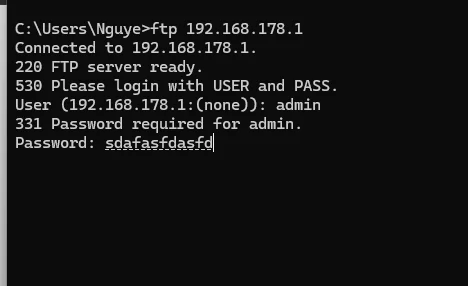
The first image is captioned as a small mistake, showing the password being displayed while it is typed.
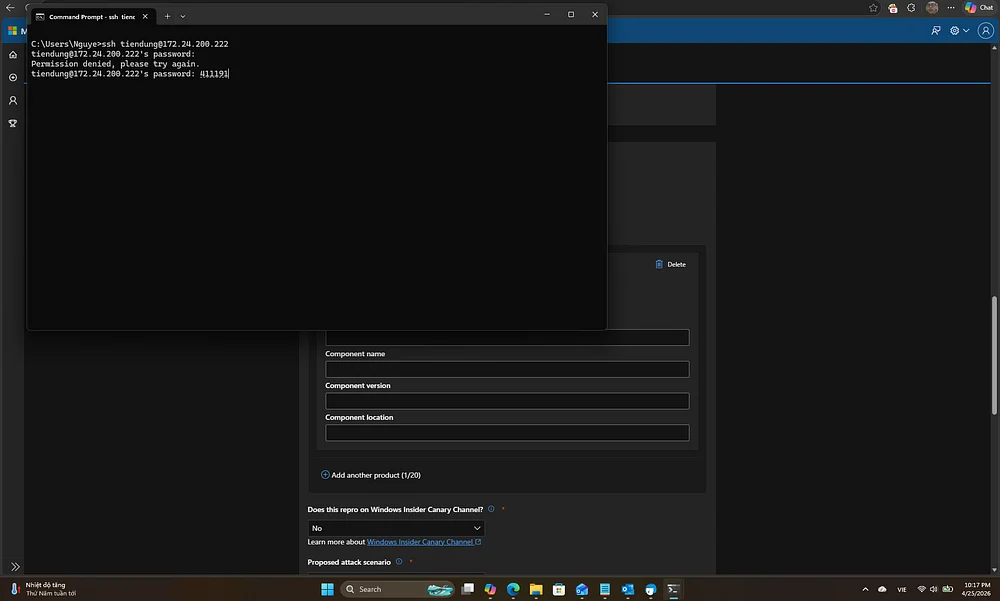
The second image is captioned as the bug at the SSH prompt.
Exploitation
The report gives no request, payload, command or step-by-step procedure. The behaviour is described only as: type a password at an SSH or FTP prompt while the Vietnamese Telex keyboard is active, and the characters appear on screen instead of being hidden.
Root cause
The report does not analyse the cause. It only states that the Vietnamese keyboard shows the password characters while the SSH and FTP prompts normally hide them, and that this conflicts with the design principle of password entry. Any explanation of why the input method interferes with the hidden input would be speculation, and the report offers none.
Impact
The report does not describe the impact in security terms. The author's only guidance is to avoid accessing FTP and SSH in crowded places where people can look over your shoulder. The author's own mitigation reflects this, advising readers to avoid accessing FTP and SSH in crowded places where people can look over their shoulder.
Fix
The only guidance given is the practical one: limit FTP and SSH use in crowded places to avoid being watched.
Variants to test
- Other input methods: repeat the same test with other language input methods and keyboard layouts on Windows, typing into an SSH or FTP password prompt. A positive result is the password characters becoming visible on screen.
- Other hidden-input fields: try the same input method in other contexts where input is meant to be masked. A positive result is the same disclosure of characters that should be hidden.
- Different clients: test the behaviour across different SSH and FTP clients on the same system. A positive result is the password appearing in any client where it would otherwise be masked.
What happened, in plain words
The author found a small flaw in the Vietnamese Telex keyboard on Microsoft Windows. The keyboard is not a website or an app you install separately: it is a text input method, a piece of software whose only job is to turn the keys you press into Vietnamese characters. When you type on a normal keyboard, each key press produces one letter. An input method sits between your fingers and the screen and can change what appears, which is exactly what makes Vietnamese typing possible.
The flaw is about passwords. When you connect to a server over SSH or FTP, the program asks for your password and normally hides every character you type, usually showing nothing or a row of dots. With the Vietnamese keyboard active, the characters are shown on screen instead. Anyone standing nearby can read the password as it is typed. This is called shoulder surfing: someone simply looks over your shoulder.
The author says the bug has probably existed for a very long time, reported it to Microsoft, and says Microsoft acknowledged it. The author also notes that many people know about this behaviour but may not think of it as a security problem. The author considers it a security problem, though the report does not spell out the consequences.
The pieces involved
Before the details, here are the parts of the story in everyday terms.
- Windows: Microsoft's operating system, the software that runs on the computer.
- Input method: software that converts what you press on the keyboard into characters of a particular language. Think of a translator sitting between your keyboard and the screen: you press keys, the translator decides which letters actually appear. The Vietnamese Telex input method uses this to let you type Vietnamese letters and accents with an ordinary keyboard.
- SSH: a way to open a text session on another computer, usually a server, over a network. It is the standard tool for administering machines remotely. When you log in, it asks for a username and a password.
- FTP: an older protocol for transferring files to and from a server. It also asks for a username and password.
- Password prompt: the moment a program asks you to type your password. Programs deliberately hide what you type at that moment so that nobody can read it from the screen.
- Information disclosure: a class of security problem where information that should stay private becomes visible to someone who should not see it. Here the disclosed information is the password on screen.
- Shoulder surfing: reading private information by looking at someone's screen from nearby, without any technical tool.
Setup
The report does not describe any accounts, roles, tools or versions. The only precondition it names is the use of the Vietnamese Telex keyboard on Windows together with a password prompt for SSH or FTP. In other words, you need a Windows machine with the Vietnamese Telex keyboard selected, and you need to be logging in to something over SSH or FTP.
Finding it
The observation is simple. When a password is typed at an SSH or FTP prompt, the characters are normally not shown on screen. With the Vietnamese keyboard active, they are shown. The author calls this a contradiction with the design principle behind password entry: the whole point of hiding the characters is that nobody but the person typing should know the password.
The first image is captioned as a small mistake, showing the password being displayed while it is typed.
The second image is captioned as the bug at the SSH prompt.
Trying it
The report gives no request, payload, command or step-by-step procedure. The behaviour is described only as: type a password at an SSH or FTP prompt while the Vietnamese Telex keyboard is active, and the characters appear on screen instead of being hidden. There is nothing to copy and run; the test is simply to log in and watch the screen.
Why it happens
The report does not analyse the cause. It only states that the Vietnamese keyboard shows the password characters while the SSH and FTP prompts normally hide them, and that this conflicts with the design principle of password entry. Any explanation of why the input method interferes with the hidden input would be speculation, and the report offers none.
What the impact is
The report does not describe the impact in security terms. The author's only guidance is to avoid accessing FTP and SSH in crowded places where people can look over your shoulder. The author's own mitigation reflects this, advising readers to avoid accessing FTP and SSH in crowded places where people can look over their shoulder.
What was fixed
The only guidance given is the practical one: limit FTP and SSH use in crowded places to avoid being watched.
Other places to look
The report itself does not list further tests, but the same idea can be checked elsewhere. These are suggestions for further testing, not findings from the report.
- Other input methods: repeat the same test with other language input methods and keyboard layouts on Windows, typing into an SSH or FTP password prompt. A positive result is the password characters becoming visible on screen.
- Other hidden-input fields: try the same input method in other contexts where input is meant to be masked. A positive result is the same disclosure of characters that should be hidden.
- Different clients: test the behaviour across different SSH and FTP clients on the same system. A positive result is the password appearing in any client where it would otherwise be masked.
Glossary
- Input method: software that converts keystrokes into the characters of a particular language, such as Vietnamese.
- Telex: a typing convention for Vietnamese that uses ordinary Latin letters to produce Vietnamese letters and accents.
- SSH: a protocol for opening a secure text session on a remote computer, commonly used to administer servers.
- FTP: a protocol for transferring files between computers, which asks for a username and password.
- Password prompt: the point at which a program asks you to enter your password and normally hides what you type.
- Information disclosure: a security problem where information meant to stay private becomes visible to someone who should not see it.
- Shoulder surfing: reading private information by looking at someone's screen from nearby.
- Mitigation: a practical step that reduces the risk, such as avoiding logins in crowded places.
- Client: the program on your computer that connects to a server, for example an SSH or FTP client.
- Exploitation: actually using a flaw to gain something, here simply reading a password off the screen.



