Next.js Kena RCE Lagi, dan Kenapa Kami Pindah ke TanStack
The article describes React2Shell (CVE-2025-55182), an unsafe deserialisation flaw in React Server Components' Flight protocol that let an unauthenticated attacker run shell commands on the server, and a later Next.js advisory covering an RCE in the use cache function, an RCE in image optimisation via SVG, and a DoS through Server Actions. The author's own servers were breached through React2Shell in late 2025.

medium.com
Published on medium.com
Nextjs
The full write-up lives on its author's site
It belongs to its author, so we link to it rather than copy it. The other two tabs are our own rewrites, checked against it.
Context
This is a field note from a small team that runs its frontends on Next.js and had to deal with the React2Shell incident at the end of 2025. The author, Deni Marswandi, writes about three things in one piece: the React2Shell vulnerability (CVE-2025-55182), the out-of-band Next.js security release of 14 October 2026, and the decision to rewrite three web apps on TanStack Start. The target here is not a single application but the framework layer that sits between React and the server, the part that most teams never touch directly.
The article opens with a busy week for security news: a PHP shell, an RCE in Node.js (specifically Next.js), and an RCE in GitLab. The author says the PHP one did not worry them because almost none of their clients or projects are built on PHP. GitLab is treated as serious but not their problem: CVE-2026-97229 is an integer overflow in the CI/CD Regular Expression Compiler, CVSS 10, patched in 19.4.2, 19.3.5 and 19.2.8 since 12 October 2026, with a PoC already circulating. The advice is to upgrade self-managed GitLab installations.
The Next.js news is the one that matters to them, because almost all of their frontends are built on Next.js and they have an unpleasant history with the framework.
Setup
The relevant environment, as described:
- Next.js applications using the App Router, which pulls in the React Server Components packages.
- Production deployments on VPS instances running under PM2, with few instances per site.
- Business logic and data in Go/Rust backends; the frontend is essentially a client calling APIs.
- Applications later deployed as pods in Kubernetes.
- Three web apps and apps still running on Next.js at the time of the migration.
No specific Next.js version numbers for their own applications are given, and no request or response from their own incident is shown. The technical detail in the article comes from the public advisories and the framework documentation.
Finding it
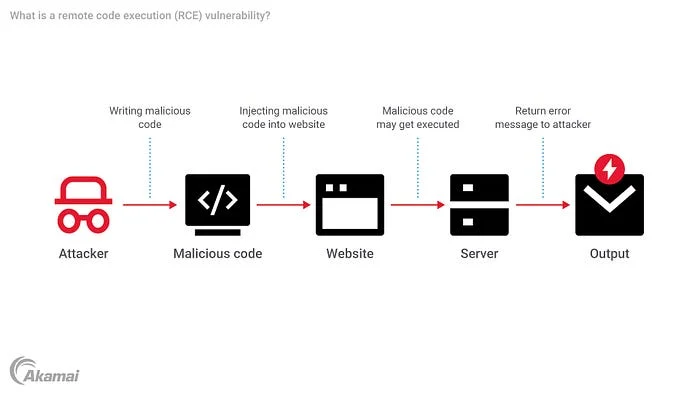
The author's starting point is the architecture rather than a single bug. React Server Components (RSC) let part of a React component tree render on the server, and the result is sent to the browser in a special format called Flight. When the browser calls a Server Function or Server Action, the data travels to the server in a similar format and the server deserialises it into JavaScript objects.
That deserialisation step is where React2Shell lives. An attacker sends a single specially crafted HTTP request to a Server Function endpoint, and while React deserialises it, the attacker's code runs on the server. No login and no account are needed. From there the attacker can call built-in Node.js functions such as child_process.execSync to run shell commands. That is the origin of the name: React to shell.
The affected packages are react-server-dom-webpack, react-server-dom-parcel and react-server-dom-turbopack in React 19.0, 19.1.0, 19.1.1 and 19.2.0. Next.js with the App Router is affected automatically because it uses these packages internally, and the default configuration is vulnerable.
React2Shell was announced by Meta and Vercel on 3 December 2025 with a CVSS score of 10. Next.js briefly had its own CVE, CVE-2025-66478, which was withdrawn because the flaw is exactly the same as the one in React; two numbers in different articles refer to one vulnerability.
Exploitation was fast. Attacks appeared almost immediately after disclosure, and CISA added CVE-2025-55182 to the Known Exploited Vulnerabilities catalogue. The number of circulating PoC exploits was reported as close to 100, a figure the author calls rare. Follow-up RSC research produced more issues: CVE-2025-55184 and CVE-2025-67779 for denial of service, the latter considered a bypass of the first React2Shell patch, and CVE-2025-55183, which could leak part of the source code. The patch had to be redone more than once.
The team was among those hit. At the end of 2025 their server was compromised through this vulnerability. They patched it while travelling to PyCon Indonesia 2025 in Jakarta, checking versions, updating dependencies, rebuilding, deploying and checking what had been touched along the way.
Exploitation
The article does not publish a request, payload or command for React2Shell or for the October 2026 issues. What it describes is the shape of the attack, and the conditions under which each issue applies.
Step 1: reach a Server Function endpoint
An attacker sends one crafted HTTP request to an endpoint that handles Server Functions or Server Actions. No authentication is required. The data is sent to the server in a format similar to Flight, which React uses for server rendering.
Step 2: let React deserialise it
The server deserialises the body into JavaScript objects. The flaw is in that deserialisation path: while React deserialises the crafted input, the attacker's code runs on the server.
Step 3: run shell commands
Once code execution is achieved, the attacker can reach Node.js built-ins such as child_process.execSync and run shell commands on the host. The article names this function as the example of what the attacker can call; it does not show the exact call.
The October 2026 advisory
On 14 October 2026 Next.js published an unscheduled security update. Patches are in v16.4.1 (Active LTS) and v15.5.28 (Maintenance LTS). It covers three issues:
| Issue | Severity | Advisory | Condition |
|---|---|---|---|
RCE in the use cache function |
Critical | GHSA-673q-mjm6-r5xr | App Router with Cache Components, when use cache returns typed arrays such as Uint8Array |
| RCE in Image Optimization via SVG | Critical | CVE-2026-96889, GHSA-2464-fhr4-w9xw | Next.js on glibc-based Linux (Ubuntu, Debian) |
| DoS via Server Actions | High | GHSA-p3m5-59mp-jv5r | App Router with at least one Server Action |
The first has a paired advisory in React, GHSA-xqc2-xf4c-x3h3. The pattern resembles React2Shell: the problem sits in the data serialisation path between React and the server. The second originates in a memory bug in the upstream sharp library used for image optimisation, and affects glibc-based Linux, which the author notes is the most common choice for VPS deployments. The third is triggered by a special request to an App Router application that has at least one Server Action; it drives CPU up and blocks other requests in the same process. Pages Router applications, or applications without Server Actions, are not affected.
For a team running Next.js on VPS with PM2, the third issue is felt directly: with few instances, one stuck process is enough to make the site unreachable.
Two of the three issues, and React2Shell before them, sit in the same area, the boundary between React and the server, which the framework manages automatically.
Root cause
The common thread is unsafe deserialisation on the React-to-server boundary. In React2Shell, the Flight payload is deserialised into JavaScript objects and crafted input executes code during that step. In the use cache issue, the same kind of serialisation path is involved when typed arrays such as Uint8Array are returned. The application developer does not write this code; the framework does it on their behalf, and the default configuration of Next.js App Router was vulnerable.
The Image Optimization issue is different in nature: a memory bug in the upstream sharp library, reachable through SVG processing, with impact limited to glibc-based Linux. The DoS issue is a resource exhaustion problem in Server Action handling, where one request blocks the process.
Impact
For React2Shell, the impact is unauthenticated remote code execution on the server, with the ability to run shell commands through Node.js built-ins. The affected frameworks are those that use RSC, such as Next.js, RedwoodSDK, React Router RSC preview, and the RSC plugins for Vite and Parcel. Only React 19 with RSC is affected. The author's own server was compromised this way at the end of 2025.
For the October 2026 issues: code execution through use cache in App Router applications with Cache Components that return typed arrays; code execution through SVG image optimisation on glibc-based Linux; and denial of service through Server Actions in App Router applications that define at least one, where a single stuck process can take a site offline when instances are few.
The author is explicit that moving frameworks does not guarantee safety. Vulnerabilities will always exist. What changes is the size of the area that has to be defended.
Fix
What was actually changed:
- The team patched React2Shell while travelling, checking versions, updating dependencies, rebuilding, deploying and reviewing what had been touched.
- After the 2025 incident and the newer issues, they decided not to continue on Next.js. Three web apps and apps still running on Next.js were rewritten on TanStack.
- RSC is not enabled in their TanStack Start applications.
What the advisories require: upgrade to Next.js v16.4.1 or v15.5.28 for the October 2026 issues. For GitLab, upgrade to 19.4.2, 19.3.5 or 19.2.8.
Why TanStack Start, in the author's reasoning:
- The server boundary is explicit. Every server call must be written as an explicit RPC through
createServerFn, with input validation, so the open endpoints are visible. - RSC is optional. Next.js App Router is built on RSC, while in TanStack Start RSC support is still behind an experimental API. If it is not needed, it is not run.
- It fits their architecture: business logic and data live in Go/Rust backends, and the frontend is a client calling APIs.
- Type safety runs from route to component, which catches AI-generated mistakes at compile time during porting.
- The npm package includes a
SKILL.mdfile covering topics such as server functions, middleware and deployment, which helps AI follow the official patterns. - No lock-in to Vercel: TanStack Start is based on Vite and Nitro and can be deployed anywhere, including their Kubernetes pods.
Would they have been hit by React2Shell if they had used TanStack from the start? At the time, no. React2Shell lives in the RSC packages, and the affected frameworks are those that use RSC. TanStack Start did not use RSC at all then, so the attack path did not exist. Since April 2026 TanStack Start supports RSC, and its RSC is the same React Flight stream, while React2Shell comes from unsafe deserialisation in the Flight protocol. Enabling RSC in TanStack would mean running the same engine, and a similar flaw in upstream React could carry over. What protects them is the decision not to use RSC, not the framework name.
The author is not naive about this: @tanstack/react-start has also had a DoS issue, and the TanStack team advises treating server functions like ordinary APIs, authenticated, validated, with dependencies kept up to date. The goal is a smaller and better-mapped attack surface.
On the rewrite itself: most of the porting was done with AI, under strict rules covering folder structure, routing patterns, how to call APIs, which dependencies may be added, and which parts may or may not be touched. The rules are applied in every session so the output is consistent. Playwright tests were written by hand, on the principle that tests written by the same AI as the code only prove what the AI believes is correct. The tests encode user-facing behaviour of the old applications, such as login, main flows, forms and navigation, and the new TanStack version is considered done when they pass. The three apps were worked on in parallel and finished in three days.
Variants to test
- Server Function and Server Action endpoints on any RSC-based framework. Send a crafted HTTP request to an endpoint that handles server calls and look for code execution during deserialisation. A positive result is a shell command running on the host, for example through
child_process.execSync, without authentication. use cachewith typed arrays. In an App Router application with Cache Components, make ause cachefunction return aUint8Arrayor another typed array and probe the serialisation path. A positive result is code execution on the server.- SVG through Image Optimization on glibc Linux. On Ubuntu or Debian, exercise SVG image optimisation, where the upstream
sharpmemory bug applies. - Server Actions for denial of service. Against an App Router application with at least one Server Action, send a special request and watch CPU and request latency in the same process. A positive result is CPU saturation and other requests blocked; Pages Router applications and applications without Server Actions should not react.
- RSC enabled on TanStack Start. If RSC is turned on, the Flight stream is the same engine as React's, so test the same deserialisation surface. A positive result is the same class of behaviour as React2Shell.
- Server functions in TanStack Start. Treat them as ordinary API endpoints: check authentication, input validation and dependency versions. A positive result is a server function that executes without authentication or without validating its input.
What happened, in plain words
A small software team builds the visible part of websites and apps, the part you click and type into. That part is called the frontend, and for years this team built almost all of it with a tool called Next.js. In late 2025 a serious security hole was found in a piece of software their sites depended on, and someone broke into their server through it. In October 2026 the makers of Next.js published another batch of security fixes, and the team decided they had had enough. They rewrote three of their web apps on a different tool, TanStack Start, and this article explains why.
The author is Deni Marswandi. He writes about three things in one piece: the 2025 hole (known as React2Shell), the October 2026 Next.js security release, and the move to TanStack Start. The subject is not one website but the framework layer, the layer of ready-made software that sits between the code a developer writes and the server that runs it. Most teams never touch that layer directly, which is exactly why problems in it are so widespread.
The article opens with a busy week for security news: a PHP shell, a remote code execution (RCE) in Node.js (specifically Next.js), and an RCE in GitLab. The author says the PHP one did not worry them because almost none of their clients or projects are built on PHP. GitLab is treated as serious but not their problem: CVE-2026-97229 is an integer overflow in the CI/CD Regular Expression Compiler, CVSS 10, patched in 19.4.2, 19.3.5 and 19.2.8 since 12 October 2026, with a proof of concept (PoC) already circulating. The advice is to upgrade self-managed GitLab installations.
The Next.js news is the one that matters to them, because almost all of their frontends are built on Next.js and they have an unpleasant history with the framework.
The setup: what they were running
Before the story makes sense, here is the environment the author describes. Think of it as the kitchen the team cooks in.
- Next.js applications using the App Router, which pulls in the React Server Components packages. The App Router is Next.js's modern way of organising pages and data; React Server Components (RSC) is a feature that lets part of a page be prepared on the server instead of in your browser.
- Production deployments on VPS instances running under PM2, with few instances per site. A VPS is a rented virtual computer in a data centre; PM2 is a small supervisor program that keeps a Node.js application running and restarts it if it crashes.
- Business logic and data in Go/Rust backends; the frontend is essentially a client calling APIs. An API is the agreed way one program asks another for data or actions, like a waiter taking your order to the kitchen. Go and Rust are programming languages used for that kitchen side.
- Applications later deployed as pods in Kubernetes. Kubernetes is software that runs and manages many copies of an application across machines; a pod is one running unit inside it.
- Three web apps and apps still running on Next.js at the time of the migration.
No specific Next.js version numbers for their own applications are given, and no request or response from their own incident is shown. The technical detail in the article comes from the public advisories and the framework documentation. An advisory is an official notice from the makers of a piece of software saying what is wrong and what to do about it.
Finding it: where the hole lives
The author's starting point is the architecture rather than a single bug. React Server Components (RSC) let part of a React component tree render on the server, and the result is sent to the browser in a special format called Flight. A component is a reusable piece of a page, like a button or a comment box. Rendering means turning code into the finished page. Flight is simply the name of the data format React uses to ship that finished work to the browser.
When the browser calls a Server Function or Server Action, the data travels to the server in a similar format and the server deserialises it into JavaScript objects. A Server Function or Server Action is a piece of code that runs on the server when the user does something, for example submitting a form. Deserialising means turning a stream of text back into usable program objects, the way unpacking a parcel turns a box into the objects inside it.
That deserialisation step is where React2Shell lives. An attacker sends a single specially crafted HTTP request to a Server Function endpoint, and while React deserialises it, the attacker's code runs on the server. An HTTP request is the message your browser sends to a server when you open a page or submit a form; an endpoint is the specific address on the server that handles that kind of message. No login and no account are needed. From there the attacker can call built-in Node.js functions such as child_process.execSync to run shell commands. Node.js is the program that runs JavaScript outside the browser; child_process.execSync is a built-in function that starts another program on the machine. A shell command is an instruction typed to the operating system, like ls to list files. That is the origin of the name: React to shell.
The affected packages are react-server-dom-webpack, react-server-dom-parcel and react-server-dom-turbopack in React 19.0, 19.1.0, 19.1.1 and 19.2.0. A package is a bundle of ready-made code that other projects install and reuse. Next.js with the App Router is affected automatically because it uses these packages internally, and the default configuration is vulnerable. Default configuration means the settings you get if you change nothing, which is how most projects start.
React2Shell was announced by Meta and Vercel on 3 December 2025 with a CVSS score of 10. CVSS is a standard 0 to 10 scale for how bad a security flaw is; 10 is the maximum. Next.js briefly had its own CVE, CVE-2025-66478, which was withdrawn because the flaw is exactly the same as the one in React; two numbers in different articles refer to one vulnerability. A CVE is a public catalogue number given to a known security flaw so everyone can talk about the same thing.
Exploitation was fast. Attacks appeared almost immediately after disclosure, and CISA added CVE-2025-55182 to the Known Exploited Vulnerabilities catalogue. CISA is a US government cybersecurity agency; its catalogue lists flaws that are known to be used in real attacks. The number of circulating PoC exploits was reported as close to 100, a figure the author calls rare. A PoC exploit is a working demonstration that shows how to abuse a flaw.
Follow-up RSC research produced more issues: CVE-2025-55184 and CVE-2025-67779 for denial of service, the latter considered a bypass of the first React2Shell patch, and CVE-2025-55183, which could leak part of the source code. Denial of service (DoS) means making a service unusable, for example by keeping it so busy it cannot answer anyone. A bypass means getting around a fix that was supposed to close the hole. Source code is the human-written text of the program. The patch had to be redone more than once.
The team was among those hit. At the end of 2025 their server was compromised through this vulnerability. They patched it while travelling to PyCon Indonesia 2025 in Jakarta, checking versions, updating dependencies, rebuilding, deploying and checking what had been touched along the way. A dependency is another package your project relies on. Deploying means putting the new version live.
Exploitation: how the attack works, step by step
The article does not publish a request, payload or command for React2Shell or for the October 2026 issues. What it describes is the shape of the attack, and the conditions under which each issue applies. A payload is the part of an attack message that carries the harmful content.
Step 1: reach a Server Function endpoint
An attacker sends one crafted HTTP request to an endpoint that handles Server Functions or Server Actions. No authentication is required. Authentication is proving who you are, usually with a username and password. The data is sent to the server in a format similar to Flight, which React uses for server rendering. The request body is the part of the message that carries data, as opposed to the address line.
Step 2: let React deserialise it
The server deserialises the body into JavaScript objects. The flaw is in that deserialisation path: while React deserialises the crafted input, the attacker's code runs on the server. Application logic is the code the team actually wrote, such as checking a password or saving an order. The attack happens before that code gets a chance to look at the input.
Why this step matters: the unpacking itself is the weak point. It is like a parcel-opening machine that, if the box is shaped a certain way, starts following instructions printed on the box.
Step 3: run shell commands
Once code execution is achieved, the attacker can reach Node.js built-ins such as child_process.execSync and run shell commands on the host. The article names this function as the example of what the attacker can call; it does not show the exact call. The host is the actual machine the application runs on.
Why this step matters: code execution on the server lets the attacker run shell commands on the host.
The October 2026 advisory
On 14 October 2026 Next.js published an unscheduled security update. Patches are in v16.4.1 (Active LTS) and v15.5.28 (Maintenance LTS). LTS means long-term support: a version line that still receives fixes. It covers three issues:
| Issue | Severity | Advisory | Condition |
|---|---|---|---|
RCE in the use cache function |
Critical | GHSA-673q-mjm6-r5xr | App Router with Cache Components, when use cache returns typed arrays such as Uint8Array |
| RCE in Image Optimization via SVG | Critical | CVE-2026-96889, GHSA-2464-fhr4-w9xw | Next.js on glibc-based Linux (Ubuntu, Debian) |
| DoS via Server Actions | High | GHSA-p3m5-59mp-jv5r | App Router with at least one Server Action |
A few of those words need unpacking. use cache is a Next.js feature that marks a function's result as reusable, so the server does not recompute it every time. A typed array such as Uint8Array is a compact way of holding raw bytes in JavaScript, often used for images or binary data. Image Optimization is Next.js's built-in service that resizes and converts images on the fly. SVG is a picture format made of text instructions rather than pixels. glibc is the standard C library on most Linux systems, the layer between programs and the operating system; Ubuntu and Debian are two popular Linux distributions. GHSA numbers are advisory identifiers from GitHub's security advisory database.
The first has a paired advisory in React, GHSA-xqc2-xf4c-x3h3. The pattern resembles React2Shell: the problem sits in the data serialisation path between React and the server. The second originates in a memory bug in the upstream sharp library used for image optimisation, and affects glibc-based Linux, which the author notes is the most common choice for VPS deployments. A memory bug is a mistake in how a program handles its working memory, which can sometimes be steered into running foreign code. Upstream means the original project that other software borrows from. The third is triggered by a special request to an App Router application that has at least one Server Action; it drives CPU up and blocks other requests in the same process. CPU is the part of the computer that does the calculating; if it is saturated, nothing else gets done.
For a team running Next.js on VPS with PM2, the third issue is felt directly: with few instances, one stuck process is enough to make the site unreachable. A process is one running copy of a program.
Two of the three issues, and React2Shell before them, sit in the same area, the boundary between React and the server, which the framework manages automatically.
Root cause: why the same area keeps breaking
The common thread is unsafe deserialisation on the React-to-server boundary. In React2Shell, the Flight payload is deserialised into JavaScript objects and crafted input executes code during that step. In the use cache issue, the same kind of serialisation path is involved when typed arrays such as Uint8Array are returned. The application developer does not write this code; the framework does it on their behalf, and the default configuration of Next.js App Router was vulnerable.
A useful comparison: the team built a house and the framework installed the plumbing. When the plumbing leaks, the residents are surprised, because they never laid those pipes and cannot see them behind the walls.
The Image Optimization issue is different in nature: a memory bug in the upstream sharp library, reachable through SVG processing, with impact limited to glibc-based Linux. The DoS issue is a resource exhaustion problem in Server Action handling, where one request blocks the process. Resource exhaustion means using up a shared supply, such as processing time, until others cannot get any.
Validation means checking that incoming data is the shape and type you expect before using it.
Impact: what an attacker gets
For React2Shell, the impact is unauthenticated remote code execution on the server, with the ability to run shell commands through Node.js built-ins. Remote means from somewhere else on the internet; unauthenticated means without any login. The affected frameworks are those that use RSC, such as Next.js, RedwoodSDK, React Router RSC preview, and the RSC plugins for Vite and Parcel. Those are other frameworks and build tools that also use RSC. Only React 19 with RSC is affected. The author's own server was compromised this way at the end of 2025.
For the October 2026 issues: code execution through use cache in App Router applications with Cache Components that return typed arrays; code execution through SVG image optimisation on glibc-based Linux; and denial of service through Server Actions in App Router applications that define at least one, where a single stuck process can take a site offline when instances are few.
The author is explicit that moving frameworks does not guarantee safety. Vulnerabilities will always exist. What changes is the size of the area that has to be defended.
Fix: what the team actually changed
- The team patched React2Shell while travelling, checking versions, updating dependencies, rebuilding, deploying and reviewing what had been touched.
- After the 2025 incident and the newer issues, they decided not to continue on Next.js. Three web apps and apps still running on Next.js were rewritten on TanStack.
- RSC is not enabled in their TanStack Start applications.
What the advisories require: upgrade to Next.js v16.4.1 or v15.5.28 for the October 2026 issues. For GitLab, upgrade to 19.4.2, 19.3.5 or 19.2.8.
Why TanStack Start, in the author's reasoning. TanStack is a collection of open-source libraries for web apps, such as TanStack Query for fetching and caching data, TanStack Router for routing, TanStack Table and TanStack Form. On top of them sits TanStack Start, a full-stack framework built on TanStack Router that adds server-side rendering (SSR), streaming, type-safe server functions, server routes and middleware. Type-safe means the compiler checks that the data you pass around has the right shape. Middleware is code that runs around a request, for example to check a login.
- The server boundary is explicit. Every server call must be written as an explicit RPC through
createServerFn, with input validation, so the open endpoints are visible. RPC means remote procedure call: asking the server to run a named function, as if it were local. - RSC is optional. Next.js App Router is built on RSC, while in TanStack Start RSC support is still behind an experimental API. If it is not needed, it is not run.
- It fits their architecture: business logic and data live in Go/Rust backends, and the frontend is a client calling APIs.
- Type safety runs from route to component, which catches AI-generated mistakes at compile time during porting. Compile time is when the code is translated into a runnable program, before it ever runs.
- The npm package includes a
SKILL.mdfile covering topics such as server functions, middleware and deployment, which helps AI follow the official patterns. npm is the standard package manager for JavaScript; a package manager downloads and tracks the libraries a project uses. - No lock-in to Vercel: TanStack Start is based on Vite and Nitro and can be deployed anywhere, including their Kubernetes pods. Vite and Nitro are build and server tools that turn the source into a running site.
Would they have been hit by React2Shell if they had used TanStack from the start? At the time, no. React2Shell lives in the RSC packages, and the affected frameworks are those that use RSC. TanStack Start did not use RSC at all then, so the attack path did not exist. Since April 2026 TanStack Start supports RSC, and its RSC is the same React Flight stream, while React2Shell comes from unsafe deserialisation in the Flight protocol. A protocol is an agreed set of rules for how two programs talk. Enabling RSC in TanStack would mean running the same engine, and a similar flaw in upstream React could carry over. What protects them is the decision not to use RSC, not the framework name.
The author is not naive about this: @tanstack/react-start has also had a DoS issue, and the TanStack team advises treating server functions like ordinary APIs, authenticated, validated, with dependencies kept up to date. The goal is a smaller and better-mapped attack surface. Attack surface is the total set of places an attacker could try to get in.
On the rewrite itself: most of the porting was done with AI, under strict rules covering folder structure, routing patterns, how to call APIs, which dependencies may be added, and which parts may or may not be touched. The rules are applied in every session so the output is consistent. Playwright tests were written by hand, on the principle that tests written by the same AI as the code only prove what the AI believes is correct. Playwright is a tool that drives a real browser automatically to check that a site behaves as expected. The tests encode user-facing behaviour of the old applications, such as login, main flows, forms and navigation, and the new TanStack version is considered done when they pass. The three apps were worked on in parallel and finished in three days.
Variants to test: where to look next
These are the places a security tester would probe, and why. They are written for someone who already knows the basics; a beginner can read them as a map of the same ideas.
- Server Function and Server Action endpoints on any RSC-based framework. Send a crafted HTTP request to an endpoint that handles server calls and look for code execution during deserialisation. A positive result is a shell command running on the host, for example through
child_process.execSync, without authentication. use cachewith typed arrays. In an App Router application with Cache Components, make ause cachefunction return aUint8Arrayor another typed array and probe the serialisation path. A positive result is code execution on the server.- SVG through Image Optimization on glibc Linux. On Ubuntu or Debian, exercise SVG image optimisation, where the upstream
sharpmemory bug applies. - Server Actions for denial of service. Against an App Router application with at least one Server Action, send a special request and watch CPU and request latency in the same process. A positive result is CPU saturation and other requests blocked; Pages Router applications and applications without Server Actions should not react.
- RSC enabled on TanStack Start. If RSC is turned on, the Flight stream is the same engine as React's, so test the same deserialisation surface. A positive result is the same class of behaviour as React2Shell.
- Server functions in TanStack Start. Treat them as ordinary API endpoints: check authentication, input validation and dependency versions. A positive result is a server function that executes without authentication or without validating its input.
Glossary
- Advisory: an official notice from software makers describing a security flaw and the fix.
- API: the agreed way one program asks another for data or actions.
- App Router: the modern Next.js way of organising pages, layouts and data fetching.
- Application logic: the code a team writes itself, as opposed to framework code.
- Attack surface: the total set of places an attacker could try to get in.
- Authentication: proving who you are, usually with a username and password.
- Bypass: getting around a fix that was supposed to close a hole.
- Cache Components: a Next.js feature set that lets parts of a page be cached and reused.
- CISA: a US government cybersecurity agency that catalogues exploited flaws.
- Compile time: the stage when source code is translated into a runnable program, before it runs.
- Component: a reusable piece of a page, such as a button or a comment box.
- CPU: the part of a computer that performs calculations.
- CVSS: a standard 0 to 10 scale for the severity of a security flaw.
- CVE: a public catalogue number given to a known security flaw.
- Default configuration: the settings you get if you change nothing.
- Denial of service (DoS): making a service unusable, for example by keeping it too busy to answer.
- Dependency: another package your project relies on.
- Deploy: put a new version of an application live.
- Deserialise: turn a stream of text back into usable program objects.
- Endpoint: the specific address on a server that handles a kind of request.
- Flight: the data format React uses to send rendered server components and server calls.
- Framework: ready-made software that provides structure and common features for building an application.
- Frontend: the visible part of a site or app that users click and type into.
- GHSA: an identifier for an advisory in GitHub's security advisory database.
- glibc: the standard C library on most Linux systems, sitting between programs and the operating system.
- Go / Rust: programming languages often used for backend services.
- Host: the actual machine an application runs on.
- HTTP request: the message a browser sends to a server when opening a page or submitting a form.
- Image Optimization: Next.js's built-in service that resizes and converts images on the fly.
- Integer overflow: a mistake where a number grows past what its storage can hold and wraps around.
- Kubernetes: software that runs and manages many copies of an application across machines.
- LTS: long-term support, a version line that still receives fixes.
- Memory bug: a mistake in how a program handles its working memory, sometimes steerable into running foreign code.
- Middleware: code that runs around a request, for example to check a login.
- Node.js: the program that runs JavaScript outside the browser.
- npm: the standard package manager for JavaScript.
- Package: a bundle of ready-made code that other projects install and reuse.
- Payload: the part of an attack message that carries the harmful content.
- Playwright: a tool that drives a real browser automatically to test a site.
- PM2: a supervisor program that keeps a Node.js application running and restarts it if it crashes.
- Pod: one running unit of an application inside Kubernetes.
- PoC (proof of concept): a working demonstration showing how to abuse a flaw.
- Process: one running copy of a program.
- Protocol: an agreed set of rules for how two programs talk.
- RCE (remote code execution): running an attacker's code on someone else's server, from elsewhere on the internet.
- React: a popular JavaScript library for building user interfaces.
- React Server Components (RSC): a React feature that lets part of a page be prepared on the server.
- Remote: from somewhere else on the internet.
- Render: turn code into the finished page.
- Request body: the part of a message that carries data, as opposed to the address line.
- Resource exhaustion: using up a shared supply, such as processing time, until others cannot get any.
- RPC (remote procedure call): asking the server to run a named function, as if it were local.
- Server Action / Server Function: a piece of code that runs on the server when the user does something, such as submitting a form.
- Shell command: an instruction typed to the operating system, such as listing files.
- Source code: the human-written text of a program.
- SSR (server-side rendering): building the page on the server before sending it to the browser.
- SVG: a picture format made of text instructions rather than pixels.
- TanStack Start: a full-stack web framework built on TanStack Router, with SSR, server functions and middleware.
- Type-safe: the compiler checks that data passed around has the right shape.
- Typed array: a compact way of holding raw bytes in JavaScript, such as
Uint8Array. - Unauthenticated: without any login.
- Upstream: the original project that other software borrows from.
- Validation: checking that incoming data is the shape and type you expect before using it.
- Vite / Nitro: build and server tools that turn source code into a running site.
- VPS: a rented virtual computer in a data centre.




