URGENT - Subdomain Takeover on users.tweetdeck.com , the same issue of report #32825
A Twitter subdomain was pointing to an AWS S3 bucket that no longer existed, so anyone could register that bucket name and serve content on the subdomain. An attacker could therefore take over the subdomain and host malicious pages under Twitter's domain.
 Originally disclosed on HackerOne
- Triaged in 2 hours
- Fixed in 5 hours
- Paid in 6 days
- Disclosed after 5 hours
hi twitter security team .
This is an urgent issue the same of report #32825 Your subdomain users.tweetdeck.com is pointing to AWS S3, but no bucket was connected to it. an attacker can claim the domain and takeover the full subdomain.
Please fix it as soon as possible , and let me know if you need any further information .
missoum best regards
Attachments
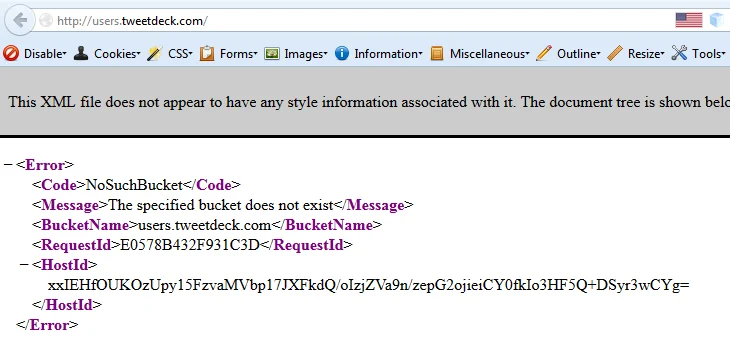
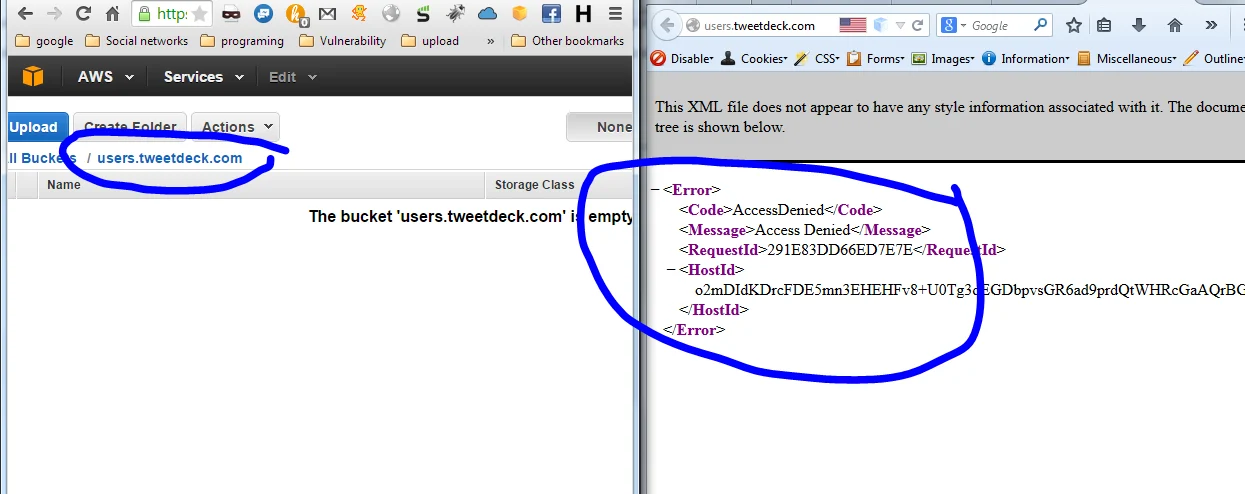
What the report shows
The researcher reported a subdomain takeover on users.tweetdeck.com, a host under the TweetDeck domain. The report opens by saying it is urgent and that it is the same issue as report #32825, so the same class of problem had already been raised before.
The finding is stated in one paragraph: the subdomain was pointing to AWS S3, but no bucket was connected to it. Because the DNS record still pointed the name at S3 while no bucket was connected to it, anyone who could create a bucket with the matching name could claim it and serve content from the subdomain. The researcher's own words are that an attacker "can claim the domain and takeover the full subdomain".
The researcher asked the team to fix it as soon as possible and offered further information. No request, payload, DNS query or command is included in the report, and no response from the provider is quoted. The report does not describe how the dangling record was discovered.
Two screenshots are attached as evidence.
The report does not state a severity rating or a CVSS score. The report itself contains no detail on the fix that was applied.
Root cause
The likely cause is a dangling DNS record: the record for users.tweetdeck.com still pointed at S3, but no bucket was connected to it. S3 answers requests for a bucket that does not exist with a not-found response rather than refusing the name outright, so the name stays available for anyone to register. Once an attacker creates a bucket with that exact name, they can claim the subdomain.
Impact
If the bucket name is claimed, the attacker controls everything served from users.tweetdeck.com. In the report's framing that is a full takeover of the subdomain. The practical consequences depend on how the host is used: content hosted there inherits the trust of the parent domain, and any cookie scoped to the parent domain can be exposed to it. The report does not enumerate these consequences; it only asserts the takeover itself.
How this kind of bug works
Subdomain takeover is a mismatch between DNS and the service a record points to. Many products let customers point a hostname at a third-party service: object storage, static site hosting, a CDN, a SaaS platform, a function runtime. The provider identifies the tenant by the hostname in the request, so the hostname is effectively a claim on a name inside the provider's namespace.
When the customer stops using the service but leaves the DNS record in place, the name becomes unclaimed. Providers differ in what they do with unclaimed names. Some return a distinctive error page or status code; some let any account register the name. If the provider allows registration, the first person to create a resource with that name receives all traffic for the hostname.
The defences are on both sides. On the customer side, DNS records must be removed in the same change that deletes the backing resource, and decommissioning checklists should include a sweep for records pointing at third-party services. On the provider side, names can be reserved after deletion, or the service can refuse to serve a hostname that is not verified by the current owner. Certificate transparency monitoring and periodic DNS inventory help catch records that outlive their targets.
How to test for it
- Build an inventory of hostnames for the target, from certificate transparency logs, passive DNS and the organisation's own published lists.
- Resolve each hostname and record the CNAME chain. Look for records pointing at third-party platforms: object storage endpoints, static hosting, CDN edges, marketing and support SaaS, and application platforms.
- For each candidate, request the hostname over HTTP and HTTPS and read the response body and status code carefully. A provider-specific "no such bucket" or "repository not found" page, or a hostname that resolves but serves a generic provider error, is the signal.
- Confirm that the name is genuinely unclaimed by attempting to register it in your own account on the provider, using a name that matches the record exactly. Stop at the point of confirmation: do not publish content, do not intercept traffic, and remove the resource immediately afterwards.
- Record the evidence: the DNS answer, the HTTP response, and the provider's confirmation that the name was available.
Common false positives: a record that points at a provider but whose name is still held by the organisation under a different account; a wildcard DNS entry that makes every random label resolve; a provider error page served for a name that is reserved and cannot be registered; and a host that resolves but is protected by an access policy that would also block an attacker. Verify availability before reporting.
How it is fixed
The standard fix is to remove the dangling DNS record, or to repoint it at a resource the organisation controls. If the hostname is still needed, recreate the backing resource and keep it, or move the hostname to a service that requires ownership verification. After the change, confirm that the hostname no longer resolves to the third-party endpoint, and add the hostname to monitoring so a future dangling record is caught quickly. Where the provider supports it, reserve the name so it cannot be claimed by another account.
Hunting notes
This bug class hides wherever DNS and cloud resources are managed by different teams or tools: staging and demo hostnames, marketing landing pages, help-centre and status subdomains, and hosts left behind after a product is retired. Old certificate transparency entries and passive DNS data are good starting points because they surface names that may no longer appear in current documentation.
Useful recon signals are CNAMEs into object storage and static hosting providers, hostnames that return provider error pages, and subdomains that resolve but serve nothing. When you report, show the DNS chain, the provider response proving the name is unclaimed, and a clear statement of what an attacker could serve from the host. Keep the proof minimal and non-destructive: claiming the name briefly and releasing it is enough, and it keeps the report inside the program's rules.
What happened, in plain words
A security researcher found a problem with a web address owned by Twitter: users.tweetdeck.com. TweetDeck was a Twitter product, and this address sat under its domain. The researcher wrote to the Twitter security team saying the issue was urgent and that it was the same problem as an earlier report, #32825. So this kind of issue had already been raised once before.
The problem is explained in a single paragraph. The subdomain was pointing to AWS S3, but no bucket was connected to it. To understand that, you need two ideas.
A subdomain is a name that sits in front of a main domain. If example.com is the main address, then shop.example.com and help.example.com are subdomains. They are like different departments inside the same building: the building has one street address, but each department has its own door.
AWS S3 is Amazon's file storage service. People and companies use it to store files, and those files can be served to anyone on the internet. Each storage area is called a bucket, and every bucket has a name that must be unique across the whole service. A company can point one of its subdomains at a bucket, so that visitors to the subdomain see the files inside it.
Here, the subdomain still pointed at S3, but no bucket was connected to it. The researcher's point was that anyone could now create a bucket with that exact name and take over the subdomain. In the researcher's own words, an attacker "can claim the domain and takeover the full subdomain".
The researcher asked the team to fix it as soon as possible and offered to provide more information if needed. The report contains no request, no command, no DNS lookup and no reply from the provider. It also does not explain how the researcher found the dangling record.
Two screenshots were attached as evidence.
The report gives no severity rating and no CVSS score. The report says nothing about how the issue was fixed.
In general, how this kind of bug works
This is called subdomain takeover. It happens when a company's DNS record still points at a third-party service, but the company no longer owns the thing on the other end.
DNS is the internet's address book. When you type a name into your browser, DNS translates it into the location of a server. One common type of DNS entry is a CNAME, which is a bit like a mail forwarding note: it says "this name is really handled over there". A company might set a CNAME so that shop.example.com is handled by a storage provider.
Many services identify their customers by the name in the request. If you ask for a particular bucket name, the provider looks for a bucket with that name and serves it. So the name itself is the claim on the resource. When the company deletes the bucket but leaves the DNS record in place, the name becomes free. Some providers answer requests for a missing name with a "not found" page instead of refusing outright, which means anyone can register that name. The first person to create a resource with the matching name receives all the traffic for the subdomain.
Why it matters
If an attacker claims the name, they control everything served from that subdomain. Content hosted there inherits the trust of the parent domain, because visitors see a familiar address. Any cookie set for the parent domain can also be exposed to the subdomain. A cookie is a small piece of data a website stores in your browser, often to remember that you are logged in, so this can matter a great deal. The report itself only asserts the takeover; it does not list these consequences.
How to test for it
- Build a list of the organisation's hostnames, using public sources such as certificate transparency logs (public records of issued security certificates), passive DNS data and the organisation's own published lists.
- Look up each hostname and record where it points. Flag any that point at third-party platforms: storage, static hosting, content delivery networks, marketing and support tools, and application platforms.
- Request each candidate over HTTP and HTTPS and read the response carefully. A provider-specific "no such bucket" page, or a hostname that resolves but serves a generic provider error, is the signal.
- Confirm the name is genuinely free by trying to register it in your own account, using a name that matches the record exactly. Stop at confirmation: do not publish content, do not intercept traffic, and remove the resource immediately afterwards.
- Keep the evidence: the DNS answer, the HTTP response and the provider's confirmation that the name was available.
Watch for false positives. A record may point at a provider while the name is still held by the organisation under another account. A wildcard DNS entry can make every random name resolve. A provider error page may be served for a name that is reserved and cannot be registered. And a host may resolve but be protected by an access policy that would also block an attacker. Verify availability before reporting.
How it is fixed
The standard fix is to remove the dangling DNS record, or to repoint it at a resource the organisation controls. If the hostname is still needed, recreate the backing resource and keep it, or move the hostname to a service that requires proof of ownership. Afterwards, confirm the hostname no longer resolves to the third-party endpoint, and add it to monitoring so a future dangling record is caught quickly. Where the provider supports it, reserve the name so no other account can claim it.
Where to look
This bug class hides wherever DNS and cloud resources are managed by different teams or tools: staging and demo hostnames, marketing landing pages, help-centre and status subdomains, and hosts left behind after a product is retired. Old certificate transparency entries and passive DNS data are good starting points, because they surface names that may no longer appear in current documentation.
Useful signals are CNAMEs into storage and static hosting providers, hostnames that return provider error pages, and subdomains that resolve but serve nothing. When you report, show the DNS chain, the provider response proving the name is unclaimed, and a clear statement of what an attacker could serve from the host. Keep the proof minimal and non-destructive: claiming the name briefly and releasing it is enough, and it keeps the report inside the programme's rules.
Glossary
- Subdomain: a name placed in front of a main domain, such as
usersinusers.tweetdeck.com, used to separate parts of a site. - DNS: the internet's address book, translating names into the locations of servers.
- CNAME: a DNS record that says one name is handled by another name, like a forwarding note.
- AWS S3: Amazon's file storage service, where files are kept in containers called buckets.
- Bucket: a named storage area in S3; bucket names must be unique across the whole service.
- Subdomain takeover: taking control of a subdomain because its DNS record points at a resource nobody owns any more.
- Dangling DNS record: a DNS entry that still points at a service or resource that has been deleted or renamed.
- Cookie: a small piece of data a website stores in your browser, often used to keep you logged in.
- HTTP and HTTPS: the protocols browsers use to request and receive web pages; HTTPS is the encrypted version.
- Status code: a number a server returns with a response, such as 404 for "not found".
- Certificate transparency logs: public records of security certificates issued for websites, useful for finding hostnames.
- Passive DNS: historical records of which names resolved to which addresses.
- Wildcard DNS: a DNS setting that makes every possible name under a domain resolve, even ones nobody created.
- CVSS: a standard scoring system for rating the severity of a security issue.
- Bounty: a payment made by an organisation to a researcher who reports a valid security issue.





