Content Spoofing
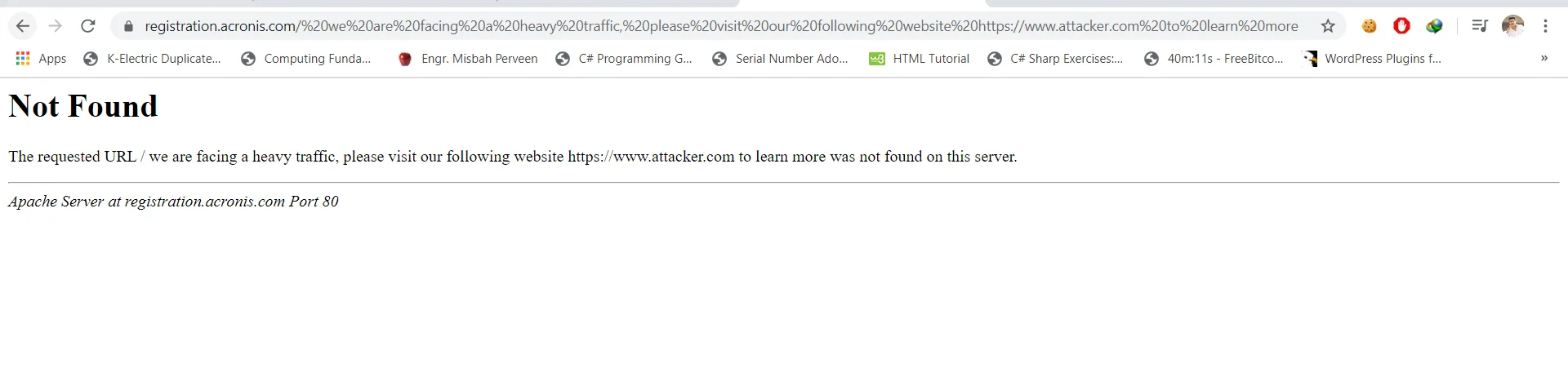
A URL path on the vendor's registration domain was reflected back into the page, letting an attacker place arbitrary text on a trusted page. An attacker could use this to show a fake message directing victims to a malicious site.
 Originally disclosed on HackerOne
- Triaged in 2 hours
- Fixed in 4 months
- Disclosed after 4 months
Vulnerability: Content Spoofing or Text Injection
Description: This vulnerability will reflect text on to the web page which is used to scam a victim to visit or send information to a malicious website. Because it is inside the domain and trusted web page, there is chances of scam. Open the Url and you will see it.
Reference: https://owasp.org/www-community/attacks/Content_Spoofing
Screenshot is attached as a POC.
Impact
It is used to scam victim and result will be dangerous.
Attachments
Not written yet. The AI write-up for this report has not been written yet. The Original tab links to the source.
How it worked
Root cause
Likely the application echoes the requested URL path into the response page without sanitising or encoding it.
Impact
An attacker could display misleading text on a trusted domain to trick victims into visiting a malicious site, though the report gives no evidence beyond a screenshot.
What the attacker needed
Victim opens a crafted link
Explained by bugbounty.wiki with AI from the original and checked against quotes from it; it can still be wrong. Read the original before relying on a detail.
Not written yet. The AI write-up for this report has not been written yet. The Original tab links to the source.
Some websites copy part of the address you typed into the page they show you. If they do not clean that text first, an attacker can put their own words there. Because the page sits on the real company's domain, victims may trust the fake message and follow a link to a scam site.
What is XSS?
Script an attacker supplies runs in another user's browser, on the target's origin, with that user's session.





