Missing rate limit for current password field (Password Change) Account Takeover
The password change form did not limit how many times the current password could be guessed. An attacker who already had access to a logged-in session could brute force the current password and then set a new one, taking over the account.
 Originally disclosed on HackerOne
- Triaged in 9 days
- Fixed in 6 months
- Paid in 15 days
- Disclosed after 6 months
Vulnerability: Missing Rate Limit for Current Password field (Password Change) Account Takeover
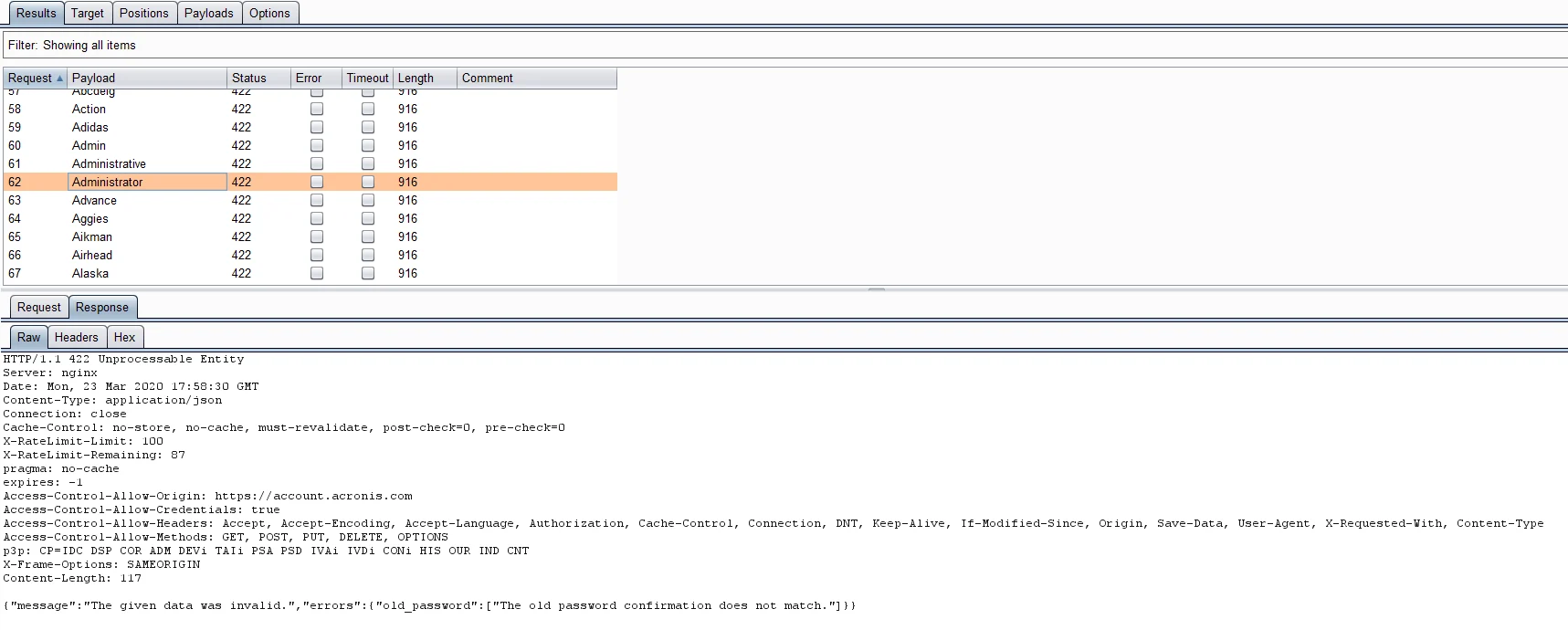
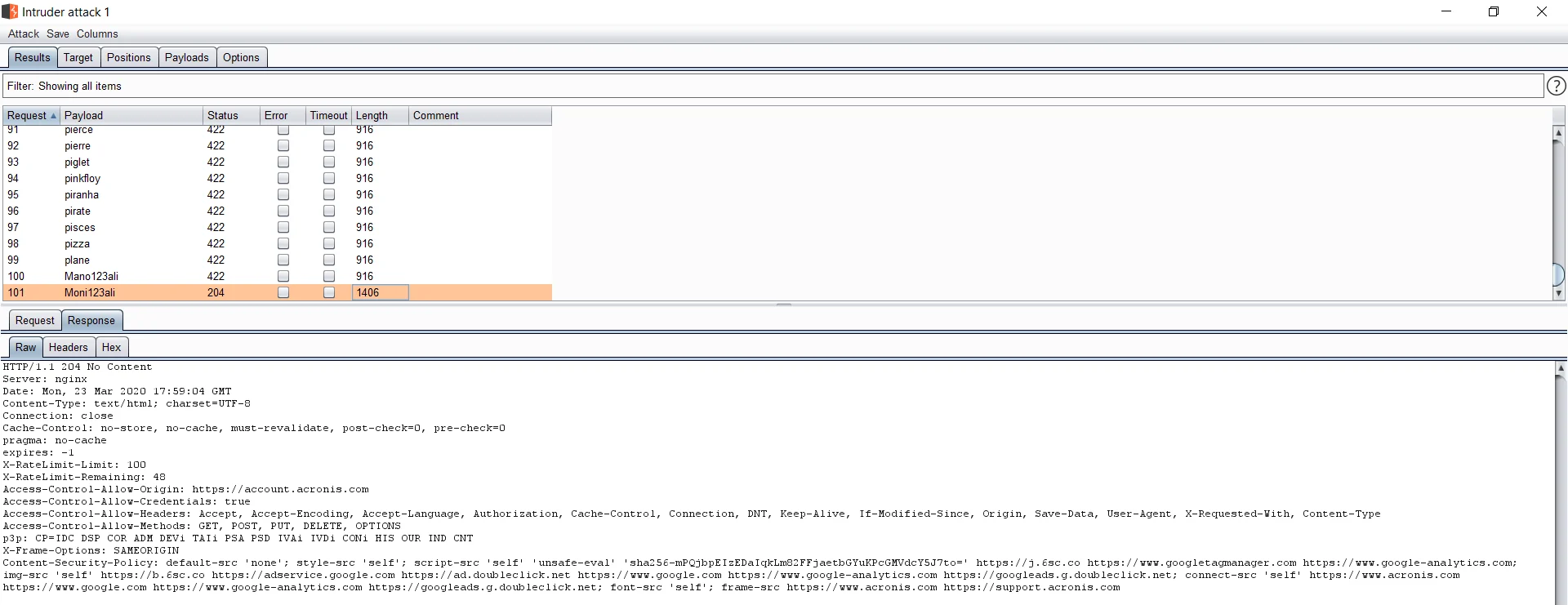
Steps to reproduce the bug: 1)Go to Profile > Password. Enter any (wrong password) In current password filed. 2)Now enter the new password and Turn the Intercept ON. 3)Capture the request & Send the request to Intruder and add a Payload Marker on the current password value. 4)Add the payload for the password field having a list of more than 100 password or more for test and start attack. BOOM!
Screen shot is attached as a proof of concept.
Impact
There is no rate limit enabled for "Current Password" field on changing password on your website. A malicious minded user can continually tries to brute force an account password. If user forget to logout account in some public computer then attacker is able to know the correct password, and also able to change the password to new one by inputting large number of payloads.
Attachments
Not written yet. The AI write-up for this report has not been written yet. The Original tab links to the source.
How it worked
Root cause
Likely the password change endpoint accepted unlimited attempts on the current password field without rate limiting, lockout or throttling.
Impact
An attacker with access to a logged-in session could brute force the current password and change it, taking over the account.
What the attacker needed
Access to a logged-in session
How it was found
- Open the profile password page and enter a wrong value in the current password field.
- Enter a new password and turn on the intercepting proxy.
- Send the captured request to the intruder tool and mark the current password value as the payload position.
- Load a list of over a hundred candidate passwords and start the attack.
Explained by bugbounty.wiki with AI from the original and checked against quotes from it; it can still be wrong. Read the original before relying on a detail.
Not written yet. The AI write-up for this report has not been written yet. The Original tab links to the source.
When you change your password, the site asks for your old one to prove it is you. This site let someone keep guessing that old password over and over with no slowdown or lockout. If an attacker already had your open session, they could guess the old password and then set a new one, locking you out.
What is Account takeover?
Getting into someone else's account through a flaw in sign-in, password reset, second factor, single sign-on or session handling.




