XSS in https://promo.acronis.com/
A page on the promo subdomain writes a script tag using the value of document.referrer, so an attacker who hosts a page that frames it can make the victim's browser load a script from the attacker's own domain. That lets the attacker run JavaScript in the context of the promo site, for example to show an alert or redirect the victim to a phishing page.

- Triaged in under an hour
- Fixed in 9 months
- Paid in 21 days
- Disclosed after 3.9 years
Hello,
I found DOM XSS in https://promo.acronis.com/
Open this URL https://promo.acronis.com/GL-Trial-MassTransit.html and view source.
Search for document.write and there will be 4 statements inside try/catch block.

The last statement loads script from using document.referrer. So we can host a page that loads https://promo.acronis.com/GL-Trial-MassTransit.html in iframe. So it will load the script /marketo/common.js from our domain.
Steps To Reproduce
- To create server I am using Node.js you can use static files also.. If you are using static files server make sure to create
/marketo/common.jsfile. - Create a director and copy this file F988371 in it.
- Run
npm init -y - and then
npm i expressto install exprss. - Now run
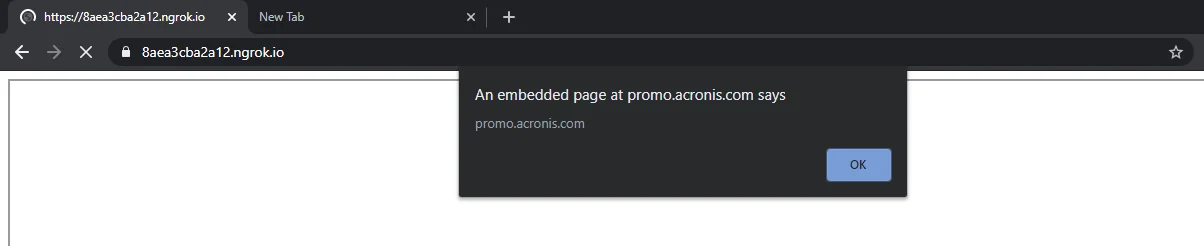
node index.jsthis will start server on 'localhost:5000' - Open http://localhost:5000 and you will see alert.
Impact
Anyone who opens this page, attacker can execute JavaScript code on their device or redirect victims to phishing websites.
Not written yet. The AI write-up for this report has not been written yet. The Original tab links to the source.
How it worked
Root cause
Likely the page passes document.referrer into a document.write call that builds a script tag, without validating or escaping the value.
Impact
Anyone who opens the attacker's page could have JavaScript executed on their device in the promo site's context, or be redirected to a phishing site.
What the attacker needed
Victim opens attacker's page; attacker hosts a script at a fixed path
How it was found
- Set up a server that serves a page framing the promo trial page and also serves a script at the path the page expects.
- Start the server locally.
- Open the attacker page in a browser.
- Observe the script from the attacker's server running and an alert appearing.
Explained by bugbounty.wiki with AI from the original and checked against quotes from it; it can still be wrong. Read the original before relying on a detail.
Not written yet. The AI write-up for this report has not been written yet. The Original tab links to the source.
Some pages build parts of themselves on the fly using information the browser sends along, such as the address of the page that linked here (the referrer). If that value is trusted without checking, an attacker can arrange for their own address to be used, and the victim's browser then fetches and runs code the attacker controls. This is called cross-site scripting, or XSS: running someone else's JavaScript as if it belonged to the trusted site.
What is XSS?
Script an attacker supplies runs in another user's browser, on the target's origin, with that user's session.




