Text injection on status.algolia.com
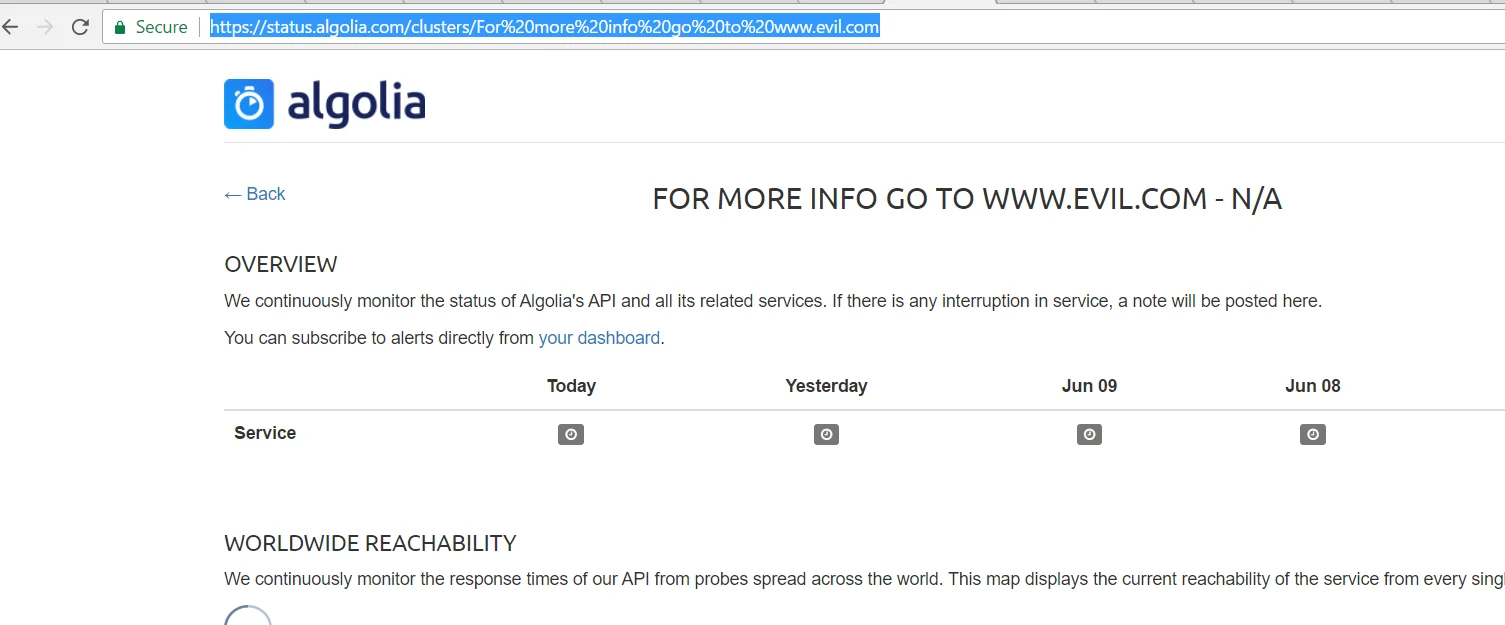
The status page reflected arbitrary text from the URL path into the page, allowing an attacker to inject misleading content. An attacker could craft a link that displays attacker-controlled text, potentially used for phishing.

- Disclosed after 2 months
Hi Algolia team!
I just found a text injection vulnerabilty in status.algolia.com/clusters . Please follow the steps below.
Vulnerable URL status.algolia.com
Steps to reproduce:
- Go to Vulnerable URL
- Add anything you want after the Vulnerable Url.
POC LIVE POC
F193293
Hope you fix it!
Thanks! Sh3r1
Attachments
Not written yet. The AI write-up for this report has not been written yet. The Original tab links to the source.
How it worked
What the attacker needed
Victim clicks a crafted link
Explained by bugbounty.wiki with AI from the original and checked against quotes from it; it can still be wrong. Read the original before relying on a detail.
Not written yet. The AI write-up for this report has not been written yet. The Original tab links to the source.
A website took part of the web address and showed it on the page without cleaning it. This let someone put their own words on the page by sharing a special link. Visitors might see fake messages and be tricked.
What is XSS?
Script an attacker supplies runs in another user's browser, on the target's origin, with that user's session.