Command Injection - CRITICISM
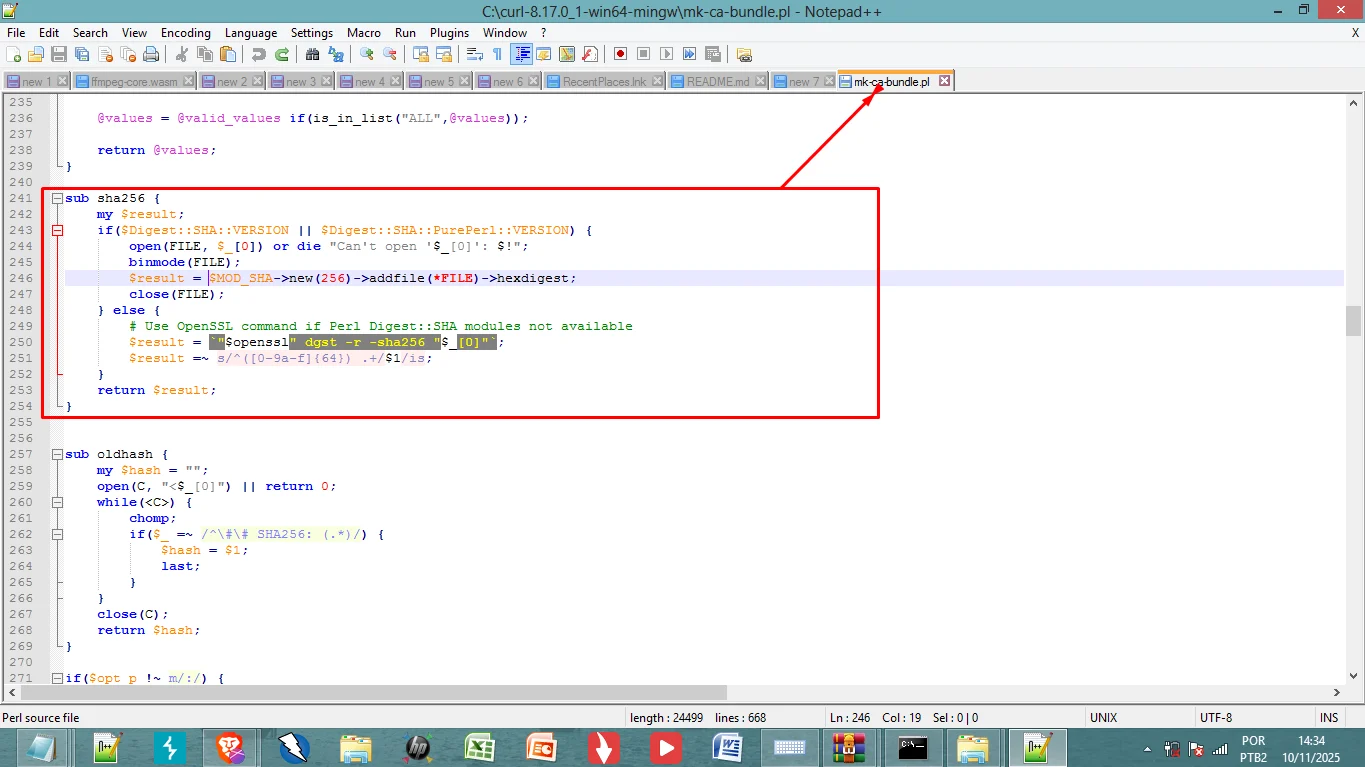
The report claims that in curl [redacted] on Windows, the mk-ca-bundle Perl script interpolates a filename directly into a shell command, allowing an attacker to execute arbitrary commands. The reporter states this could lead to extraction of confidential information.

- Disclosed after 13 hours
Description: The $openssl code in curl 8.17.0.1 allows exploitation.
Steps to reproduce:
- Extract and install curl on Windows.
- See the code in mk-ca-bundle.
Affected: curl:8.17.0.1 SO:Windows 11/10/8
Helped analized: Deep Seek
perl
$result = "$openssl" dgst -r -sha256 "$_[0]";
Problem: The $_[0] parameter is directly interpolated into the shell command.
Risk: Attack can execute arbitrary commands.
Example of exploitation: perl sha256("file.txt; rm -rf /") sha256("file.txt; cat /etc/passwd")
Best, @tomar-re
Impact
Extraction of confidential information.
Attachments
Not written yet. The AI write-up for this report has not been written yet. The Original tab links to the source.
How it worked
Impact
An attacker could execute arbitrary commands, potentially extracting confidential information.
What the attacker needed
Windows system with curl installed; Attacker can control the filename argument
How it was found
- Extract and install curl on Windows.
- Inspect the code in mk-ca-bundle.
Explained by bugbounty.wiki with AI from the original and checked against quotes from it; it can still be wrong. Read the original before relying on a detail.
Not written yet. The AI write-up for this report has not been written yet. The Original tab links to the source.
A program builds a command line by pasting in a filename without checking it. If the filename contains special characters like a semicolon, the computer may run extra commands the attacker chose. This is called command injection.
What is RCE?
Running the attacker's code on the target's servers: through command or code injection, unsafe deserialisation or template injection.



