XSS in flashmediaelement.swf (business-blog.zomato.com)
A reflected cross-site scripting flaw existed in the flashmediaelement.swf file on business-blog.zomato.com because of insecure URL sanitisation. An attacker could craft a link that runs script in a victim's browser.

- Fixed in 4 months
- Disclosed after 5 months
Hello Team
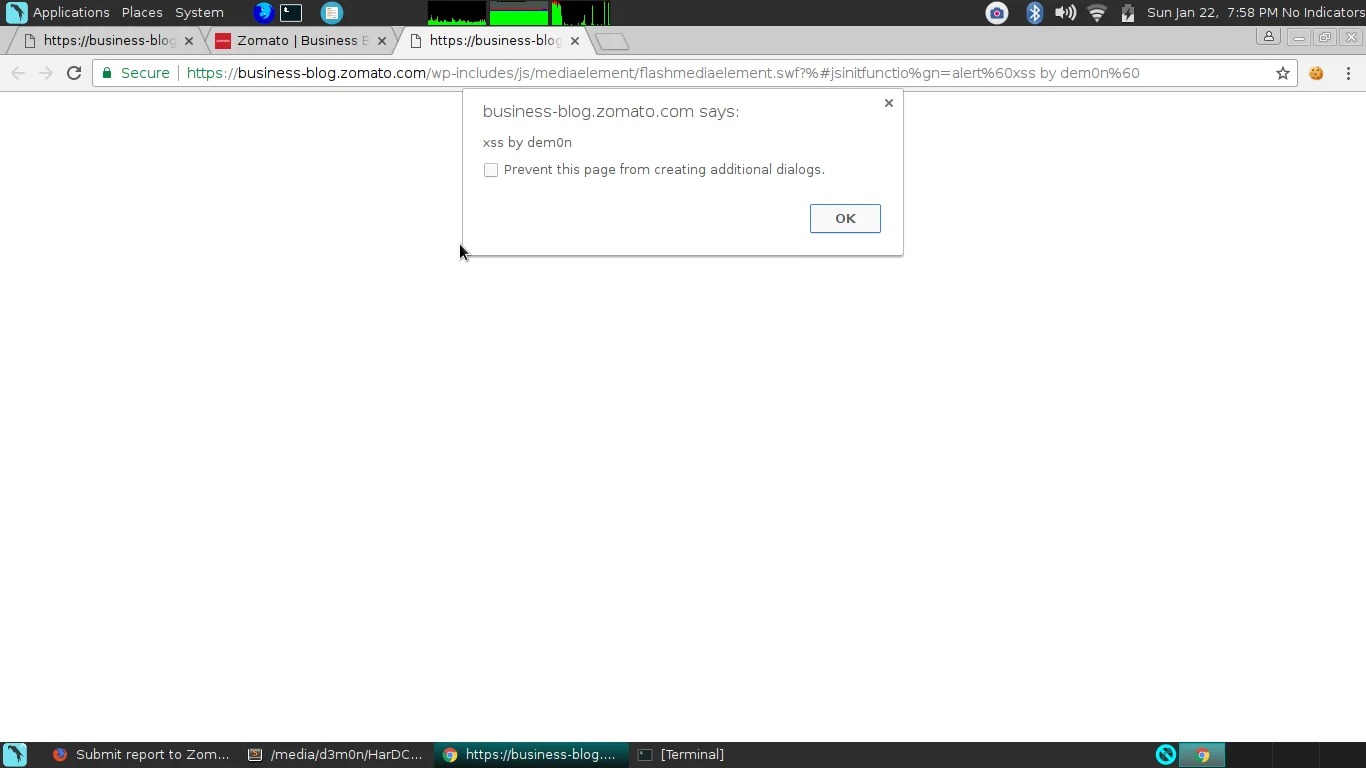
Description:- business-blog.zomato.com is vulnerable to reflected XSS that stems from an insecure URL sanitization process performed in the file flashmediaelement.swf
POC:- https://business-blog.zomato.com/wp-includes/js/mediaelement/flashmediaelement.swf?%#jsinitfunctio%gn=alert%60xss by dem0n%60
Fix:-
Update to WordPress to latest
Regards:- Santhosh
Not written yet. The AI write-up for this report has not been written yet. The Original tab links to the source.
How it worked
Root cause
Likely the Flash file failed to properly sanitise a URL parameter before using it, allowing script injection.
Impact
An attacker could run script in a victim's browser via a crafted link.
What the attacker needed
Victim clicks a crafted link
The fix
The report recommends updating WordPress to the latest version.
Explained by bugbounty.wiki with AI from the original and checked against quotes from it; it can still be wrong. Read the original before relying on a detail.
Not written yet. The AI write-up for this report has not been written yet. The Original tab links to the source.
Cross-site scripting (XSS) is when a website takes something from a link and puts it into the page without cleaning it, so an attacker can make the page run their own code. Here a Flash file on the site did not clean up part of the web address, so a specially crafted link could run a script in the visitor's browser.
What is XSS?
Script an attacker supplies runs in another user's browser, on the target's origin, with that user's session.








