Dangling CNAME/Orphaned CNAME leads P2 on Google VRP
A subdomain of a Google product had a dangling CNAME pointing to a service that had been sold to another company, creating a potential subdomain takeover. An attacker could exploit this to disrupt service or abuse the subdomain.

As-salamu alaykum everyone, It’s me Mohd Hasan Ansari aka Jerry1319 a you guys knows me well via mine handles ( Reality : Nobody cares 😒) .
The full write-up lives on its author's site
It belongs to its author, so we link to it rather than copy it. The other two tabs are our own rewrites, checked against it.
Context
This is a write-up of a subdomain takeover finding on a Google product, reported through Google's vulnerability reward programme and accepted at P2. The researcher is Mohd Hasan Ansari, known as Jerry1319 (@Mdhsan19). The body of the write-up describes the target only under a placeholder name, Jerry.com, and asks readers to substitute their own redacted name. The product involved is described as an ASM product, that is, an attack surface management product, and the researcher notes that access to it is restricted to paid users only.
The issue class is a dangling CNAME, also called an orphaned CNAME: a DNS record that still points at a service the original owner no longer controls.
Setup
The researcher had been testing Google for a long time. The main obstacle was access: the ASM product could not be reached through a normal login because it is available to paid users only, so the researcher looked for another way in.
The first tool used was subzy, a subdomain takeover scanner, run against subdomains of the target. It produced no hits, because every CNAME it examined resolved to a valid service. The finding therefore came from manual work rather than from tooling.
Finding it
With no way to log in to the ASM product directly, the researcher turned to the product's public presence and opened the YouTube channel of Jerry.com, watching the videos published there. The description of one of those videos contained a link to a subdomain. Opening the link returned a strange error.
Checking the DNS for that subdomain showed a CNAME pointing to a service that Jerry.com had previously owned. In 2021 the product and its name had been sold to another company. The record had never been updated, so the subdomain still pointed at the old product, now owned by a different organisation. Searching for this pattern on the internet led the researcher to the name for it: dangling CNAME or orphaned CNAME.
The researcher's own definition, as given in the write-up: if a service or product previously owned by a company has since been sold to another company, and the developer and auditor forget to change the CNAME to a valid DNS target, so that it still points at the old product, that is a dangling CNAME or orphaned CNAME issue.
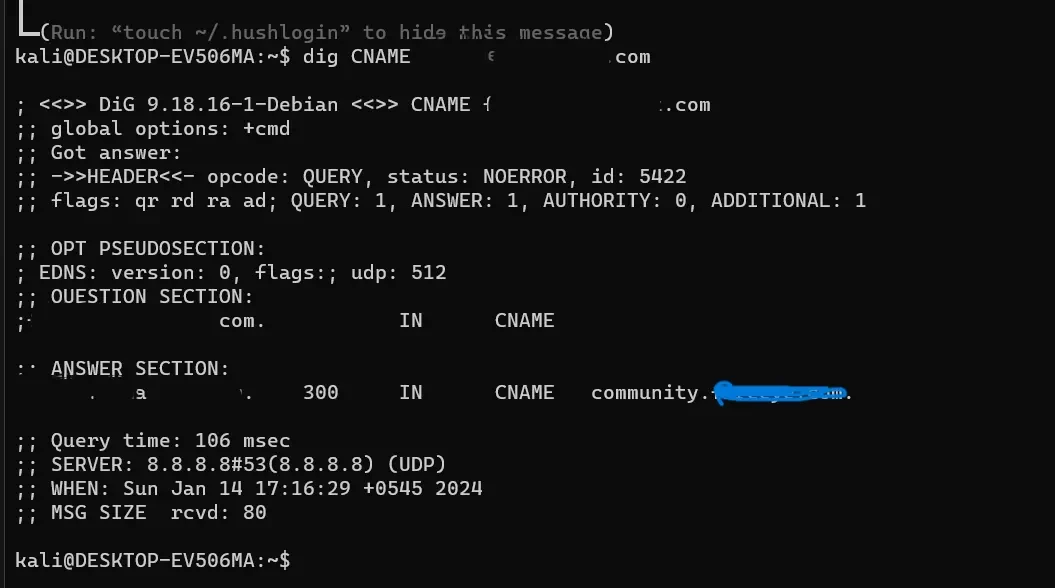
The image is captioned "CNAME DANGLING" and illustrates the dangling record described above.
In this case Jerry.com was pointing at another product that was not owned by Google. The researcher frames the consequence as service disruption for Google plus potential exploitation of the subdomain through the company that had bought the product.
Exploitation
The write-up does not include the subdomain, the CNAME target, the error page, or any request or response. It describes the sequence at a high level only.
Step 1: Look for an entry point without paid access
Because the ASM product is restricted to paid users, the researcher searched for public material belonging to the product instead of trying to authenticate.
Step 2: Mine the public material for hostnames
The YouTube channel of Jerry.com was reviewed video by video. A subdomain link appeared in the description of one video.
Step 3: Visit the subdomain and note the error
Opening the link produced a weird error rather than the expected application. An error of this kind on a hostname that is supposed to serve a product is the signal to inspect DNS.
Step 4: Resolve the record
A CNAME lookup on the subdomain showed it pointing at a service that had belonged to Jerry.com before the 2021 sale of the product and name to another company. The record had not been changed since.
Step 5: Confirm the class of issue
Searching for the observed behaviour identified it as a dangling or orphaned CNAME. The researcher then confirmed the situation before writing the report, which was submitted to Google with an attack scenario and was accepted.
Root cause
When the product and its name were sold in 2021, the DNS record for the subdomain was left pointing at the old service. The write-up attributes this to the developer and auditor forgetting to change the CNAME to a valid DNS target. The record remained valid, which is why subzy found nothing: every CNAME it examined was valid, but the target was now controlled by a different company. The ownership of the target had changed, not its validity, so automated takeover checks had no reason to flag it.
Impact
The researcher lists the impact as service disruption, potential subdomain abuse and takeover, and reputational damage to the company. The takeover path described is through the company that bought the product: whoever now owns the old service sits at the other end of a record that Google still publishes. The write-up does not demonstrate an actual takeover, and the impact is stated in terms of potential.
Fix
The write-up does not say what remediation was applied.
Variants to test
- Product documentation and media channels. Read video descriptions, blog posts, changelogs and support articles for hostnames that are not linked from the main site. A positive result is a hostname that resolves but returns an error or a default page.
- Records left over from divestments. For any company that has sold a product or brand, resolve hostnames under the old brand and check whether their CNAME targets belong to the acquirer or to a third party. A positive result is a CNAME whose target is controlled by an organisation other than the record owner.
- Scanner misses on valid targets. Run a takeover scanner, then manually resolve every CNAME it reports as valid and ask who owns the target today. A positive result is a live target whose ownership has changed since the record was created.
- Error pages on forgotten hosts. Collect hostnames that return unusual errors and trace each one's DNS chain. A positive result is an error caused by a backend the current owner no longer administers.
Closing note on reporting
The researcher's tip for Google reports: when the issue is not very technical or is a business logic issue, add an attack scenario explaining every part of it, because this increases the chance of acceptance at P2.
The second image sits with that tip at the end of the write-up.
What happened, in plain words
A security researcher found that a web address belonging to Google still pointed, behind the scenes, at a service that Google no longer owned. The service had been sold to another company years earlier, but the pointer had never been updated. The researcher warned that whoever now controls that old service could potentially abuse or take over the Google subdomain. The researcher reported it through Google's bug bounty programme, and it was accepted at P2, a severity level in Google's reward scheme. This article walks through how the finding was made, step by step, for someone who has never done security testing before.
Background: the product and the problem
The target was a Google product described as an ASM product. ASM stands for attack surface management: software that helps a company keep track of all its internet-facing systems, so it can see what an attacker might see. The researcher notes that this product is only accessible to paid users, so there was no way to log in and explore it directly.
The issue class is a dangling CNAME, also called an orphaned CNAME. To understand it, you need to know what a CNAME is.
DNS and CNAMEs in plain terms
Every time you type a web address into your browser, your computer asks a directory service called DNS (Domain Name System) to translate that human-friendly name into the numeric address of a server. Think of DNS as a phone book: you look up a name and get a number.
A CNAME (Canonical Name) record is a special entry in that phone book that says "this name is just another name for that other name". For example, shop.example.com might be a CNAME pointing to example-shop.hosting-provider.com. When your browser asks for shop.example.com, DNS follows the pointer and returns the address of the hosting provider's server. The website owner does not have to manage the server's numeric address; the hosting provider does.
A dangling CNAME is a CNAME record that still points at a service the original owner no longer controls. Imagine you move house but forget to cancel the forwarding address you set up with the post office. Mail sent to your old address still gets forwarded to the new place, but now the new occupants receive it. In DNS terms, if the company that owns the target service changes, whoever controls that service can receive traffic meant for the original owner.
Why this is dangerous
If an attacker gains control of the service that a dangling CNAME points to, they can serve their own content on the original company's subdomain. That can be used for phishing (tricking users into entering passwords on a page that looks like it belongs to the real company), for spreading malware, or simply to damage the company's reputation. The researcher describes the impact as service disruption, potential subdomain abuse and takeover, and reputational damage.
How the researcher found it
Step 1: Trying automated tools first
The researcher started by running a tool called subzy against subdomains of the target. subzy is a subdomain takeover scanner. The tool found nothing, because every CNAME it checked was valid. The tool found nothing, because every CNAME it checked pointed to a valid, live service. This is an important point: the record was not broken in a way that automated tools detect. The target service was still running; it had simply changed ownership.
Step 2: Finding a way in without paid access
Since the ASM product required a paid account, the researcher looked for public information about the product instead. The researcher opened the product's YouTube channel and watched the videos published there. One video's description contained a link to a subdomain. This is a common technique: public material such as video descriptions, blog posts, and support articles often contains hostnames that are not linked from the main website.
Step 3: Visiting the subdomain and seeing an error
Opening the link returned a strange error instead of the expected application. An error on a hostname that is supposed to serve a product is a signal to look at the DNS. The researcher then checked the CNAME record for that subdomain.
Step 4: Checking the DNS record
The CNAME pointed to a service that the product's original owner had previously owned. In 2021, the product and its name had been sold to another company. The DNS record had never been updated, so the subdomain still pointed at the old product, now owned by a different organisation. Searching the internet for this pattern led the researcher to the term "dangling CNAME" or "orphaned CNAME".
The image is captioned "CNAME DANGLING" and illustrates the dangling record described above.
Step 5: Confirming the issue and reporting
After confirming the situation, the researcher wrote a report explaining the issue with an attack scenario and submitted it to Google. The report was accepted at P2.
What the report does not include
The write-up does not include the actual subdomain, the CNAME target, the error page, or any HTTP request or response. It describes the sequence at a high level only. This is common in public write-ups, where sensitive details are removed.
Root cause
When the product and its name were sold in 2021, the DNS record for the subdomain was left pointing at the old service. The researcher attributes this to the developer and auditor forgetting to change the CNAME to a valid DNS target. The record remained valid, which is why subzy found nothing: every CNAME it examined was valid, but the target was now controlled by a different company. The ownership of the target had changed, not its validity, so automated takeover checks had no reason to flag it.
Impact
The researcher lists the impact as service disruption, potential subdomain abuse and takeover, and reputational damage to the company. The takeover path described is through the company that bought the product: whoever now owns the old service sits at the other end of a record that Google still publishes. The write-up does not demonstrate an actual takeover, and the impact is stated in terms of potential.
Fix
The write-up does not say what remediation was applied.
Variants to test
- Product documentation and media channels. Read video descriptions, blog posts, changelogs and support articles for hostnames that are not linked from the main site. A positive result is a hostname that resolves but returns an error or a default page.
- Records left over from divestments. For any company that has sold a product or brand, resolve hostnames under the old brand and check whether their CNAME targets belong to the acquirer or to a third party. A positive result is a CNAME whose target is controlled by an organisation other than the record owner.
- Scanner misses on valid targets. Run a takeover scanner, then manually resolve every CNAME it reports as valid and ask who owns the target today. A positive result is a live target whose ownership has changed since the record was created.
- Error pages on forgotten hosts. Collect hostnames that return unusual errors and trace each one's DNS chain. A positive result is an error caused by a backend the current owner no longer administers.
Closing note on reporting
The researcher's tip for Google reports: when the issue is not very technical or is a business logic issue, add an attack scenario explaining every part of it, because this increases the chance of acceptance at P2.
The second image sits with that tip at the end of the write-up.
Glossary
- ASM (Attack Surface Management): Software that helps a company discover and monitor all its internet-facing systems, so it can identify and manage potential entry points for attackers.
- Bug bounty programme: A scheme where organisations reward security researchers for responsibly reporting vulnerabilities.
- CNAME (Canonical Name) record: A DNS record that maps one domain name to another, effectively saying "this name is an alias for that name".
- Dangling CNAME / Orphaned CNAME: A CNAME record that points to a service that is no longer controlled by the domain owner, potentially allowing someone else to take over the subdomain.
- DNS (Domain Name System): The internet's directory service that translates human-readable domain names into IP addresses.
- P2: A severity level in Google's vulnerability reward programme.
- Subdomain: A domain that is part of a larger domain, e.g.
blog.example.comis a subdomain ofexample.com. - Subdomain takeover: A vulnerability where an attacker gains control of a subdomain by claiming the service that the subdomain's DNS record points to.
subzy: A tool used to scan for subdomain takeover vulnerabilities by checking CNAME records against known vulnerable services.- Vulnerability: A weakness in a system that can be exploited to compromise its security.




