[network.informatica.com] The login form XSS via the referer value
The referer parameter on the login page was inserted into JavaScript without validation and later used for redirection, allowing an attacker to supply a javascript: URL that executes script in the victim's browser.

- Triaged in 13 days
- Fixed in 3 months
- Disclosed after 5 months
The referer parameter value https://network.informatica.com/login!input.jspa?referer=%ref% is inserted into the Javascript code
if (pageURL.indexOf("login!input.jspa?referer=") > -1 || pageURL.indexOf("login.jspa?referer=") > -1) {
	finalPageURL='%ref%';
}
and used in further redirection without validation:
InfaAutoLogin.authenticateUser(response.id, finalPageURL, {
	callback:function(responseMap) {
		if(responseMap['status'] === 'success') {
			document.location = responseMap['location'];
		}
		else {
			sessionStorage.setItem('autoLoginType', responseMap['statusMsg']);
		}
	}
});
This means an attacker can put JS links there, which will cause script execution in the victim's browser:
- Log into your Informatica Network account
- Go to https://network.informatica.com/login!input.jspa?referer=javascript:alert(document.domain)
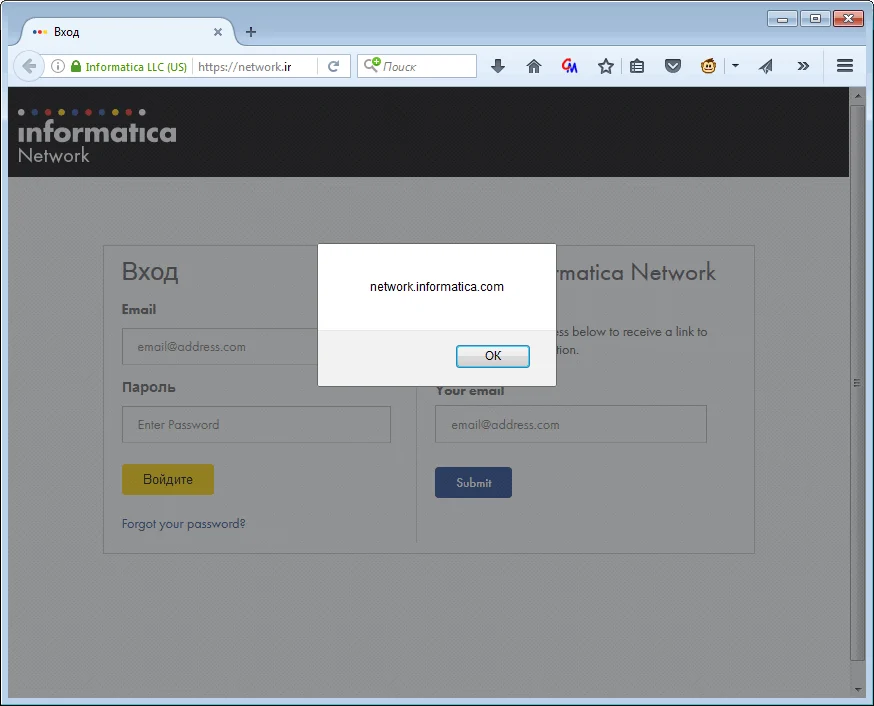
Tested with latest Firefox and Chrome.
Not written yet. The AI write-up for this report has not been written yet. The Original tab links to the source.
How it worked
Root cause
Likely the referer parameter was inserted into JavaScript and used for redirection without validating that it was a safe URL.
Impact
An attacker could execute arbitrary script in the victim's browser via a crafted link.
What the attacker needed
A free account; victim clicks a crafted link
Explained by bugbounty.wiki with AI from the original and checked against quotes from it; it can still be wrong. Read the original before relying on a detail.
Not written yet. The AI write-up for this report has not been written yet. The Original tab links to the source.
A login page took a value from the web address (the referer parameter) and put it directly into JavaScript code. Because it was not checked, someone could craft a link that makes the browser run their own script when the page loads, which is called cross-site scripting (XSS).
What is XSS?
Script an attacker supplies runs in another user's browser, on the target's origin, with that user's session.









