Bug in iOS application which could lead to unauthorised access.
The iOS app stored the user's authenticated session identifier in a preferences file that was not protected by the strongest iOS data protection class. An attacker with physical access to a locked phone could extract the file and use the session identifier to access the user's account.

- Paid in 4 days
- Disclosed after 34 days
Hi,
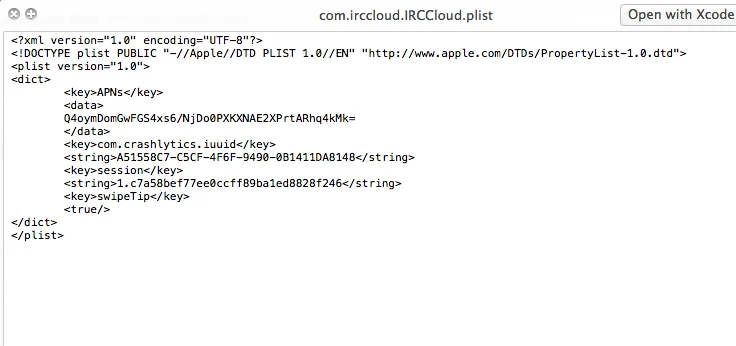
The file under the Preferences folder within the iOS application stores sensitive information: com.irccloud.IRCCloud.plist. This file stores the user's authenticated session identifier. Stealing this information would allow unauthorised access to a user's account.
The content of the file can be seen in the file attached to this report.
This file is accessible from the phone even while the phone is locked with a passcode suggesting that the application does not secure the file using the appropriate data protection class.
This can also be verified by using the tool available at the following link:
https://github.com/ciso/ios-dataprotection/
If a user is logged into the application, all that an attacker needs to do is surreptitiously take the phone and dump the file within the folder. This would work while the phone is locked and does not require the phone to be jailbroken.
I should also mention that I haven't looked through all the files, but any sensitive file with the Protection class set to anything other than NSFileProtectionComplete would be extractable from the iPhone without requiring the passcode.
If you would like to test this, you can use the ios-data protection tool mentioned above or extract the data with iExplorer (Demo version) while the phone is locked and the user logged in.
More information regarding data protection is available here:
Attachments
Not written yet. The AI write-up for this report has not been written yet. The Original tab links to the source.
How it worked
Root cause
Likely the app did not set the appropriate iOS data protection class (such as NSFileProtectionComplete) on the preferences file that stored the session identifier.
Impact
An attacker with physical access to a locked phone could extract the session identifier and gain unauthorised access to the user's account, without needing to jailbreak the phone.
What the attacker needed
Physical access to the locked phone; user logged into the app; no jailbreak required
The fix
The app should secure sensitive files with an appropriate data protection class so they cannot be read while the device is locked.
How it was found
- Log into the application on the phone.
- Lock the phone with a passcode.
- Use a tool such as ios-dataprotection or iExplorer to extract the preferences file from the locked phone.
- Read the authenticated session identifier from the extracted file.
Explained by bugbounty.wiki with AI from the original and checked against quotes from it; it can still be wrong. Read the original before relying on a detail.
Not written yet. The AI write-up for this report has not been written yet. The Original tab links to the source.
When you log into an app, it often saves a kind of digital key (a session identifier) so you don't have to log in again. This report found that the key was saved in a file that could be read even while the phone was locked. Someone who briefly took the phone could copy that file and use the key to get into the account.
What is Info disclosure?
Data the application should keep private (personal data, internal details, other users' records) reaches someone it should not.





