SSL BREACH attack (CVE-2013-3587)
The site may use HTTP compression and reflect user input and a secret in responses, which could allow a BREACH attack; an attacker who can inject chosen plaintext and measure encrypted sizes could recover parts of the secret.

- Disclosed after 11 hours
Hello security team,
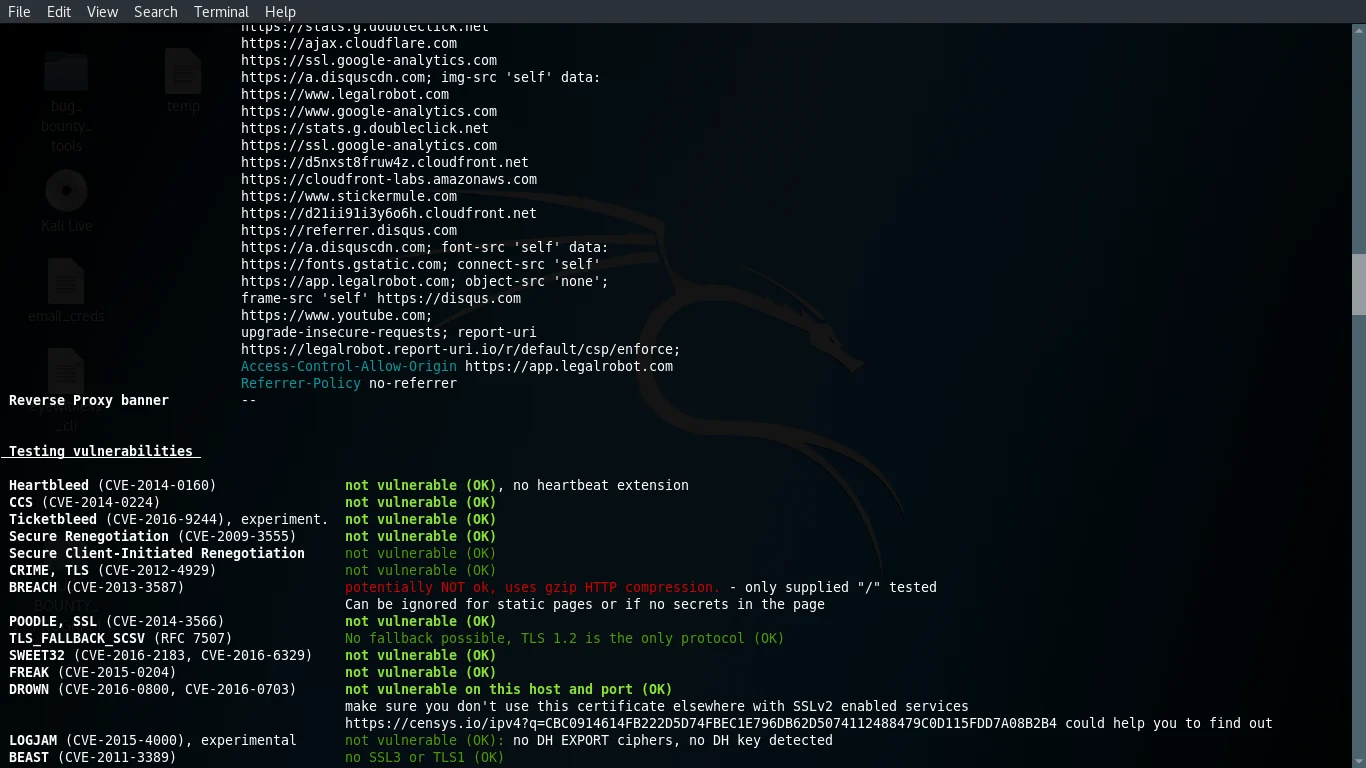
The site legalrobot.com is potentially vulnerable to the BREACH attack.
Allowing an attacker the ability to:
- Inject partial chosen plaintext into a victim's requests
- Measure the size of encrypted traffic
- can leverage information leaked by compression to recover targeted parts of the plaintext.
BREACH (Browser Reconnaissance & Exfiltration via Adaptive Compression of Hypertext) is a category of vulnerabilities and not a specific instance affecting a specific piece of software. To be vulnerable, a web application must:
Be served from a server that uses HTTP-level compression Reflect user-input in HTTP response bodies Reflect a secret (such as a CSRF token) in HTTP response bodies
Mitigations to fix this include:
- Disabling HTTP compression
- Separating secrets from user input
- Randomizing secrets per request
- Masking secrets (effectively randomizing by XORing with a random secret per request)
- Protecting vulnerable pages with CSRF
- Length hiding (by adding random number of bytes to the responses)
- Rate-limiting the requests
For more info on breach attack visit: http://www.breachattack.com/
I have attached an image "proof_of_vuln.png" for POC.
Attachments
Not written yet. The AI write-up for this report has not been written yet. The Original tab links to the source.
How it worked
Root cause
Likely the server applies HTTP-level compression to responses that contain both attacker-influenced input and a secret value, without mitigations such as separating or randomising the secret.
Impact
An attacker could potentially recover targeted parts of a secret such as a CSRF token, but the report only states the site is 'potentially' vulnerable and provides no demonstrated exploitation.
What the attacker needed
Server uses HTTP compression; responses reflect user input; responses reflect a secret; attacker can measure response sizes
The fix
The report lists mitigations such as disabling HTTP compression, separating secrets from user input, randomising or masking secrets per request, and length hiding; it does not say the issue was fixed.
Explained by bugbounty.wiki with AI from the original and checked against quotes from it; it can still be wrong. Read the original before relying on a detail.
Not written yet. The AI write-up for this report has not been written yet. The Original tab links to the source.
When a website compresses its responses, the compressed size can leak information about the content. If a secret and some text the attacker controls appear together in the same response, the attacker can guess the secret piece by piece by watching how the size changes. This report says the site may be set up in a way that allows this.
What is Crypto?
Encryption, signatures, randomness or certificate checks that do not protect what they claim to.




