Open Redirect Vulnerability in OAuth Flow Leading to Potential Phishing Attack
The OAuth flow on lichess4545.com did not validate the redirect_uri parameter, allowing an attacker to change it to an arbitrary external domain. After a user authorised the OAuth request, they could be redirected to a malicious site for phishing.

- Disclosed after 27 days
Summary:
An open redirect vulnerability exists in the OAuth flow on lichess4545.com. By manipulating the redirect_uri parameter during the OAuth authorization process with Lichess, an attacker can redirect users to an arbitrary external domain (e.g., example.com) after login. This could be exploited for phishing or other malicious purposes.
Steps To Reproduce:
- Navigate to
https://www.lichess4545.com/blitzbattle/and log into your test account - Notice that you are redirected to
https://lichess.com, and you're requested to complete OAuth after logging in. - In the OAuth URL, there is a redirect_uri parameter. Change this from
redirect_uri=https://www.lichess4545.com/auth/lichess/toredirect_uri=https://example.com/auth/lichess/ - Now Click "Authorize". This will redirect you to
https://example.com/
Supporting Material/References:
The steps with pictures are provided down below.
- Navigate to https://www.lichess4545.com/blitzbattle/` and log into your test account
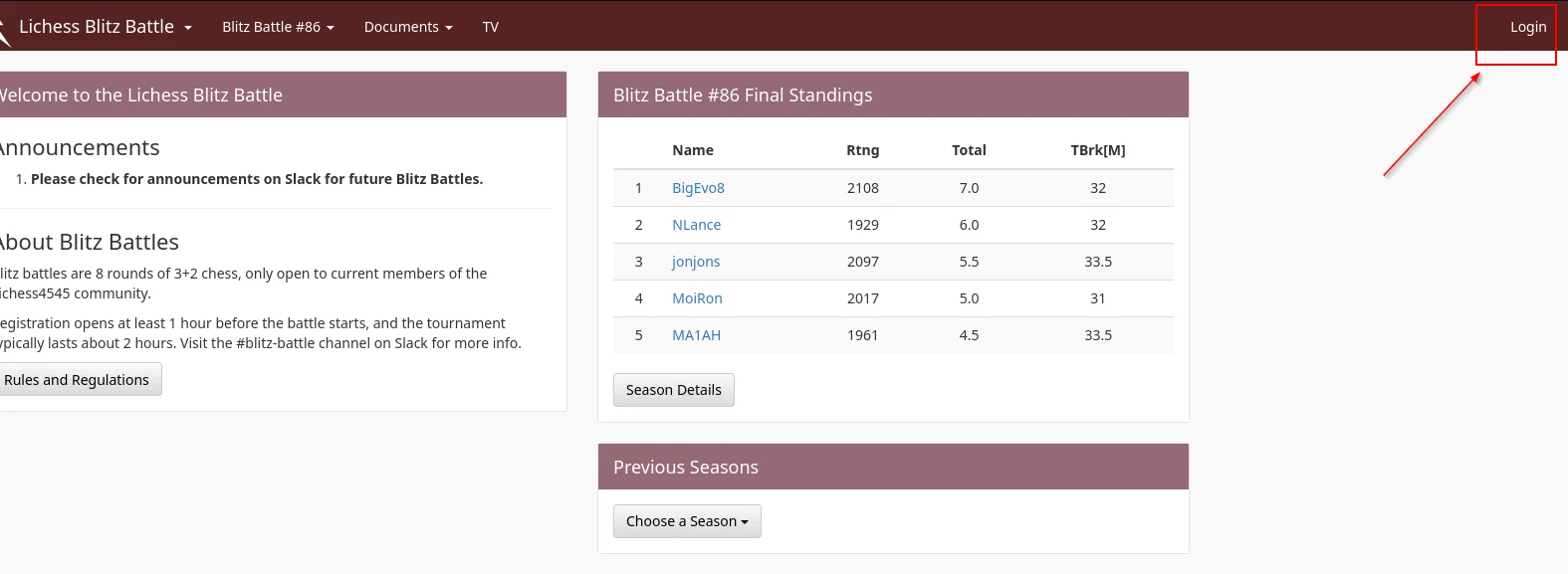
- Notice that you are redirected to
https://lichess.com, and you're requested to complete OAuth after logging in.
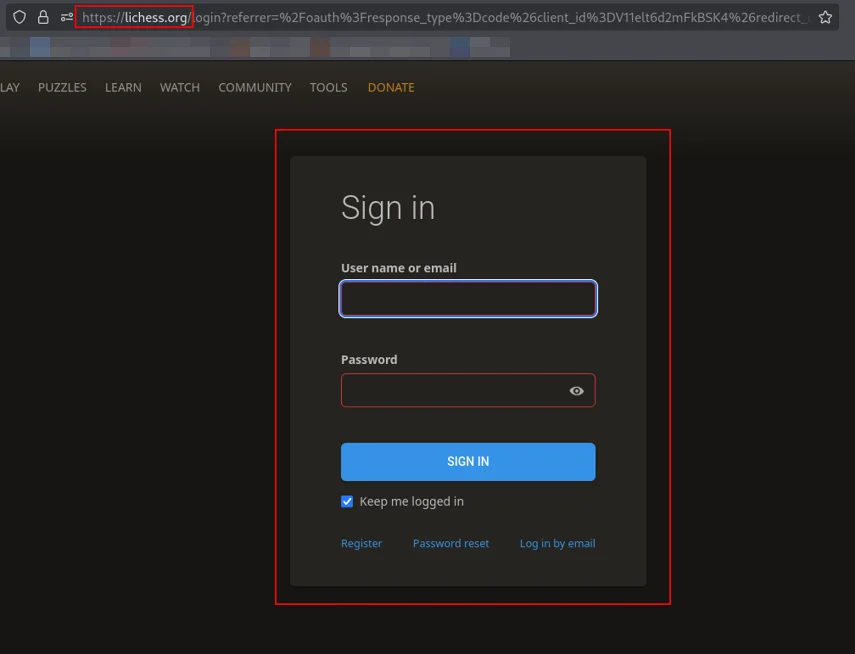
- In the OAuth URL, there is a redirect_uri parameter. Change this from
redirect_uri=https://www.lichess4545.com/auth/lichess/toredirect_uri=https://example.com/auth/lichess/

Changed to the redirect below

- Now Click "Authorize". This will redirect you to
https://example.com/
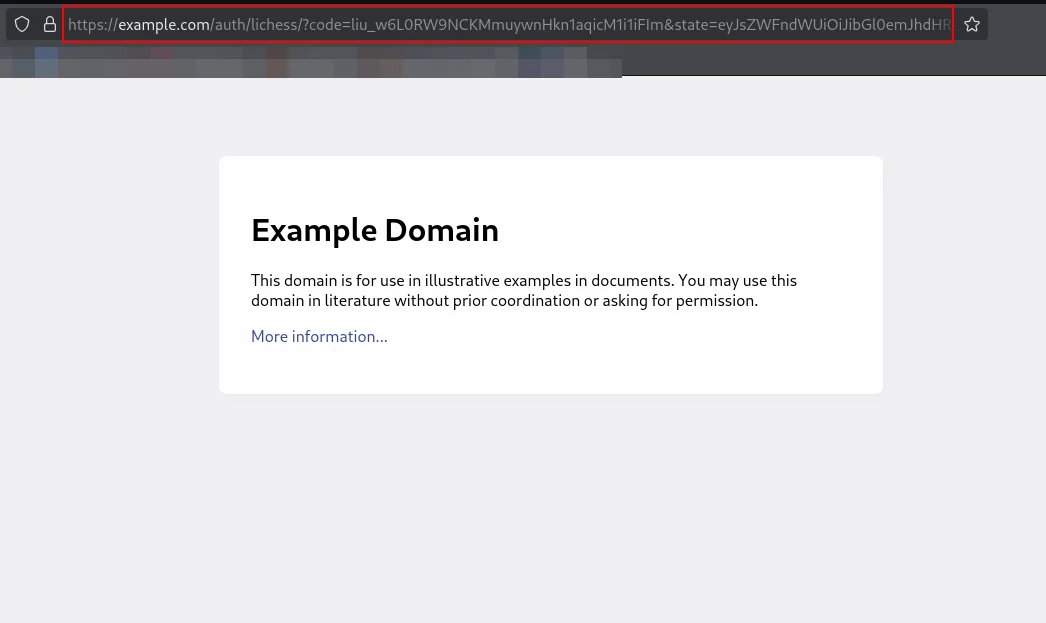
- attachments / references
Open Redirect reference from OWASP top 10: https://owasp.org/Top10/A01_2021-Broken_Access_Control/
CWE-MITRE https://cwe.mitre.org/data/definitions/601.html
We understand that this program does not offer monetary rewards for vulnerability submissions. However, we would greatly appreciate it if a Letter of Recommendation or a brief confirmation of responsible disclosure could be provided, if possible. This would be incredibly helpful as I continue to build experience in security research. Thank you for your time and consideration.
I have also seen this program does not have an option to involve a collaborator, Can you please add https://hackerone.com/lict101 to this report as a collaborator please? Thank you.
Impact
An attacker can exploit the open redirect in the OAuth redirect_uri parameter to redirect users to a malicious domain after authentication. This can be used for phishing, stealing OAuth tokens (if combined with other attacks), or tricking users into thinking they’re interacting with a trusted site. Since the redirect occurs after a legitimate login process, it significantly increases the credibility of the phishing attempt.
Not written yet. The AI write-up for this report has not been written yet. The Original tab links to the source.
How it worked
Root cause
Likely the OAuth implementation did not validate that the redirect_uri parameter matched a pre-registered URL, allowing any external domain to be used.
Impact
An attacker could redirect users to a malicious domain after authentication, which could be used for phishing, stealing OAuth tokens (if combined with other attacks), or tricking users into thinking they are interacting with a trusted site.
What the attacker needed
Victim clicks a crafted OAuth link; victim logs in and authorises
The fix
The redirect_uri parameter should be validated against a whitelist of allowed URLs.
How it was found
- Navigate to the blitzbattle page and log into a test account.
- Observe the redirect to Lichess and the OAuth prompt.
- In the OAuth URL, change the redirect_uri parameter to an external domain.
- Click 'Authorize' and observe the redirect to the external domain.
Explained by bugbounty.wiki with AI from the original and checked against quotes from it; it can still be wrong. Read the original before relying on a detail.
Not written yet. The AI write-up for this report has not been written yet. The Original tab links to the source.
When you log in to a website using another service (like Lichess), the website tells the service where to send you back afterwards. This report found that the website did not check that the return address was its own, so an attacker could change it to a fake site. That fake site could then trick you into giving away your password or other information.
What is Open redirect?
A trusted site forwards users to any address an attacker picks; rarely paid alone, often the missing link in a chain.




