Bypassing one-time checkout router page (revealing payment information)
The one-time checkout router page could be bypassed by setting a basket_key cookie to a checkout identifier and requesting a different order endpoint, which returned the completed order page. Because the identifiers were sequential and unauthenticated, an attacker could brute-force them to reveal other customers' order details, including names, addresses, emails and phone numbers.

- Triaged in 12 days
- Fixed in 12 days
- Paid in 12 days
- Disclosed after 8 months
Description:
When user submits for a checkout, the checkout router page /checkout-router/[ID]/ is accessible only once, which can be bypassed by crafting the checkout [ID] in cookie basket_key send to the page /new/checkout/order/. combining with brute-force attack, if the ID is valid a result page shown from any user that made the payment. this disclosure contains items ordered, prices, customer name, billing address, email address, phone number... This attack require no authentications, and no rate-limit in brute-forcing checkout [ID]
Step to reproduce:
- Go to https://www.lyst.com/cart/
- Assuming your shopping bag is not empty, click "checkout securely" or https://www.lyst.com/cart/verify/set-password/
- Confirming account by entering email & password.
- Upon click "checkout", use burp to intercept the request.
You will get a redirection link to the checkout router, the form of the url is: https://checkout.lyst.com/checkout-router/[ID]/
where [ID] is the 19 digit number identification - the link redirects again to https://checkout.lyst.com/new/checkout/order/ which you will provide billing information.
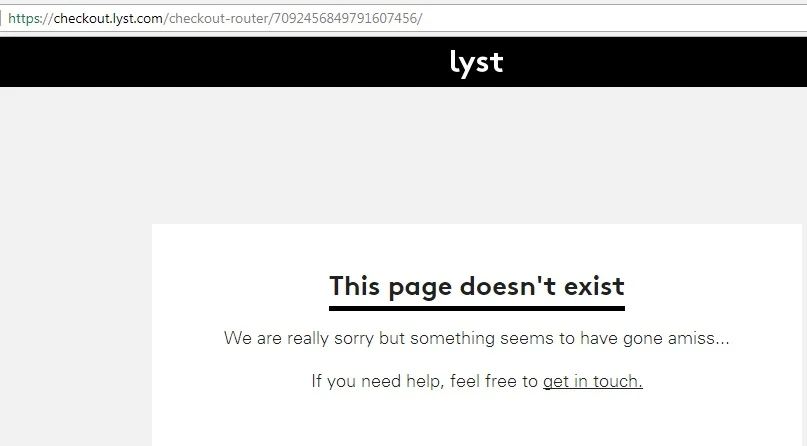
Now the point is the link https://checkout.lyst.com/checkout-router/[ID]/ is accessible only once, you will get "This page doesn't exist" message if you try to request the link. To bypass this, we can craft cookie value key basket_key=[ID] in request to the endpoint /new/checkout/order/.
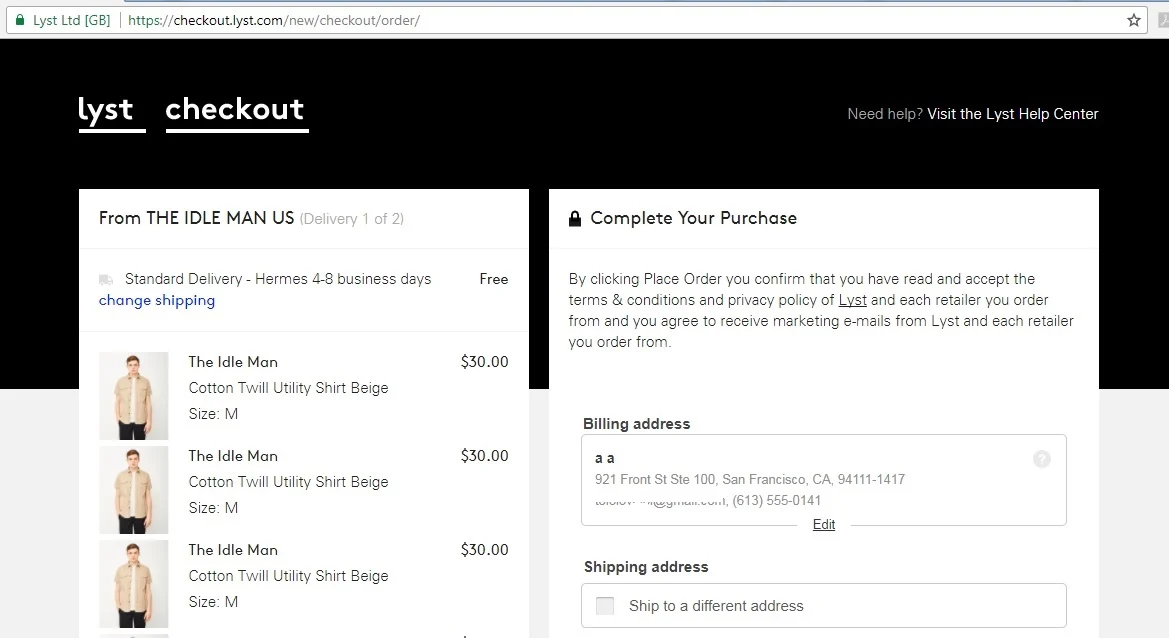
In this report I use base key 7092456849791607456 which I created from my own check out (filled with billing address).
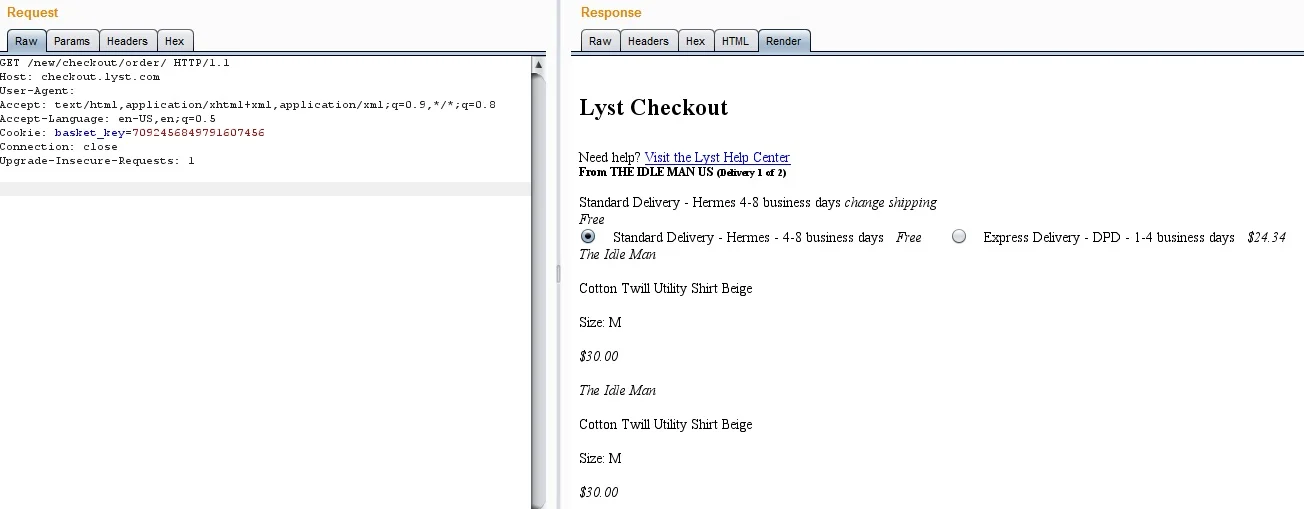
I use chrome extension EditThisCookie in the attached image, here are the same result from burp (also image attached):
GET /new/checkout/order/ HTTP/1.1 Host: checkout.lyst.com User-Agent: Accept: text/html,application/xhtml+xml,application/xml;q=0.9,/;q=0.8 Accept-Language: en-US,en;q=0.5 Cookie: basket_key=7092456849791607456 Connection: close Upgrade-Insecure-Requests: 1
Images Attached:
1.jpg: access the regular endpoint second time resulting in error 2.jpg: bypassing via cookie injection in another endpoint 3.jpg: tested in burp suite
Attachments
Not written yet. The AI write-up for this report has not been written yet. The Original tab links to the source.
How it worked
Root cause
Likely the order endpoint trusted a client-supplied basket_key cookie as proof of access to an order, without checking that the requester owned it or limiting repeated guesses.
Impact
An unauthenticated attacker could brute-force identifiers to view other customers' orders, including items, prices, names, billing addresses, emails and phone numbers, with no rate limit to slow the guessing.
What the attacker needed
No account needed; attacker can guess or brute-force IDs; no rate limit on the endpoint
How it was found
- Add an item to the cart and start checkout.
- Confirm the account by entering email and password.
- Intercept the checkout request to capture the checkout router link with its identifier.
- Request the order endpoint with a basket_key cookie set to the identifier to reach the order page.
Explained by bugbounty.wiki with AI from the original and checked against quotes from it; it can still be wrong. Read the original before relying on a detail.
Not written yet. The AI write-up for this report has not been written yet. The Original tab links to the source.
When you pay online, the site gives your order a long number so it can look it up later. This report found that anyone could put such a number into a cookie and see the finished order page, even without logging in. Since the numbers are predictable, someone could try many of them and read other people's order details.
What is IDOR?
One user can read or change another user's data, usually by changing an identifier the server trusts without checking who is asking. One of the most paid bug classes on web programs.





