Subdomain takeover of storybook.lystit.com
A subdomain had a dangling CNAME record pointing to an unclaimed S3 bucket, which the researcher was able to register. By enabling static website hosting on that bucket, the researcher could serve arbitrary content, including script, on the organisation's subdomain.

- Triaged in 1 hour
- Fixed in 22 hours
- Paid in 21 hours
- Disclosed after 22 hours
Summary:
The subdomain storybook.lystit.com had an CNAME record pointing to an unclaimed S3 bucket. This is a high severity security issue because an attacker can register the bucket on AWS and therefore can serve her own content on the subdomain. This allows for various attacks.
Description:
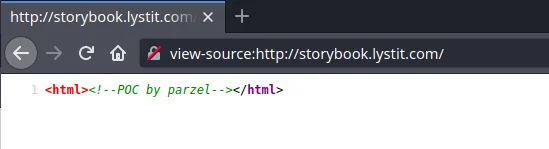
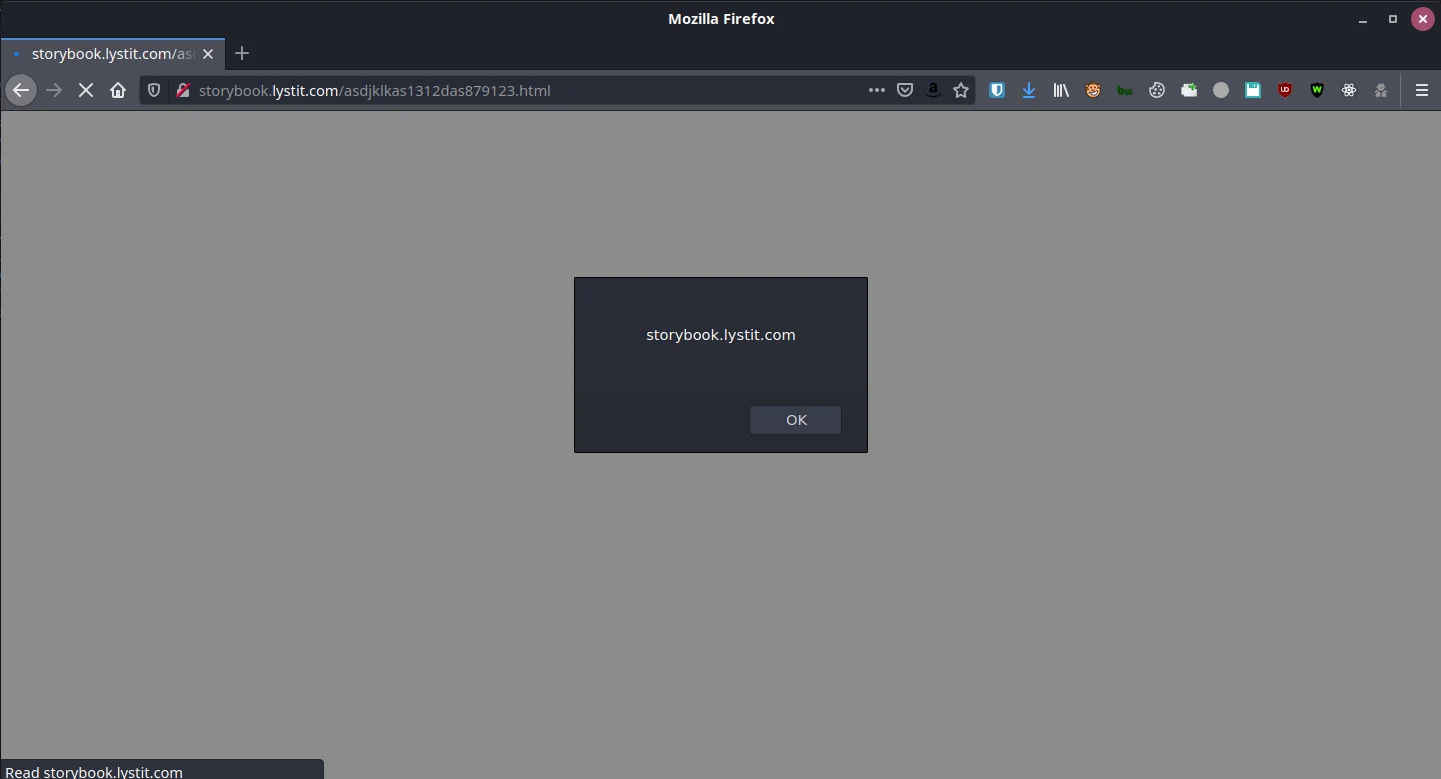
The dangling CNAME record of storybook.lystit.com is pointing to ███████ and the bucket which could not be found was: "storybook.lystit.com". I was able to register a S3 bucket with this name in AWS. After enabling static website hosting I was able to takeover the subdomain and serve arbitrary content. I am serving a POC to proof I am controlling the subdomain as well as a simple XSS POC.
POC
POC: view-source:http://storybook.lystit.com/
Stored XSS: http://storybook.lystit.com/asdjklkas1312das879123.html
Supporting Material/References:
https://www.hackerone.com/blog/Guide-Subdomain-Takeovers
Recommendations for fix
Remove the dangling CNAME record from storybook.lystit.com
Impact
The domain takeover allows various attacks. As the full domain is attacker controlled it can be used to serve XSS attacks, phishing campaigns and might be used to bypass the Same Origin Policy on other lystit.com domains and services.
Subdomain takeover of storybook.lystit.com
Context
Lyst runs its public web presence under lyst.com, and the scope of the report covers *.lyst.com. One of the subdomains in that space, storybook.lystit.com, had a CNAME record pointing to an S3 bucket. Static sites of this kind are commonly served from object storage, and in this case the subdomain was wired to Amazon S3 through a DNS CNAME record.
That is the normal arrangement: the DNS name points at a bucket, the bucket holds the generated static files, and S3 serves them as a website. The subdomain itself never hosts anything on Lyst infrastructure; it is a pointer to a bucket name.
Setup
The report does not describe any special tooling, accounts or versions. The researcher needed an AWS account able to create an S3 bucket with a chosen name and to enable static website hosting on it. No credentials, roles or access to Lyst systems were required, which is the point of the finding.
Finding it
The dangling CNAME record of storybook.lystit.com pointed to a bucket that could not be found. The bucket name that was missing was:
storybook.lystit.com
A CNAME that resolves to an S3 website endpoint whose bucket no longer exists is a classic takeover signal: the DNS record still delegates the name, but nothing on the other side claims it. Because S3 bucket names are global and first come, first served, anyone who registers the missing name inherits whatever traffic the CNAME sends there.
Exploitation
Step 1: register the missing bucket
The researcher created an S3 bucket in AWS with the name storybook.lystit.com, the same name the dangling CNAME expected. Bucket creation succeeded because no one else held the name.
Step 2: enable static website hosting
Static website hosting was enabled on the new bucket. This makes S3 serve objects over the website endpoint rather than only through the REST API, which is what a CNAME pointing at an S3 website expects.
Step 3: serve content and confirm control
With hosting enabled, the researcher was able to take over the subdomain and serve arbitrary content. Two proofs were published:
POC: view-source:http://storybook.lystit.com/
Stored XSS: http://storybook.lystit.com/asdjklkas1312das879123.html
The first URL is the root of the subdomain, viewed as source, serving the researcher's proof of concept. The second URL is a stored XSS proof of concept served from the same subdomain.
Root cause
The mistake is a DNS record that outlived the resource it referenced. storybook.lystit.com kept a CNAME pointing at an S3 bucket, and that bucket could not be found while the record stayed in place. S3 does not reserve bucket names for former owners, so the name became claimable by anyone.
The takeover only requires the ability to create a bucket with the exact name and turn on website hosting.
Impact
Because the full subdomain is attacker controlled, the report lists several attacks it enables:
- serving XSS attacks from a trusted
lystit.comname; - running phishing campaigns on the subdomain;
- possibly bypassing the Same Origin Policy on other
lystit.comdomains and services.
The Same Origin Policy point is hedged in the report ("might be used"), and it depends on how other services treat sibling subdomains, for example through cookies scoped to the parent domain or through permissive cross-origin settings.
Fix
The recommendation in the report is to remove the dangling CNAME record from storybook.lystit.com. The report does not state what change was actually made.
Variants to test
- Enumerate CNAMEs under the target's domains and resolve each one. A positive result is a CNAME pointing at an object storage or hosting endpoint (S3 website endpoint, Azure blob, GitHub Pages, Heroku and similar) where the backing resource returns a not-found response.
- For each such CNAME, check whether the referenced bucket or app name is still claimable. A positive result is being able to create the resource with the exact name and then see your own content served through the target's hostname.
- Look for subdomains that once hosted generated documentation, component libraries or marketing microsites. These are frequently built as static bundles and torn down without cleaning up DNS.
- Test whether cookies scoped to the parent domain are sent to the taken-over subdomain, and whether other subdomains make cross-origin requests to it. A positive result is session material or privileged responses reaching attacker-controlled content.
Hunting notes
This class of bug hides in DNS hygiene gaps: records left behind after a static site, documentation portal or campaign page is retired. During recon, the signal is a CNAME to a hosting provider whose target no longer resolves to a live resource, and the confirmation is cheap: register the name, enable hosting, and fetch the subdomain.
The report includes a root URL proof of concept and a stored XSS proof of concept on the taken-over subdomain. That combination, plus the explicit list of downstream attacks, is what makes the case for a high severity rating.
What happened, in plain words
Lyst is a shopping site that lives on the internet address lyst.com. Like most large sites, it uses many smaller addresses underneath that one, called subdomains, such as storybook.lystit.com. One of those subdomains, storybook.lystit.com, had a DNS record pointing at an S3 bucket.
The subdomain was pointed at a storage service run by Amazon called S3, which holds files in containers called buckets. The pointer from the subdomain to the bucket is a DNS record of type CNAME. Think of DNS as the internet's phone book: it translates a name people type into the address of the machine that answers. A CNAME is a special entry that says "for this name, look up that other name instead", like a mail forwarding note that sends letters to a new address.
The problem was that the bucket the CNAME pointed at no longer existed. The forwarding note was still in the phone book, but the destination had moved out. Because S3 bucket names are global and handed out on a first come, first served basis, anyone could create a bucket with that exact name. The researcher did exactly that, switched on the option that lets S3 serve a bucket as a website, and from then on the subdomain showed the researcher's files instead of Lyst's. That is a subdomain takeover.
Context
Lyst runs its public web presence under lyst.com, and the scope of the report covers *.lyst.com. The asterisk is a wildcard meaning "every subdomain of lyst.com". One of the subdomains in that space, storybook.lystit.com, had a CNAME record pointing to an S3 bucket. Static sites of this kind are commonly served from object storage, and in this case the subdomain was wired to Amazon S3 through a DNS CNAME record.
That is the normal arrangement: the DNS name points at a bucket, the bucket holds the generated static files, and S3 serves them as a website. The subdomain itself never hosts anything on Lyst infrastructure; it is a pointer to a bucket name.
Setup
The report does not describe any special tooling, accounts or versions. The researcher needed an AWS account able to create an S3 bucket with a chosen name and to enable static website hosting on it. No credentials, roles or access to Lyst systems were required, which is the point of the finding.
Finding it
The dangling CNAME record of storybook.lystit.com pointed to a bucket that could not be found. The bucket name that was missing was:
storybook.lystit.com
This block is the name of the missing bucket. A CNAME that resolves to an S3 website endpoint whose bucket no longer exists is a classic takeover signal: the DNS record still delegates the name, but nothing on the other side claims it. Because S3 bucket names are global and first come, first served, anyone who registers the missing name inherits whatever traffic the CNAME sends there.
Exploitation
Step 1: register the missing bucket
The researcher created an S3 bucket in AWS with the name storybook.lystit.com, the same name the dangling CNAME expected. Bucket creation succeeded because no one else held the name.
Step 2: enable static website hosting
Static website hosting was enabled on the new bucket. This makes S3 serve objects over the website endpoint rather than only through the REST API, which is what a CNAME pointing at an S3 website expects.
Step 3: serve content and confirm control
With hosting enabled, the researcher was able to take over the subdomain and serve arbitrary content. Two proofs were published:
POC: view-source:http://storybook.lystit.com/
Stored XSS: http://storybook.lystit.com/asdjklkas1312das879123.html
The first line is a URL for the root of the subdomain, prefixed with view-source:, which tells the browser to show the raw HTML of the page instead of rendering it. It is there to show the researcher's proof of concept served from the subdomain. The second line is a stored XSS proof of concept served from the same subdomain. "Origin" here means the combination of scheme, host and port that a browser uses to decide which pages may talk to each other; a page served from storybook.lystit.com counts as part of the lystit.com family for many purposes.
Root cause
The mistake is a DNS record that outlived the resource it referenced. storybook.lystit.com kept a CNAME pointing at an S3 bucket, and that bucket could not be found while the record stayed in place. S3 does not reserve bucket names for former owners, so the name became claimable by anyone.
The takeover only requires the ability to create a bucket with the exact name and turn on website hosting.
Impact
Because the full subdomain is attacker controlled, the report lists several attacks it enables:
- serving XSS attacks from a trusted
lystit.comname; - running phishing campaigns on the subdomain;
- possibly bypassing the Same Origin Policy on other
lystit.comdomains and services.
The Same Origin Policy point is hedged in the report ("might be used"), and it depends on how other services treat sibling subdomains, for example through cookies scoped to the parent domain or through permissive cross-origin settings.
Fix
The recommendation in the report is to remove the dangling CNAME record from storybook.lystit.com. The report does not state what change was actually made.
Variants to test
- Enumerate CNAMEs under the target's domains and resolve each one. A positive result is a CNAME pointing at an object storage or hosting endpoint (S3 website endpoint, Azure blob, GitHub Pages, Heroku and similar) where the backing resource returns a not-found response.
- For each such CNAME, check whether the referenced bucket or app name is still claimable. A positive result is being able to create the resource with the exact name and then see your own content served through the target's hostname.
- Look for subdomains that once hosted generated documentation, component libraries or marketing microsites. These are frequently built as static bundles and torn down without cleaning up DNS.
- Test whether cookies scoped to the parent domain are sent to the taken-over subdomain, and whether other subdomains make cross-origin requests to it. A positive result is session material or privileged responses reaching attacker-controlled content.
Hunting notes
This class of bug hides in DNS hygiene gaps: records left behind after a static site, documentation portal or campaign page is retired. During recon, the signal is a CNAME to a hosting provider whose target no longer resolves to a live resource, and the confirmation is cheap: register the name, enable hosting, and fetch the subdomain.
The report includes a root URL proof of concept and a stored XSS proof of concept on the taken-over subdomain. That combination, plus the explicit list of downstream attacks, is what makes the case for a high severity rating.
Glossary
- Subdomain: a name placed in front of a main domain, such as
storybookinstorybook.lystit.com, used to give a service its own address. - DNS: the internet's naming system that turns names people type into the addresses of the machines that answer.
- CNAME record: a DNS entry that says one name should be looked up under another name, like a forwarding note.
- Dangling CNAME: a CNAME whose destination no longer exists, leaving the name pointing at nothing.
- Subdomain takeover: claiming a subdomain by registering the abandoned resource its DNS record still points at, so your content is served under the victim's name.
- Amazon S3: Amazon's object storage service, which keeps files in containers called buckets.
- Bucket: a named container in S3 that holds files; bucket names are global and first come, first served.
- Static website hosting: an S3 option that serves the files in a bucket as a website over a web endpoint.
- AWS: Amazon Web Services, the cloud platform that provides S3.
- Storybook: a tool that builds a static website for browsing user interface components.
- Static site: a website made of ready-made files served as they are, with no server-side program generating pages.
- REST API: a way for programs to talk to a service over the web using standard requests, rather than through a browser page.
- Endpoint: the address a service answers on.
- POC: proof of concept, a small demonstration that a problem is real.
- XSS (cross-site scripting): a flaw where an attacker gets their own script to run inside a page on someone else's site, so it runs with that site's trust.
- Stored XSS: an XSS variant where the malicious script is saved on the server and served to whoever loads the page.
- Origin: the combination of scheme, host and port that a browser uses to decide which pages may interact.
- Same Origin Policy: the browser rule that stops pages from different origins from freely reading each other's data.
- Cookie: a small piece of data a site stores in your browser and sends back with later requests, often used to keep you logged in.
- Phishing: tricking people with a fake page or message so they hand over information or credentials.
- CVSS: a standard scoring system for rating the severity of a security flaw.
- Bounty: a reward paid to a researcher for reporting a valid security problem.
- Recon: the information-gathering phase of security testing, where you map out what a target exposes.







