Arbitrary command execution in MS-DOS
MS-DOS versions 1.1 and 2.0 allow a user at the main command interface to run arbitrary system commands and programs. An attacker with access to the keyboard could execute any program on the system.

- Fixed in 1 hour
- Disclosed after 1 hour
Versions 1.1 and 2.0 of MS-DOS allow a malicious actor to execute arbitrary system commands via the main application interface.
Prerequisites:
- MS-DOS 1.1 or MS-DOS 2.0 installation
- Input device (e.g. keyboard)
Steps to reproduce:
- Enter the command mode
- Type
VERto make sure that the system is on of the affected versions - Pass a known system command like
HELPto see that the system responds correctly - Use
EXEC PROGRAM_NAME.BATto execute arbitrary programs
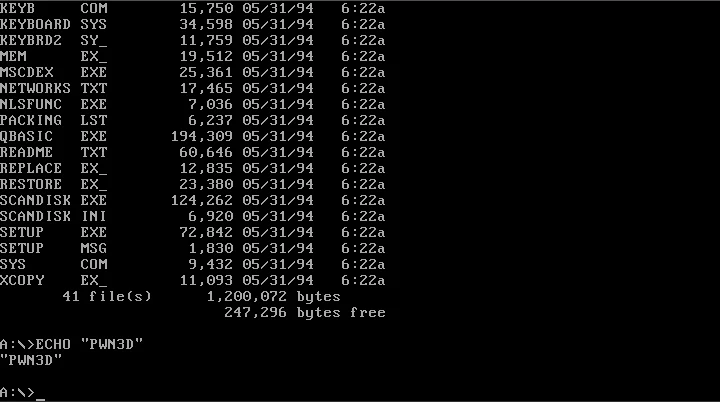
See PoC below.
Attachments
Not written yet. The AI write-up for this report has not been written yet. The Original tab links to the source.
How it worked
Root cause
Likely the report treats the intended command-line interface, which by design runs any command the user types, as a vulnerability.
Impact
Anyone with physical access to the keyboard could run any program, but this is the normal behaviour of the operating system rather than a security bypass.
What the attacker needed
MS-DOS 1.1 or 2.0 installed; Access to an input device such as a keyboard
How it was found
- Enter command mode
- Type VER to check the version
- Run a known command such as HELP to confirm the system responds
- Use EXEC PROGRAM_NAME.BAT to run an arbitrary program
Explained by bugbounty.wiki with AI from the original and checked against quotes from it; it can still be wrong. Read the original before relying on a detail.
Not written yet. The AI write-up for this report has not been written yet. The Original tab links to the source.
MS-DOS is an old operating system where you type commands to run programs. This report says that anyone who can type at the keyboard can run any command or program, which is how the system is designed to work. It is not a hidden flaw that lets someone break in remotely.
What is RCE?
Running the attacker's code on the target's servers: through command or code injection, unsafe deserialisation or template injection.