Reflected XSS on dailydeals.mtn.co.za
A reflected cross-site scripting flaw existed in the cpID parameter of the dailydeals.mtn.co.za deals page when the request was sent as a POST. An attacker could craft a request that runs script in a victim's browser, potentially stealing cookies or redirecting the user.
 Originally disclosed on HackerOne
- Triaged in 7 days
- Fixed in 6 months
- Disclosed after 7 months
Hello MTN Team.
i found Reflected XSS on https://dailydeals.mtn.co.za/index.cfm?GO=DEALS vi cpID parameter with POST method
Steps To Reproduce:
- Intercept the https://dailydeals.mtn.co.za/index.cfm?GO=DEALS
- Change Method to POST
- Add empty line after last header
- Write this code
category_id=7&cpID=1%22%3e%20%3cimg%20src%3da%20onerror%3dalert("XSS")%3e<!--
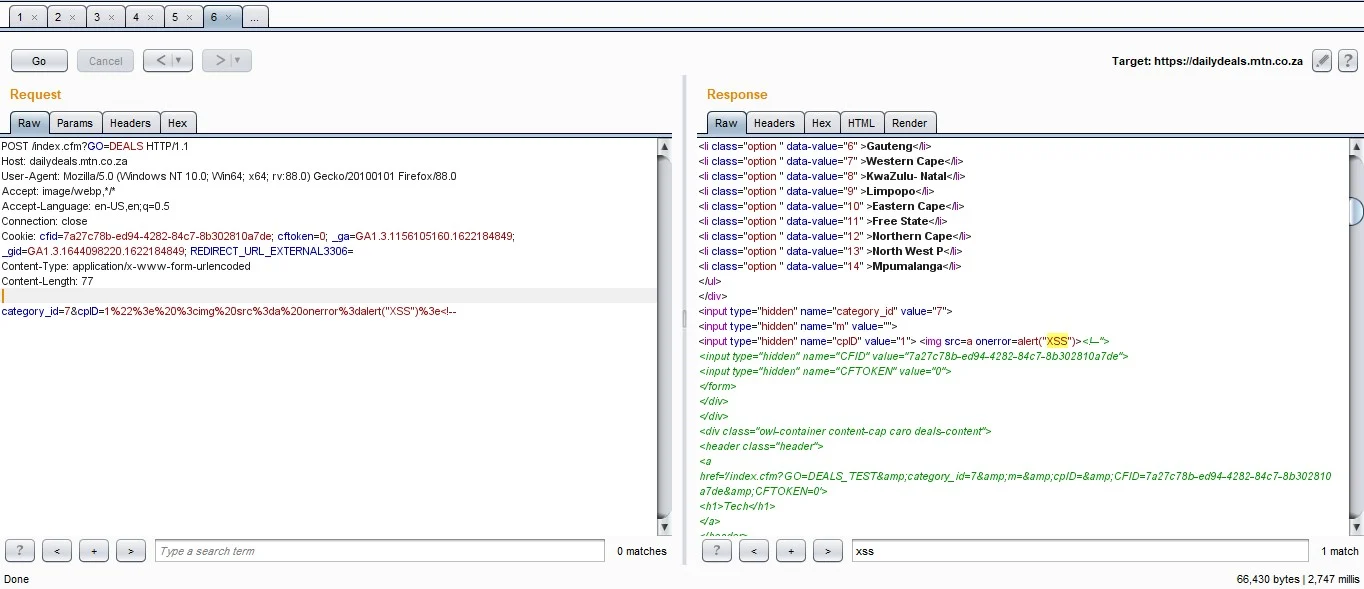
- Sent the Request.
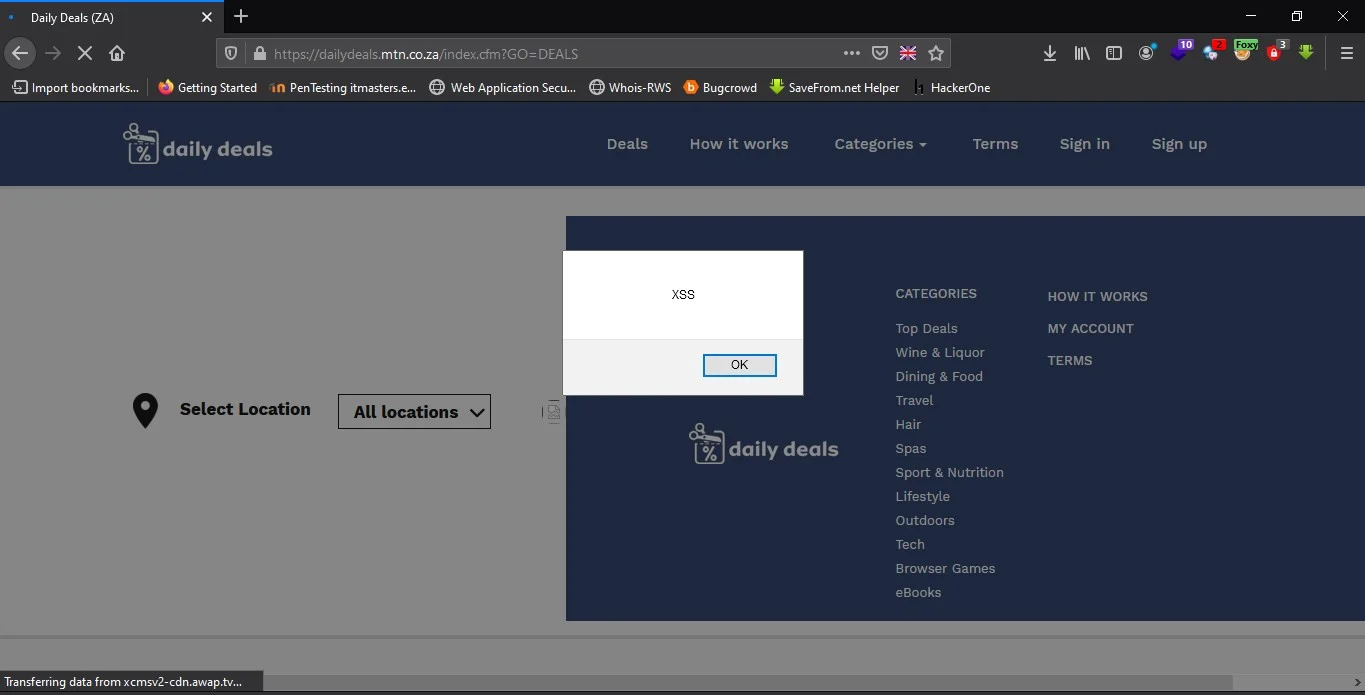
- Right Click on response area, then Click on
Show response in browser - copy the link, and put it on browser use BurpSuite as proxy
- press the Enter key, then you will see the
XSSon your browser
Impact
attacker can convinces a victim to visit a URL then he can:
- steal users cookies
- redirect the user to malicious website
Not written yet. The AI write-up for this report has not been written yet. The Original tab links to the source.
How it worked
Root cause
Likely the cpID parameter was reflected into the HTML response without output encoding, so injected markup was rendered as active content.
Impact
An attacker could convince a victim to visit a crafted URL and then steal the user's cookies or redirect them to a malicious website.
What the attacker needed
Victim visits a crafted URL; request sent as POST
How it was found
- Intercept the deals page request.
- Change the request method to POST.
- Add an empty line after the last header.
- Insert a crafted cpID value containing an image tag with an error handler.
- Send the request.
- View the response in a browser to see the script run.
Explained by bugbounty.wiki with AI from the original and checked against quotes from it; it can still be wrong. Read the original before relying on a detail.
Not written yet. The AI write-up for this report has not been written yet. The Original tab links to the source.
Cross-site scripting (XSS) is when a website puts attacker-supplied text into a page without cleaning it, so the browser runs it as code. Here the cpID value sent in a form submission was echoed back into the page, letting a script run in the visitor's browser. That script could read the user's session cookie or send them to another site.
What is XSS?
Script an attacker supplies runs in another user's browser, on the target's origin, with that user's session.