Bruteforce attack is possible on newsletter.nextcloud.com
The site protects its admin directories with HTTP Basic authentication, which the reporter says can be brute-forced. The site also discloses the PHPList version in error messages, which the reporter links to known XSS and CSRF issues in that version.

- Disclosed after 21 hours
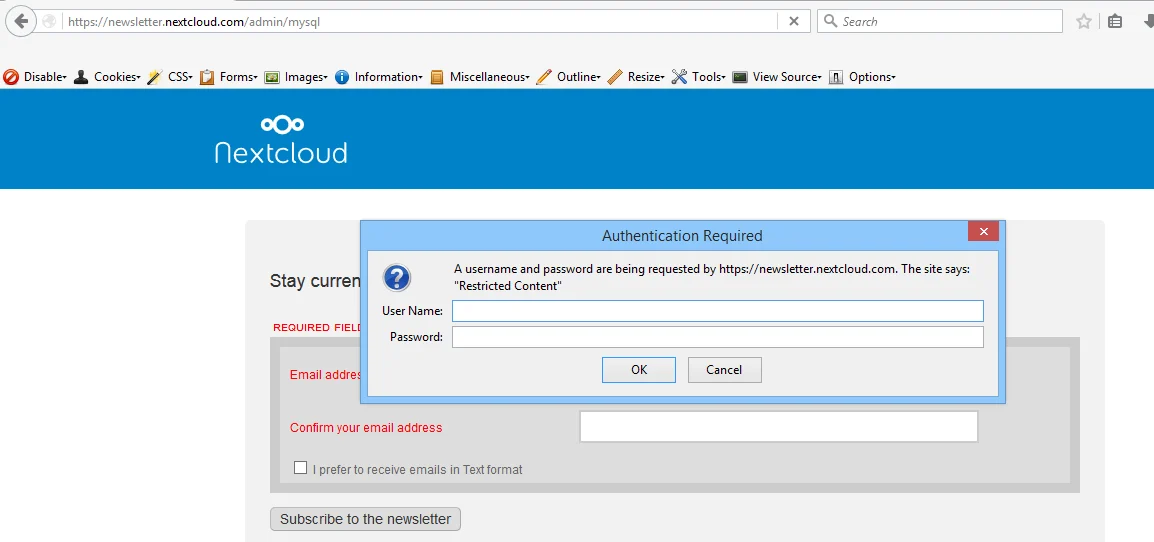
Since HTTP Basic authentication is used on [https://newsletter.nextcloud.com], This type of authentication is vulnerable to Bruteforce attack.
refer the attachment below
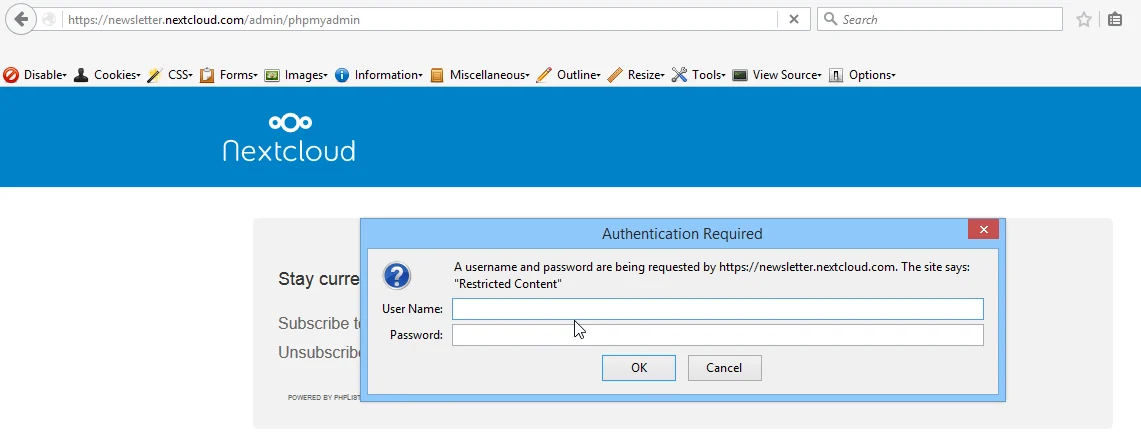
refer the attachment below
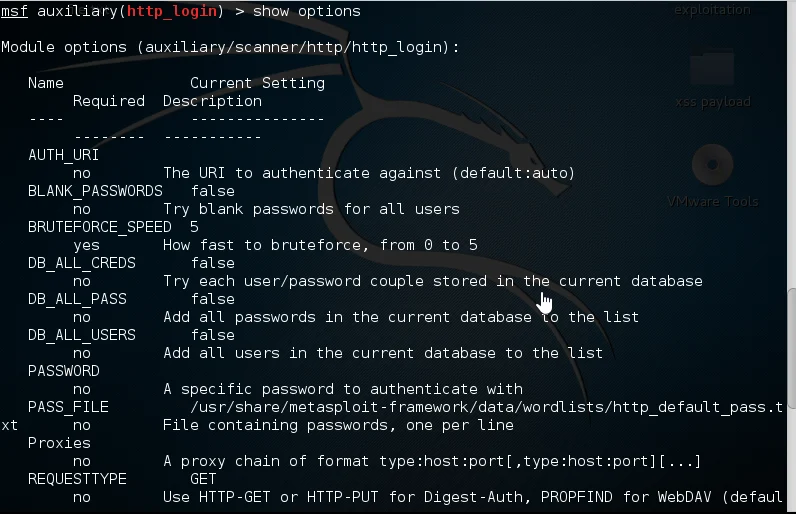
Attacking via metasploit auxilary scanner http_login:
refer the attachment below
An attacker can bruteforce the following directories on {https://newsletter.nextcloud.com}
- [https://newsletter.nextcloud.com/admin/]
- [https://newsletter.nextcloud.com/admin/pma/]
- [https://newsletter.nextcloud.com/admin/phpmyadmin/]
- [https://newsletter.nextcloud.com/admin/mysql]
The website also reveals that PHP list version 3.2.5 is used
refer the attachment below
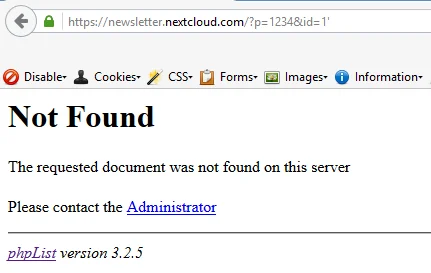
An attacker can take advantage of this and can exploit the framework related vulnerability.
Recently PHP list version 3.2.5 was vulnerable to XSS and CSRF
- {https://packetstormsecurity.com/files/137278/PHPList-3.2.4-Cross-Site-Request-Forgery-Cross-Site-Scripting.html}
- {https://www.youtube.com/watch?v=cU6ob4sCKgs}
So it is a good practice to use the latest stable version and dont reveal the banner in the error messages.
Not written yet. The AI write-up for this report has not been written yet. The Original tab links to the source.
How it worked
Root cause
Likely the admin area relies only on HTTP Basic authentication with no rate limiting or lockout, and error pages reveal the PHPList version.
Impact
An attacker could guess admin credentials through repeated login attempts and could use the disclosed version to target known XSS and CSRF flaws, though the report shows no successful compromise.
What the attacker needed
Network access to the admin login; no rate limiting on login attempts
The fix
The site should add rate limiting or lockout to the admin login and stop revealing the PHPList version in error messages, and it should run the latest stable release.
How it was found
- Identify the admin directories protected by HTTP Basic authentication.
- Run a brute-force tool against the login prompt to guess credentials.
- Read the disclosed PHPList version from the site's error messages.
- Look up known vulnerabilities for that version.
Explained by bugbounty.wiki with AI from the original and checked against quotes from it; it can still be wrong. Read the original before relying on a detail.
Not written yet. The AI write-up for this report has not been written yet. The Original tab links to the source.
HTTP Basic authentication asks for a username and password in a pop-up box every time you visit a page. Because nothing stops someone from trying many passwords in a row, a program can guess them automatically. The report also notes the site tells visitors which software version it runs, which helps an attacker look up known bugs for that version.
What is Account takeover?
Getting into someone else's account through a flaw in sign-in, password reset, second factor, single sign-on or session handling.