Directory Listing On download.nextcloud.com & Practical Attacks on PGP (Pretty Good Privacy)
The download server for Nextcloud exposed directory listings, letting anyone browse and see files in folders such as the server and daily build directories. The reporter also pasted general background text about PGP weaknesses, but did not show a concrete PGP attack against the site.
 Originally disclosed on HackerOne
- Disclosed after under an hour
Sir,
I have found a major bug in your website :) That Is Directory listing & Practical Attacks On PGP signature)
affected area>>
https://download.nextcloud.com/server/
here is my poc>>
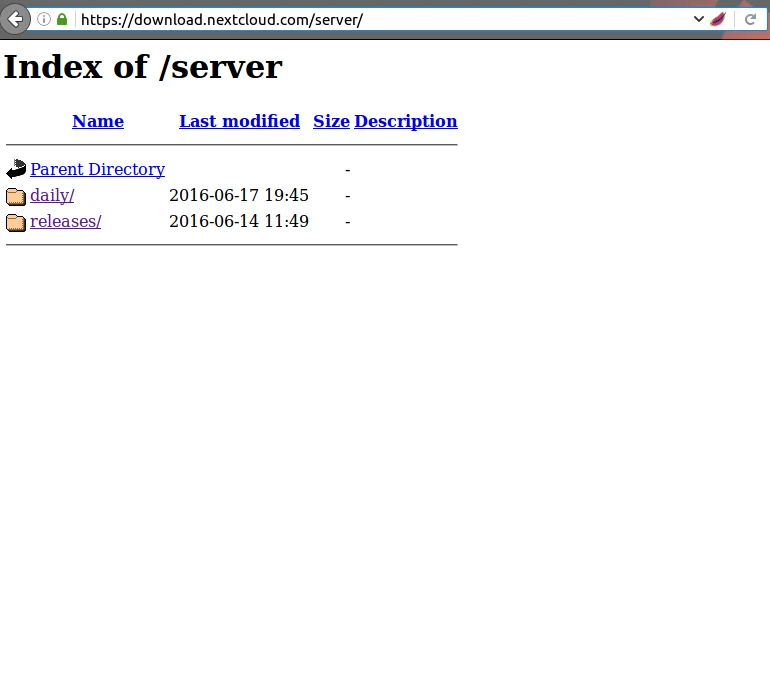
Poc Details: The web server is configured to display the list of files contained in this directory. As a result of a misconfiguration - end user / attacker able to see content of the folders with systemically important files.
Impact:: Exposing the contents of a directory can lead to an attacker gaining access to source code or providing useful information for the attacker to devise exploits, such as creation times of files or any information that may be encoded in file names. The directory listing may also compromise private or confidential data.
Another Bug is here
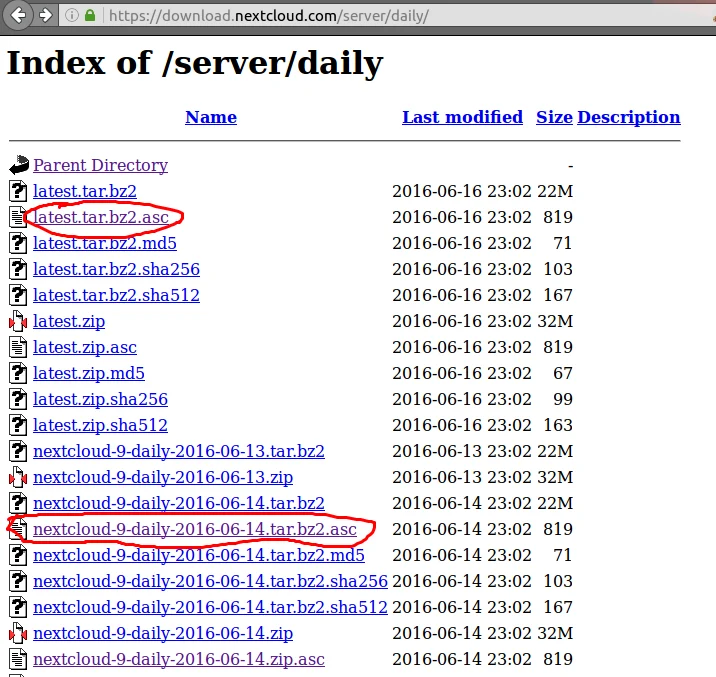
1.https://download.nextcloud.com/server/daily/
& poc>>
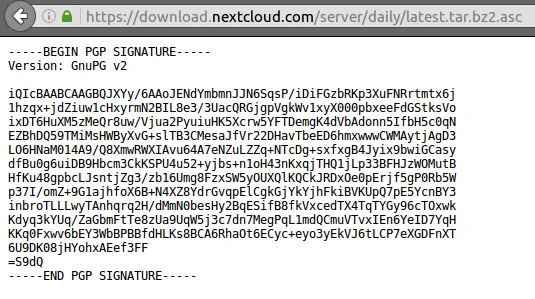
Impact::
1.Practical Attacks on PGP
No data security implementation can ever be completely safeguarded from the attacks of an adversary. PGP like most cryptographic and security applications can be circumvented in a variety of ways. This section will cover several of the practical attacks (both technical and non-technical) on Pretty Good Privacy that do not involve cryptanalysis or any attack on the cryptosystem protocols, but instead the implementation of PGP on a data system
2.Pass-phrase and Private Key File Compromises
One of the most common ways for an attacker to compromise the security of PGP on a system is to obtain another user’s pass
phrase and/or private key
file. If an attacker has access to the pass phrase and
secret key file they can
read the compromised user’s encrypted messages and make signatures using
that user’s private key. This weakness is not just specific to PGP; this is a
typical weakness found in most password/pass-phrase authentication
cryptosystems. Users may select easily guessed pass-phrases or may store
their private key in a location where someone with malicious intent may access
it.
An attacker may also use a tool or utility that will try to obtain a user’s pass
phrase from the local workstation. Brute force or dictionary attack utilities such
as PGPCrack or PGPpass are designed to crack PGP encrypted files. The
attacker may also use a keyboard logger utility that can capture the keystrokes
of an unsuspecting user and save it to a designated location where they can then retrieve the user’s revealed plaintext pass-phrase.
3.Public Key Tampering
In a public key cryptosystem, the public keys of users should be distributed so all have the components necessary to securely communicate and exchange information with each other. A crucial component in this system is the fact that users must be able to trust that a public key really belongs to whom it appears to belong to. This particular vulnerability is quite important to be aware of,many novices and even IT professionals may fall victim to trusting the tampered public key of an impostor. Once a user encrypts a document or message with the tampered public key and sends it, the impostor will be able to decrypt and read the contents. The user may have just unintentionally disclosed sensitive personal or proprietary company information. PGP users should make certain that they only trust the public key of someone if they have got it directly from its owner, or someone the user directly trusts has signed the public key of the new user.
4.Trojan Horse Attacks
Trojan horse attacks pose one of the most serious threats to application security today. A Trojan horse is a seemingly harmless program that contains malicious code, which may infect a users PGP application or their operating system subverting the security of both. An attacker could use this code to capture a user’s plaintext messages, or to obtain the user’s pass-phrase or private key.
and so many :)
Thanks sir :)
Regards,
1337_inj3c70r
Not written yet. The AI write-up for this report has not been written yet. The Original tab links to the source.
How it worked
Root cause
Likely directory listing (autoindex) was left enabled on the download web server.
Impact
An attacker could learn file names, creation times and possibly source or confidential data from the exposed listings; the PGP section is generic background and no working PGP attack is shown.
What the attacker needed
None
How it was found
- Open the download server's server directory in a browser.
- Observe that the server returns a list of files instead of an index page.
- Repeat on the daily build directory and its signature file.
Explained by bugbounty.wiki with AI from the original and checked against quotes from it; it can still be wrong. Read the original before relying on a detail.
Not written yet. The AI write-up for this report has not been written yet. The Original tab links to the source.
A web server can be set to show a plain list of every file in a folder when no index page exists, instead of refusing. Here that setting was left on for a public download area, so visitors could see what files exist and when they were made. The rest of the report is general reading about PGP, a tool for encrypting email, and does not demonstrate a real attack.
What is Crypto?
Encryption, signatures, randomness or certificate checks that do not protect what they claim to.