SSRF at apps.nextcloud.com/developer/apps/releases/new
The developer app release form on apps.nextcloud.com accepted a user-supplied download URL and fetched it server-side, allowing an attacker to probe internal services on the loopback interface. By observing different error messages, the attacker could tell whether a given local port was open or closed.

- Disclosed after 37 days
Hi,
I've found SSRF vulnerability at https://apps.nextcloud.com/developer/apps/releases/new
##Description##
Server Side Request Forgery (SSRF) is a vulnerability that appears when an attacker has the ability to create requests from the vulnerable server.
Usually, Server Side Request Forgery (SSRF) attacks target internal systems behind the firewall that are normally inaccessible from the outside world (but using SSRF it’s possible to access these systems). With SSRF it’s also possible to access services from the same server that is listening on the loopback interface. Using Server Side Request Forgery attacks it’s possible to:
- Scan and attack systems from the internal network that are not normally accessible
- Enumerate and attack services that are running on these hosts
- Exploit host-based authentication services
##Steps to reproduce##
- Navigate to https://apps.nextcloud.com/developer/apps/releases/new
- Enter https://127.0.0.1:22 (SSH) or https://127.0.0.1:80 (HTTP) (Download Link area)
- You will get this error
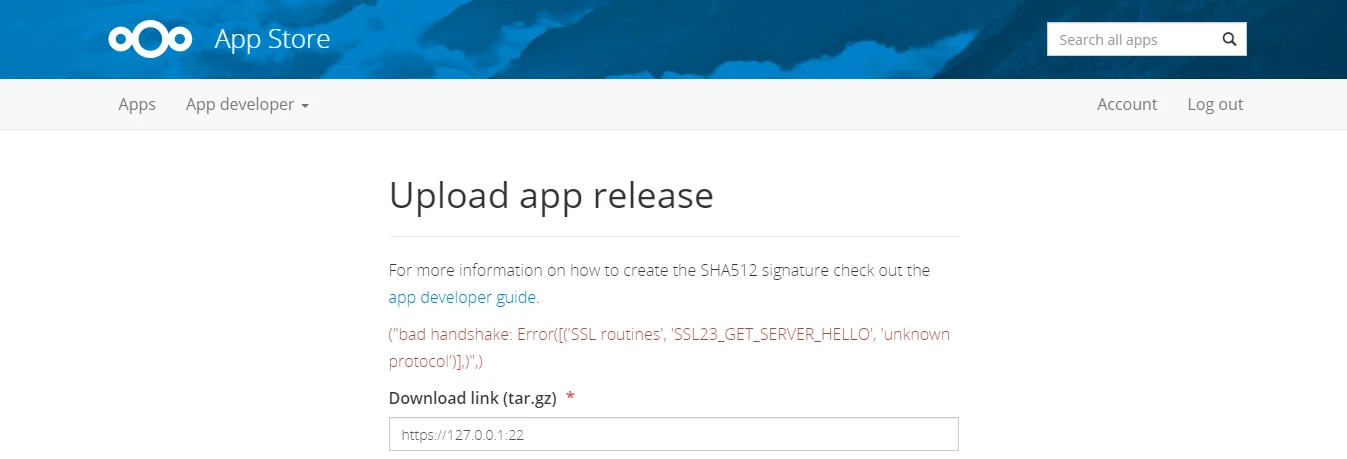
means the 22 port is opened, the same with 80
- but if you entered https://127.0.0.1:21 (Telnet) you will get this error
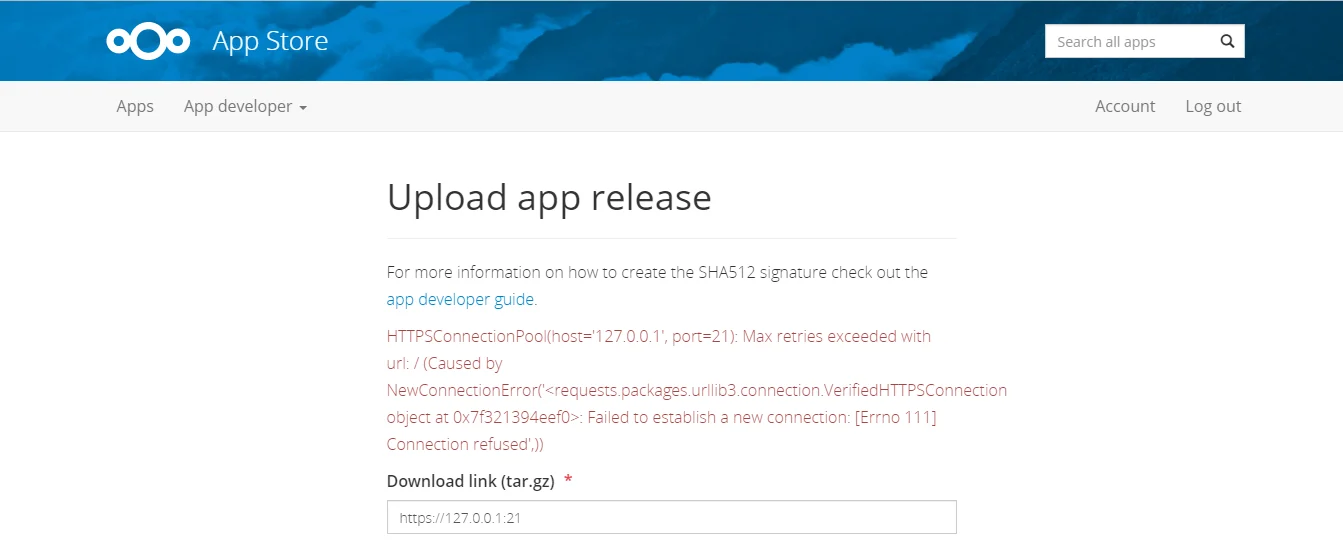
means the 21 port isn't opened
Thanks.
Not written yet. The AI write-up for this report has not been written yet. The Original tab links to the source.
How it worked
Impact
An attacker could use the server to scan and potentially reach internal services on the loopback interface, though the report only demonstrates port-state disclosure through error messages.
How it was found
- Navigate to the new app release page.
- Enter a loopback URL with port 22 or 80 in the Download Link field.
- Observe an error indicating the port is open.
- Enter a loopback URL with port 21 and observe a different error indicating the port is closed.
Explained by bugbounty.wiki with AI from the original and checked against quotes from it; it can still be wrong. Read the original before relying on a detail.
Not written yet. The AI write-up for this report has not been written yet. The Original tab links to the source.
A server-side request forgery (SSRF) bug lets an attacker make the website's own server send requests to places the attacker cannot reach directly, such as internal services. Here the 'Download Link' field was fetched by the server, so pointing it at the server's own loopback address revealed which local ports were open through different error messages.
What is SSRF?
The server can be made to fetch an address the attacker chooses, reaching internal services, cloud metadata or other customers' data.