[authmagic-timerange-stateless-core] Improper Authentication
The authmagic-timerange-stateless-core module does not verify the JWT token when reissuing a new token, only the refresh token. An attacker can modify the token's payload to forge another user's identity.

- Triaged in 9 days
- Fixed in 10 months
- Disclosed after 10 months
Summary by the researcher
Research based on this and other JWT related H1 reports: https://r2c.dev/blog/2020/hardcoded-secrets-unverified-tokens-and-other-common-jwt-mistakes/
The report
I would like to report Improper Authentication in authmagic-timerange-stateless-core
It allows to forge user's identity.
Module
module name: authmagic-timerange-stateless-core
version: 0.0.9
npm page: https://www.npmjs.com/package/authmagic-timerange-stateless-core
Module Description
Stateless and passwordless authentication core for authmagic (https://github.com/authmagic/authmagic).
Module Stats
[20] weekly downloads
Vulnerability
Vulnerability Description
authmagic-timerange-stateless-core is an npm module that runs an API for stateless and passwordless authentication by utilizing JWT tokens. The module is also one of the core dependencies of authmagic which is an authorization service.
The module defined to handle authentication but does not validate the JWT token sent by the user when reissuing a new token (POST request to /token endpoint). Therefore it allows modifying payload within the token and also reissuing new token which will be signed by the system and become valid. This weakness provides an opportunity to forge the user's identity by changing the information inside the token's payload that is used to authenticate the client.
Steps To Reproduce:
source code example:
https://github.com/authmagic/authmagic-timerange-stateless-core/blob/master/core.js#L11
const checkRefreshToken = (token, refreshToken, key) => {
  try {
    if(jwt.verify(refreshToken, key)) {
      return jwt.decode(token, {complete: true}).signature === jwt.decode(refreshToken).signature;
    }
  } catch(e) {
    return false;
  }

  return false;
};
while comparing signatures in token and refreshToken only the refreshToken is verified, the token itself has to include the same sign like the one stored in refreshToken's payload but the validity of the token is not checked.
the authmagic-timerange-stateless-core is utilized by Authmagic (https://github.com/authmagic/authmagic) so it is handy to use Authmagic example app (https://github.com/authmagic/authmagic-getting-started-example) for testing, as it demonstrates the behaviour of the module in a situation that is near to production.
- create directory for testing
mkdir poc
cd poc/
- install and run authmagic example app
npm install -g authmagic-cli
npm init -y
authmagic init -e
authmagic install
authmagic
Note: make sure name in your package.json is not named as authmagic if you do not want to get an error npm refusing to install as a dependency of itself.
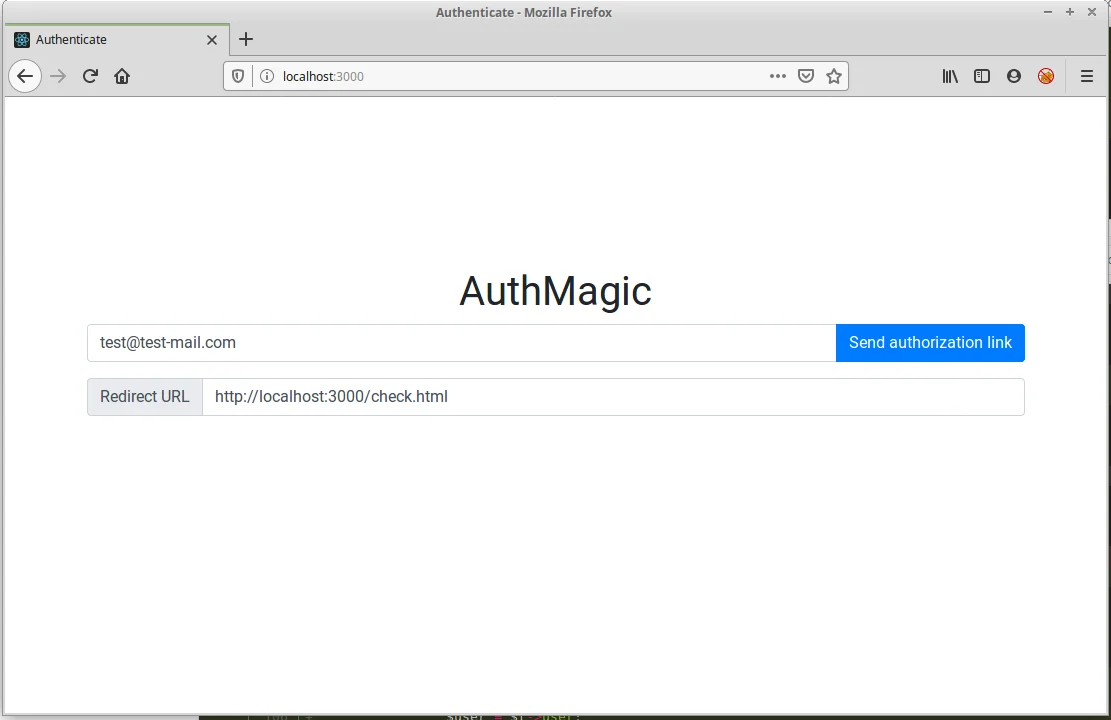
- go to http://localhost:3000
F632927
- enter email and click
Send authorization link - follow
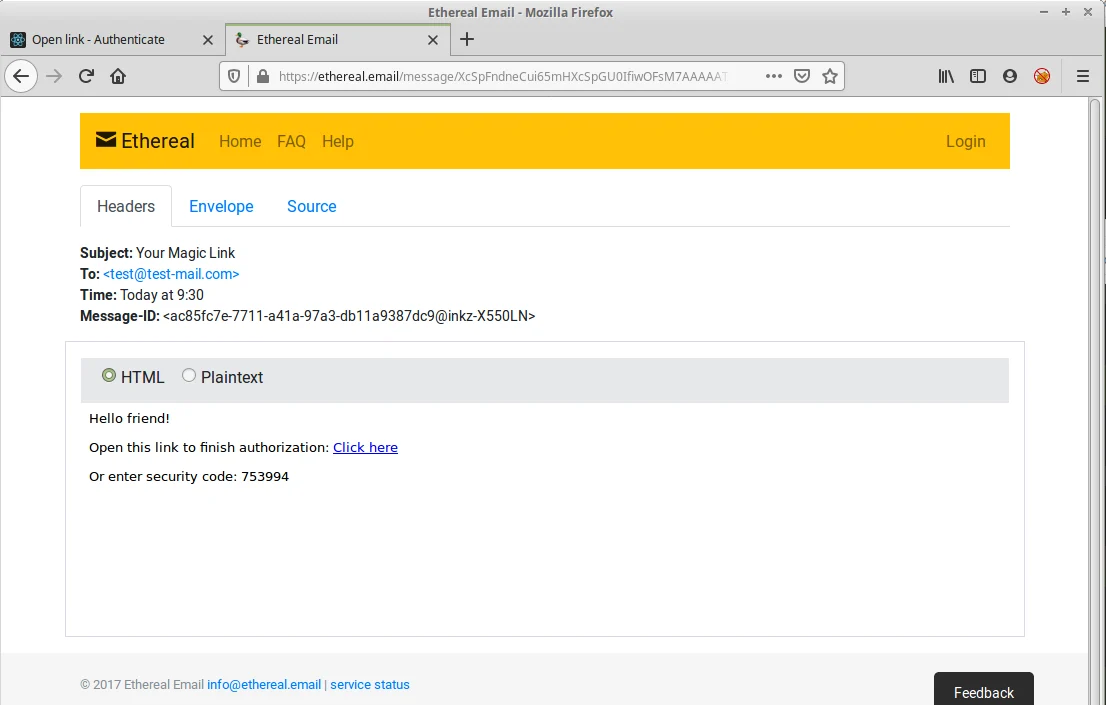
Preview urlform the console (similar to one on screenshot)
F632928
- follow
Click here
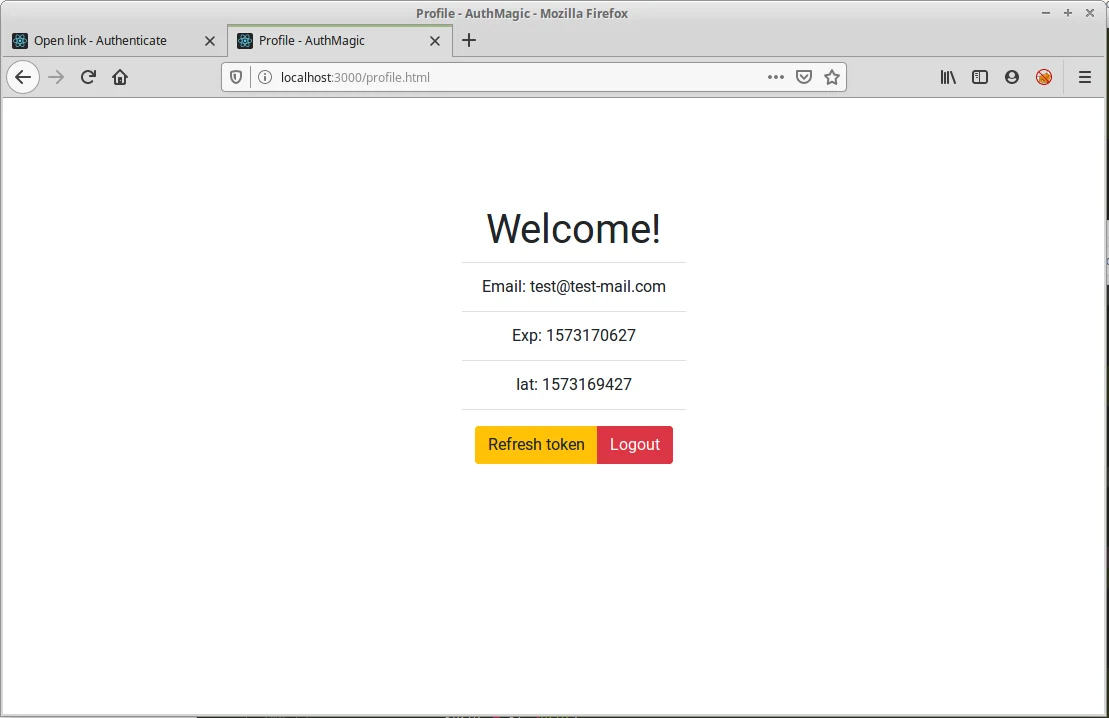
F632929
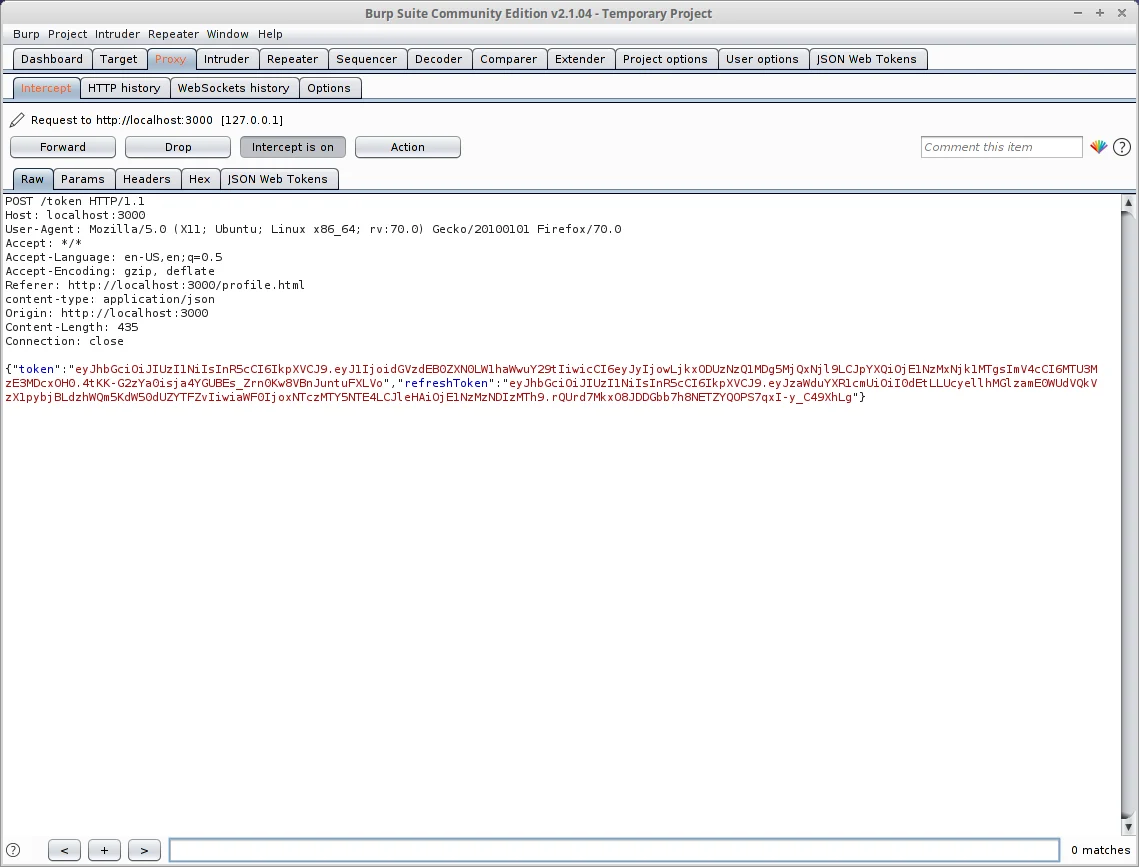
Note: next I provide steps to intercept and change jwt token with BurpSuite and its JSON Web Tokens (JWT4B) plugin, as it is the easiest and quick way if more detailed explanation required let me know.
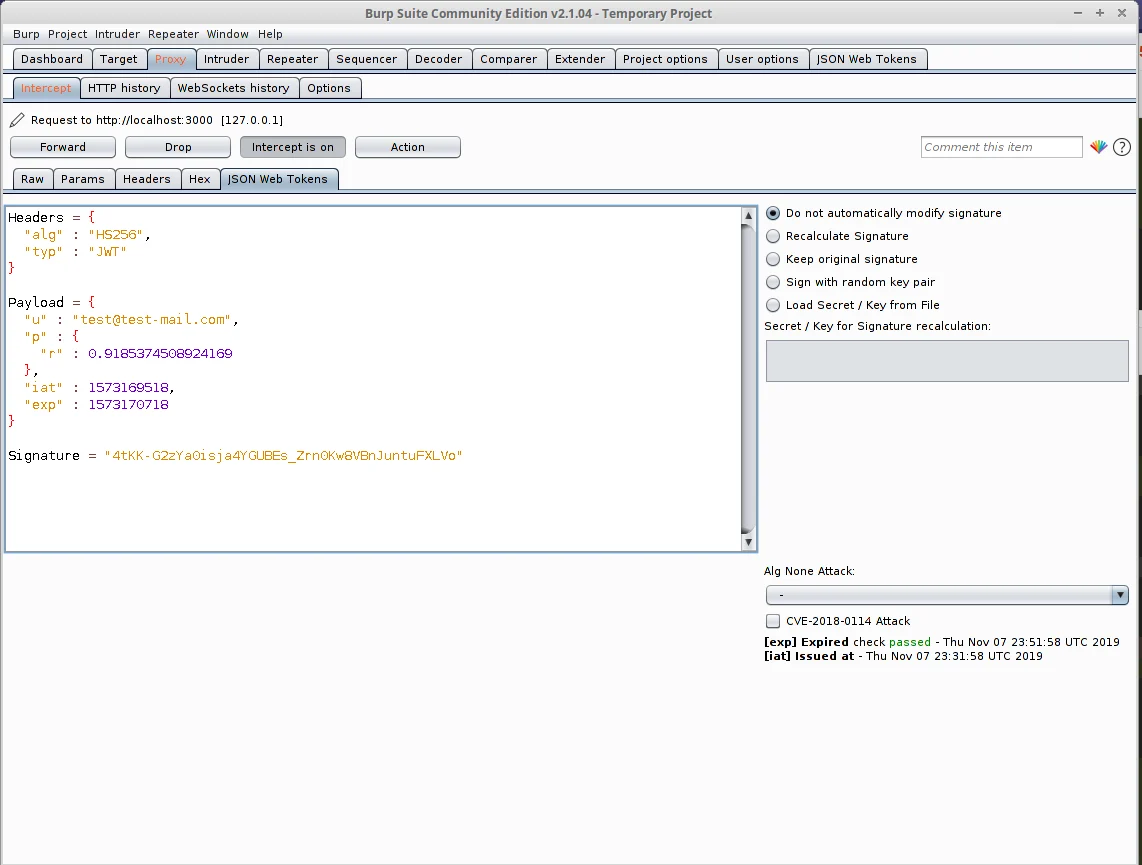
- click 'Refresh token' and intercept its request
F632930 F632931
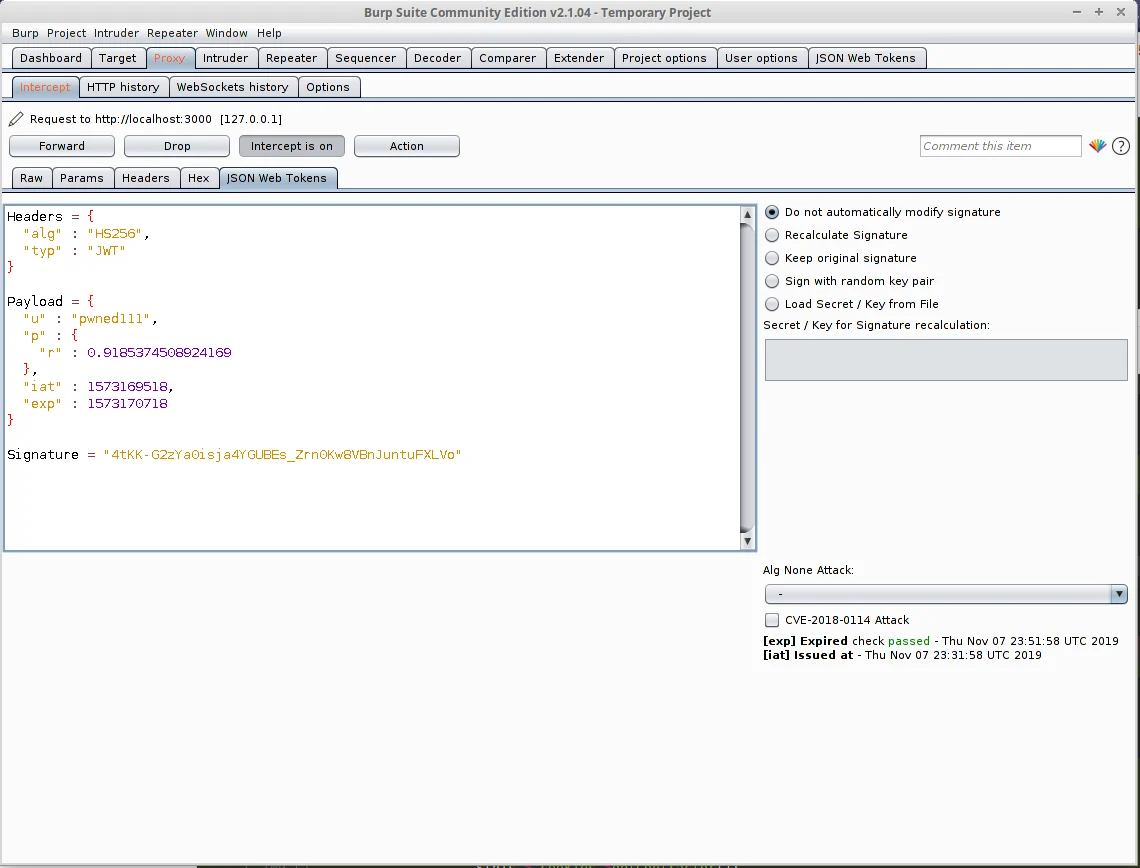
- change payload parameter
uinsidetoken(e.g withJSON Web Tokens (JWT4B)plugin)
F632932 F632933
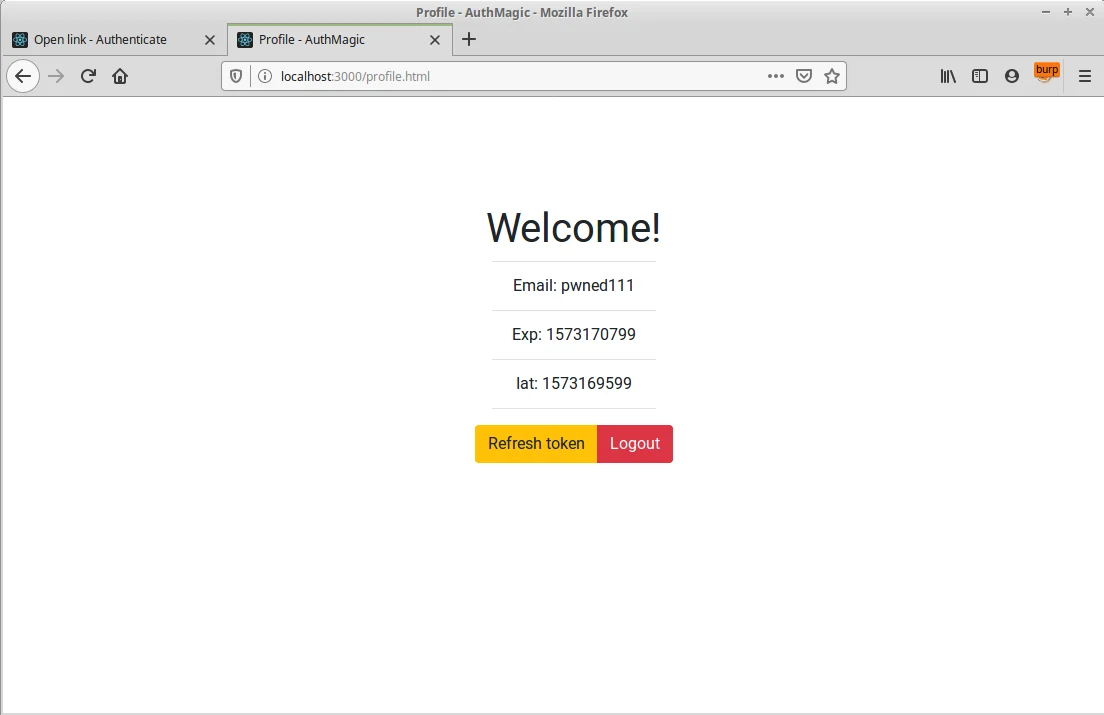
- different email will be displayed
F632934
While testing you can put a breakpoint in poc/node_modules/authmagic-timerange-stateless-core/core.js file to line 10:
const checkRefreshToken = (token, refreshToken, key) => {
  try {
    if(jwt.verify(refreshToken, key)) {
...
or add a console.log after it like to this
console.log(jwt.decode(token, {complete: true}), jwt.decode(refreshToken));
to make sure that it is the authmagic-timerange-stateless-core responsible for handling token verification
Patch
Supporting Material/References:
- OPERATING SYSTEM VERSION: Linux Mint current
- NODEJS VERSION: 12.7.0
- NPM VERSION: 6.10.0
Wrap up
- I contacted the maintainer to let them know: [N]
- I opened an issue in the related repository: [N]
Impact
This weakness provides opportunity to forge user's identity by changing information inside token's payload that is used to verify the client.
Attachments

Not written yet. The AI write-up for this report has not been written yet. The Original tab links to the source.
How it worked
Root cause
The code verifies the refresh token but only compares signatures of the token and refresh token, without verifying the token's signature or validity.
Impact
An attacker could forge a user's identity by changing the token's payload.
What the attacker needed
Access to the authmagic example app; ability to intercept HTTP requests
The fix
The token should be fully verified, not just its signature compared to the refresh token.
How it was found
- Install and run the authmagic example app.
- Go to the local site and enter an email to receive an authorization link.
- Follow the link and click to authenticate.
- Intercept the 'Refresh token' request.
- Modify the payload parameter 'u' inside the token.
- Observe that a different email is displayed.
Explained by bugbounty.wiki with AI from the original and checked against quotes from it; it can still be wrong. Read the original before relying on a detail.
Not written yet. The AI write-up for this report has not been written yet. The Original tab links to the source.
This module handles login using tokens. When you ask for a new token, it checks the refresh token but not the token you send. So you can change the token to pretend to be someone else.
What is Account takeover?
Getting into someone else's account through a flaw in sign-in, password reset, second factor, single sign-on or session handling.




