Subdomain takeover http://accessday.opn.ooo/
An unused subdomain was delegated to a third-party hosting provider and left unclaimed, so anyone could register it. An attacker could then serve their own content from that subdomain.

- Triaged in 6 days
- Fixed in 13 days
- Paid in 13 days
- Disclosed after 45 days
I found unused accessday.opn.ooo subdomain was delegated to wix.com and not claimed.
##Steps To Reproduce:
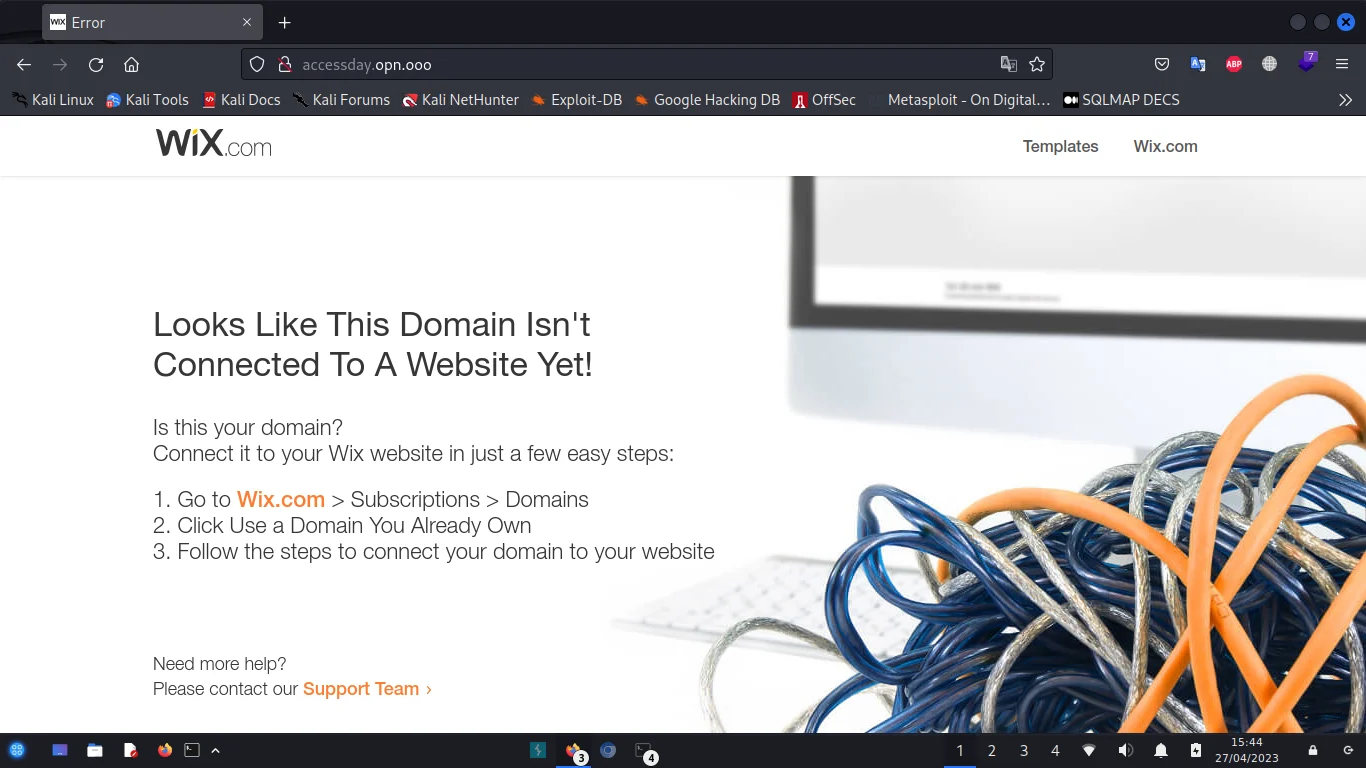
- Visit http://accessday.opn.ooo/
- This domain pointing towards to WIX cdn, anyone can claim this subdomain
##Similar report: https://hackerone.com/reports/1256389 https://hackerone.com/reports/996956 https://hackerone.com/reports/1183296
Impact
An attacker can claim this subdomain and abused for specific purposes
Attachments
What the report shows
The report is filed against the Omise programme's www.opn.ooo asset and concerns the subdomain accessday.opn.ooo. The researcher reports that this subdomain was unused, had been delegated to wix.com, and had not been claimed by anyone.
The reproduction is short and consists of a single step:
- Visit the subdomain in a browser.
The report states that the domain points at the WIX CDN and that, because of this, anyone can claim the subdomain. The attached screenshot shows the page served at that address.
The researcher links three earlier HackerOne reports as similar cases: 1256389, 996956 and 1183296. The impact section keeps the claim general: an attacker can claim the subdomain and abuse it for specific purposes. No proof-of-concept claim was performed, and the report does not describe the DNS record type, the CNAME target, or any response headers.
The report does not describe the remediation that was applied.
Root cause
The likely root cause is a dangling DNS record: a subdomain that still points at a third-party hosting provider (here WIX) without a tenant claiming it. Because the provider allocates site names on a first-come basis, the unclaimed name can be registered by anyone, and the provider will then serve that person's content from the organisation's hostname.
Impact
The report's own framing is that an attacker can claim the subdomain and use it for specific purposes. In practice, content served from a hostname under the organisation's domain inherits the trust that users and systems place in that domain. The report does not enumerate concrete abuse scenarios, so the impact statement should be read as the researcher wrote it: control of the hostname, with the abuse left open.
How this kind of bug works
Subdomain takeover is a DNS and lifecycle problem rather than an application vulnerability. An organisation creates a DNS record, usually a CNAME, that delegates a hostname to a service it does not operate: a website builder, a PaaS, a CDN, a status page, a marketing tool. The provider identifies the customer's site by the hostname in the request, so the DNS record is the only thing tying the hostname to the tenant.
When the tenant is deleted, suspended, or never created, the DNS record is often left behind. The provider now receives requests for a hostname it has no tenant for. Many providers answer such requests with a generic error page, and some of those error pages explicitly say the site is unclaimed and can be registered. If the provider lets a new customer register the same site name, the new customer's content is served at the original hostname.
The defences are process and provider controls: deleting DNS records as part of decommissioning, inventorying every record that points outside the organisation's own authoritative zones, and preferring providers that verify domain ownership before serving a hostname or that reserve deleted names.
How to test for it
- Enumerate hostnames: certificate transparency logs, passive DNS sources, the organisation's own scope listing, and brute force against common labels.
- Resolve each hostname and record the record type and target. Focus on CNAMEs and on A records that point at provider ranges.
- For each external target, request the hostname with the original
Hostheader and read the response body and status code. Provider-specific "unclaimed" pages are the strongest signal. - Confirm that the provider would actually let you register the name, without registering it. Check the provider's documentation and its sign-up flow for the site name, and stop there.
A positive result looks like a response from the third-party provider that identifies the missing tenant, combined with a registration path that accepts the hostname. Common false positives are wildcard DNS records that answer for every label, provider error pages that appear for any unknown hostname regardless of whether the name is claimable, and records that still resolve to a live tenant owned by the organisation. A page that merely looks like a provider's default page is not proof; the claimability of the specific name is what matters.
How it is fixed
Remove or repoint the dangling DNS record. Then verify that the hostname no longer resolves to the third-party service, and add the decommissioning step to the change process so records are deleted with the service. Where the provider supports it, enable domain ownership verification so a hostname cannot be attached without proof of control.
Hunting notes
This bug class hides in forgotten infrastructure: campaign and event pages, microsites, status and documentation hosts, and anything created by marketing outside the main engineering process. Recon signals include CNAMEs to website builders and PaaS providers, hostnames that return provider error pages, and subdomains whose names suggest a temporary purpose.
Keep the demonstration minimal and do not serve content that could be mistaken for the organisation's own.
What happened, in plain words
Every website name, like opn.ooo, is managed by a system called DNS. DNS is the internet's address book: it translates a name a person can read into the address of a computer that answers requests for it. A large domain can hand out smaller names underneath it, called subdomains, such as accessday.opn.ooo. The organisation that owns opn.ooo decides where each subdomain points.
In this report, the researcher found that the subdomain accessday.opn.ooo was unused, delegated to wix.com and not claimed. Instead, the DNS entry for it had been delegated to wix.com, a company that hosts websites for other people. The researcher says the subdomain had not been claimed by anyone at WIX. Because of that, anyone could register that name at WIX and have their own content served at accessday.opn.ooo.
The report is filed against the Omise programme, on the www.opn.ooo asset.
What the report shows
The reproduction is a single step: visit the subdomain in a browser.
This is an HTTP request, the message a browser sends to a web server to ask for a page. The first line says which method is used (GET, meaning "give me this resource") and which path is wanted (/, the front page). The second line, Host, tells the server which website name the visitor typed. Servers often host many names on the same machine, so the Host header is how the server knows which site to answer with. Here it names the subdomain under investigation.
The report states that the domain points at the WIX CDN and that, because of this, anyone can claim the subdomain. A CDN, or content delivery network, is a service that stores and serves website content from many locations; WIX uses one to serve the sites built on its platform. The attached screenshot shows the page that was served at that address.
The researcher links three earlier HackerOne reports as similar cases: 1256389, 996956 and 1183296. The impact section stays general: an attacker can claim the subdomain and abuse it for specific purposes. No claim was actually performed as a proof of concept, and the report does not describe the DNS record type, the CNAME target, or any response headers.
The report does not describe the remediation that was applied.
In general, how this kind of bug works
This kind of issue is commonly called a subdomain takeover. It is a problem with DNS records and with the lifecycle of services, not a flaw in a web application's code.
An organisation creates a DNS record that hands a hostname over to a service it does not run itself: a website builder, a hosting platform, a CDN, a status page, a marketing tool. A common record type for this is a CNAME, short for canonical name, which says "for this name, look at that other name instead". The provider decides which customer's site to show by looking at the hostname in the request, so that DNS record is the only thing connecting the hostname to the customer's account.
When the customer's site is deleted, suspended, or was never created, the DNS record is often left behind. The provider now receives requests for a hostname it has no customer for. Many providers answer with a generic error page, and some of those pages say the site is unclaimed and can be registered. If the provider lets a new customer register the same site name, that new customer's content is served at the original hostname. A useful comparison is a flat whose former tenant has moved out but whose door sign still carries the old name: if the building lets anyone put that name on the door, a stranger can start receiving the post addressed to it.
The defences are about process and provider controls: deleting DNS records when a service is decommissioned, keeping an inventory of every record that points outside the organisation's own DNS servers, and preferring providers that check domain ownership before serving a hostname or that reserve deleted names.
How to test for it
- Collect hostnames: certificate transparency logs (public records of certificates issued for names), passive DNS sources, the organisation's own scope listing, and guessing common labels.
- Look up each hostname and note the record type and where it points. Focus on CNAMEs and on address records that point at provider ranges.
- For each external target, request the hostname with the original
Hostheader and read the response body and status code. Provider-specific "unclaimed" pages are the strongest signal. - Confirm that the provider would actually let you register the name, without registering it. Check the provider's documentation and its sign-up flow for the site name, and stop there.
A positive result looks like a response from the third-party provider that identifies the missing customer, combined with a registration path that accepts the hostname. Common false positives are wildcard DNS records that answer for every label, provider error pages that appear for any unknown hostname regardless of whether the name is claimable, and records that still resolve to a live customer owned by the organisation. A page that merely looks like a provider's default page is not proof; the claimability of the specific name is what matters.
How it is fixed
Remove or repoint the dangling DNS record. Then verify that the hostname no longer resolves to the third-party service, and add the decommissioning step to the change process so records are deleted together with the service. Where the provider supports it, enable domain ownership verification so a hostname cannot be attached without proof of control.
Hunting notes
This bug class hides in forgotten infrastructure: campaign and event pages, microsites, status and documentation hosts, and anything created by marketing outside the main engineering process. Recon signals include CNAMEs to website builders and hosting platforms, hostnames that return provider error pages, and subdomains whose names suggest a temporary purpose.
Keep the demonstration minimal and do not serve content that could be mistaken for the organisation's own.
Glossary
- DNS: the internet's naming system that maps readable names to the addresses of the computers that answer for them.
- Domain: a name an organisation controls, such as
opn.ooo. - Subdomain: a name underneath a domain, such as
accessday.opn.ooo, whose pointing is decided by the domain's owner. - DNS record: an entry in DNS that says where a name points.
- CNAME: a DNS record that says one name should be looked up as another name instead.
- HTTP request: the message a browser sends to a server to ask for a page or resource.
- Host header: the part of an HTTP request that names the website the visitor asked for, so the server knows which site to answer with.
- CDN: a content delivery network, a service that stores and serves website content from many locations.
- WIX: a website hosting and building platform, named in the report as the service the subdomain was delegated to.
- Subdomain takeover: registering an unclaimed name at a third-party provider so that your content is served at an organisation's hostname.
- Dangling DNS record: a DNS record that still points at a third-party service after the customer or site it referred to has gone.
- Certificate transparency logs: public records of security certificates issued for website names, useful for finding hostnames.
- Passive DNS: data collected about which names resolve to which addresses over time.
- Wildcard DNS: a DNS setup that answers for every possible subdomain name, which can cause false positives.
- False positive: a finding that looks like a problem but is not one.
- Proof of concept: a minimal demonstration that a vulnerability is real.
- Severity: a rating of how serious a finding is; here, medium.
- Bounty: a payment made to a researcher for a valid report; here, 50.00 USD.




