Credientals Over GET method in plain Text
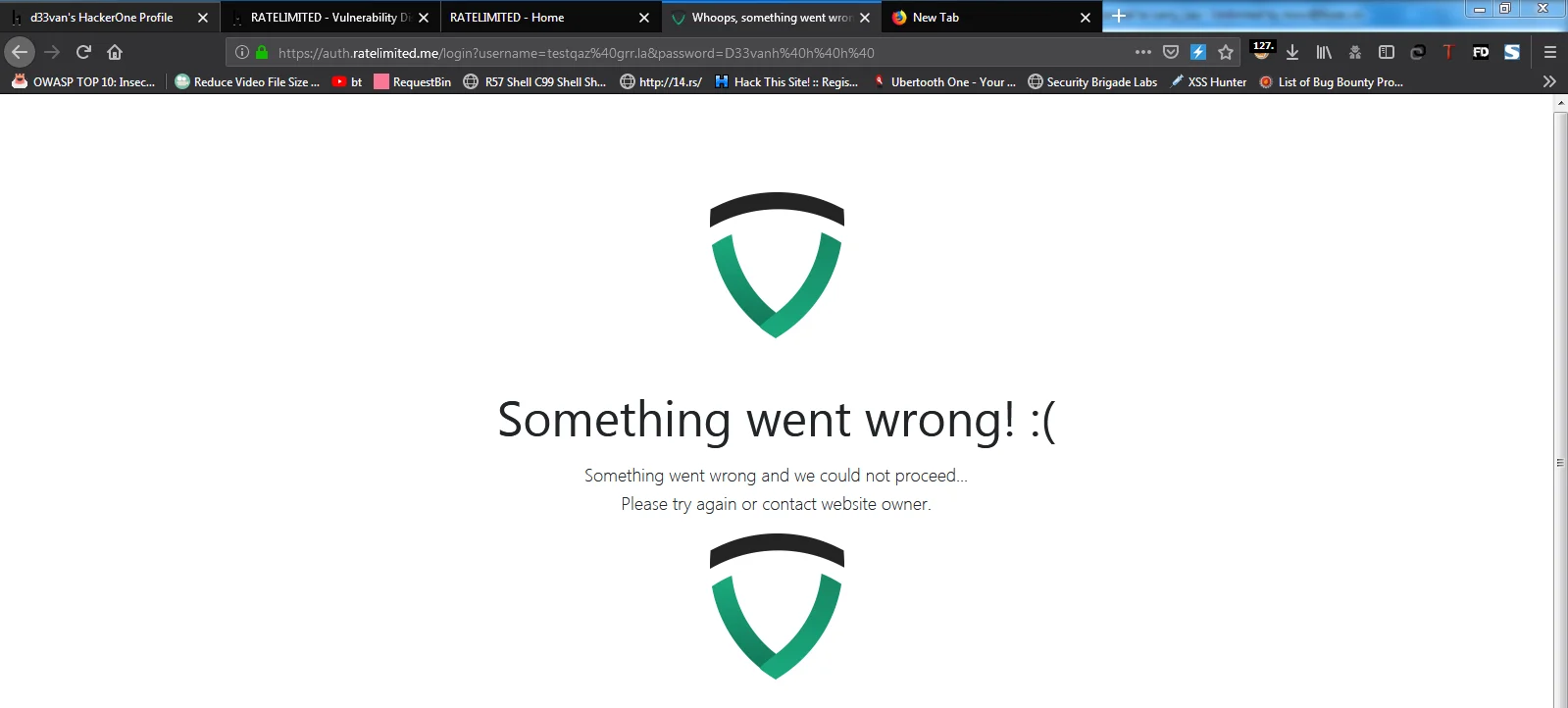
The login form sent the username and password as query parameters in a GET request, so credentials appeared in plain text in the URL and could be saved in browser history.

- Triaged in 31 hours
- Fixed in 11 days
- Disclosed after 13 days
Hi Team,
Description While I was testing the application i found this bug where the application is sending the credentials over Plain text in URL : https://auth.ratelimited.me/login?username=testqaz%40grr.la&password=D33vanh%40h%40h%40
Vulnerable URl https://auth.ratelimited.me
Impact
Impact: if the application is sending the credentials over GET request it will be saved in the history of the Browser
Attachments
Not written yet. The AI write-up for this report has not been written yet. The Original tab links to the source.
How it worked
Root cause
Likely the login form used the GET method instead of POST, placing credentials in the URL query string.
Impact
Credentials could be exposed through browser history, allowing someone with access to it to see the password.
What the attacker needed
Access to browser history
The fix
Credentials should not be sent in the URL; the text does not specify a fix.
Explained by bugbounty.wiki with AI from the original and checked against quotes from it; it can still be wrong. Read the original before relying on a detail.
Not written yet. The AI write-up for this report has not been written yet. The Original tab links to the source.
When a website sends your username and password as part of the web address, that information can be saved in your browser's history. Anyone who later sees that address can read the password.
What is Info disclosure?
Data the application should keep private (personal data, internal details, other users' records) reaches someone it should not.



