HTTP PUT method is enabled downloader.ratelimited.me
The web server allowed HTTP PUT requests to write arbitrary files to the server. An attacker could upload malicious content, potentially leading to compromise of other users or the server.
 Originally disclosed on HackerOne
- Triaged in under an hour
- Fixed in under an hour
- Disclosed after 3.3 years
Summary:
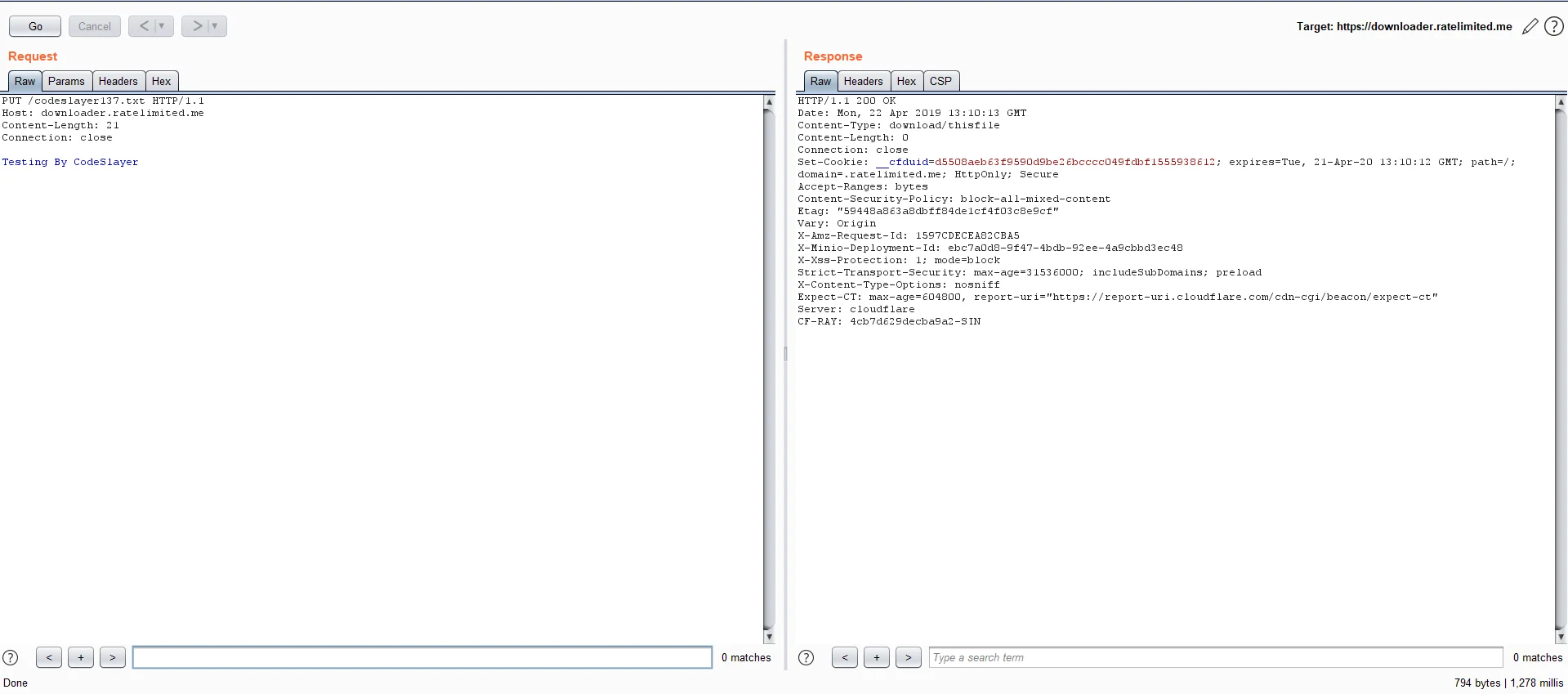
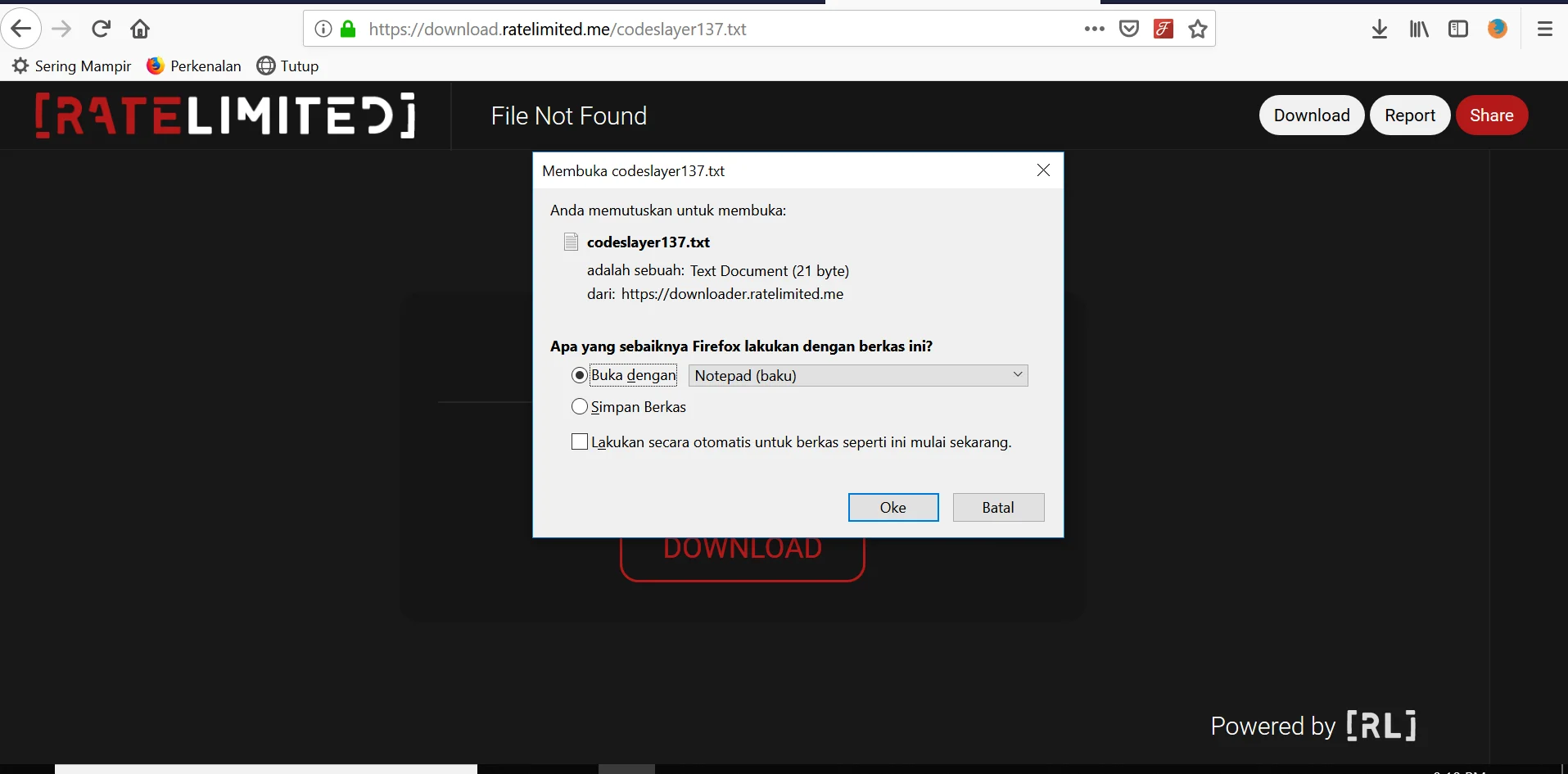
Found on HTTP PUT sites enabled on web servers. I tried testing to write the file / codelayer137.txt uploaded to the server using the PUT verb, and the contents of the file were then taken using the GET verb
Steps To Reproduce:
Request: PUT /codeslayer137.txt HTTP/1.1 Host: downloader.ratelimited.me Content-Length: 21 Connection: close
Testing By CodeSlayer
Response: HTTP/1.1 200 OK Date: Mon, 22 Apr 2019 13:10:13 GMT Content-Type: download/thisfile Content-Length: 0 Connection: close Set-Cookie: __cfduid=d5508aeb63f9590d9be26bcccc049fdbf1555938612; expires=Tue, 21-Apr-20 13:10:12 GMT; path=/; domain=.ratelimited.me; HttpOnly; Secure Accept-Ranges: bytes Content-Security-Policy: block-all-mixed-content Etag: "59448a863a8dbff84de1cf4f03c8e9cf" Vary: Origin X-Amz-Request-Id: 1597CDECEA82CBA5 X-Minio-Deployment-Id: ebc7a0d8-9f47-4bdb-92ee-4a9cbbd3ec48 X-Xss-Protection: 1; mode=block Strict-Transport-Security: max-age=31536000; includeSubDomains; preload X-Content-Type-Options: nosniff Expect-CT: max-age=604800, report-uri="https://report-uri.cloudflare.com/cdn-cgi/beacon/expect-ct" Server: cloudflare CF-RAY: 4cb7d629decba9a2-SIN
POC: https://download.ratelimited.me/codeslayer137.txt
Impact
The HTTP PUT method is normally used to upload data that is saved on the server at a user-supplied URL. If enabled, an attacker may be able to place arbitrary, and potentially malicious, content into the application. Depending on the server's configuration, this may lead to compromise of other users (by uploading client-executable scripts), compromise of the server (by uploading server-executable code), or other attacks.
Attachments
Not written yet. The AI write-up for this report has not been written yet. The Original tab links to the source.
How it worked
Root cause
Likely the server was misconfigured to allow unauthenticated PUT requests, enabling arbitrary file uploads.
Impact
An attacker could upload arbitrary content, potentially leading to compromise of other users or the server, depending on configuration.
What the attacker needed
None
How it was found
- Send a PUT request to the server with a file name and content.
- The server responds with 200 OK, indicating the file was written.
- Retrieve the uploaded file using a GET request to confirm it exists.
Explained by bugbounty.wiki with AI from the original and checked against quotes from it; it can still be wrong. Read the original before relying on a detail.
Not written yet. The AI write-up for this report has not been written yet. The Original tab links to the source.
HTTP PUT is a method that lets a client send a file to a server to be saved. If a server accepts PUT requests without proper checks, anyone can upload files. This can be dangerous because attackers might upload scripts that run on the server or in other users' browsers.
What is File upload?
An upload feature accepts a file that the server or other users' browsers then treat as code or as something trusted.