XSS in buying and selling pages, can created spoofed content (false login message)
The search query parameter on several buying and selling pages was reflected into the HTML without proper encoding, allowing an attacker to inject arbitrary HTML tags and classes. An attacker could craft a link that displays a fake login or account-locked message styled with Reverb's own CSS, tricking a logged-in user into visiting a malicious site to steal credentials.

- Triaged in 37 hours
- Fixed in 5 days
- Paid in 5 days
- Disclosed after 4 months
Previously this issue was resolved at another location in report #351376 After spending more time searching the website, I found additional areas where this problem persists:
https://sandbox.reverb.com/my/buying/orders?query= https://sandbox.reverb.com/my/selling/listings?query= https://sandbox.reverb.com/my/selling/orders?query=
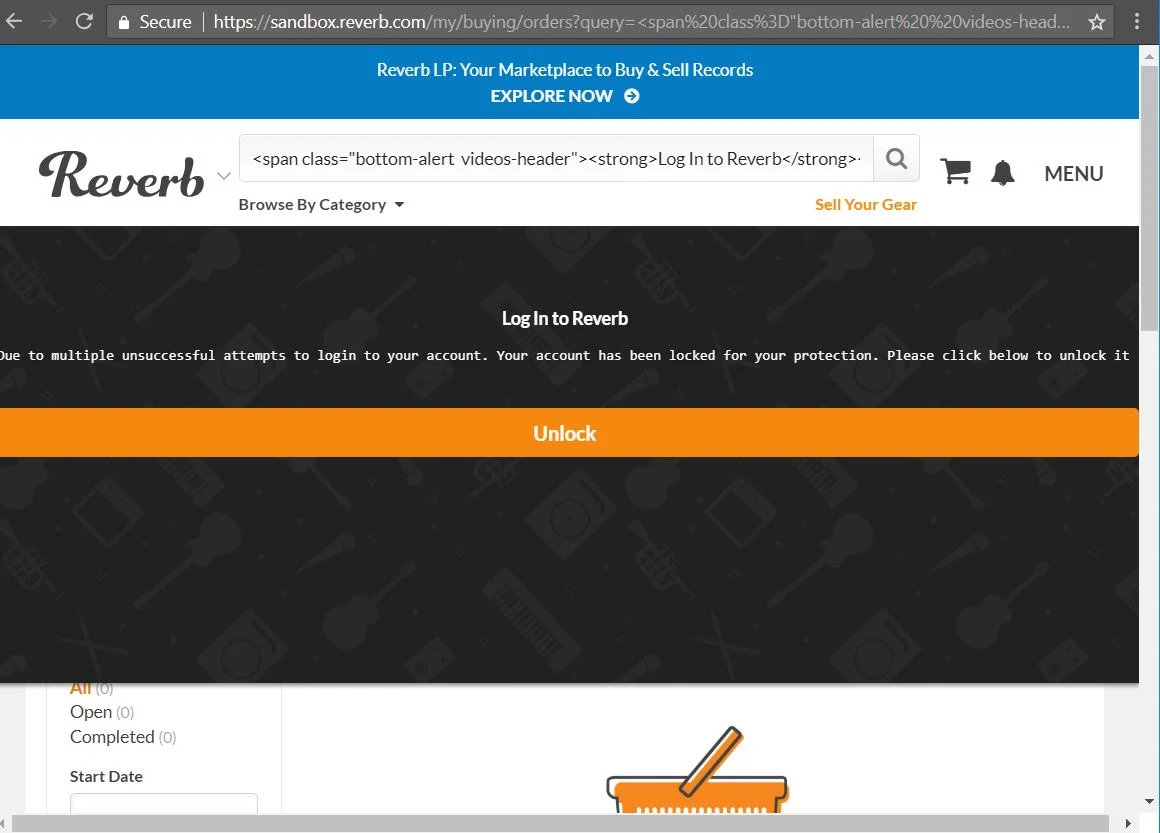
These queries render several html tags along with the class attribute. This allows a user to spoof content and make it appear to come from Reverb.com.
In this PoC I use several tags along with the class attribute to prompt a user to click an outside link. The message uses Reverb.com CSS branding and appears authentic.
Impact
An attacker can create a link on behalf of Reverb.com to persuade a logged in user to take a number of different actions like visiting a malicious website to steal account information.
Attachments
Not written yet. The AI write-up for this report has not been written yet. The Original tab links to the source.
How it worked
Root cause
Likely the search query parameter was reflected into the page without HTML-encoding, allowing injected tags and class attributes to be rendered.
Impact
An attacker could persuade a logged-in user to visit a malicious website to steal account information, though the report does not demonstrate script execution.
What the attacker needed
Victim clicks a crafted link; victim is logged in
How it was found
- Visit one of the buying or selling pages with a query parameter.
- Insert HTML tags and class attributes into the query value.
- Observe that the tags are rendered and the content appears styled as Reverb.com.
Explained by bugbounty.wiki with AI from the original and checked against quotes from it; it can still be wrong. Read the original before relying on a detail.
Not written yet. The AI write-up for this report has not been written yet. The Original tab links to the source.
When a website puts something you typed (like a search term) directly into the page without cleaning it first, an attacker can type HTML code instead of normal text. That code becomes part of the page, so the attacker can make the site show fake messages that look real. Here, the attacker made a fake 'account locked' warning with a button that leads to a bad website.
What is XSS?
Script an attacker supplies runs in another user's browser, on the target's origin, with that user's session.








