Cross-domain AJAX request
A cross-domain AJAX request vulnerability existed where an attacker could craft a malicious link that, when clicked by an admin of a demo team and after social engineering interaction with a dialog, could bypass the same-origin policy. The fix for this issue could be bypassed using alternative URL formats.

- Triaged in under an hour
- Fixed in 15 hours
- Paid in 9 days
- Disclosed after 10 days
Summary by the program
(This is similar to #97191)
If the following conditions are met…
- You are an admin of a demo team
- And you click a malicious link provided by an attacker
- And you are social engineered into interacting with the displayed dialog
- And you are using a browser that doesn't support
Content Security Policy(such as Internet Explorer)
… then a same-origin policy violation could occur.
The report
Hi,
Two weeks ago, I found a Cross-domain AJAX request, but due to the fact that you uses a very strict Content Security Policy, I hesitated to send this. Today, I noticed that bug has been fixed. But this fix can be bypassed.
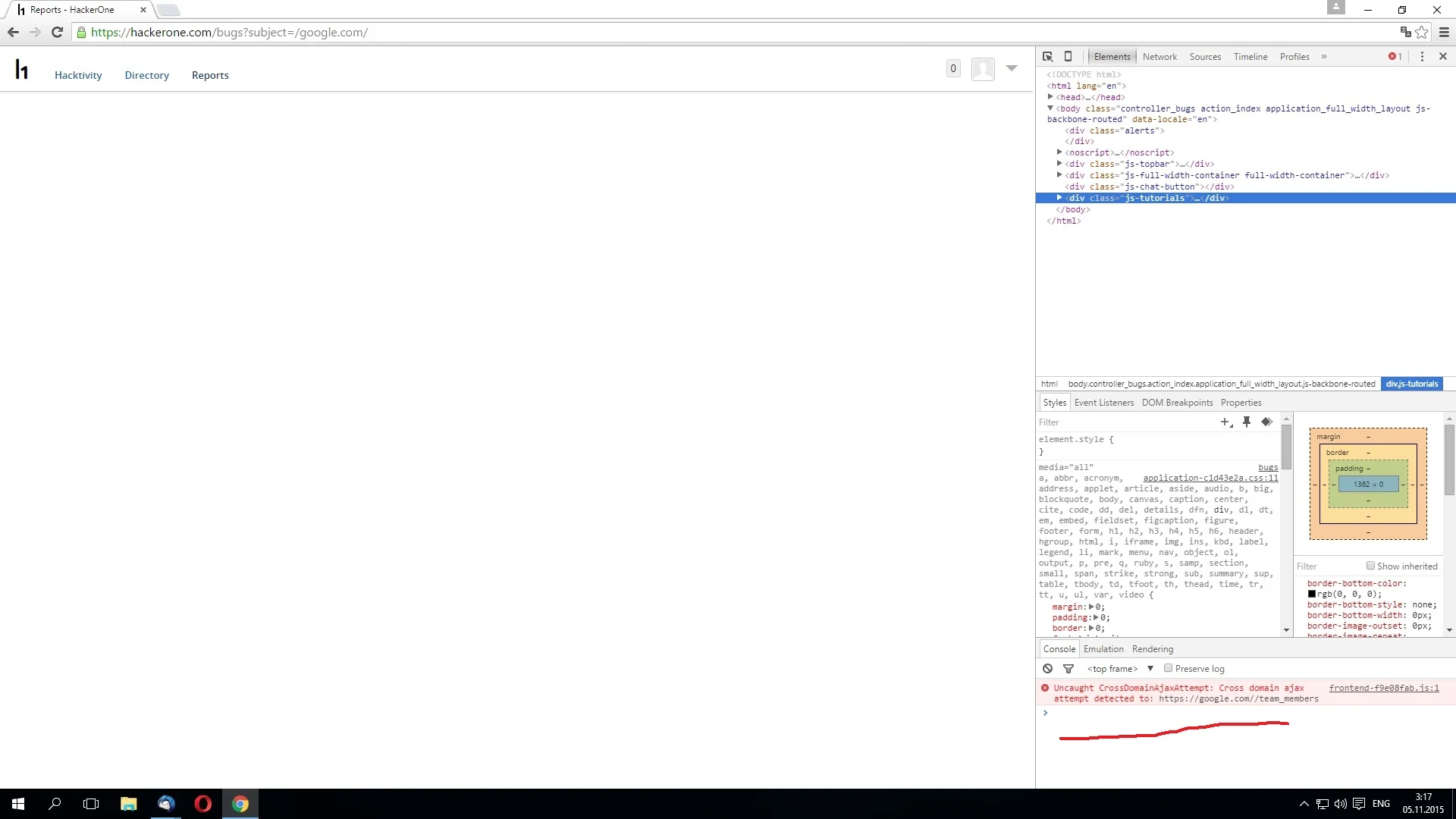
This example not working now (screenshot 1):
https://hackerone.com/bugs?subject=/google.com/
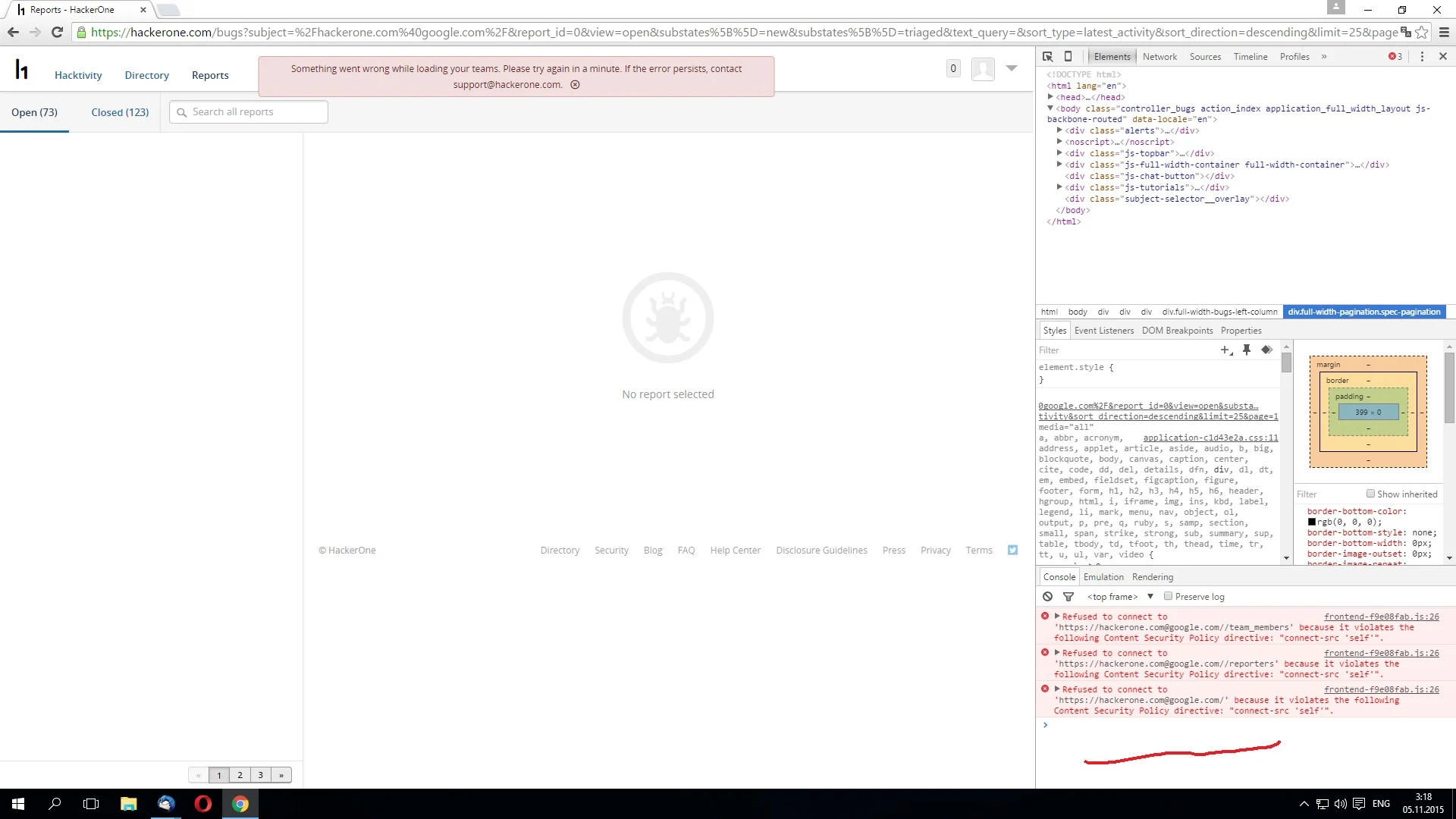
But if will be (screenshot 2):
https://hackerone.com/bugs?subject=/[email protected]/ or https://hackerone.com/bugs?subject=%2Fhackerone.com.google.com
It's will work.
Attachments
Not written yet. The AI write-up for this report has not been written yet. The Original tab links to the source.
How it worked
Root cause
Likely insufficient validation of the subject parameter allowed bypassing the same-origin policy via crafted URLs.
Impact
A same-origin policy violation could occur, potentially allowing cross-domain AJAX requests, but only if the victim uses a browser without CSP support and is social engineered.
What the attacker needed
Admin of a demo team; victim clicks a malicious link; social engineering interaction; browser without CSP support
The fix
The existing fix can be bypassed using alternative URL formats for the subject parameter.
How it was found
- As an admin of a demo team, click a malicious link provided by an attacker.
- Interact with the displayed dialog as social engineered.
- Use a browser that doesn't support Content Security Policy (such as Internet Explorer).
Explained by bugbounty.wiki with AI from the original and checked against quotes from it; it can still be wrong. Read the original before relying on a detail.
Not written yet. The AI write-up for this report has not been written yet. The Original tab links to the source.
This report describes a possible same-origin policy violation. The attacker tricks an admin into clicking a link and interacting with a dialog, and if the browser lacks CSP support, a violation could occur.
What is CORS?
A permissive cross-origin policy lets another site read responses with the user's credentials.