Denial of service in report view.
The report view loads every comment at once, so a report with many or very large comments overloads the server and returns a gateway timeout. An attacker could fill a report with comments to stop legitimate users from viewing it and to amplify load on the servers.

- Disclosed after 3 days
Hello Team! First of all thank you for acknowledging my feature request, I know it will help a lot of users.
Description:
I just wanted to report a potential vulnerability on the report view functionality. For obvious reasons I'm using my sandboxed team on an alternate account to test it, but I'm pretty sure it can be still exploited on non-sandboxed teams. I'm guessing that one of the main differences between sandboxed and non-sandboxed teams is that non-sandboxed have rate-limiting, but this wouldn't be a successfuly way of preventing this potential attack, but just a way of slowing it down, but not for long.
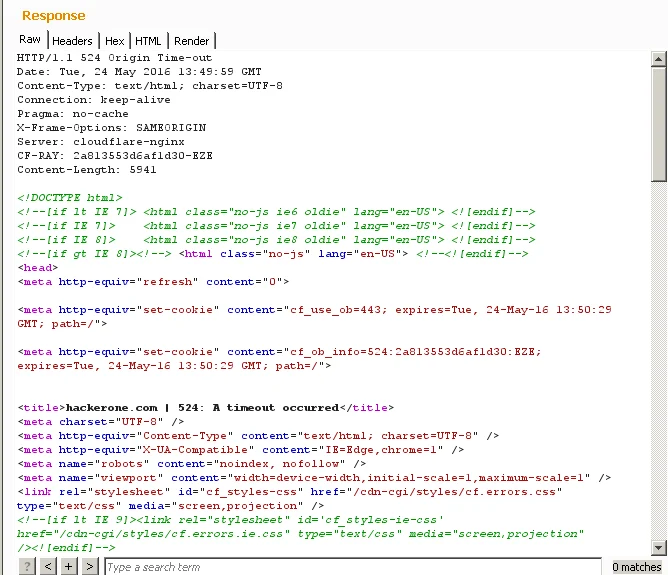
Basically the problem relies in that the view report functionality, tries to load every comment, either man made or system made, which, given enough comments, overloads the server and sends a 524 Origin Time-Out.
I was able to get this error by sending around 450 "test" messages on the same report, or by sending a few big messages. You can see it by yourself on reports 137508, 132450 and 138662 (Three different ways of exploiting this vulnerability)
Why is this a vulnerability?
A malicious individual could very well leverage this vulnerability to prevent a legitimate user from accessing the report. In addition, it causes an unnecessary load on Hackerone's servers, since it can be used as a request amplification attack, by issuing a large amount of requests to the report, once it's filled with random info. Also, even though compression techniques can be used to reduce the amount of data transferred, this can by greatly bypassed by issuing high-entropy data (random), which would hinder the compression mechanisms.
How to fix this?
Several ideas come to mind:
- Limit the amount of consecutive comments that can be seen at once in a report, providing a "see more" button which will at most overload the client interface, not the server.
- Limit the amount of data sent per comment, providing a "see more" button which loads the following chunk of data.
- When a high amount of comment load is detected (either because of a high amount of comments or big comments being sent), perform a CAPTCHA check.
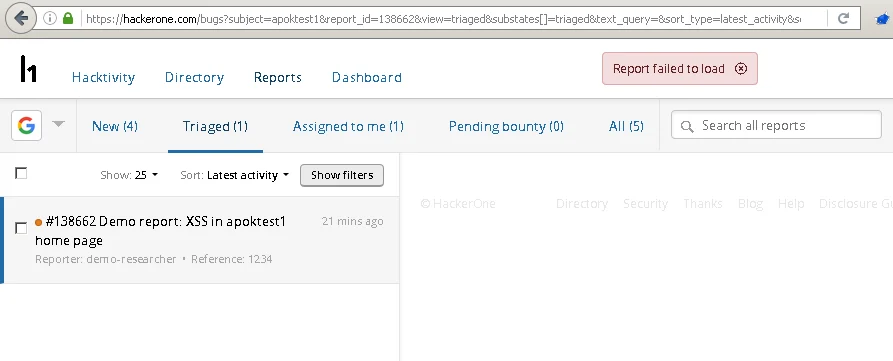
As you can see on the following screenshot, the report failed to load:
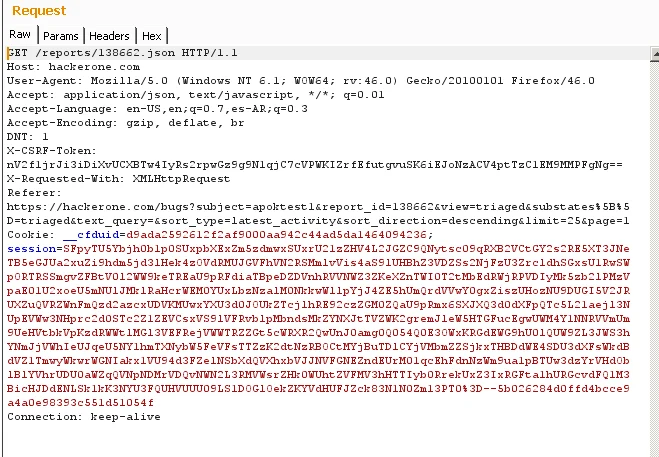
This is the request made by the Ajax controller:
This is the response sent by the server, showing a gateway error after 60 seconds:
Not written yet. The AI write-up for this report has not been written yet. The Original tab links to the source.
How it worked
Root cause
Likely the report view fetches and renders all comments in a single request without pagination or size limits, so the work grows without bound with the number of comments.
Impact
A malicious user could prevent legitimate users from accessing a report and could cause unnecessary load on the servers through repeated requests; the author notes that rate-limiting on non-sandboxed teams would only slow the attack, not stop it.
What the attacker needed
Ability to post comments on a report; a report with many or very large comments
The fix
The report view should paginate comments and limit comment size, and optionally require a CAPTCHA when a high volume of comments is detected.
How it was found
- Open a report and post around 450 short test messages, or a few very large messages, on the same report.
- Open the report view and observe that it fails to load.
- The Ajax request returns a gateway error after about 60 seconds.
Explained by bugbounty.wiki with AI from the original and checked against quotes from it; it can still be wrong. Read the original before relying on a detail.
Not written yet. The AI write-up for this report has not been written yet. The Original tab links to the source.
A web page that shows a discussion thread was trying to load all the messages at the same time. When there were hundreds of messages, or a few very large ones, the server took too long and gave up, so the page would not open. Someone could abuse this to make a report unreadable for other people.
What is DoS?
A request that exhausts resources or crashes a component. Many programs forbid testing it; reports usually show it from code, not by attacking.






