User Controllable Cookie
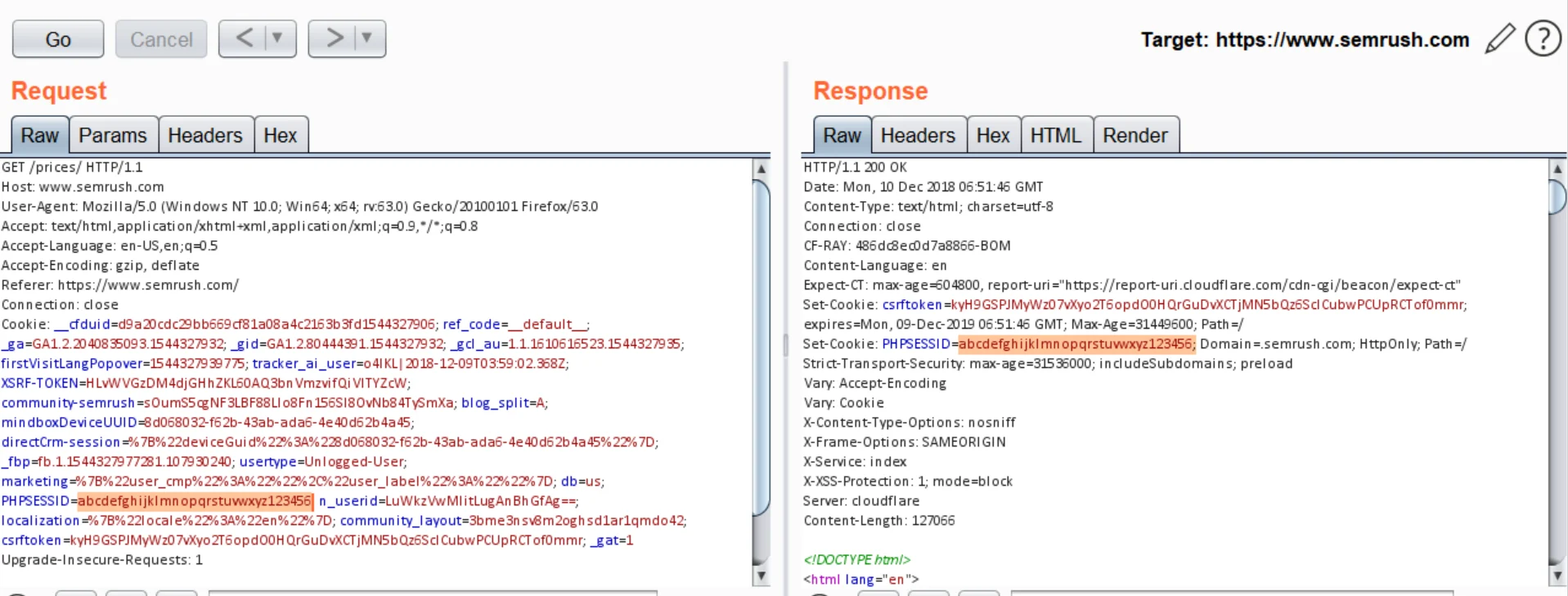
The server does not validate the PHPSESSID cookie for unauthenticated users, so an attacker can set an arbitrary session ID and later reuse it. This could allow the attacker to perform malicious activities and prevent accurate tracking of user activities.

- Disclosed after 11 days
NOTE! Thanks for submitting a report! Please replace all the [square] sections below with the pertinent details. Remember, the more detail you provide, the easier it is for us to verify and then potentially issue a bounty, so be sure to take your time filling out the report!
User Controllable Cookie
Impact
Hi Team.
I dont know whether it is eligible for bounty or not, just want to let you know that cookies are not validating by the server when the requests comes from an un-authenticated user. Which means an attacker can set user cookie (Physically) and later attacker can set the same cookie at his browser and can perform malicious activities (can't track user activities accurately).
Also tested it is not possible with the authenticated user but may lead other possible vulnerabilities in future as it is a important cookie (PHPSESSID). Please check the screenshot and also the below URL (Only for reference provided netsparker link and not used for scanning or to attack).
https://www.netsparker.com/web-vulnerability-scanner/vulnerabilities/user-controllable-cookie/
Request:
GET /prices/ HTTP/1.1 Host: www.semrush.com User-Agent: Mozilla/5.0 (Windows NT 10.0; Win64; x64; rv:63.0) Gecko/20100101 Firefox/63.0 Accept: text/html,application/xhtml+xml,application/xml;q=0.9,/;q=0.8 Accept-Language: en-US,en;q=0.5 Accept-Encoding: gzip, deflate Referer: https://www.semrush.com/ Connection: close Cookie: __cfduid=d9a20cdc29bb669cf81a08a4c2163b3fd1544327906; ref_code=default; _ga=GA1.2.2040835093.1544327932; _gid=GA1.2.80444391.1544327932; _gcl_au=1.1.1610616523.1544327935; firstVisitLangPopover=1544327939775; tracker_ai_user=o4IKL|2018-12-09T03:59:02.368Z; XSRF-TOKEN=HLvWVGzDM4djGHhZKL60AQ3bnVmzvifQiVlTYZcW; community-semrush=sOumS5cgNF3LBF88Llo8Fn156SI8OvNb84TySmXa; blog_split=A; mindboxDeviceUUID=8d068032-f62b-43ab-ada6-4e40d62b4a45; directCrm-session=%7B%22deviceGuid%22%3A%228d068032-f62b-43ab-ada6-4e40d62b4a45%22%7D; _fbp=fb.1.1544327977281.107930240; usertype=Unlogged-User; marketing=%7B%22user_cmp%22%3A%22%22%2C%22user_label%22%3A%22%22%7D; db=us; PHPSESSID=abcdefghijklmnopqrstuvwxyz123456; n_userid=LuWkzVwMlitLugAnBhGfAg==; localization=%7B%22locale%22%3A%22en%22%7D; community_layout=3bme3nsv8m2oghsd1ar1qmdo42; csrftoken=kyH9GSPJMyWz07vXyo2T6opdO0HQrGuDvXCTjMN5bQz6SclCubwPCUpRCTof0mmr; _gat=1 Upgrade-Insecure-Requests: 1
Attachments
Not written yet. The AI write-up for this report has not been written yet. The Original tab links to the source.
How it worked
Impact
An attacker could set a user cookie and later reuse it to perform malicious activities, though the report notes this is not possible with authenticated users and may lead to other vulnerabilities in the future.
What the attacker needed
Unauthenticated user; ability to set a cookie
Explained by bugbounty.wiki with AI from the original and checked against quotes from it; it can still be wrong. Read the original before relying on a detail.
Not written yet. The AI write-up for this report has not been written yet. The Original tab links to the source.
The site did not check the session cookie for unauthenticated users, so someone could set their own cookie value and the site would accept it. This could let an attacker perform malicious activities or affect tracking.
What is CSRF?
Another site makes a signed-in user's browser perform an action they did not intend.


