Subdomain takeover on developer.openapi.starbucks.com
A Starbucks subdomain pointed to a third-party API portal service (Mashery) that allowed anyone to register a trial account and claim the subdomain as their own custom domain. The attacker could then serve arbitrary content, including JavaScript, under the Starbucks domain.

- Triaged in 5 hours
- Fixed in 42 days
- Paid in 42 days
- Disclosed after 4 months
Hi team,
Summary:
Subdomain developer.openapi.starbucks.com is vulnerable to subdomain takeover via Mashery service. The reason why it's worked unfortunately not fully clear to me.
Details:
Doing my recent research on starbucks.com subdomains, I stumbled upon http://developer.openapi.starbucks.com/ The server returned 200 response with the following

The Server header of HTTP responce was Mashery Proxy so it gave me an idea, that I should go and try register an trial account at https://www.mashery.com/
After registering an account and confirming it, I got access to the dashboard. Under the Portal Settings menu there was an option to add your own domain name. I added developer.openapi.starbucks.com as my domain and I get no error. After I went to the http://developer.openapi.starbucks.com/ and saw welcome page
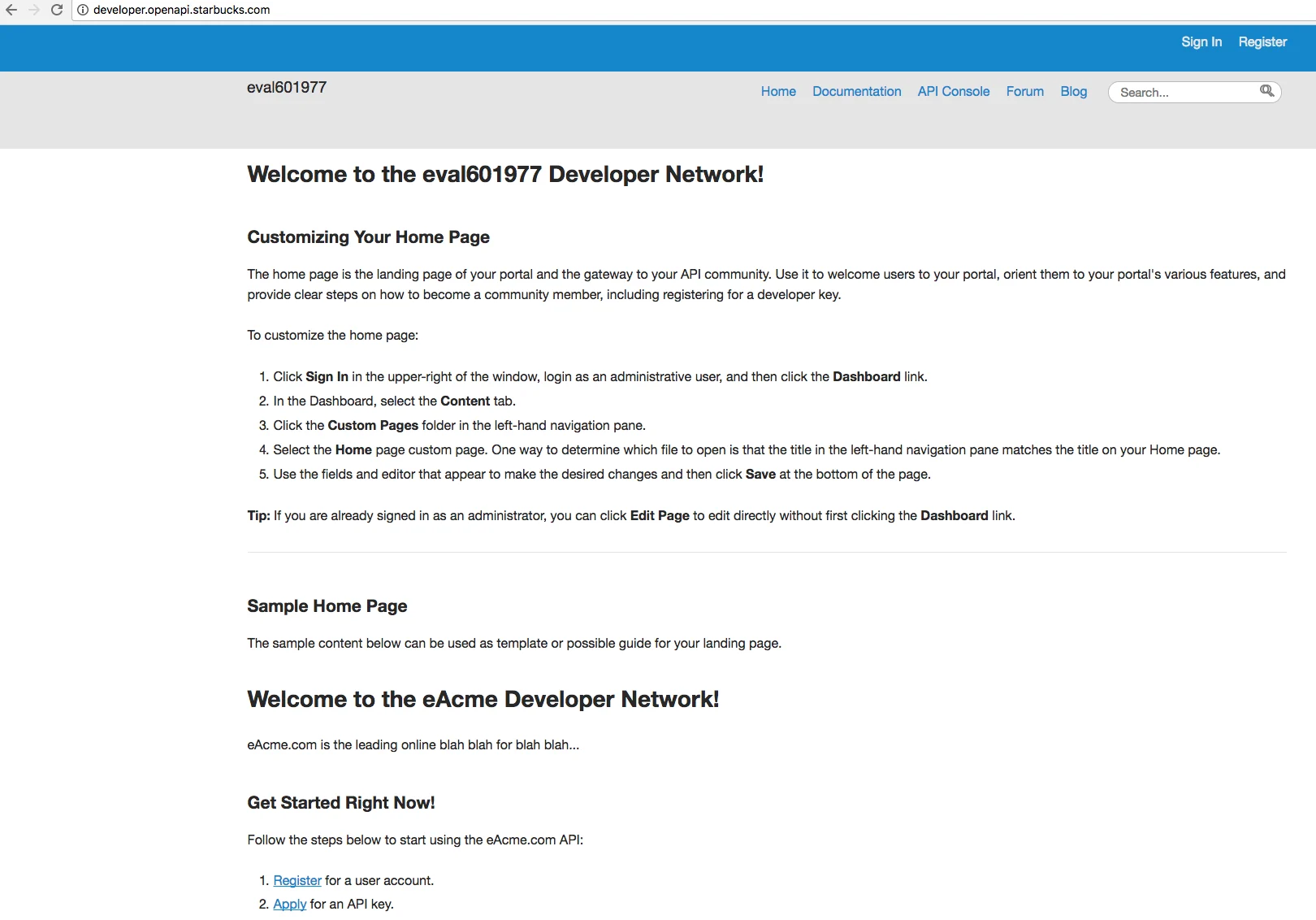
which gave me understanding that I can serve my own content under developer.openapi.starbucks.com
PoC:
I added simple js code to the Welcome page alert(document.domain) for this proof-of-concept.
To confirm it just click this link http://developer.openapi.starbucks.com/
Impact:
As I can serve my own content without any restrictions, with this webpage I can set up a campaign to steal user cookie sessions, or use it to steal credentials, or for phishing purposes.
Please let me know, if you need more information!
Thanks, Danil
Not written yet. The AI write-up for this report has not been written yet. The Original tab links to the source.
How it worked
Root cause
Likely the third-party service allowed any user to add an arbitrary custom domain without verifying ownership, and the target subdomain still had a DNS record pointing to that service.
Impact
An attacker could serve arbitrary content under the Starbucks domain, which could be used to steal session cookies or credentials, or for phishing.
What the attacker needed
A free Mashery trial account
How it was found
- Visit the subdomain and note the Server header says Mashery Proxy.
- Register and confirm a trial account at Mashery.
- In the dashboard, add the target subdomain as a custom domain.
- Visit the subdomain again and see the attacker's welcome page.
Explained by bugbounty.wiki with AI from the original and checked against quotes from it; it can still be wrong. Read the original before relying on a detail.
Not written yet. The AI write-up for this report has not been written yet. The Original tab links to the source.
A subdomain is a smaller part of a website's address, like a branch of a main site. This report shows that one such branch was still pointing to an outside service that let anyone claim it. Because the address still looked like it belonged to Starbucks, an attacker could put their own page there and trick visitors.
What is Subdomain takeover?
A company's DNS still points at a cloud service it no longer uses, so anyone can claim it and serve content on the company's domain.





