SSRF external interaction
The chatbox on the login page appeared to make the server send an HTTP request to a URL supplied by the user. An attacker could use this to make the server contact arbitrary external or internal systems.

- Triaged in 44 hours
- Fixed in 36 days
- Disclosed after 40 days
hi team,
i found ssrf external interaction on your website which is https://my.stripo.email/cabinet/#/login?guid=&tn=&locale=en on chatbox
description:- the attacker might cause the server to make connection back to it self or to other web services within the organization infrastructure or to external third party systems
steps to reproduce:-
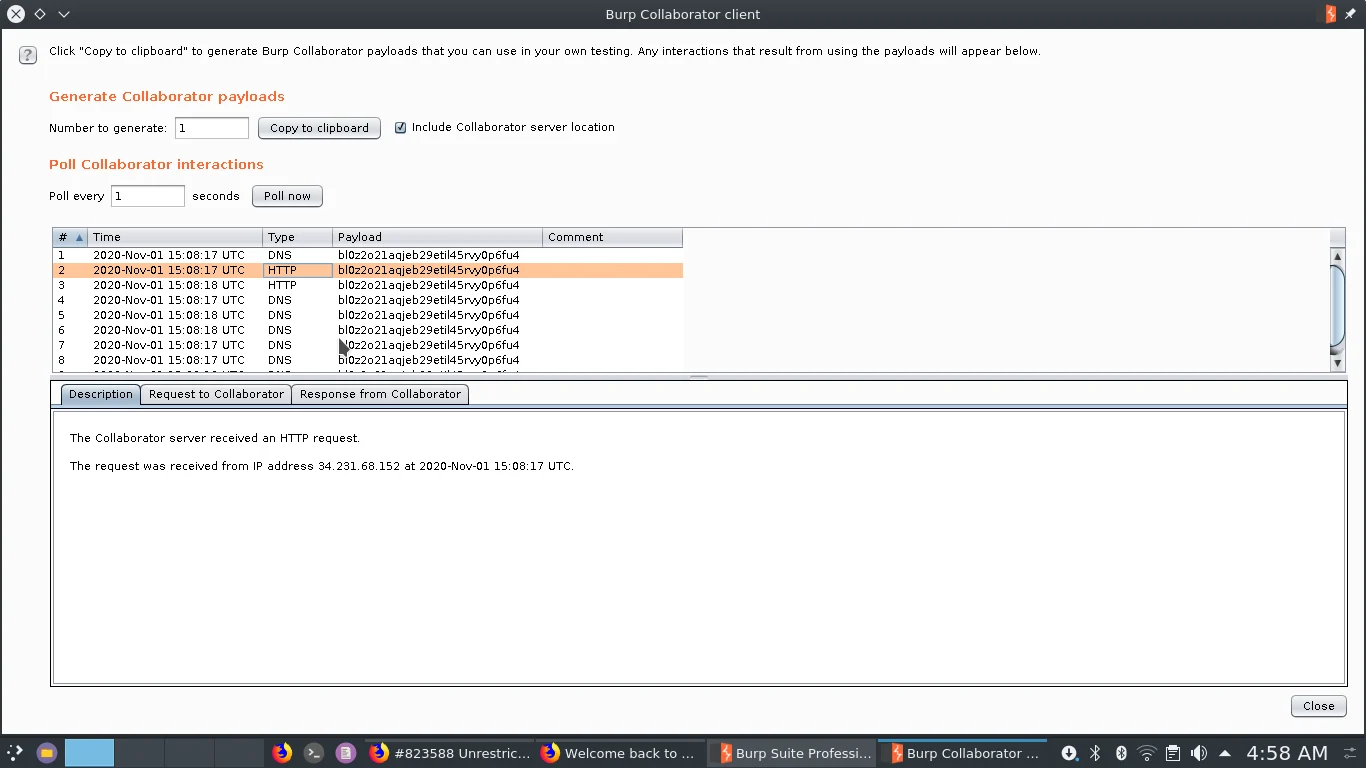
1)navigate to this website https://my.stripo.email/cabinet/#/login?guid=&tn=&locale=en 2))there you can find chat box 3)paste burp collaborator URL or http://pingb.in 4)you will get HTTP request to your server
note:-i previously submitted this issues in bug crowd it marked as p4 so i set severity to low and i tested many chat application not all are vulnerable example bug crowd chat system.
Impact
by this vulnerability attacker can map out attack surface
Attachments
Not written yet. The AI write-up for this report has not been written yet. The Original tab links to the source.
How it worked
Root cause
Likely the chatbox feature passed user-supplied URLs to a server-side HTTP client without validating or restricting the destination.
Impact
An attacker could map out the attack surface by making the server connect to systems it can reach, though the report does not show access to internal data.
What the attacker needed
Access to the login page; a server to receive requests
How it was found
- Open the login page that contains the chatbox.
- Locate the chatbox on that page.
- Enter a URL pointing to a server you control.
- Observe an HTTP request arriving at your server.
Explained by bugbounty.wiki with AI from the original and checked against quotes from it; it can still be wrong. Read the original before relying on a detail.
Not written yet. The AI write-up for this report has not been written yet. The Original tab links to the source.
A server-side request forgery (SSRF) happens when a website takes a web address from a user and fetches it on the server's behalf. Here the chatbox seemed to fetch a link the user typed, so the person could make the company's server visit a site they control. That can be used to probe what the server can reach, including internal services.
What is SSRF?
The server can be made to fetch an address the attacker chooses, reaching internal services, cloud metadata or other customers' data.





