SSRF in Export template to ActiveCampaign
The export template feature to ActiveCampaign accepted a user-supplied API URL and made a server-side request to it. An attacker could make arbitrary HTTP/HTTPS requests from the server.

- Triaged in 20 hours
- Fixed in 54 days
- Disclosed after 4 months
Summary:
I found a SSRF vulneranility in export template to email marketing platform (ActiveCampaign).
Steps To Reproduce:
[add details for how we can reproduce the issue]
- Login to your account in
- Go to
https://my.stripo.email/cabinet/#/templates/ - Click on
Create your first mail& select one template - Export
- Click on
ActiveCampaign - Insert your server address in
API URLand a fake string in API Key - Now Click on Export and see your
server logs
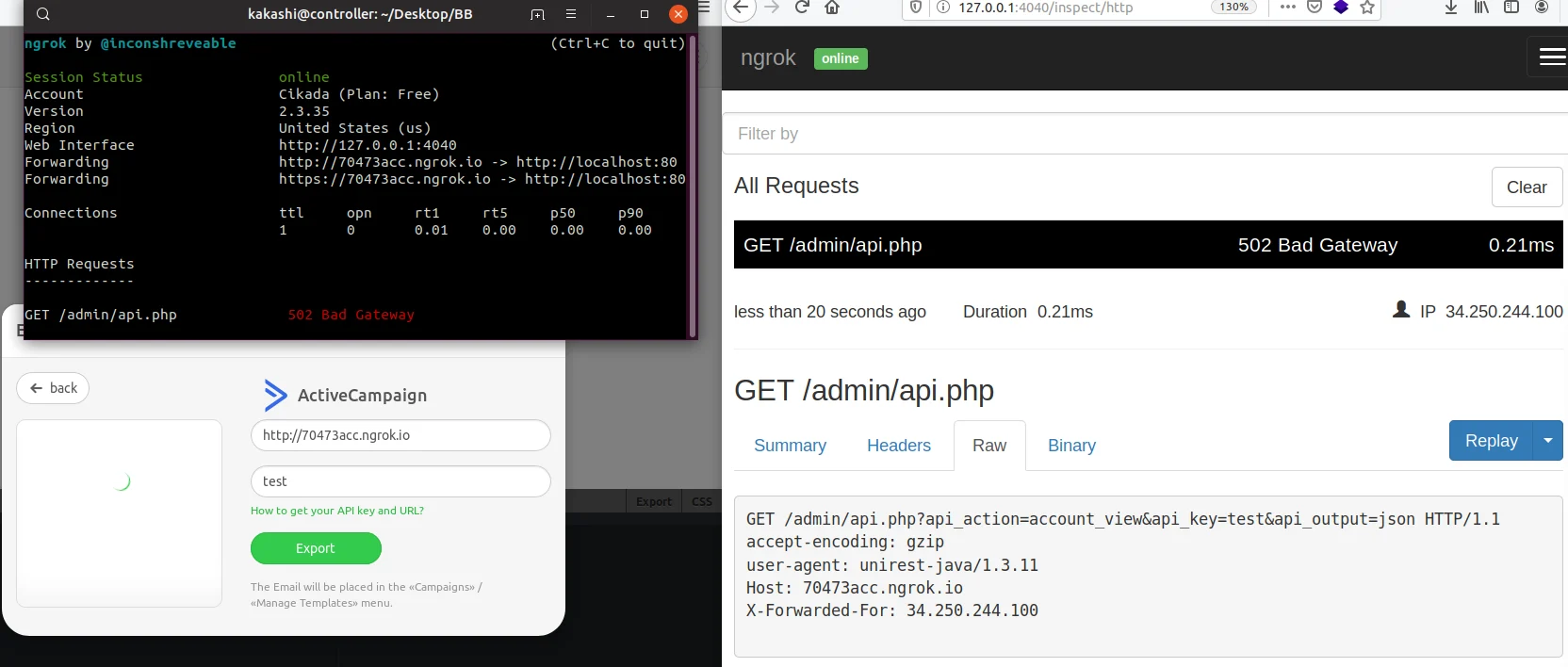
PoC Video
Impact
The export template to ActiveCampaign is vulnerable to a SSRF vulnerability. The vulnerability allows an attacker to make arbitrary HTTP/HTTPS requests.
Not written yet. The AI write-up for this report has not been written yet. The Original tab links to the source.
How it worked
Root cause
Likely the export feature used the user-supplied API URL directly for a server-side request without validating or restricting the destination.
Impact
An attacker could make arbitrary HTTP/HTTPS requests from the server.
What the attacker needed
A user account; access to the export feature
How it was found
- Log in to the account.
- Open the templates page.
- Create a mail and select a template.
- Choose Export and then ActiveCampaign.
- Enter your own server address as the API URL and a fake API key.
- Click Export and check your server logs.
Explained by bugbounty.wiki with AI from the original and checked against quotes from it; it can still be wrong. Read the original before relying on a detail.
Not written yet. The AI write-up for this report has not been written yet. The Original tab links to the source.
A server-side request forgery (SSRF) bug lets someone make the server send a request to a web address the attacker chooses. Here, the export feature trusted the API URL field and fetched it from the server, so the attacker could see the request arrive on their own server.
What is SSRF?
The server can be made to fetch an address the attacker chooses, reaching internal services, cloud metadata or other customers' data.



