Changing Driver Passwords With Only an Authenticated Session (no password, no email)
The email change function did not require the current password, unlike the password change function. An attacker with an authenticated session could change the driver's email to one they control, then use the password reset flow to take over the account.

- Disclosed after 3 months
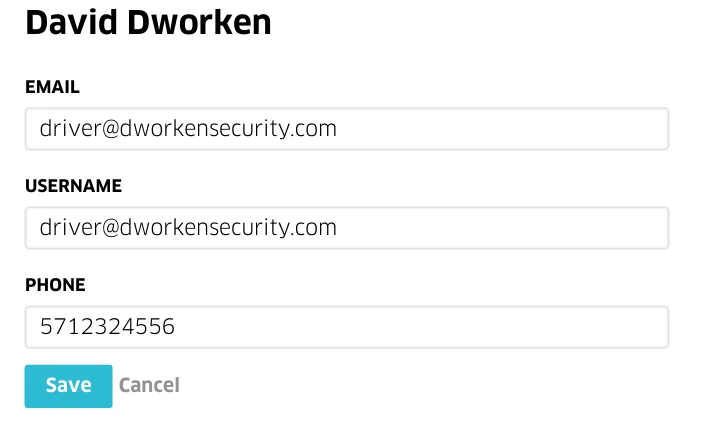
It is possible to completely take over a driver's account with only an authenticated session. If a driver is logged on and wants to change their password, they will be asked for their current password (changePassword.png), but when they want to change their email, they are not asked for their current password (changeEmail.png). Once a driver's email has been changed, it is trivial to reset their password through the password reset page (which only requires access to the driver's email account).
So the steps to take over a driver's account from an authenticated session are:
- Change the driver's email to something that is attacker controlled
- Log out
- Use the forgot your password page to have a reset link sent to the attacker controlled email
- Use the link to reset the driver's password
In order to fix this, you have to add password authentication for changing the email associated with the account (or do what you do for riders and not allow changing the email).
Thanks, David Dworken
Attachments

Not written yet. The AI write-up for this report has not been written yet. The Original tab links to the source.
How it worked
Impact
An attacker with an authenticated session could take over the driver's account.
What the attacker needed
An authenticated driver session
The fix
Password authentication should be added for changing the email associated with the account, or email changes should be disallowed as they are for riders.
How it was found
- Change the driver's email to something that is attacker controlled
- Log out
- Use the forgot your password page to have a reset link sent to the attacker controlled email
- Use the link to reset the driver's password
Explained by bugbounty.wiki with AI from the original and checked against quotes from it; it can still be wrong. Read the original before relying on a detail.
Not written yet. The AI write-up for this report has not been written yet. The Original tab links to the source.
When you change your password on a website, you usually have to type your old password first. Here, changing your email address did not ask for the old password. So anyone who already had access to a logged-in session could switch the email to their own, then use the 'forgot password' link to get a reset code sent to that email and take over the account.
What is Account takeover?
Getting into someone else's account through a flaw in sign-in, password reset, second factor, single sign-on or session handling.




