Content injection on 404 error page at faspex.uber.com
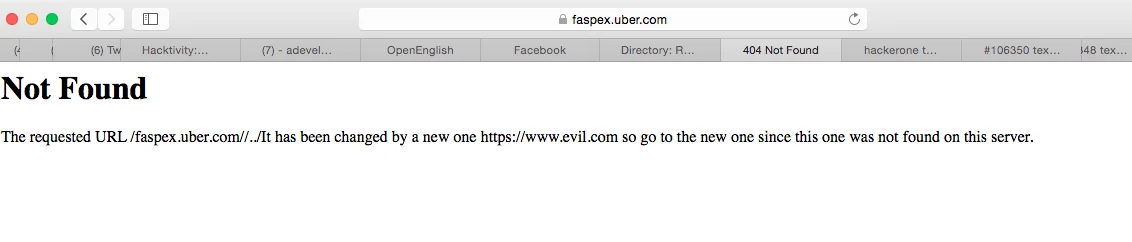
The 404 error page reflected part of the requested URL path, allowing an attacker to inject arbitrary text into the page. This could be used to spoof content and facilitate phishing.

- Disclosed after 12 days
INTRO:
i want to report a text injection and a missconfiguration of the 404 page which can be used in phishing at faspex.uber.com
EXPLOITABILITY:
IMPACT:
The issue can be used for an attacker to spoof content and phishing purposes
FIX:
Use a Predefined 404 page will fix the issue,
Please let me know if any more info needed,
Best Regards,
@ak1t4
Attachments
Not written yet. The AI write-up for this report has not been written yet. The Original tab links to the source.
How it worked
Root cause
Likely the 404 page reflected the requested URL path without sanitising or encoding it.
Impact
An attacker could spoof content on the error page and use it for phishing.
What the attacker needed
Victim clicks a crafted link
The fix
The 404 page should use a predefined, static error page instead of reflecting user input.
Explained by bugbounty.wiki with AI from the original and checked against quotes from it; it can still be wrong. Read the original before relying on a detail.
Not written yet. The AI write-up for this report has not been written yet. The Original tab links to the source.
When a website cannot find a page, it shows a 404 error. Here, the site copied part of the web address the visitor typed into the error message without cleaning it. An attacker could craft a link that makes the error page display a fake message, tricking people into visiting a malicious site.
What is XSS?
Script an attacker supplies runs in another user's browser, on the target's origin, with that user's session.






