Able to view others' gifts on /gift/share URL, giftId is predictable, and easy to manipulate
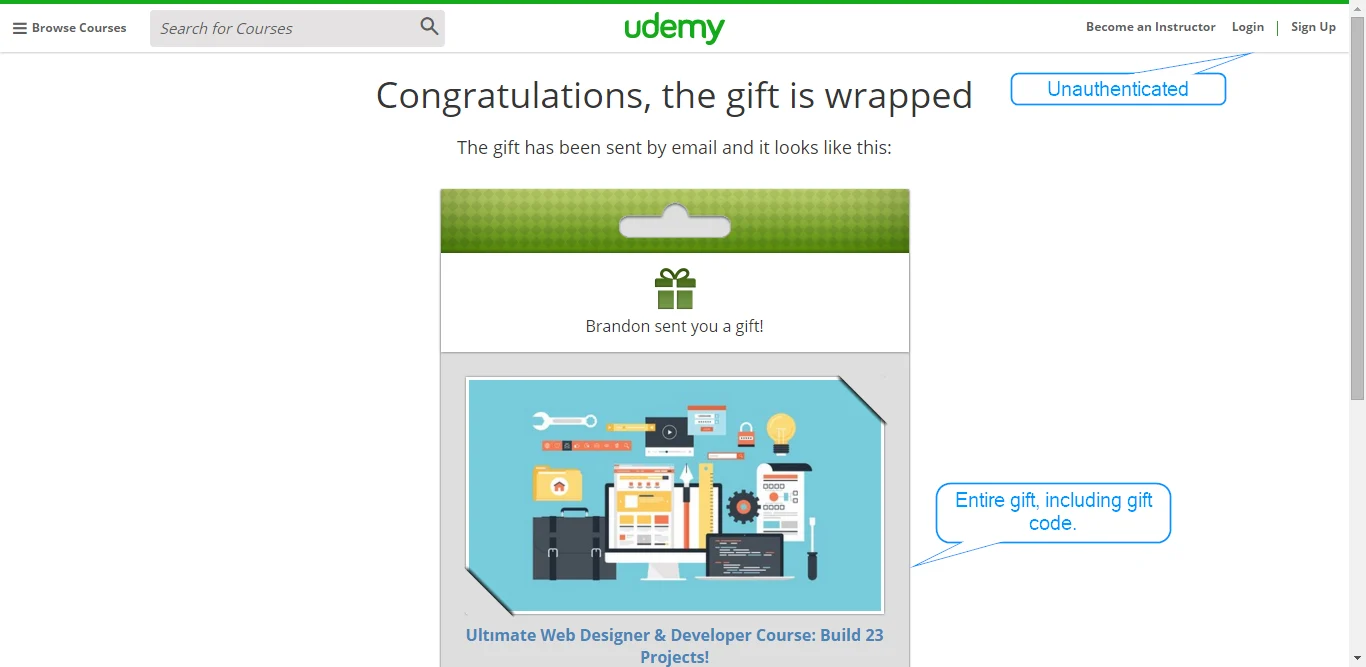
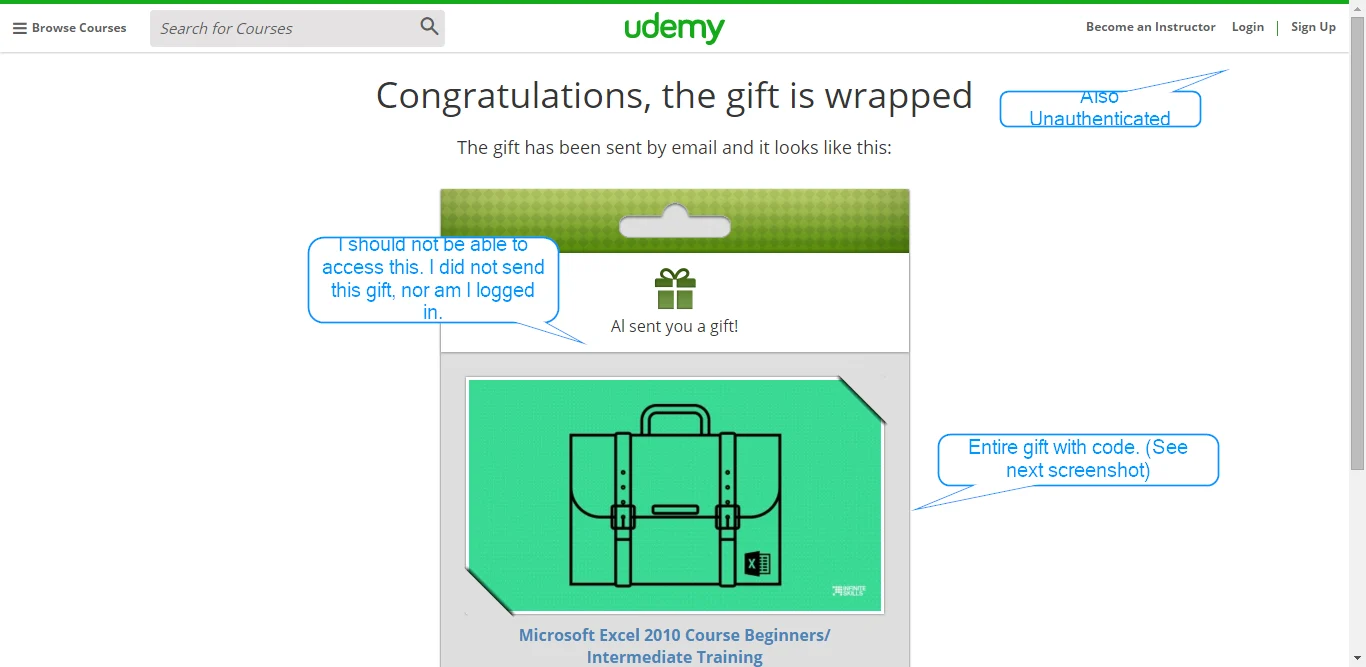
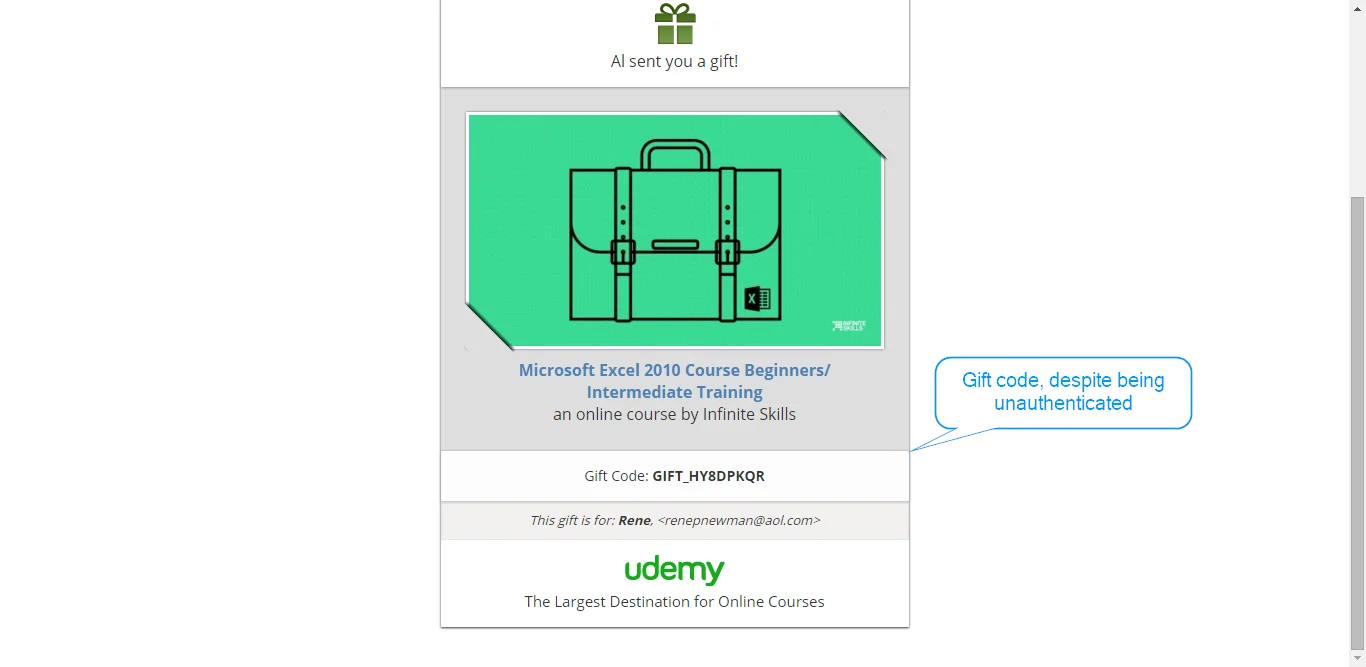
Gift share URLs used sequential numeric gift IDs, so anyone could view other people's gifts by changing the ID. This exposed recipient names, emails and redemption codes, and allowed redeeming gifts to unrelated accounts.
 Originally disclosed on HackerOne
- Triaged in 2 days
- Fixed in 16 days
- Paid in 16 days
- Disclosed after 13 months
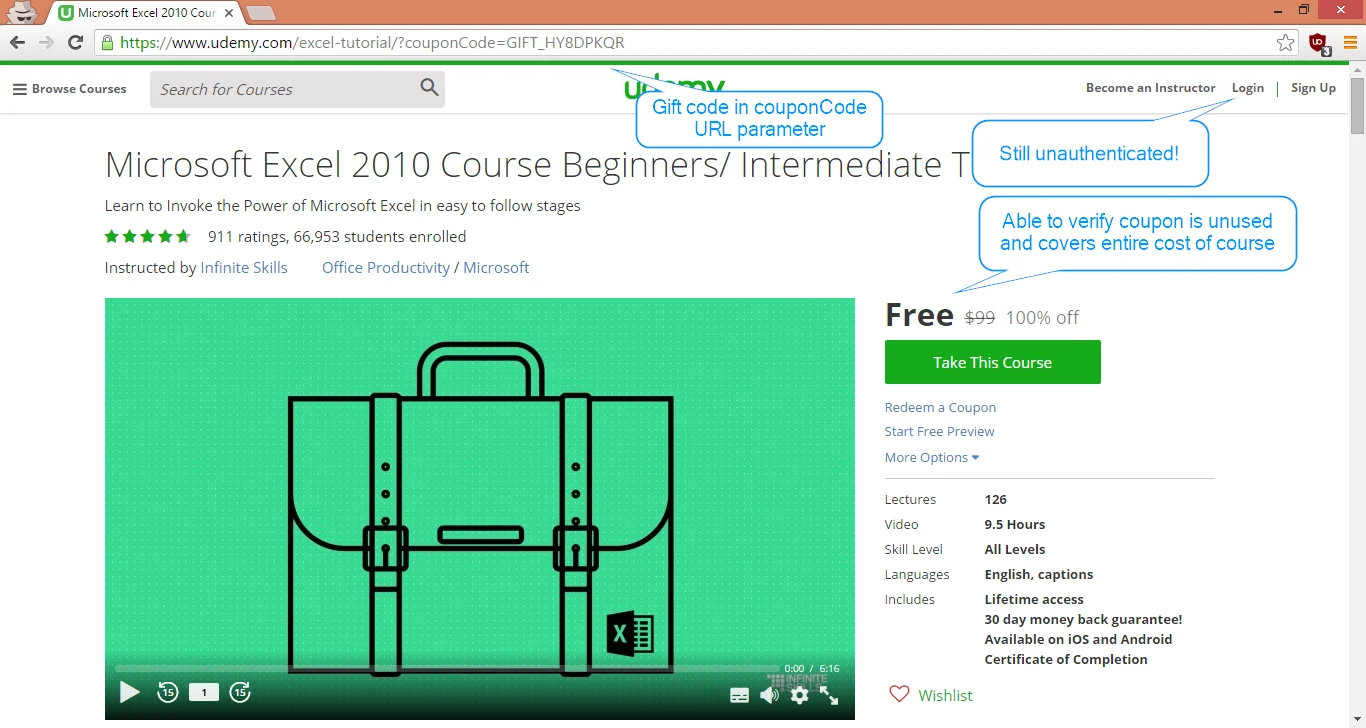
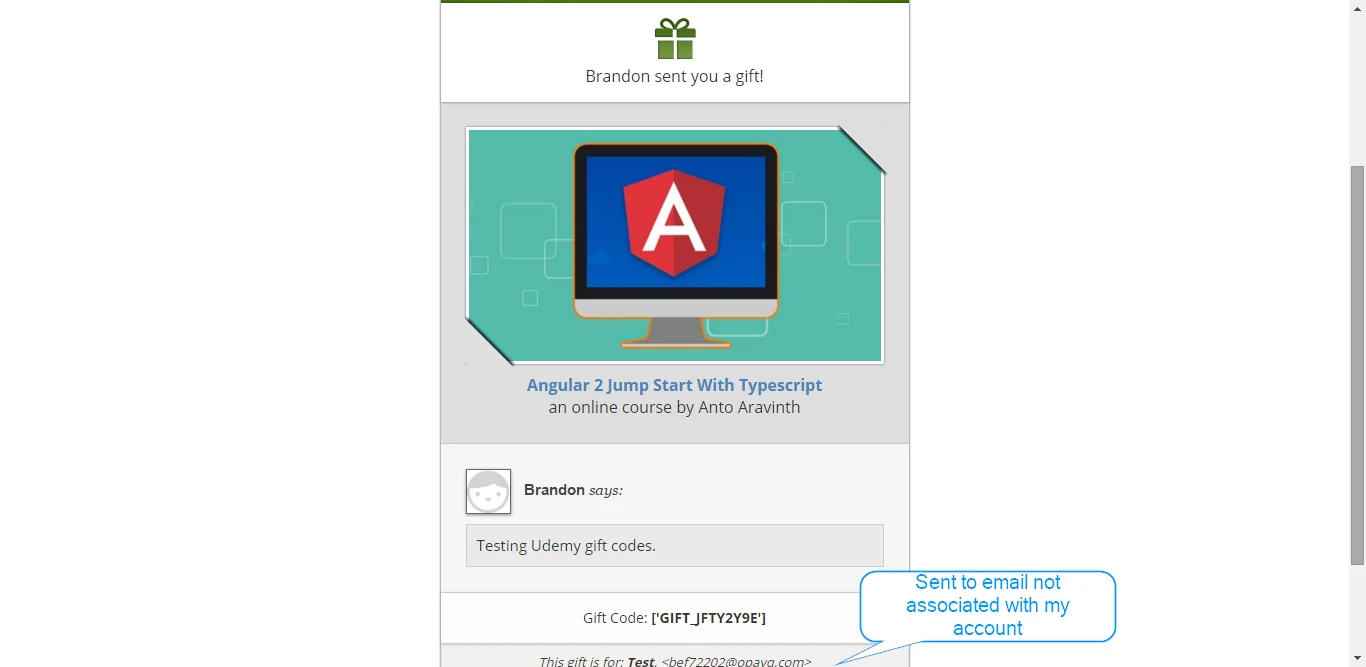
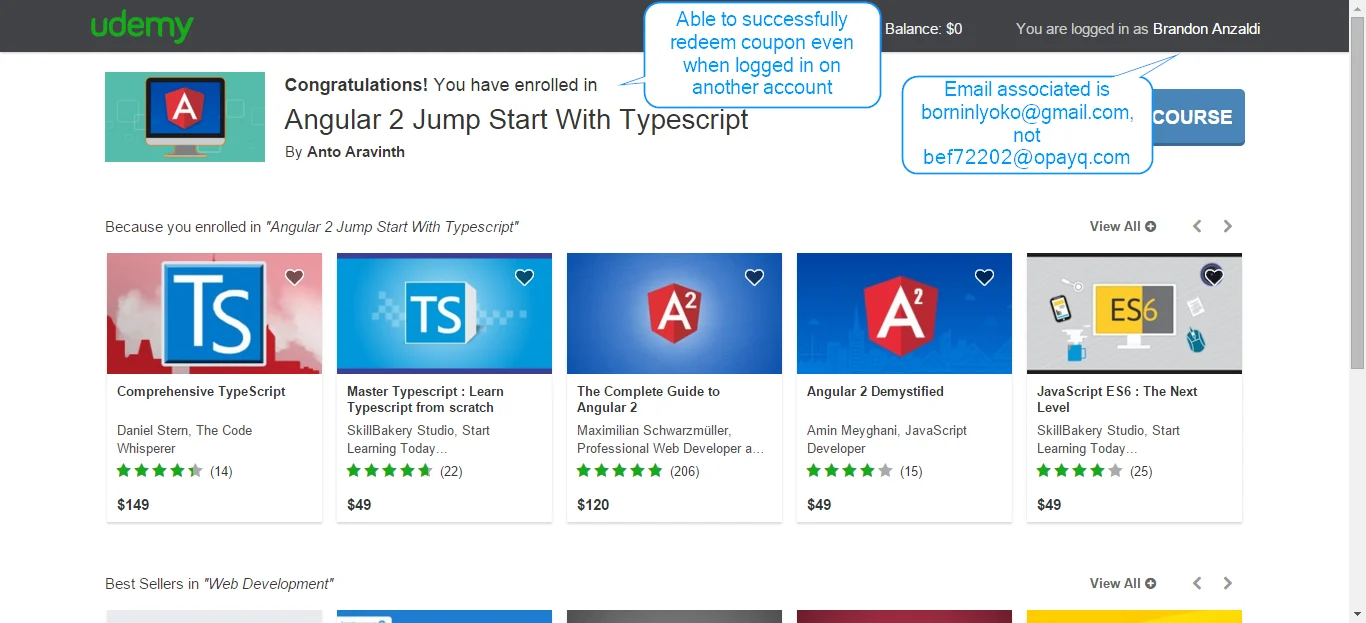
I recently purchased a gift for a friend, and noticed the share URL gift ID was simply numeric. I managed to access other people's gifts simply by incrementing and decrementing the ID by 2, I was able to verify that the price was dropped to "Free", regardless of if I was logged in or not, and I was able to successfully redeem a gift to an account, even if it was not associated with the gift email, or the account that initially purchased the gift.
Scope:
This affects Udemy.com at the /gift/share/ endpoint. Reveals name and email of recipient of gift, as well as exposing the gift redemption code.
Example URLs:
https://www.udemy.com/gift/share/?giftId=559076 (mine) https://www.udemy.com/gift/share/?giftId=559078 (not mine, but still able to access it [giftId incremented by 2])
Replication:
- From a valid URL, increment or decrement the giftId parameter by 2.
- Visit the course page, and add the
couponCodeparameter with the coupon code as the value to verify the code is valid, or enter it in the "Redeem a Coupon" box. - Check out, and you will be able to redeem another person's gifts.
Suggested Actions to Rectify Issue:
- Require user to be authenticated, and only allow them to view their purchased gifts.
- If you want to give unauthenticated access, use randomly generated IDs instead of sequential IDs.
Attachments
Not written yet. The AI write-up for this report has not been written yet. The Original tab links to the source.
How it worked
Root cause
Likely the gift share endpoint used predictable sequential numeric identifiers and did not check that the requester owned the gift.
Impact
An attacker could view other users' gift recipient names, emails and redemption codes, and could redeem gifts to accounts not associated with the gift email or purchaser.
What the attacker needed
A valid gift share URL; no authentication required
The fix
The endpoint should require authentication and only allow users to view their own gifts, or use randomly generated IDs if unauthenticated access is needed.
How it was found
- Start from a valid gift share URL.
- Change the giftId parameter by adding or subtracting 2.
- Visit the course page and add the couponCode parameter with the coupon code, or enter it in the Redeem a Coupon box.
- Check out to redeem another person's gift.
Explained by bugbounty.wiki with AI from the original and checked against quotes from it; it can still be wrong. Read the original before relying on a detail.
Not written yet. The AI write-up for this report has not been written yet. The Original tab links to the source.
A gift page used a simple number in the web address to identify each gift. Because the numbers were in order, changing the number let someone see other people's gift details and codes. This is like guessing a locker number and finding it unlocked.
What is IDOR?
One user can read or change another user's data, usually by changing an identifier the server trusts without checking who is asking. One of the most paid bug classes on web programs.


