Reflected XSS in scores.ubnt.com
The product parameter on a Ubiquiti scores page was reflected into the page without proper validation, so a crafted link could run script in a logged-in user's browser. An attacker could use this to steal session cookies from authenticated users or for phishing.

- Triaged in 22 hours
- Fixed in 4 days
- Paid in 4 days
- Disclosed after 4 months
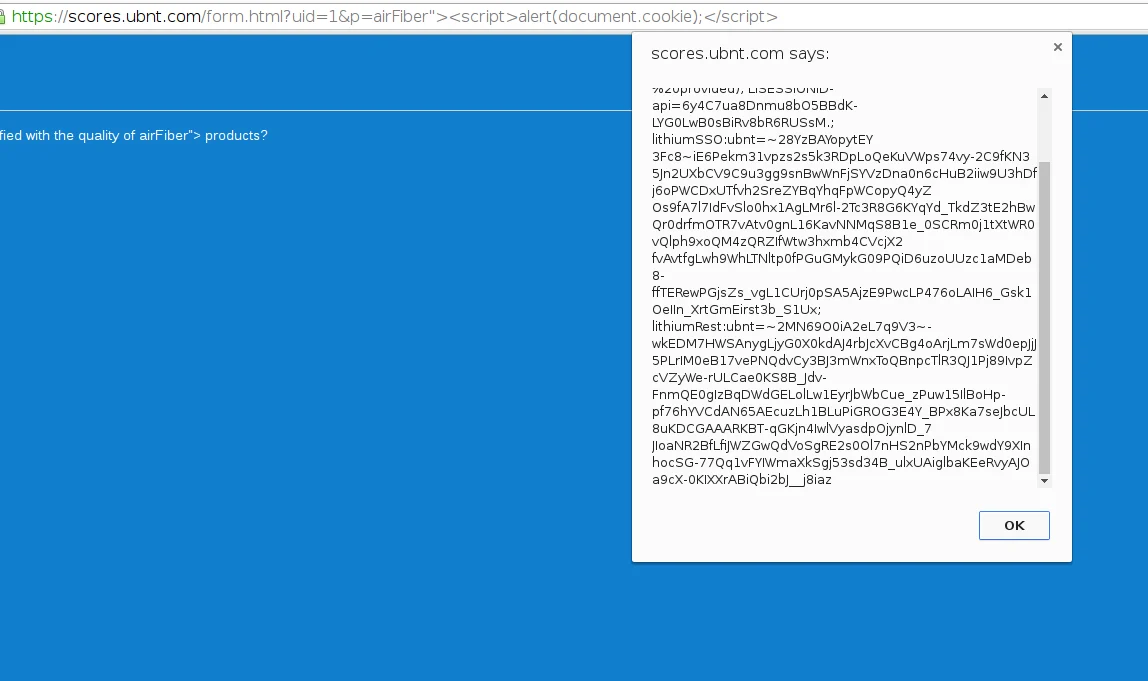
Parameter p in https://scores.ubnt.com/form.html?uid=1&p=airFiber is vulnerable to XSS. If a user logs in at https://account.ubnt.com/login and visits https://scores.ubnt.com/form.html?uid=1&p=airFiber"><script>alert(document.cookie);</script>, a message box will be presented with his cookie. Attached is a POC (xss-scores-chrome.png).
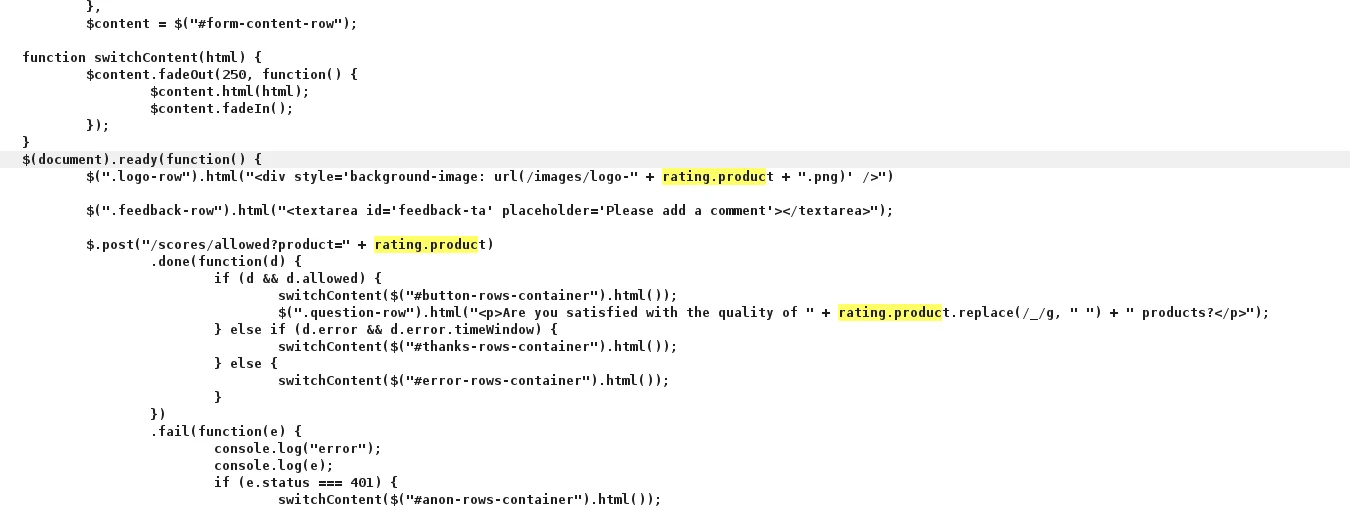
Vulnerable code of https://scores.ubnt.com/form.html is also attached (xss-vuln-code.png), where it is visible that product (parameter p) is included without proper input validation.
This vulnerability can be used to steal cookies (session data) from authenticated users as also for phishing attacks. It can be exploited by sending a malicious link to users or posting this link to a forum.
As UBNT implements SSO, this can be very dangerous.
To mitigate this vulnerability, consider the following:
*output encoding of all special characters *input validation of data suplied from users
Attachments
Not written yet. The AI write-up for this report has not been written yet. The Original tab links to the source.
How it worked
Root cause
The page reflected the product parameter into its output without output encoding or input validation.
Impact
Because the site uses SSO, stolen session cookies could be dangerous, and the link could also be used for phishing.
What the attacker needed
Victim is logged in; victim clicks a crafted link
The fix
The page should be fixed by output-encoding all special characters and validating user-supplied input.
How it was found
- Log in at the Ubiquiti account login page.
- Visit the scores form page with a crafted product parameter containing script.
- A message box appears showing the user's cookie.
Explained by bugbounty.wiki with AI from the original and checked against quotes from it; it can still be wrong. Read the original before relying on a detail.
Not written yet. The AI write-up for this report has not been written yet. The Original tab links to the source.
When a website takes something from the address bar and puts it straight into the page, it can accidentally include code as well as text. Here the 'p' value was echoed back, so a link could make the browser run a small script. That script can read the user's login cookie, which is like a temporary pass that keeps them signed in, and send it to the attacker.
What is XSS?
Script an attacker supplies runs in another user's browser, on the target's origin, with that user's session.





