Critical IDOR - Delete any group of any organization remotely
The delete-group endpoint did not check that the group belonged to the requesting user's organisation, so changing the group identifier in the request let an attacker delete any group in any organisation. The reporter states this is the same class of flaw as a previously reported member-deletion IDOR.

- Triaged in under an hour
- Fixed in 2 hours
- Disclosed after 3 months
Hello Team,
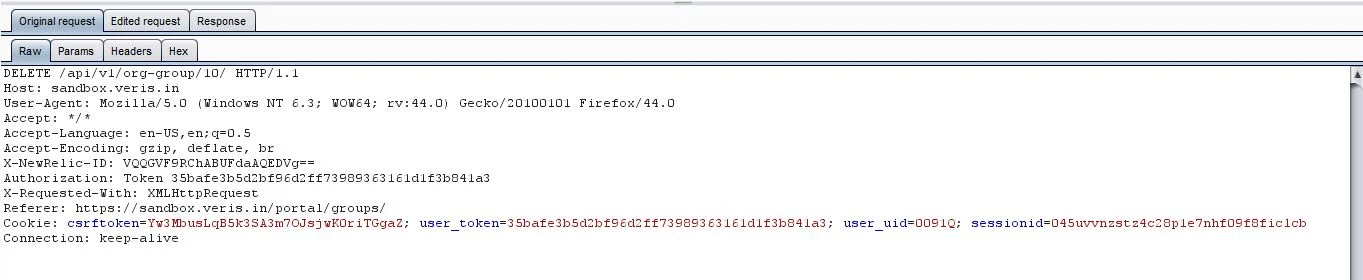
I have found a critical IDOR for deleting any groups of any organization remotely. It means an attacker can easily delete any group of any organization from his account by just chaning the group_id in delete request.
This is similar to previously reported IDOR to delete any members. So I am not writing down steps to reproduce again as it is also similar but jut to perform in Groups section.
Proof of Concept: Please find the attached screenshots.
Do evaluate it and inform me accordingly.
Best Regards,
Hely H. Shah
Attachments


Not written yet. The AI write-up for this report has not been written yet. The Original tab links to the source.
How it worked
Root cause
Likely the delete-group handler used the client-supplied group identifier without verifying that the group belonged to the caller's organisation.
Impact
An authenticated attacker could delete any group of any organisation; the report provides only screenshots as evidence.
What the attacker needed
An account on the platform; knowledge of a target group identifier
Explained by bugbounty.wiki with AI from the original and checked against quotes from it; it can still be wrong. Read the original before relying on a detail.
Not written yet. The AI write-up for this report has not been written yet. The Original tab links to the source.
An IDOR (insecure direct object reference) happens when a website trusts an identifier sent by the user, such as a group number, without checking that the user is allowed to touch that group. Here the delete request accepted any group number, so someone with an account could remove groups belonging to other organisations. The report gives no technical detail beyond that.
What is Access control?
A user can do something their role should not allow: reach an admin function, act on a feature they have not paid for, or skip a permission check. IDOR is the special case where the object belongs to someone else.