Critical - Insecure Direct Object Reference - Deleting any member of any organization remotely
The application's member deletion endpoint did not verify that the requesting user belonged to the same organisation as the member being deleted. An attacker with any account could delete members from other organisations by changing the member identifier in the request.

- Triaged in under an hour
- Fixed in 2 hours
- Disclosed after 3 months
Hello Team,
I have found an extremely critical issue with the help of which an attacker can delete any member of any organization. The vulnerability is Insecure Direct Object Reference(IDOR) which leads to privilege escalation as an attacker can perform such a critical attack from his own account.
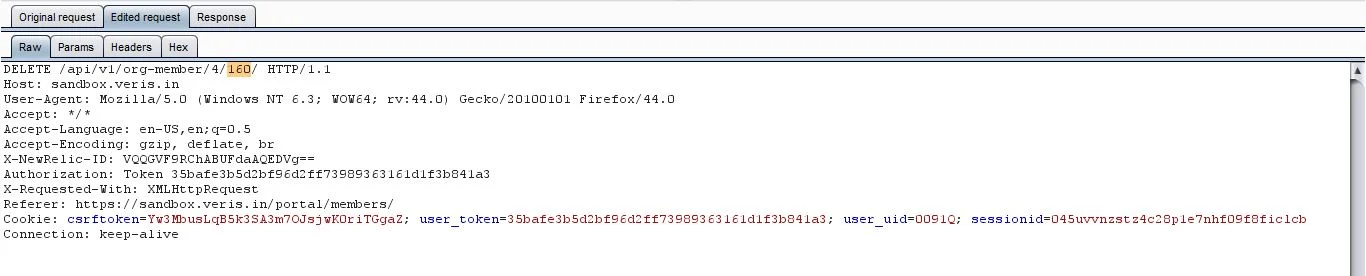
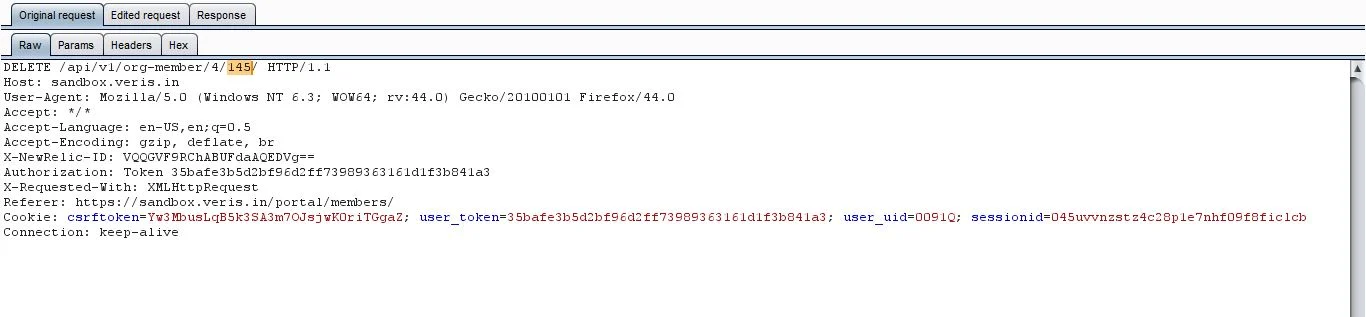
Vulnerable URL: DELETE /api/v1/org-member/4/[MEMBER_ID]/
On changing the member id, application allows an attacker to delete that member. I tried using my 2 accounts and got success in the same.
Steps to Reproduce:'
- Login to your Veris View Portal.
- Go to Member Book.
- Set up Burp Suite to intercept the request OR simply edit the member id from browser's Inspect Element feature.
- Delete a Member and intercept the request.
- Replace the member id with some other member of other organization.
- Forward the request.
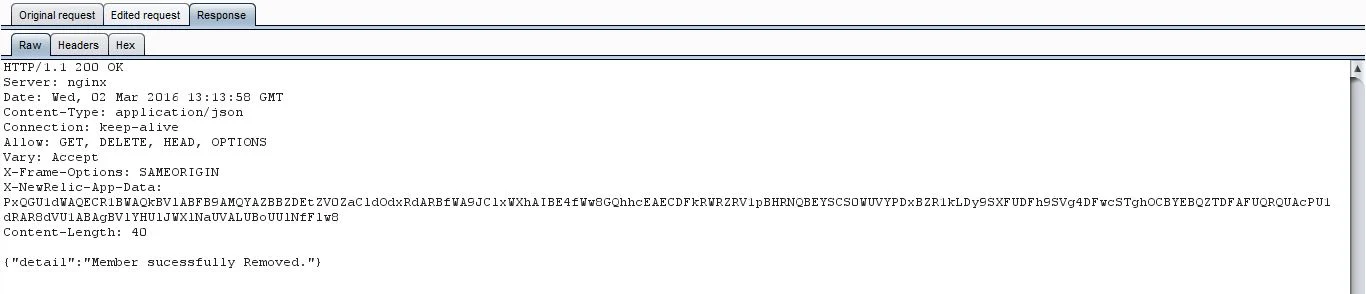
- Check in the other organization. Member would be deleted.
Proof of Concept: Please find the attached screenshots.
Do evaluate it and inform me accordingly.
Best Regards,
Hely H. Shah
Attachments
Not written yet. The AI write-up for this report has not been written yet. The Original tab links to the source.
How it worked
Impact
An attacker with any account could delete members from any organisation.
What the attacker needed
A valid account; ability to intercept or edit requests
How it was found
- Log in to the portal.
- Go to the Member Book section.
- Intercept the delete request or edit the member ID in the browser.
- Delete a member and capture the request.
- Replace the member ID with one from another organisation.
- Forward the request and check that the other organisation's member is deleted.
Explained by bugbounty.wiki with AI from the original and checked against quotes from it; it can still be wrong. Read the original before relying on a detail.
Not written yet. The AI write-up for this report has not been written yet. The Original tab links to the source.
An IDOR (Insecure Direct Object Reference) happens when a website uses an identifier like a member number in a request but does not check that the person making the request is allowed to act on that member. Here, anyone logged in could change the number to someone else's member ID and delete that person from a different organisation.
What is IDOR?
One user can read or change another user's data, usually by changing an identifier the server trusts without checking who is asking. One of the most paid bug classes on web programs.


