Unmasking BeaverTail: A Forensic Deep Dive into the Lazarus Group’s Fake Recruiter Campaign (APT38)
A fake recruiter campaign on LinkedIn tricked developers into cloning a GitHub repository whose tailwind.config.js file contained an obfuscated Node.js dropper. When the victim ran standard npm commands, the dropper beaconed to attacker infrastructure and pulled down a Python-based infostealer that harvested browser profiles, passwords, cookies and crypto wallet data.
 Published on medium.com
The Lazarus Group (APT38) is escalating its attacks on the Web3 and cryptocurrency sectors through highly sophisticated social engineering campaigns. By masquerading as tech recruiters on LinkedIn, these state-sponsored threat actors trick developers into cloning weaponized GitHub repositories.This report unpacks…
The full write-up lives on its author's site
It belongs to its author, so we link to it rather than copy it. The other two tabs are our own rewrites, checked against it.
Context
The Lazarus Group (APT38) is a state-sponsored threat actor that has been escalating attacks on the Web3 and cryptocurrency sectors through social engineering. In this campaign the group poses as tech recruiters on LinkedIn and persuades developers to clone a weaponised GitHub repository as part of a supposed technical test. The repository is a plausible full-stack Web3 project, and the malware is hidden in a file that a developer would never think to inspect: tailwind.config.js.
The infection chain has three parts. A Node.js dropper, BeaverTail, sits inside the Tailwind configuration file and runs automatically when the victim runs ordinary npm commands. It profiles the endpoint and beacons to attacker infrastructure. From there it pulls a Python second stage, InvisibleFerret, which steals browser data and crypto wallet material and exfiltrates it. The report below covers the bait, the dropper, the C2 protocol, the stealer, the indicators of compromise and the YARA rules.
Setup
The victim needs no special access. The precondition is a developer with a workstation, Node.js and npm, who is willing to clone and run a repository sent by a "recruiter". The report notes that the repository has already been taken down by GitHub.
The analyst side used a code beautifier for static analysis of the obfuscated JavaScript, and network traffic analysis uncovered the in-memory string. No specific tool versions are given.
Finding it
The entry point is a LinkedIn message from someone posing as a tech recruiter. The victim is instructed to clone this repository to complete a technical test:
hxxps://github[.]com/michalcaladanxyz/caladanecomvp.git
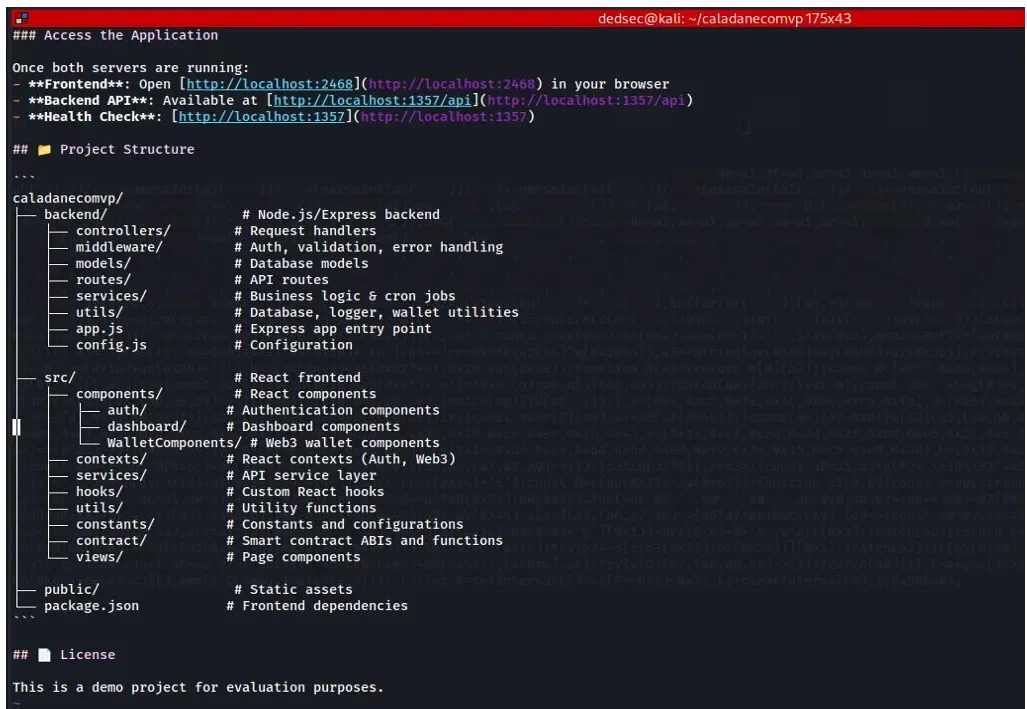
At a glance the project structure looks highly convincing. The README.md describes the Caladanecomvp-project as a full-stack Web3 application with a React/TypeScript frontend and a Node.js/Express backend.
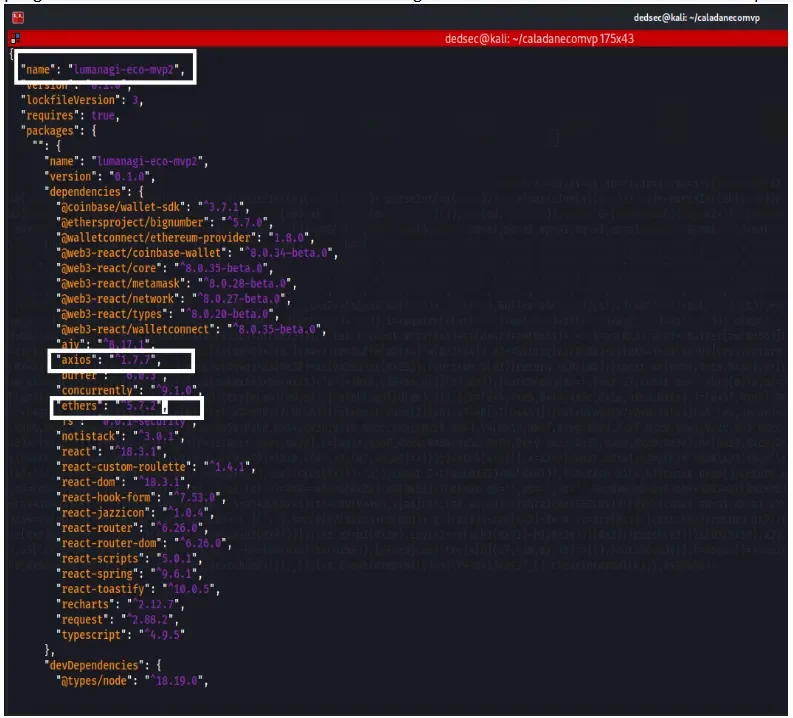
The package-lock.json, named "Lumanagi-eco-mvp2", lists legitimate cryptocurrency library dependencies such as ethers and axios, which makes the project look like real work rather than a throwaway lure.
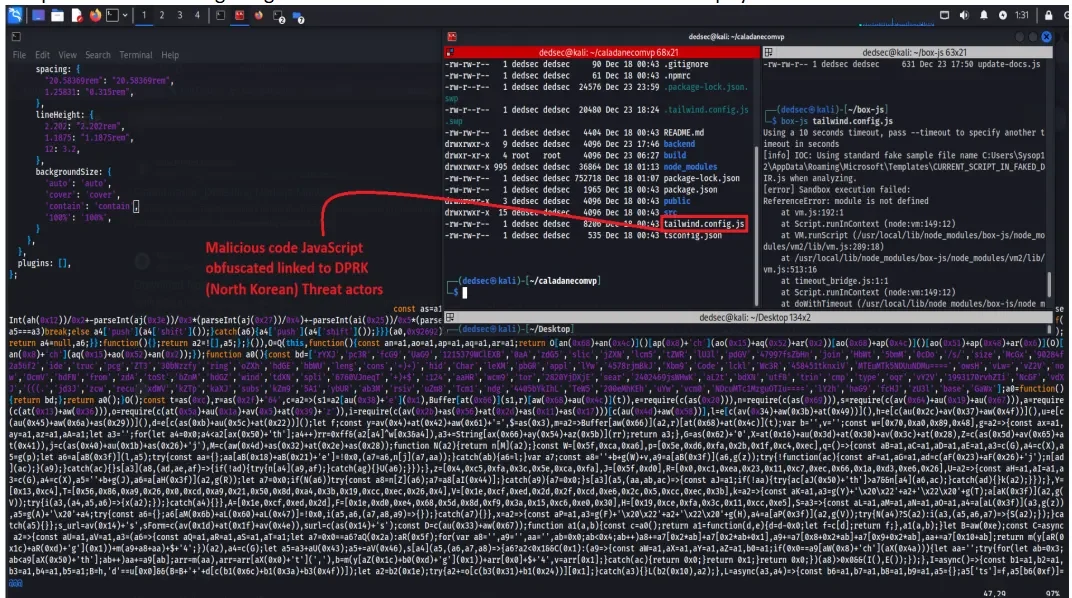
The malicious component is hidden in tailwind.config.js, a build configuration file that developers routinely treat as trusted boilerplate. It is in tailwind.config.js, a build configuration file that developers routinely treat as trusted boilerplate. The file contains heavily obfuscated JavaScript designed to execute automatically when the victim runs standard commands such as npm run start or npm run build.
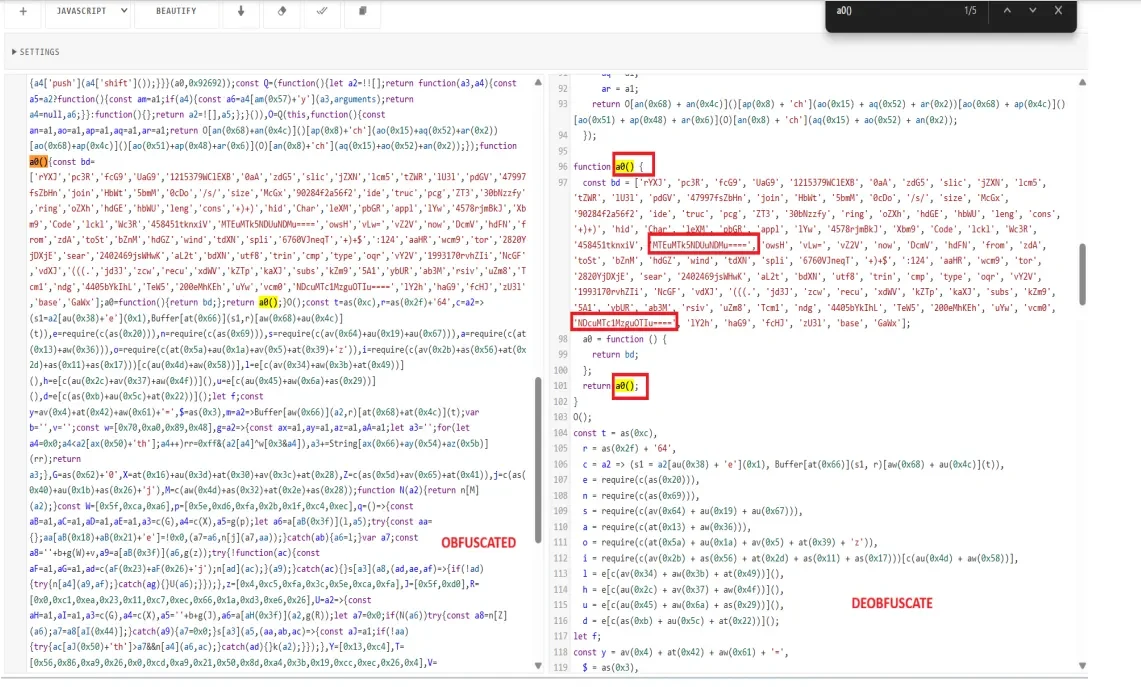
Beautifying the file exposes the decryption scheme and two strange strings.
Exploitation
Step 1: Decode the C2 addresses from the config file
Static analysis with a code beautifier revealed a highly specific decryption scheme. Two base64-like strings are embedded in the file. The first is:
NDcuMTc1MzguOTIu====
After being rearranged through custom functions and base64-decoded, it points to the C2 IP 38.92.47[.]175.
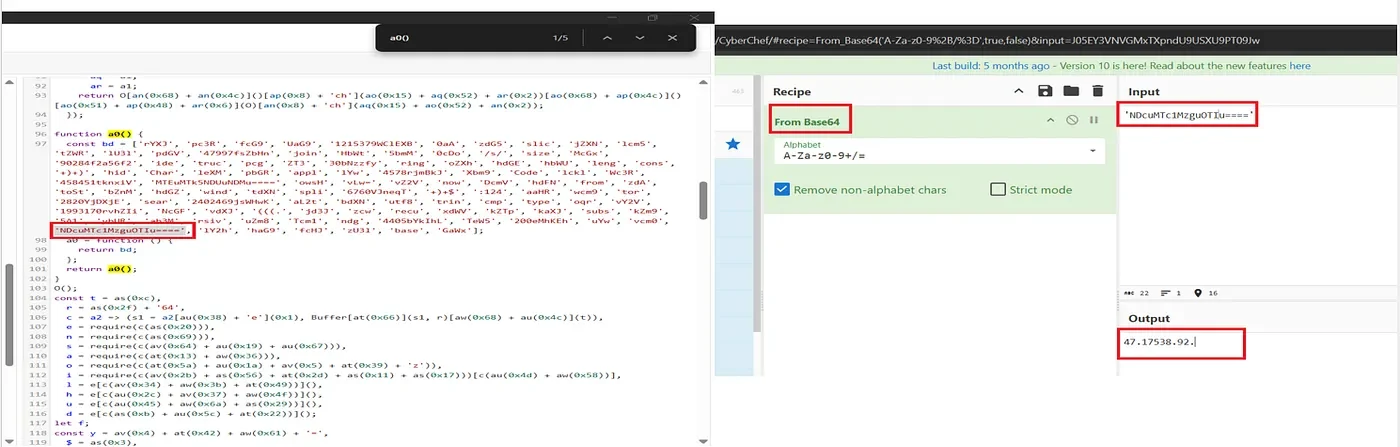
The second string is:
MTEuMTk5NDUuNDMu====
It was extracted and reassembled into the primary C2 IP 45.43.11[.]199.
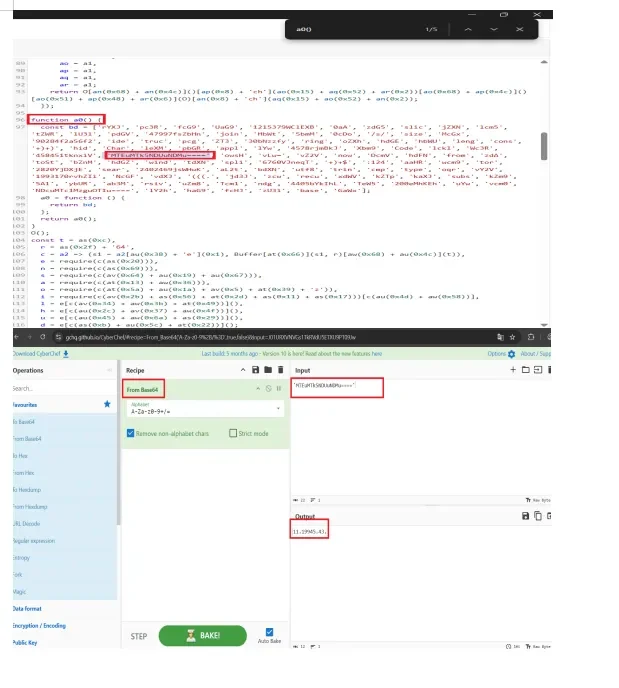
The report describes this as a Living off the Land (LotL) technique intended to keep the malicious IPs from being detected by traditional antivirus or EDR during static scanning.
Step 2: Execution and first beacon
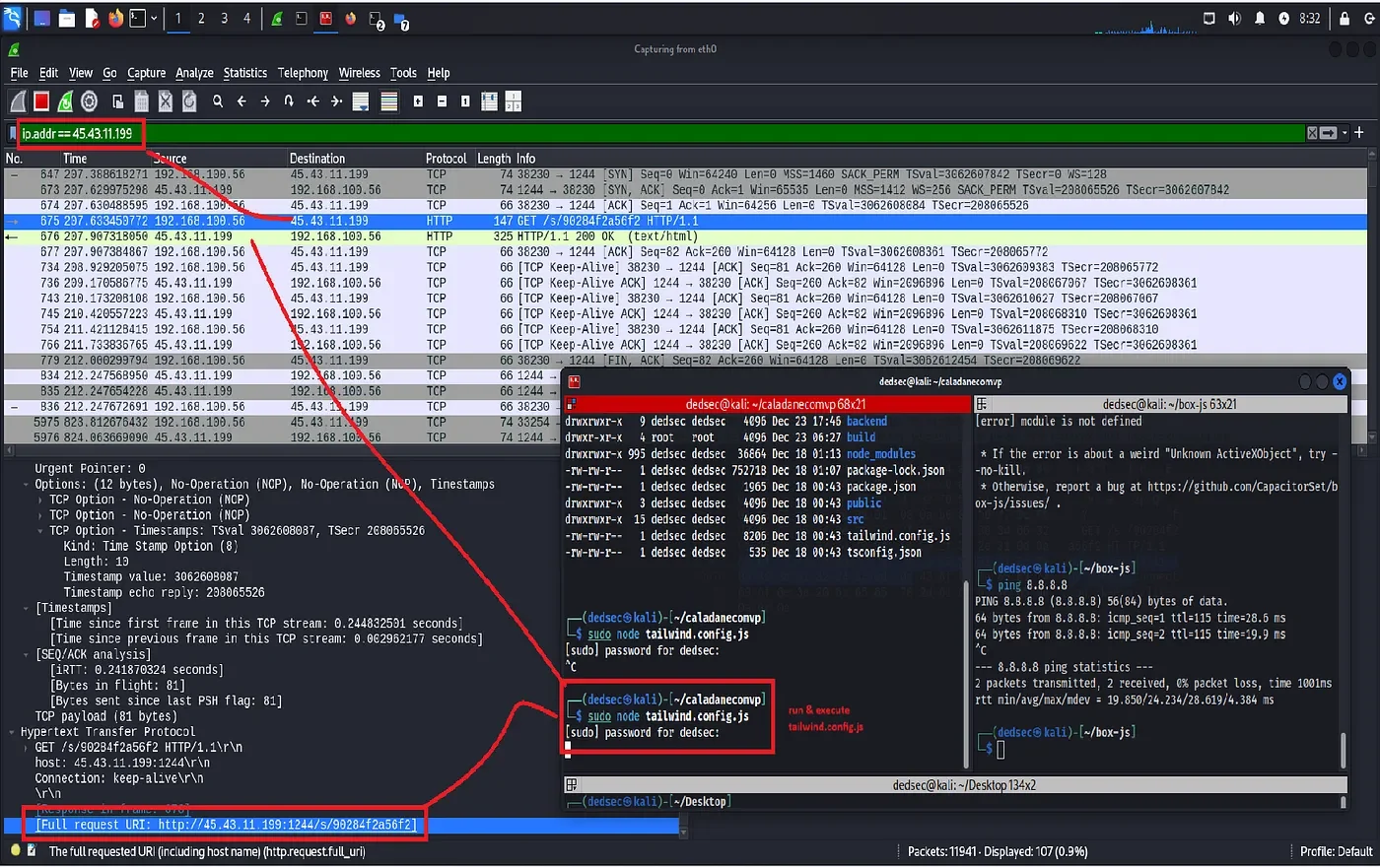
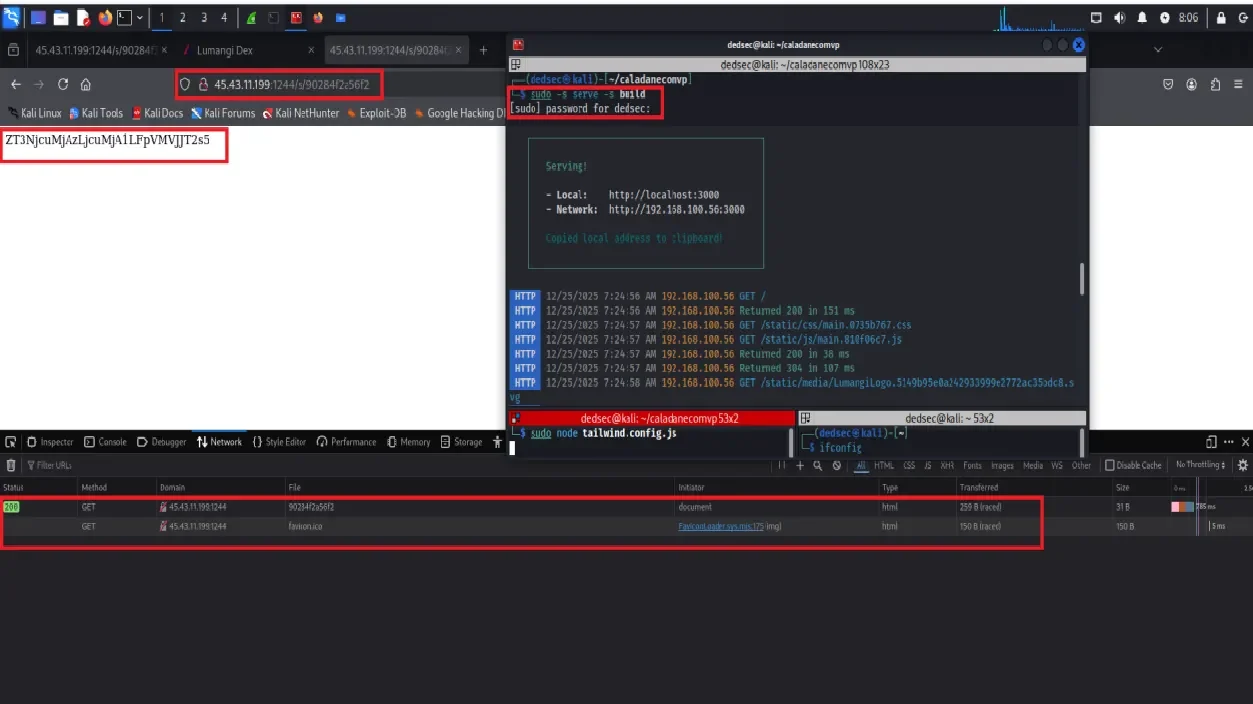
When the victim runs npm run start or npm run build, the tailwind.config.js process profiles the endpoint, checking OS, hardware and username, and beacons to:
http://45.43.11[.]199:1244/s/90284f2a56f2
Step 3: Recover the secondary C2 and campaign token
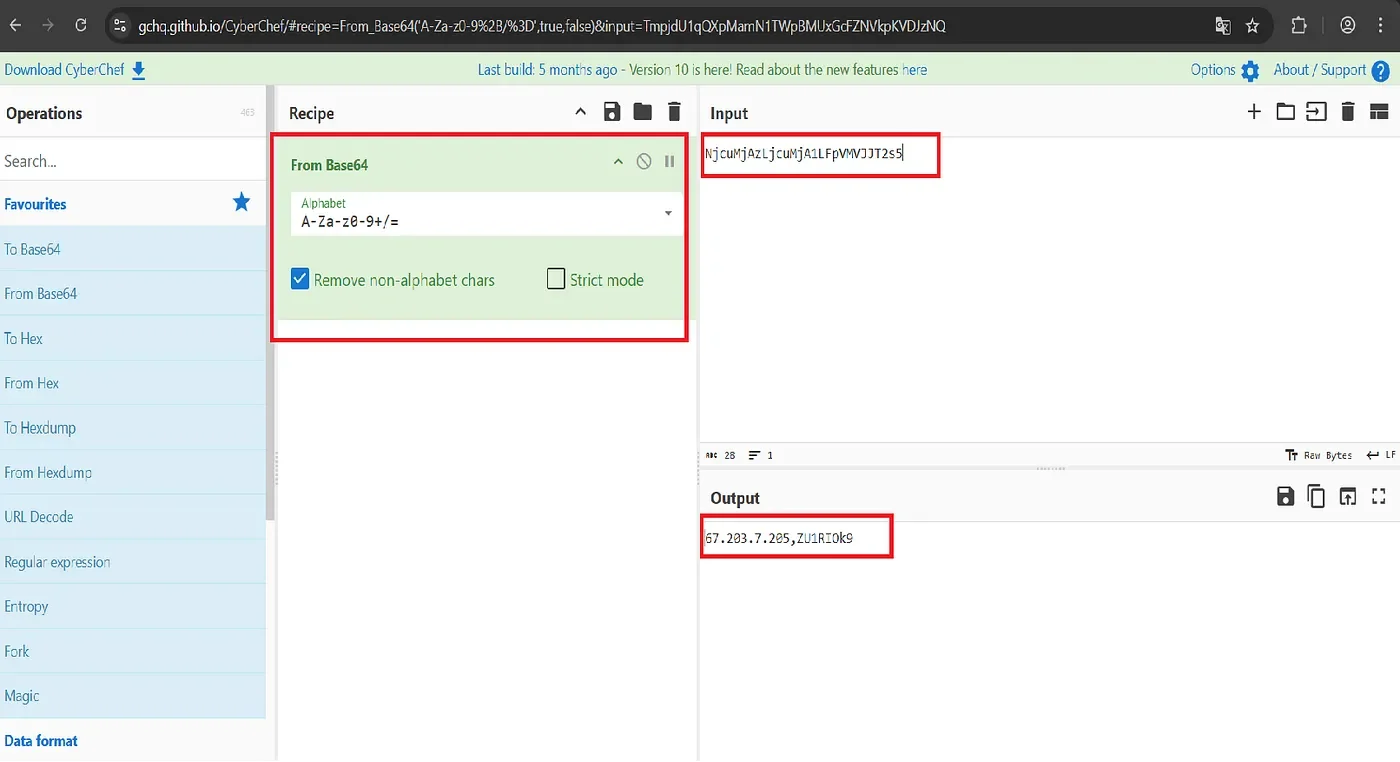
Network traffic analysis uncovered a memory text snippet:
ZT3NjcuMjAzLjcuMjA1LFpVMVJJT2s5
Removing the ZT3 key and decoding the rest reveals a secondary C2 IP, 67.203.7[.]205, and a Campaign ID Token, ZU1RIOk9.
Step 4: Download and run InvisibleFerret
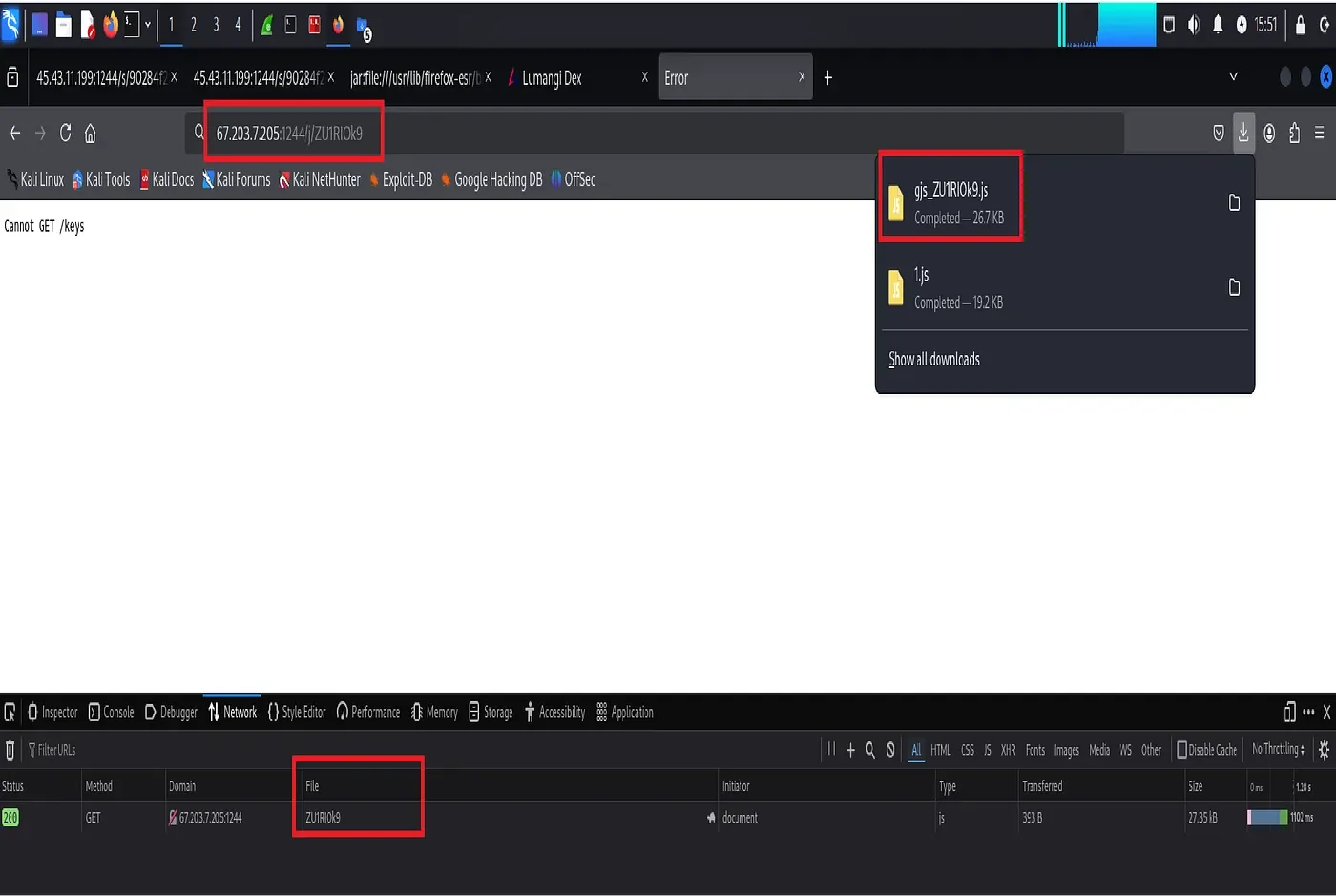
Connecting to the new infrastructure, the malware downloads a Python-based second-stage payload known as InvisibleFerret. Additional scripts, brow_ZU1RIOk9.py and gjs_ZU1RIOk9.js, are then executed to:
- Scan local directories and steal browser profiles across Chrome, Brave, Opera, Edge and Mozilla.
- Extract passwords, cookies and crypto wallet storage extensions.
Step 5: Exfiltration
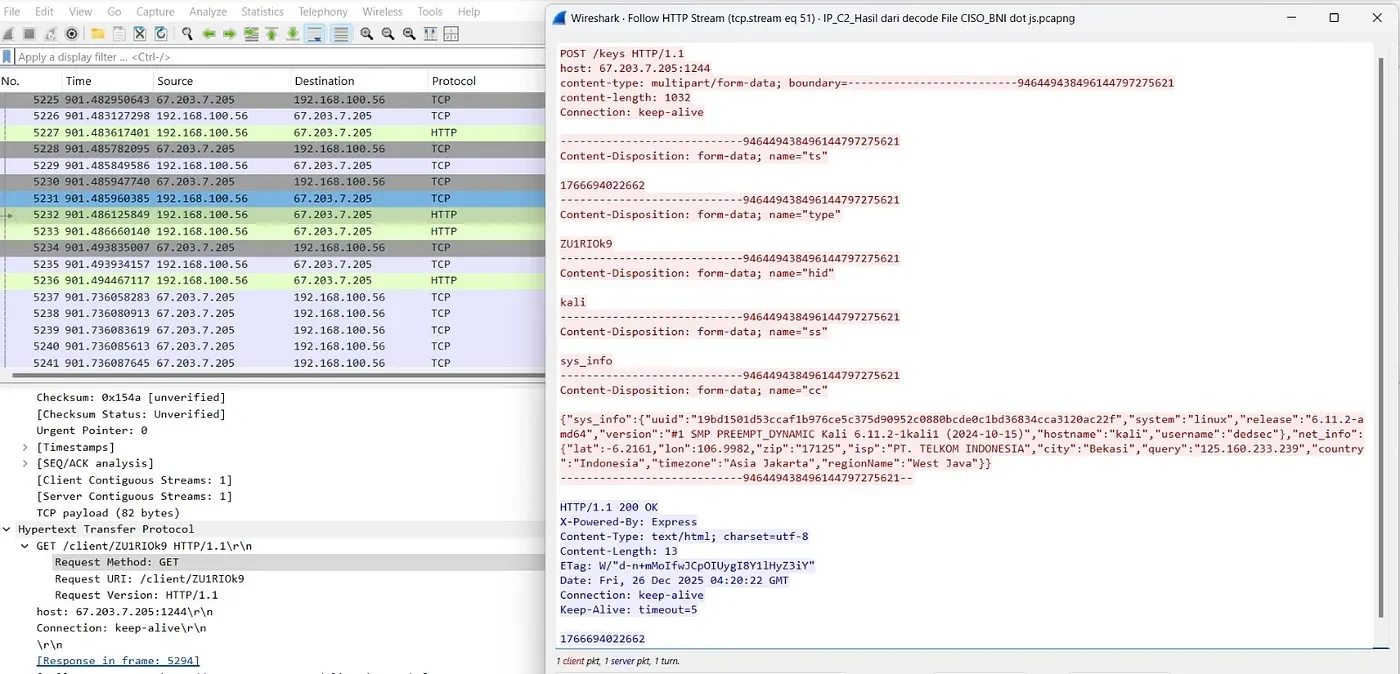
The stolen data is exfiltrated back to DPRK servers via POST requests to the /uploads and /keys directories.
Step 6: C2 heartbeat behaviour
The C2 uses an ACK/heartbeat pattern. The server provides an HTTP/1.1 200 OK response by echoing back the exact timestamp value sent by the target, 1766694022662. The report links this to the DPRK Lazarus stage loader and stealer, which takes UUID, hardware and OS specification including geolocation and network information, and extracts username information.
Root cause
The campaign does not exploit a software vulnerability. It exploits trust in the development workflow. A developer who clones a repository for a technical test expects the build tooling to be benign, and tailwind.config.js is a file that is loaded and evaluated by the build process without anyone reading it. Because the payload lives in a configuration file that runs on npm run start or npm run build, the victim executes it as a side effect of doing the task they were asked to do.
The obfuscation is meant to keep static scanning from spotting the C2 addresses, which appear as rearranged, base64-encoded fragments until custom functions reassemble them. The report calls this a LotL technique that keeps the IPs undetected by traditional antivirus or EDR during static scanning. The convincing project structure, the real Web3 dependencies and the plausible README complete the disguise.
Impact
A developer who runs the project on a primary workstation executes the hidden dropper, which profiles the host and beacons to the C2. The dropper profiles the host (OS, hardware, username) and beacons to the C2, then pulls the InvisibleFerret Python stealer. The stealer scans local directories and steals browser profiles for Chrome, Brave, Opera, Edge and Mozilla, extracting passwords, cookies and crypto wallet storage extensions, and exfiltrates them via POST requests to /uploads and /keys.
The targets are Web3 and cryptocurrency developers, and the stealer copies wallet extensions and credentials. The report does not quantify how many victims were affected or what was taken in any specific case.
Fix
The report does not describe a code fix, because there is no vulnerable product to patch. Its recommendations are procedural. A Zero Trust approach must extend beyond production infrastructure into the Software Development Life Cycle (SDLC). Developers are urged to verify recruiter identities and never run unverified code, such as npm install or npm start, on primary workstations. Third-party repositories should be evaluated only in isolated virtual machines or sandboxes.
For defenders, the report provides IoCs to integrate into security perimeters.
C2 IP addresses:
45.43.11[.]199
38.92.47[.]175
67.203.7[.]205
File hashes (MD5):
| MD5 | File | Size |
|---|---|---|
| [redacted] | tailwind.config.js | 8206 bytes |
| [redacted] | brow_ZU1RIOk9.py | 149.44 KB |
| [redacted] | main_ZU1RIOk9.py | 8.11 KB |
| [redacted] | pay_ZU1RIOk9.py | 32.35 KB |
| [redacted] | gjs_ZU1RIOk9.js | 26.71 KB |
| [redacted] | njs_ZU1RIOk9.js | 30.15 KB |
| [redacted] | main.810f06c7.js | 1.87 Mb |
Two YARA rules are provided for hunting BeaverTail and InvisibleFerret remnants.
Rule 1: BeaverTail Node.js Dropper
rule [redacted] { meta: description = "Detects heavily obfuscated BeaverTail Node.js dropper hiding inside tailwind.config.js or similar files" author = "Dedi Husni" date = "2025-12-26" reference = "Lazarus Fake Recruiter Campaign" strings: // Obfuscated C2 IP chunks $c2_ip_chunk1 = "NDcuMTc1MzguOTIu====" ascii wide $c2_ip_chunk2 = "MTEuMTk5NDUuNDMu====" ascii wide // Campaign Token & Pre-decoded C2 string $campaign_token = "ZU1RIOk9" ascii wide $b64_c2_string = "ZT3NjcuMjAzLjcuMjA1LFpVMVJJT2s5" ascii wide condition: uint16(0) != 0x5A4D and // Ignore file PE Executable (.exe/.dll) filesize < 500KB and 2 of them}
Rule 2: InvisibleFerret Python Loader
ule [redacted] { meta: description = "Detects the InvisibleFerret Python loader utilizing Base85 decoding and fileless in-memory execution" author = "Dedi Husni" date = "2025-12-26" reference = "Lazarus Fake Recruiter Campaign" strings: // Explicit Campaign ID assignment $token_var = "sType = 'ZU1RIOk9'" ascii wide // Base85 decode routine $b85_module = "import base64 as T" ascii wide $b85_decode = "T.b85decode" ascii wide // In-memory execution $exec_trigger = "exec(po)" ascii wide // Obfuscated payload variable array (common prefix) $payload_var = "_mw=" ascii wide condition: uint16(0) != 0x5A4D and // Ignore file PE Executable (.exe/.dll) filesize < 200KB and 4 of them}
Variants to test
- Other build configuration files. The same trick can be placed in any file that the build or dev server evaluates automatically, such as other bundler or framework config files. A positive result is a config file that contains base64-like fragments, custom reassembly functions, or network calls that fire on
npm run startornpm run build. - Dependency postinstall scripts. Check
package.jsonscripts and lockfile entries for lifecycle hooks that run onnpm install. A positive result is apostinstallorpreparescript that invokes an obfuscated loader or contacts an external host. - Split and keyed strings. Look for strings that only decode after a prefix is stripped, as with
ZT3NjcuMjAzLjcuMjA1LFpVMVJJT2s5and theZT3key. A positive result is a decoded value that yields an IP address or a campaign token. - Heartbeat C2 detection. Watch for servers that answer with
HTTP/1.1 200 OKand echo back the exact timestamp the client sent. A positive result is a request whose response body matches the sent timestamp value, indicating a live beacon rather than a normal API. - Campaign-token reuse. Hunt for the token
ZU1RIOk9in file names and script contents, as inbrow_ZU1RIOk9.pyandgjs_ZU1RIOk9.js. A positive result is the same token appearing across multiple artefacts, which links them to one campaign. - Recruiter lure checks. Verify the identity of anyone sending a repository for a technical test, and run it only in an isolated VM or sandbox. A positive result is a repository whose history, author accounts or dependencies do not match the claimed employer.
What happened, in plain words
A state-sponsored group tracked by security researchers as the Lazarus Group (also called APT38) went after people who work on Web3 and cryptocurrency projects. Web3 is the broad name for applications built on blockchains, the shared public ledgers that power things like cryptocurrencies. The attackers did not break into anything by finding a software flaw. Instead they pretended to be recruiters on LinkedIn, the professional social network, and asked developers to download and run a project as a kind of job test.
The project they sent looked like a real piece of software. It had a description file, real-looking libraries, and a structure a developer would recognise. Hidden inside one of its configuration files was malicious code. A configuration file is a small settings file that a project's tools read automatically; it is not usually something a developer reads line by line. Because the code sat in a file that runs on its own whenever the developer started or built the project, the developer launched the attack simply by doing the task they had been asked to do.
Once running, the malicious code, which the report calls BeaverTail, gathered basic facts about the developer's computer and sent a message to a server controlled by the attackers. That server then delivered a second piece of malicious software, a Python-based stealer called InvisibleFerret. Python is a popular programming language; a stealer is a program whose job is to copy valuable data off a machine. InvisibleFerret looked through the developer's web browsers and copied saved passwords, cookies and cryptocurrency wallet data, then sent it all back to the attackers.
The rest of this article walks through each stage in the same order as the technical analysis: the fake job offer, the hidden code, how the attackers' server addresses were disguised, what happened when the code ran, how the stolen data was sent away, and what defenders can look for. Every technical term is explained as it appears, and there is a glossary at the end.
The bait: a fake job offer and a fake repository
The attack starts with a message on LinkedIn from someone claiming to be a tech recruiter. A recruiter is a person who hires staff for companies; developers often receive such messages, so one more is not suspicious on its own. The "recruiter" asks the developer to download a project and complete a technical test, which is a common step in hiring for programming jobs.
The project lives on GitHub, a website where developers store and share code. A repository (often shortened to repo) is a folder of project files stored on GitHub, and cloning means making your own copy of it on your computer. The address given in the report is:
hxxps://github[.]com/michalcaladanxyz/caladanecomvp.git
This line is a web address with two deliberate alterations. hxxps replaces https and the dot inside the domain is written as [.]. Security reports do this so that the address is not a clickable live link and cannot accidentally be visited or picked up by automated tools. Read it as a normal GitHub address ending in .git, the standard suffix for a Git repository. Git is the version-control system GitHub is built on; it keeps track of changes to files.
The report notes that GitHub has since taken the repository down.
At first glance the project looks highly convincing. The README.md file, which is the front page of a repository where the author explains what the project is, describes the Caladanecomvp-project as a full-stack Web3 application. Full-stack means it has both a front end (what a user sees in the browser) and a back end (the server-side logic). Specifically it claims a React/TypeScript frontend and a Node.js/Express backend. React is a popular library for building web interfaces, TypeScript is a version of JavaScript with extra type checking, Node.js lets JavaScript run outside the browser on a computer, and Express is a common framework for building web servers in Node.js.
The screenshot shows that README, which describes the project as a full-stack Web3 application.
A second file, package-lock.json, is named "Lumanagi-eco-mvp2". A lockfile records the exact versions of the external code libraries a project depends on, so that everyone who installs the project gets identical versions. This one lists legitimate cryptocurrency libraries such as ethers and axios. ethers is a well-known library for interacting with the Ethereum blockchain, and axios is a very common tool for making web requests. Seeing real, widely used libraries makes the project look like actual work.
The silent dropper: tailwind.config.js
The malicious part is not in the application's own source code. It is in tailwind.config.js. Tailwind is a popular tool for styling websites, and its configuration file tells the build process which style options to use. Developers treat such files as trusted boilerplate, meaning standard setup text that nobody reads. The report calls the hidden program a dropper: a small piece of malicious code whose job is to get a larger payload onto the machine and start it.
The file contains heavily obfuscated JavaScript. Obfuscation means rewriting code so that it still works but is very hard for a human to read, for example by using meaningless variable names and by hiding text inside encoded strings. JavaScript is the programming language of the web and also the language Node.js runs. The code is designed to execute automatically when the victim runs standard commands such as npm run start or npm run build. npm is the package manager that comes with Node.js; it installs libraries and runs the scripts a project defines. npm run start starts the project's development server and npm run build produces the final version of the site. The code is designed to execute automatically when the victim runs standard commands such as npm run start or npm run build.
To understand the file, the analyst used a code beautifier. That is a tool that reformats compressed or scrambled code with proper indentation and line breaks so a person can follow it. Beautifying the file exposed the decryption scheme and two strange strings.
Step 1: Decoding the attacker's server addresses from the config file
Static analysis means examining a file without running it. With the beautified file, the analyst found a highly specific decryption scheme: a set of custom functions that reassemble hidden text. Two strings that look like base64 were embedded in the file. Base64 is a way of writing any data using only letters, digits and a few symbols, so that it can travel safely through systems that expect plain text; it is an encoding, not encryption, and anyone can reverse it. The first string is:
NDcuMTc1MzguOTIu====
After being rearranged through custom functions and base64-decoded, it points to the Command and Control (C2) IP 38.92.47[.]175. A C2 server is the attacker-controlled machine that the malware talks to for instructions and to deliver further payloads. An IP address is the numeric address of a computer on the internet, the equivalent of a postal address. The [.] notation again defuses the address so it is not a live link.
The second string is:
MTEuMTk5NDUuNDMu====
It was extracted and reassembled into the primary C2 IP 45.43.11[.]199.
The report describes this as a Living off the Land (LotL) technique. LotL means using ordinary, legitimate tools and features already present on a system instead of dropping obvious custom malware. Here the point is that the malicious IP addresses never appear in plain text in the file. Traditional antivirus or EDR products, which scan files for known bad patterns, do not flag them during static scanning. EDR stands for Endpoint Detection and Response: software that watches a computer (the endpoint) for suspicious behaviour.
Step 2: Execution and the first beacon
When the victim runs npm run start or npm run build, the tailwind.config.js process profiles the endpoint. Profiling means collecting basic facts about the machine: the report lists the operating system, the hardware and the username. It then beacons to:
http://45.43.11[.]199:1244/s/90284f2a56f2
A beacon is a small message a piece of malware sends out to announce that it is running and to ask for instructions. This address is a plain HTTP request to the first C2 IP on port 1244, with a path ending in a long random-looking identifier. A port is a numbered channel on a computer; web traffic normally uses port 80 or 443, so a request to port 1244 is unusual. The path /s/90284f2a56f2 is the specific location on the server being contacted.
Step 3: Recovering the secondary C2 and the campaign token
Network traffic analysis means watching the data that goes in and out of a machine. Doing so uncovered a text snippet held in memory:
ZT3NjcuMjAzLjcuMjA1LFpVMVJJT2s5
Removing the ZT3 key and decoding the rest reveals a secondary C2 IP, 67.203.7[.]205, and a Campaign ID Token, ZU1RIOk9. A key here is a short prefix that must be stripped before the remaining text can be decoded, a simple way of hiding the real content from casual inspection. A campaign ID token is a label the attackers use to group activity from one operation; the same token appears in the names of later files, which ties them together.
Step 4: Downloading and running InvisibleFerret
Connecting to this new infrastructure, the malware downloads a Python-based second-stage payload known as InvisibleFerret. A second stage is the larger, more capable program that a small dropper fetches after it has confirmed the machine is reachable. Additional scripts, brow_ZU1RIOk9.py and gjs_ZU1RIOk9.js, are then executed to:
- Scan local directories and steal browser profiles across Chrome, Brave, Opera, Edge and Mozilla.
- Extract passwords, cookies and crypto wallet storage extensions.
A directory is simply a folder. A browser profile is the set of files a browser keeps for a user: history, saved logins, settings and more. A cookie is a small piece of data a website stores in your browser so it can recognise you on your next visit, which is how you stay logged in; stolen cookies can let an attacker act as you without your password. A crypto wallet extension is a browser add-on that holds the keys to a cryptocurrency wallet, so copying it can give access to funds. The file names carry the campaign token ZU1RIOk9, which is how the analyst linked these scripts to the same operation.
Step 5: Sending the stolen data away
The stolen data is exfiltrated back to DPRK servers via POST requests to the /uploads and /keys directories. Exfiltration means sending stolen data out of the victim's network. A POST request is one of the standard ways a browser or program sends data to a server, as opposed to a GET request, which asks for a page. Here the malware posts the stolen data to the /uploads and /keys directories on the attacker's server.
Step 6: The C2 heartbeat
The C2 uses an ACK/heartbeat pattern. A heartbeat is a regular signal a program sends to show it is still alive, and an ACK (acknowledgement) is a reply confirming receipt. The server provides an HTTP/1.1 200 OK response by echoing back the exact timestamp value sent by the target, 1766694022662. HTTP/1.1 200 OK is the standard status line meaning the request succeeded, and a timestamp is a number recording a moment in time. The server echoes back the exact timestamp value sent by the target. The report links this behaviour to the DPRK Lazarus stage loader and stealer, which takes a UUID, hardware and OS specification including geolocation and network information, and extracts username information. A UUID is a long identifier meant to be unique to one machine or session, and geolocation is an approximate physical location derived from network data.
Why this worked
The campaign does not exploit a software vulnerability. It exploits trust in the development workflow. A developer who clones a repository for a technical test expects the build tooling to be benign, and tailwind.config.js is a file that is loaded and evaluated by the build process without anyone reading it. Because the payload lives in a configuration file that runs on npm run start or npm run build, the victim executes it as a side effect of doing the task they were asked to do.
The obfuscation is meant to keep static scanning from spotting the C2 addresses, which appear as rearranged, base64-encoded fragments until custom functions reassemble them. The report calls this a LotL technique that keeps the IPs undetected by traditional antivirus or EDR during static scanning. The convincing project structure, the real Web3 dependencies and the plausible README complete the disguise.
What the damage looks like
A developer who runs the project on a primary workstation executes the hidden dropper, which profiles the host and beacons to the C2. Code execution means the attacker's program runs with the same permissions as the logged-in user. The dropper profiles the host (OS, hardware, username) and beacons to the C2, then pulls the InvisibleFerret Python stealer. The stealer scans local directories and steals browser profiles for Chrome, Brave, Opera, Edge and Mozilla, extracting passwords, cookies and crypto wallet storage extensions, and exfiltrates them via POST requests to /uploads and /keys.
The targets are Web3 and cryptocurrency developers, and the stealer copies wallet extensions and credentials. The report does not quantify how many victims were affected or what was taken in any specific case.
How to protect yourself
The report does not describe a code fix, because there is no vulnerable product to patch. Its recommendations are procedural. A Zero Trust approach must extend beyond production infrastructure into the Software Development Life Cycle (SDLC). Zero Trust is the principle of never trusting a request or a file by default and verifying it every time; the SDLC is the whole process of building software, from writing code to releasing it. Developers are urged to verify recruiter identities and never run unverified code, such as npm install or npm start, on primary workstations. Third-party repositories should be evaluated only in isolated virtual machines or sandboxes. A virtual machine is a computer simulated inside your own computer, and a sandbox is a sealed-off environment where code can run without touching your real files.
For defenders, the report provides IoCs to integrate into security perimeters. IoC stands for Indicator of Compromise: an observable sign, such as an address or a file fingerprint, that something malicious has been present.
C2 IP addresses:
45.43.11[.]199
38.92.47[.]175
67.203.7[.]205
File hashes (MD5):
| MD5 | File | Size |
|---|---|---|
| [redacted] | tailwind.config.js | 8206 bytes |
| [redacted] | brow_ZU1RIOk9.py | 149.44 KB |
| [redacted] | main_ZU1RIOk9.py | 8.11 KB |
| [redacted] | pay_ZU1RIOk9.py | 32.35 KB |
| [redacted] | gjs_ZU1RIOk9.js | 26.71 KB |
| [redacted] | njs_ZU1RIOk9.js | 30.15 KB |
| [redacted] | main.810f06c7.js | 1.87 Mb |
An MD5 hash is a short fingerprint calculated from a file's contents. If two files have the same hash, they are almost certainly identical, so a hash lets defenders check whether a file they find matches a known malicious one.
Two YARA rules are provided for hunting BeaverTail and InvisibleFerret remnants. YARA is a tool for describing patterns in files so that a scanner can find matching files across a system.
Rule 1: BeaverTail Node.js Dropper
rule [redacted] { meta: description = "Detects heavily obfuscated BeaverTail Node.js dropper hiding inside tailwind.config.js or similar files" author = "Dedi Husni" date = "2025-12-26" reference = "Lazarus Fake Recruiter Campaign" strings: // Obfuscated C2 IP chunks $c2_ip_chunk1 = "NDcuMTc1MzguOTIu====" ascii wide $c2_ip_chunk2 = "MTEuMTk5NDUuNDMu====" ascii wide // Campaign Token & Pre-decoded C2 string $campaign_token = "ZU1RIOk9" ascii wide $b64_c2_string = "ZT3NjcuMjAzLjcuMjA1LFpVMVJJT2s5" ascii wide condition: uint16(0) != 0x5A4D and // Ignore file PE Executable (.exe/.dll) filesize < 500KB and 2 of them}
Line by line: rule [redacted] { opens a rule with a name. The meta: block holds descriptive information: what the rule detects, who wrote it, the date and a reference. The strings: block lists the text patterns to look for. $c2_ip_chunk1 and $c2_ip_chunk2 are the two encoded IP fragments seen earlier. $campaign_token is the campaign ID ZU1RIOk9, and $b64_c2_string is the encoded snippet from memory. The ascii wide part means each pattern is searched for both as plain text and in the wider encoding used by some Windows files. The condition: block decides when the rule fires: uint16(0) != 0x5A4D skips Windows executable files, which start with those bytes, because this rule targets scripts; filesize < 500KB limits it to small files; and 2 of them means at least two of the listed patterns must be present.
Rule 2: InvisibleFerret Python Loader
ule [redacted] { meta: description = "Detects the InvisibleFerret Python loader utilizing Base85 decoding and fileless in-memory execution" author = "Dedi Husni" date = "2025-12-26" reference = "Lazarus Fake Recruiter Campaign" strings: // Explicit Campaign ID assignment $token_var = "sType = 'ZU1RIOk9'" ascii wide // Base85 decode routine $b85_module = "import base64 as T" ascii wide $b85_decode = "T.b85decode" ascii wide // In-memory execution $exec_trigger = "exec(po)" ascii wide // Obfuscated payload variable array (common prefix) $payload_var = "_mw=" ascii wide condition: uint16(0) != 0x5A4D and // Ignore file PE Executable (.exe/.dll) filesize < 200KB and 4 of them}
This rule is printed in the report starting with ule rather than rule, so it is reproduced here exactly as it appears. The meta: block again describes the rule. The strings: block looks for the campaign ID assigned to a variable, the import of Python's base64 module under a short alias, the call that decodes base85 (another text encoding), the exec(po) call that runs code held in memory rather than on disk, and a variable prefix used to hold the payload. The condition: block again skips Windows executables, limits the file size to under 200KB, and requires four of the five patterns to match.
Variants to test
- Other build configuration files. The same trick can be placed in any file that the build or dev server evaluates automatically, such as other bundler or framework config files. A positive result is a config file that contains base64-like fragments, custom reassembly functions, or network calls that fire on
npm run startornpm run build. - Dependency postinstall scripts. Check
package.jsonscripts and lockfile entries for lifecycle hooks that run onnpm install. A positive result is apostinstallorpreparescript that invokes an obfuscated loader or contacts an external host. - Split and keyed strings. Look for strings that only decode after a prefix is stripped, as with
ZT3NjcuMjAzLjcuMjA1LFpVMVJJT2s5and theZT3key. A positive result is a decoded value that yields an IP address or a campaign token. - Heartbeat C2 detection. Watch for servers that answer with
HTTP/1.1 200 OKand echo back the exact timestamp the client sent. A positive result is a request whose response body matches the sent timestamp value, indicating a live beacon rather than a normal API. - Campaign-token reuse. Hunt for the token
ZU1RIOk9in file names and script contents, as inbrow_ZU1RIOk9.pyandgjs_ZU1RIOk9.js. A positive result is the same token appearing across multiple artefacts, which links them to one campaign. - Recruiter lure checks. Verify the identity of anyone sending a repository for a technical test, and run it only in an isolated VM or sandbox. A positive result is a repository whose history, author accounts or dependencies do not match the claimed employer.
Glossary
- APT38: The name security researchers give to the Lazarus Group, a state-sponsored threat actor linked to North Korea.
- ACK: An acknowledgement, a reply confirming that a message was received.
- Base64: An encoding that turns any data into letters, digits and a few symbols so it can travel as plain text; easily reversed.
- Base85: Another text encoding, similar in purpose to base64 but more compact.
- Beacon: A small message malware sends out to signal it is running and ask for instructions.
- Beautifier: A tool that reformats scrambled or compressed code with indentation so a person can read it.
- Browser profile: The set of files a browser keeps for a user, including history, saved logins and settings.
- C2 (Command and Control): The attacker-controlled server that malware contacts for instructions and payloads.
- Campaign ID token: A label the attackers use to group activity from one operation.
- Clone: To make a local copy of a repository stored on a code-hosting site.
- Code execution: When a program runs on a machine with the permissions of the logged-in user.
- Cookie: A small piece of data a website stores in your browser so it can recognise you later, such as to keep you logged in.
- Crypto wallet extension: A browser add-on that holds the keys to a cryptocurrency wallet.
- Directory: A folder on a computer.
- Dropper: A small piece of malicious code whose job is to deliver and start a larger payload.
- EDR (Endpoint Detection and Response): Software that watches a computer for suspicious behaviour.
- Exfiltration: Sending stolen data out of a victim's network.
- Full-stack: A project with both a front end (what users see) and a back end (server-side logic).
- Geolocation: An approximate physical location derived from network data.
- Git: A version-control system that tracks changes to files.
- GitHub: A website where developers store and share code repositories.
- Hash (MD5): A short fingerprint calculated from a file's contents, used to identify files.
- Heartbeat: A regular signal a program sends to show it is still alive.
- HTTP/1.1 200 OK: The standard status line meaning a web request succeeded.
- InvisibleFerret: The Python-based second-stage stealer described in this campaign.
- IoC (Indicator of Compromise): An observable sign, such as an address or file hash, that something malicious has been present.
- IP address: The numeric address of a computer on the internet.
- JavaScript: The programming language of the web, also run outside browsers by Node.js.
- Key (in a keyed string): A short prefix that must be stripped before the remaining text can be decoded.
- Lockfile: A file recording the exact versions of a project's dependencies.
- LotL (Living off the Land): Using ordinary, legitimate tools and features already on a system instead of obvious custom malware.
- MD5: A hashing algorithm that produces a short fingerprint of a file.
- Node.js: A runtime that lets JavaScript run outside the browser on a computer.
- npm: The package manager that comes with Node.js; it installs libraries and runs project scripts.
- Obfuscation: Rewriting code so it still works but is very hard for a human to read.
- Payload: The part of malicious software that does the actual work.
- Port: A numbered channel on a computer that network traffic uses.
- POST request: A standard way for a program to send data to a server.
- Profiling: Collecting basic facts about a machine, such as its operating system, hardware and username.
- Python: A popular programming language.
- README.md: The front page of a repository where the author explains the project.
- Recruiter: A person who hires staff for companies.
- Repository (repo): A folder of project files stored on a code-hosting site.
- Sandbox: A sealed-off environment where code can run without touching real files.
- SDLC (Software Development Life Cycle): The whole process of building software, from writing code to releasing it.
- Second stage: The larger, more capable program a dropper fetches after confirming a machine is reachable.
- Static analysis: Examining a file without running it.
- Stealer: Malicious software whose job is to copy valuable data off a machine.
- Tailwind: A popular tool for styling websites, configured by
tailwind.config.js. - Timestamp: A number recording a moment in time.
- UUID: A long identifier meant to be unique to one machine or session.
- Virtual machine: A computer simulated inside your own computer.
- Web3: The broad name for applications built on blockchains.
- YARA: A tool for describing patterns in files so a scanner can find matching files.
- Zero Trust: The principle of never trusting a request or file by default and verifying it every time.



