Abuse of "Remember Me" functionality.
The 'Remember Me' feature on Twitter sets authentication cookies with an expiration date nearly ten years in the future. If an attacker obtains these cookies, they could maintain access to the victim's account for that entire period.
 Originally disclosed on HackerOne
- Disclosed after 30 days
Steps to Reproduce:-
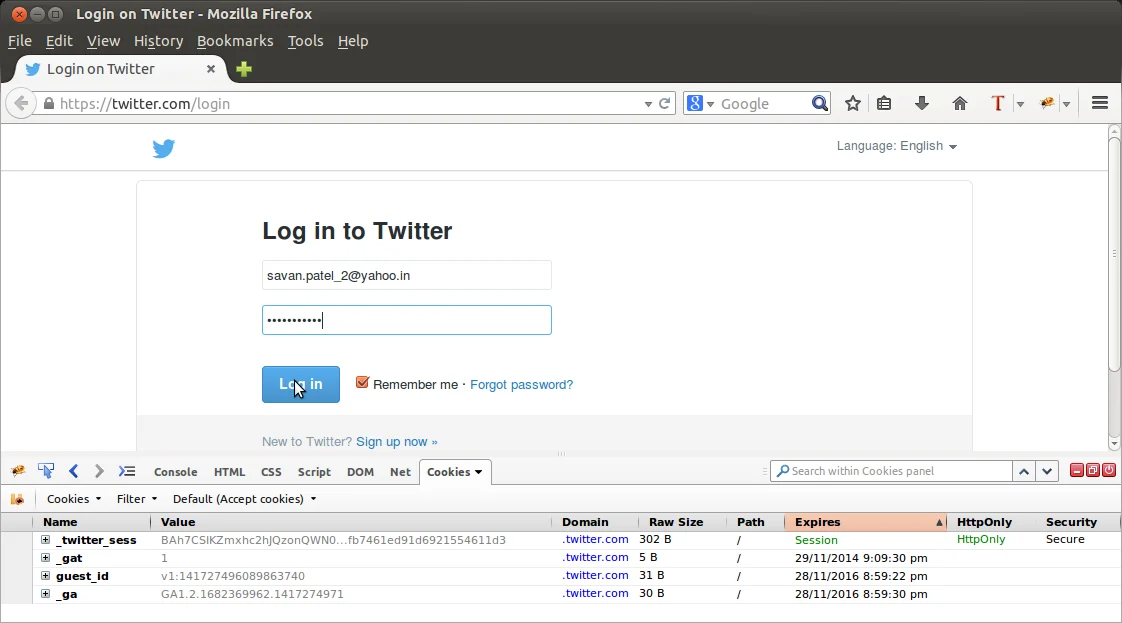
- Navigate to https://twitter.com/login, Fill up the required details and click on the "Log in" button. Make sure you have checked "Remember Me" check-box.
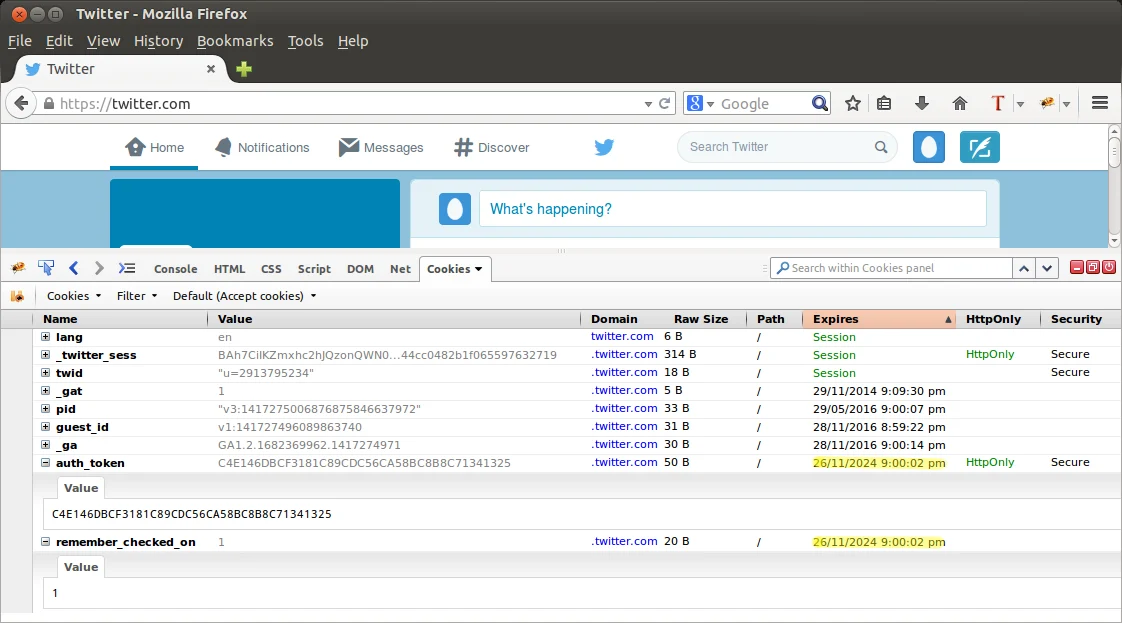
- Login Successfully, Analyze the cookie using FireBug, specially "auth_token" and "remember_checked_on". These cookies have expiration date which is of November 2024, almost 10 years from the first login.
Note:- Kindly find snapshots for more details.
Vulnerability Title :- Abuse of "Remember Me" functionality.
Vulnerability Description :- Twitter Application has "Remember Me" functionality, which allows user to logged in for 3651 days(9 years, 11 months, 29 days - almost 10 years). Remember me functionality generally decreases security of an application and ideally should be avoided, because "remember me" permanently(for almost 10 years) stores a session token, if an attacker can access this credential it can lead to them gaining access to the application.
Remediation :- -Avoid implementing remember me functionality if possible If remember me functionality is required consider only using it to remember the users user id, rather than having the functionality allow a complete login. If complete login is required, application should never allow user to keep logged in for long time ex. 10 Years. -High value applications MUST NOT possess remember me functionality. -Medium value applications SHOULD NOT contain remember me functionality. If present, the user MUST opt-in to remember me. The system SHOULD strongly warn users that remember me is insecure particularly on public computers -Low value applications MAY include an opt-in remember me function. There should be a warning to the user that this option is insecure, particularly on public computers.
For more details, Kindly check https://www.owasp.org/index.php/Guide_to_Authentication#Remember_Me.
Attachments
Not written yet. The AI write-up for this report has not been written yet. The Original tab links to the source.
How it worked
Root cause
Likely the application sets the 'Remember Me' authentication cookie with an excessively long lifetime (nearly 10 years) instead of a short, secure duration.
Impact
If an attacker can access the stored session token, they could gain access to the application for almost 10 years.
What the attacker needed
Attacker gains access to victim's cookies
The fix
The application should avoid 'Remember Me' or, if required, limit the login duration and warn users about the insecurity, especially on public computers.
How it was found
- Go to the Twitter login page and enter credentials with 'Remember Me' checked.
- Log in successfully.
- Inspect the cookies (e.g., with FireBug), especially 'auth_token' and 'remember_checked_on'.
- Observe that the cookies have an expiration date in November 2024, about 10 years from login.
Explained by bugbounty.wiki with AI from the original and checked against quotes from it; it can still be wrong. Read the original before relying on a detail.
Not written yet. The AI write-up for this report has not been written yet. The Original tab links to the source.
When you tick 'Remember Me' on a website, it stores a special file (a cookie) on your computer so you stay logged in. This report says Twitter's cookie lasts for almost 10 years. If someone steals that cookie, they could log in as you for all that time without needing your password.
What is Account takeover?
Getting into someone else's account through a flaw in sign-in, password reset, second factor, single sign-on or session handling.



