Opportunity to post hidden comments
A blocked user could still reply to the blocker's tweets, and the blocker could not see those replies while other users could. This allowed an attacker to abuse the victim without the victim knowing.
 Originally disclosed on HackerOne
- Disclosed after 37 days
Summary by the researcher
I reported an issue using which Attacker posted messages on victim's tweet cannot be seen by victim but can be observed by any other twitter user.
An example for this is:
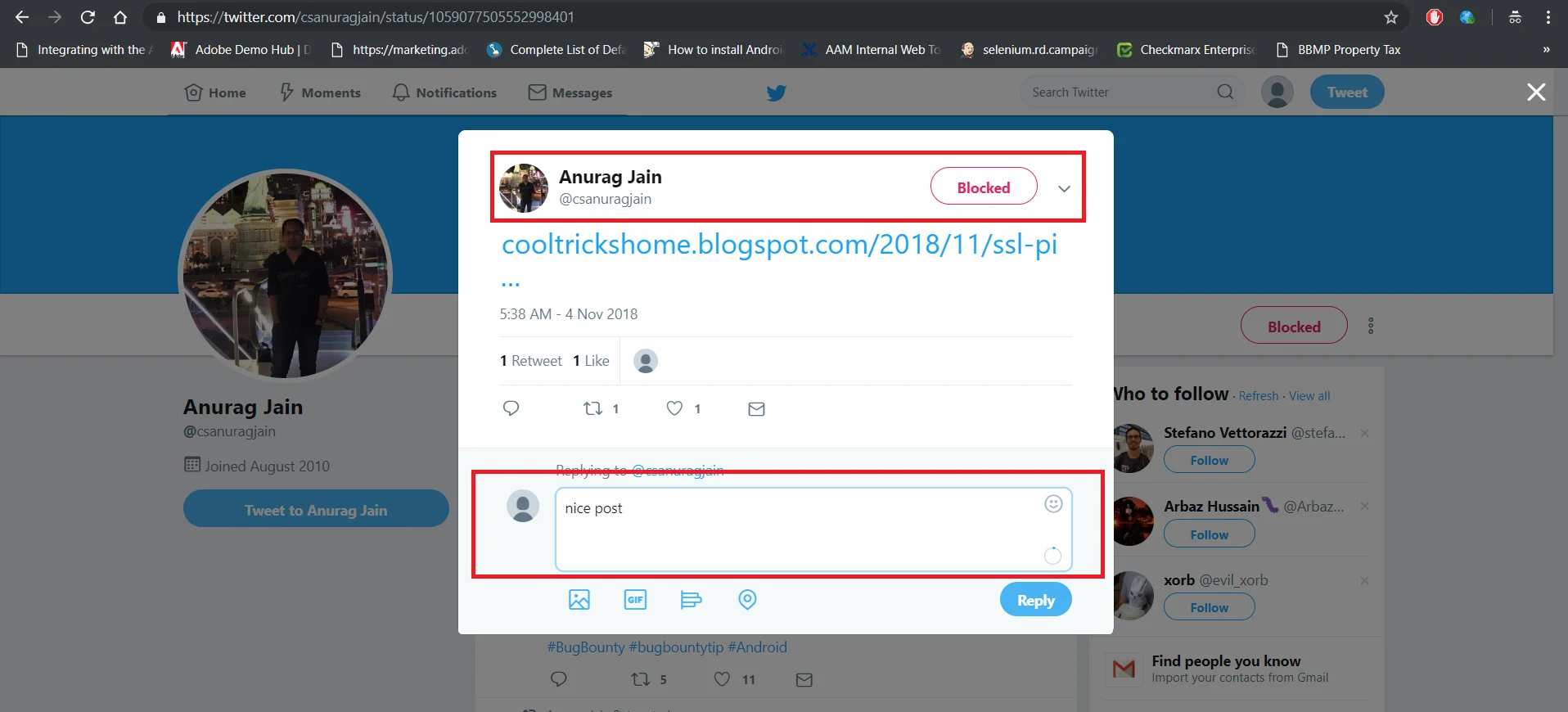
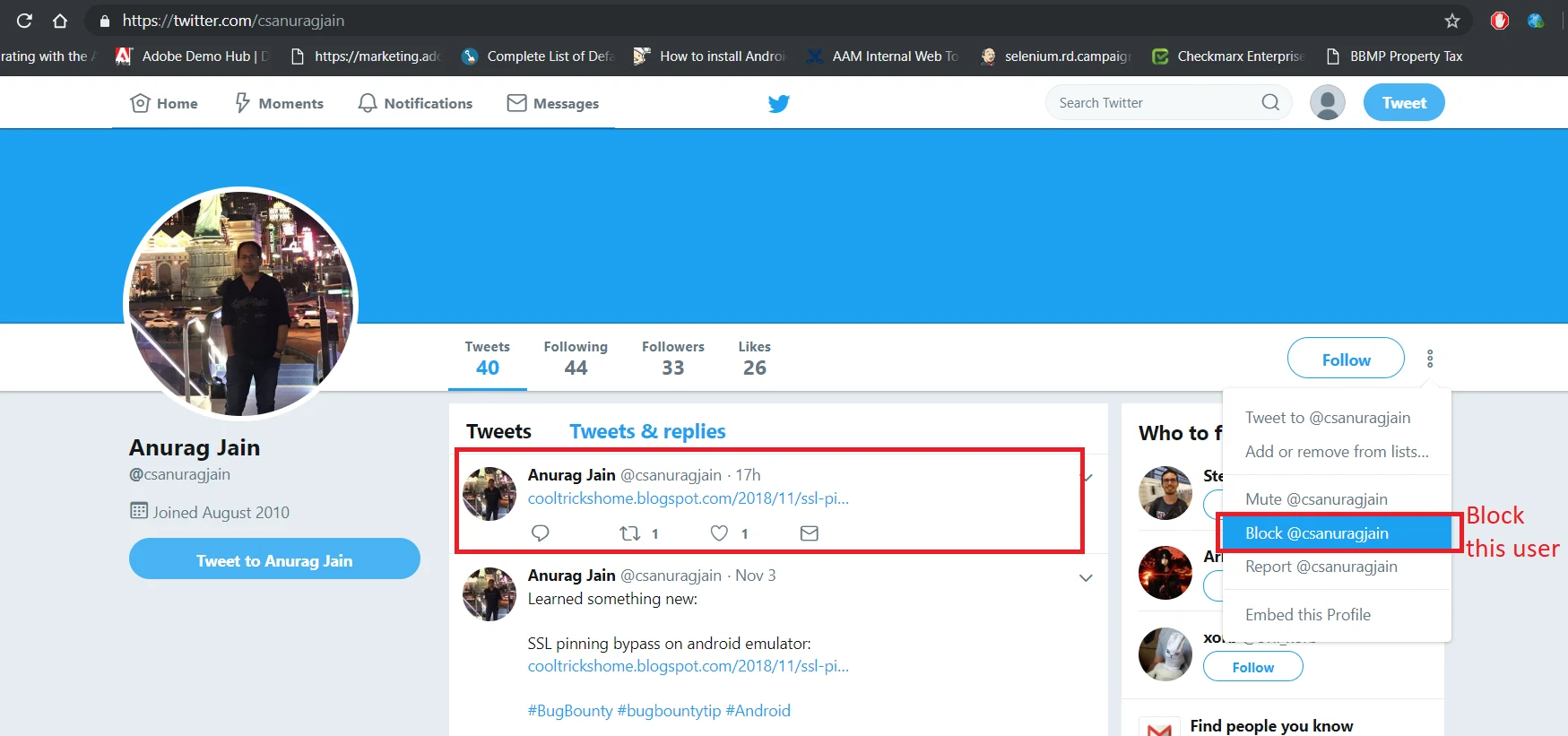
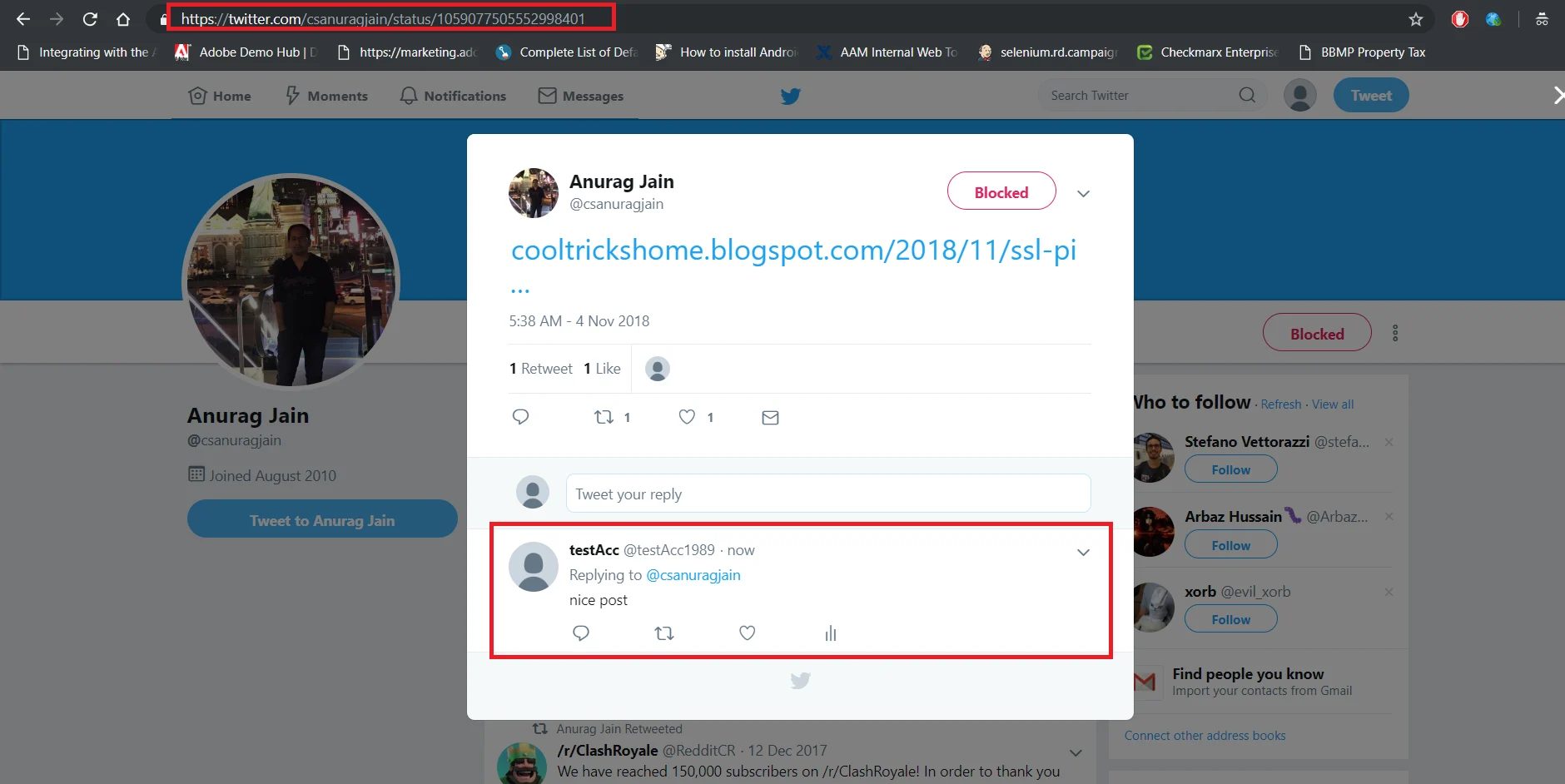
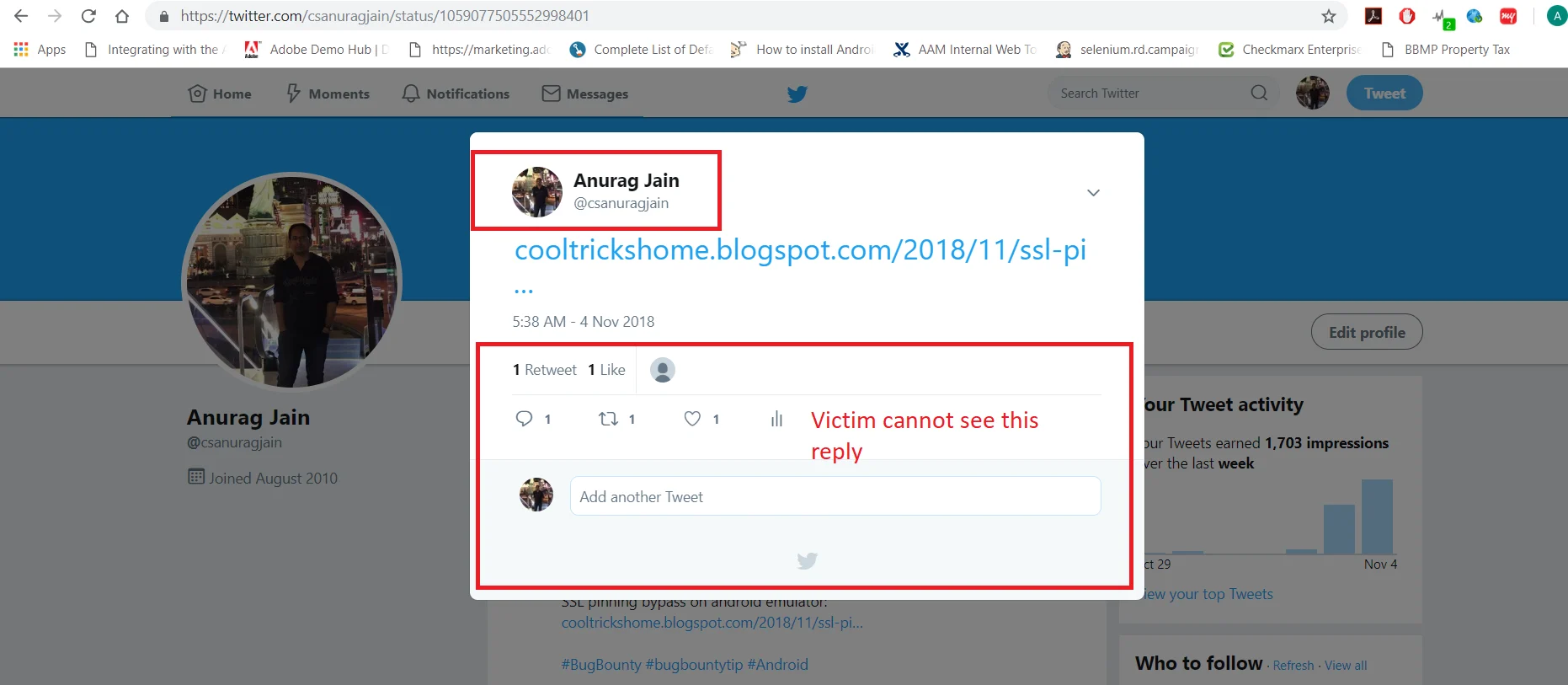
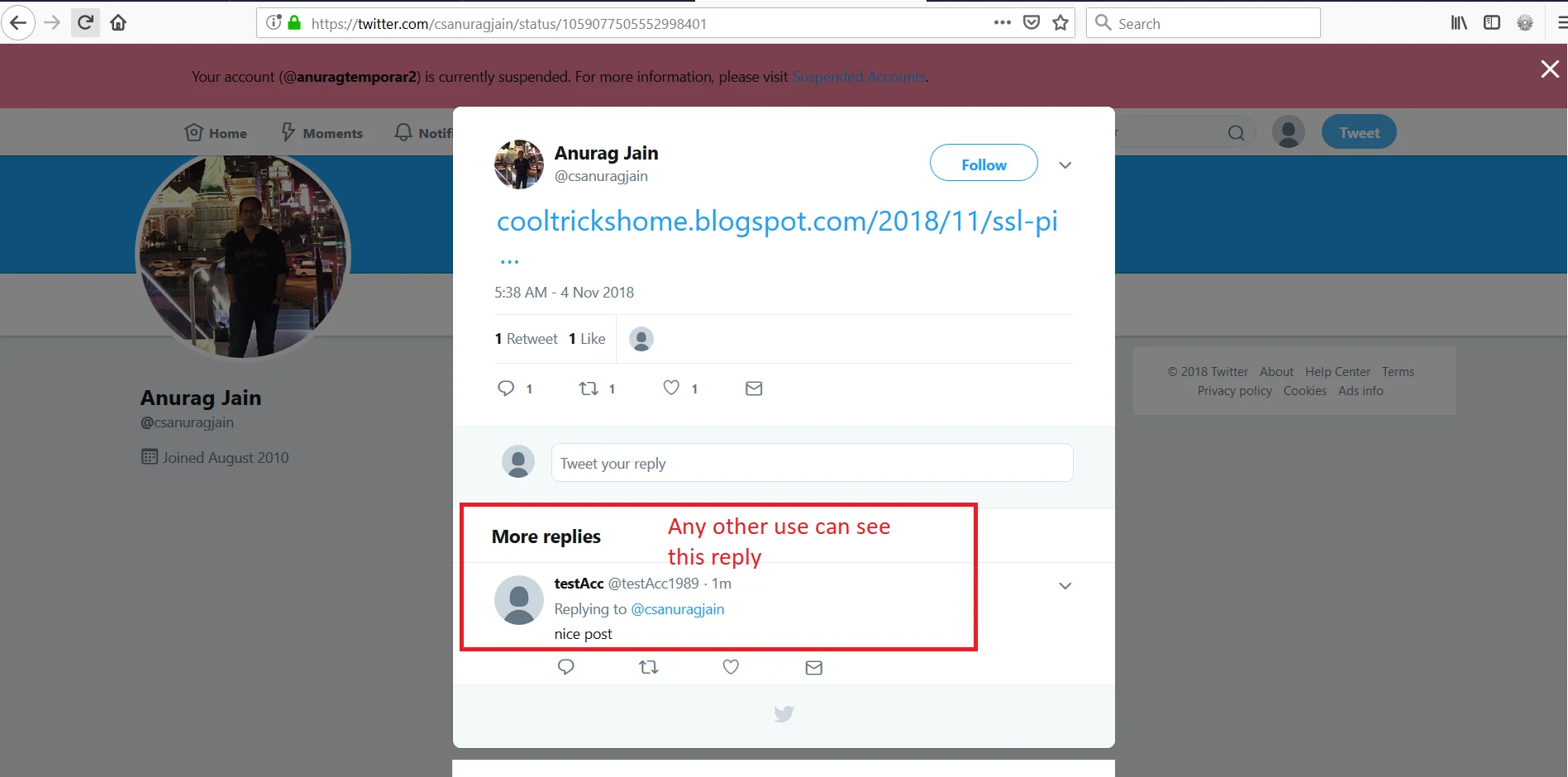
Attacker login to Twitter Attacker blocks victim using Block@victim button at https://twitter.com/<victim> Attacker opens any popular tweet of victim Attacker abuses victim in the tweet reply Victim cannot see the tweet reply posted by Attacker but any other user can see that reply.
The report
Twitter allows to comment on anyone's tweet. While testing this feature, observed that one can post comment on tweet which will be invisible to the victim whom the reply was posted and would be visible to any other twitter user. This can allow an Attacker to abuse victim on a tweet. The catch here is victim cannot even know that attacker posted on his tweet but any other twitter user can see that tweet.
Steps to reproduce
- Attacker login to Twitter
- Attacker blocks victim using Block@victim button at https://twitter.com/<victim>
- Attacker opens any popular tweet of victim
- Attacker abuses victim in the tweet reply
- Victim cannot see the tweet reply posted by Attacker but any other user can see that reply.
Recommendation If a person blocks a twitter user then he/she should not be allowed to post on any of the blocked user tweets.
Impact
This can allow an Attacker to abuse victim on a tweet. The catch here is victim cannot even know that attacker posted on his tweet but any other twitter user can see that tweet.
Attachments
Not written yet. The AI write-up for this report has not been written yet. The Original tab links to the source.
How it worked
Root cause
Likely the block feature did not prevent blocked users from replying to the blocker's tweets, and the reply visibility logic hid those replies from the blocker.
Impact
An attacker could abuse the victim on a tweet without the victim knowing, while other users could see the reply.
What the attacker needed
A Twitter account; attacker blocks the victim; victim has a public tweet
How it was found
- Attacker logs in to Twitter.
- Attacker blocks the victim using the block button on the victim's profile.
- Attacker opens a popular tweet by the victim.
- Attacker posts an abusive reply to that tweet.
- The victim cannot see the reply, but other users can.
Explained by bugbounty.wiki with AI from the original and checked against quotes from it; it can still be wrong. Read the original before relying on a detail.
Not written yet. The AI write-up for this report has not been written yet. The Original tab links to the source.
On Twitter, if you block someone, you expect they cannot interact with you. Here, a blocked person could still post replies to your tweets, but those replies were hidden from you and visible to everyone else. That means someone could insult you publicly without you ever seeing it.
What is Business logic?
The application works as coded but not as intended: a negative price, a skipped payment step, a limit that can be crossed.








