Stored XSS in www.learnboost.com via ZIP codes.
A stored cross-site scripting vulnerability existed in the ZIP code field of the Network panel, allowing an attacker to inject a script that executes when a user searches for a specific term. The attacker could run arbitrary JavaScript in the victim's browser.
 Originally disclosed on HackerOne
- Fixed in 3 months
- Paid in 30 days
- Disclosed after 4 months
Summary
www.learnboost.com is vulnerable to stored XSS via ZIP codes stored alongside school names in the Network panel.
Browsers Verified In
- Mozilla Firefox 58.0b12 (64-bit)
PoC
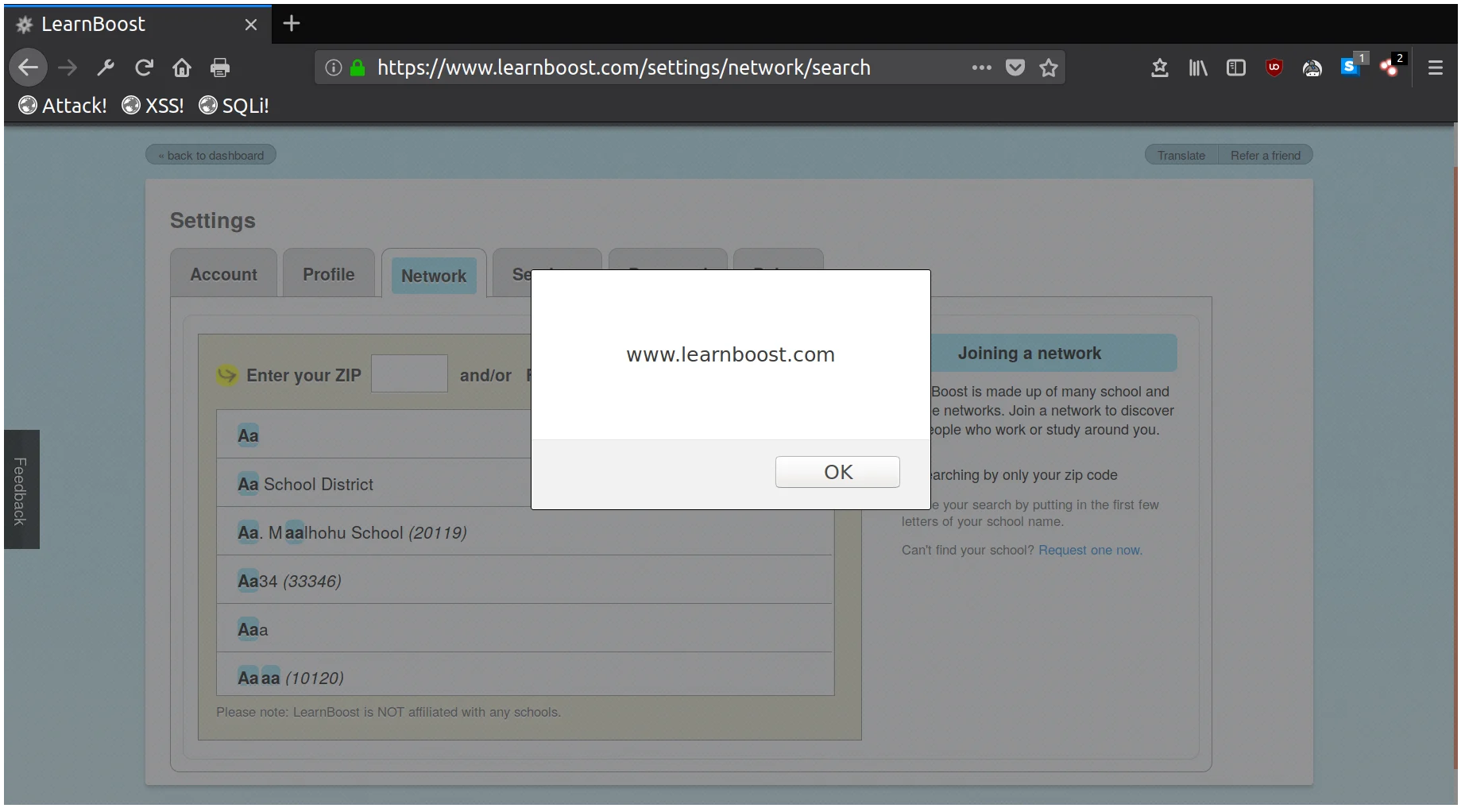
Visit https://www.learnboost.com/settings/network/search and search for fro. My entry will trigger the XSS payload.
"><img src=x onerror=alert(document.domain)>
Impact
I now have stored XSS that triggers whenever someone searches for fro. If I were to map the payload to a very common search term (e.g. aa) that would increase the likelihood that my payload would fire.
Not written yet. The AI write-up for this report has not been written yet. The Original tab links to the source.
How it worked
Root cause
Likely the application did not properly sanitise or encode user-supplied input in the ZIP code field before storing and later displaying it.
Impact
An attacker could run JavaScript in the browser of a user who searches for the triggering term.
What the attacker needed
Victim searches for the specific term
How it was found
- Visit the Network search page.
- Search for the term 'fro' to trigger the stored payload.
Explained by bugbounty.wiki with AI from the original and checked against quotes from it; it can still be wrong. Read the original before relying on a detail.
Not written yet. The AI write-up for this report has not been written yet. The Original tab links to the source.
Stored cross-site scripting (XSS) is when a website saves malicious code (like a script) and later shows it to other users. Here, the ZIP code field was not cleaned, so a script could be saved and would run when someone searched for a particular word.
What is XSS?
Script an attacker supplies runs in another user's browser, on the target's origin, with that user's session.






