homograph-attack (unicode vuln)
The Brave browser displayed a Unicode domain in its address bar in a way that made it look identical to a legitimate site, so an attacker could register such a domain and phish users. The report demonstrates this with a fake domain that resembles a real healthcare site.

- Disclosed after 4 months
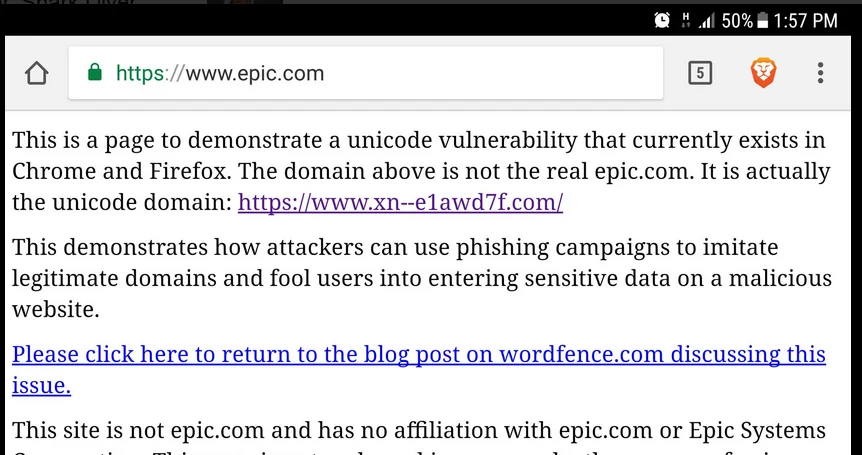
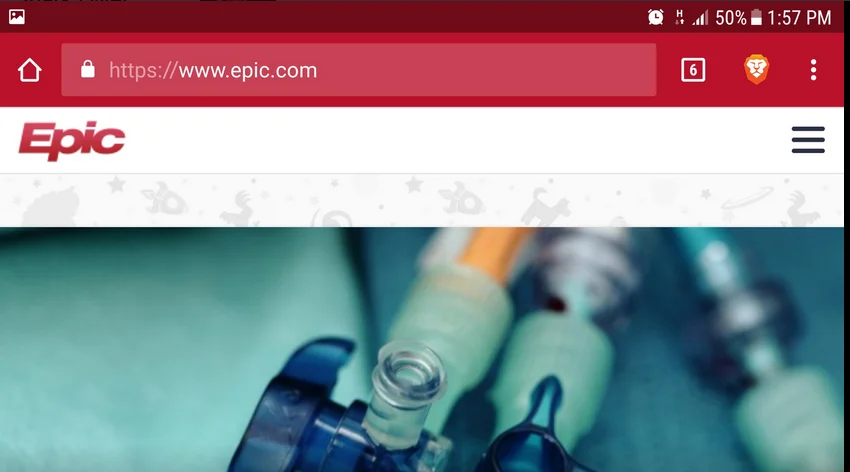
Hi team Summary: Affacted product appears identicaly different websites domains attacker uses unicode to register domains that look identical to real domains ,These fake domains can be used to fool users into signing into a fake website, thereby handing over their login credentials to an attacker... example to demonstrate how an attacker can register their own domain that looks identical to another company’s domain in the browser, ‘epic.com’(healthcare site) by registering fake site unicode domain: http://www.xn--e1awd7f.com/
and affected product show unicode domain looks like real domain
Products affected:
Brave 1.0.19 (Tested on android 6.0.1;nexus5)
Steps To Reproduce: 1.In browser open http://www.xn--e1awd7f.com/ unicode domain demo 2. you can see brave browser show fake site like real site in address bar
The fix: make sure it's display the punycode ..and warning or proper handlings References: http://www.crypto-it.net/eng/attacks/homograph-attack.html https://www.wordfence.com/blog/2017/04/chrome-firefox-unicode-phishing/
Not written yet. The AI write-up for this report has not been written yet. The Original tab links to the source.
How it worked
Root cause
Likely the browser did not detect or warn about mixed-script or lookalike Unicode characters in the domain, and displayed the domain in its Unicode form rather than punycode.
Impact
An attacker could register a lookalike domain and trick users into visiting it and entering their credentials, believing they are on the real site.
What the attacker needed
Attacker registers a lookalike domain; victim visits the domain; victim enters credentials
The fix
The browser should display the punycode form of such domains and show a warning or handle them properly.
Explained by bugbounty.wiki with AI from the original and checked against quotes from it; it can still be wrong. Read the original before relying on a detail.
Not written yet. The AI write-up for this report has not been written yet. The Original tab links to the source.
Some characters from different alphabets look the same. An attacker can register a domain using lookalike characters so the address bar shows something that appears to be a trusted site. This report shows that Brave displayed such a domain in a way that looked like the real site, making it easier for users to be tricked into entering their password on the wrong site.
What is Mobile?
Flaws specific to Android and iOS apps: exported components, deep links, WebViews and data left on the device.



