Compromising the user ID
The dating feature on Badoo allowed an attacker to extract a user's numeric ID from the avatar image URL and then visit the user's profile page directly, enabling them to send a message without a mutual match. This bypassed the intended mutual-consent logic of the dating service.

- Triaged in 2 days
- Fixed in 5 days
- Paid in 5 days
- Disclosed after 4 months
Vulnerability allows to compromise the user ID in the "Dating" menu. This is a serious vulnerability that violates the logic of the site and allows the attacker to write a message to the user he likes before the user responds reciprocally.
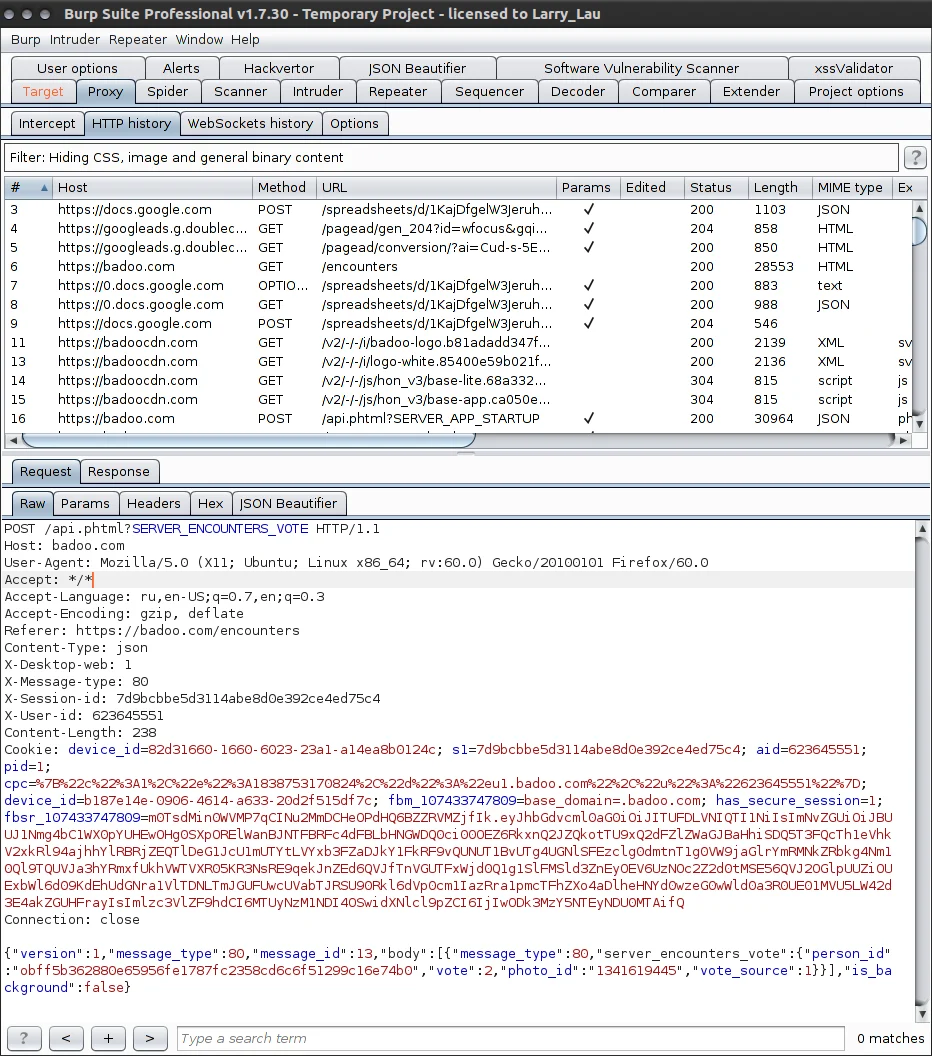
In order to play the vulnerability, you need to go to the page Dating, and use all available ones for the current account. While the husky is not over, such a request is sent:
In response comes this:
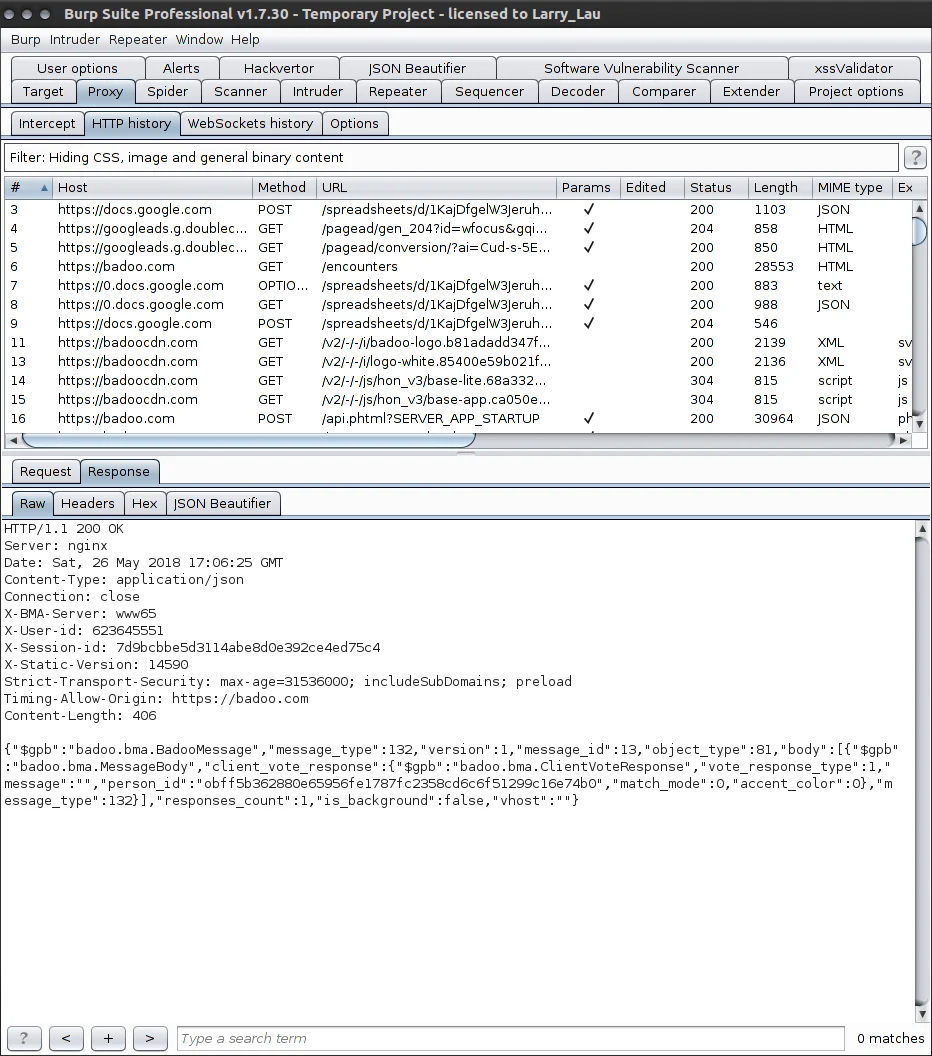
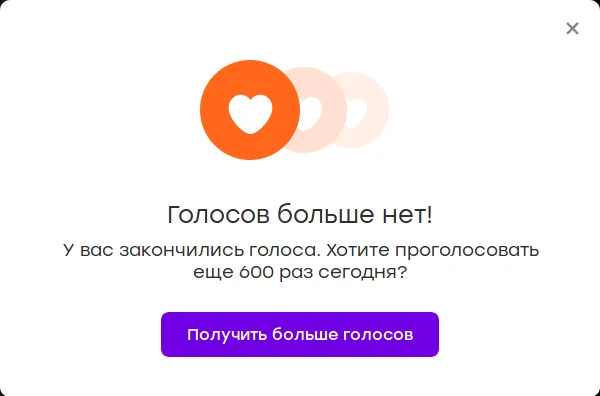
So far, nothing interesting in the answer. Next, you need to use all available hounds. If you need to do this quickly, you can press the "1" key quickly on the keyboard. When the husky is over, such a window will be displayed.
We need to close this window. Next, the implementation of the vulnerability on the real profile will be demonstrated. The following profile is displayed:
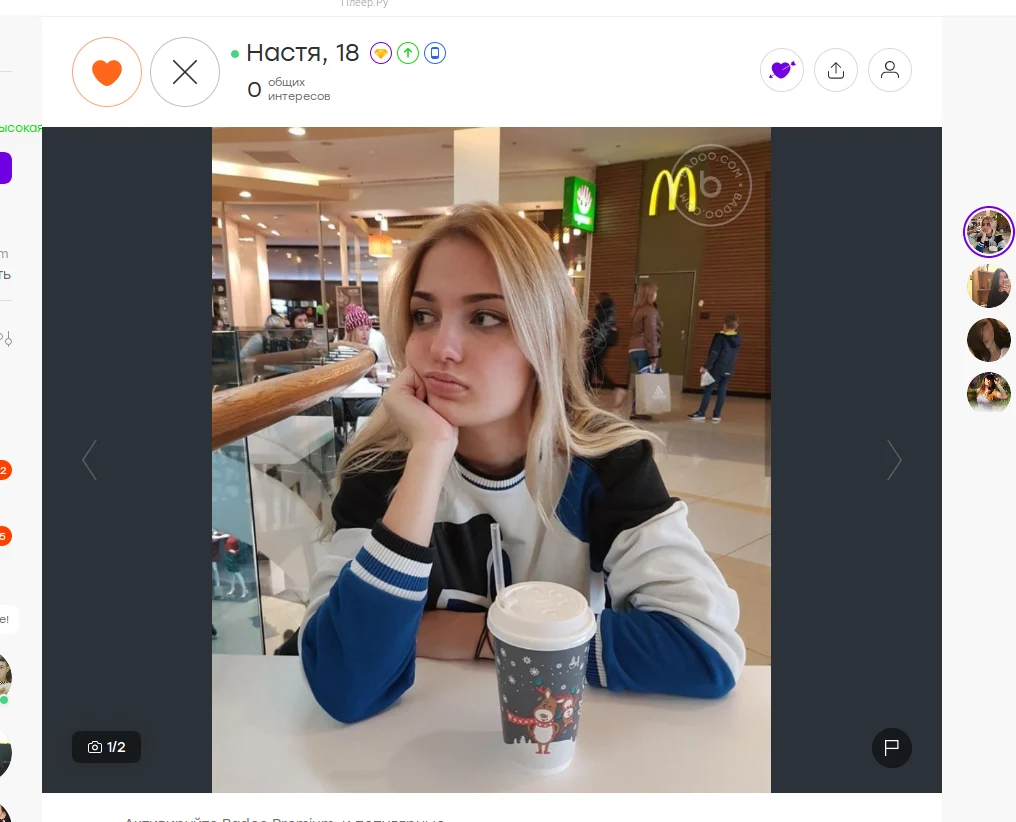
You must press the "1" key. Then look in Burp Suite which request was sent:
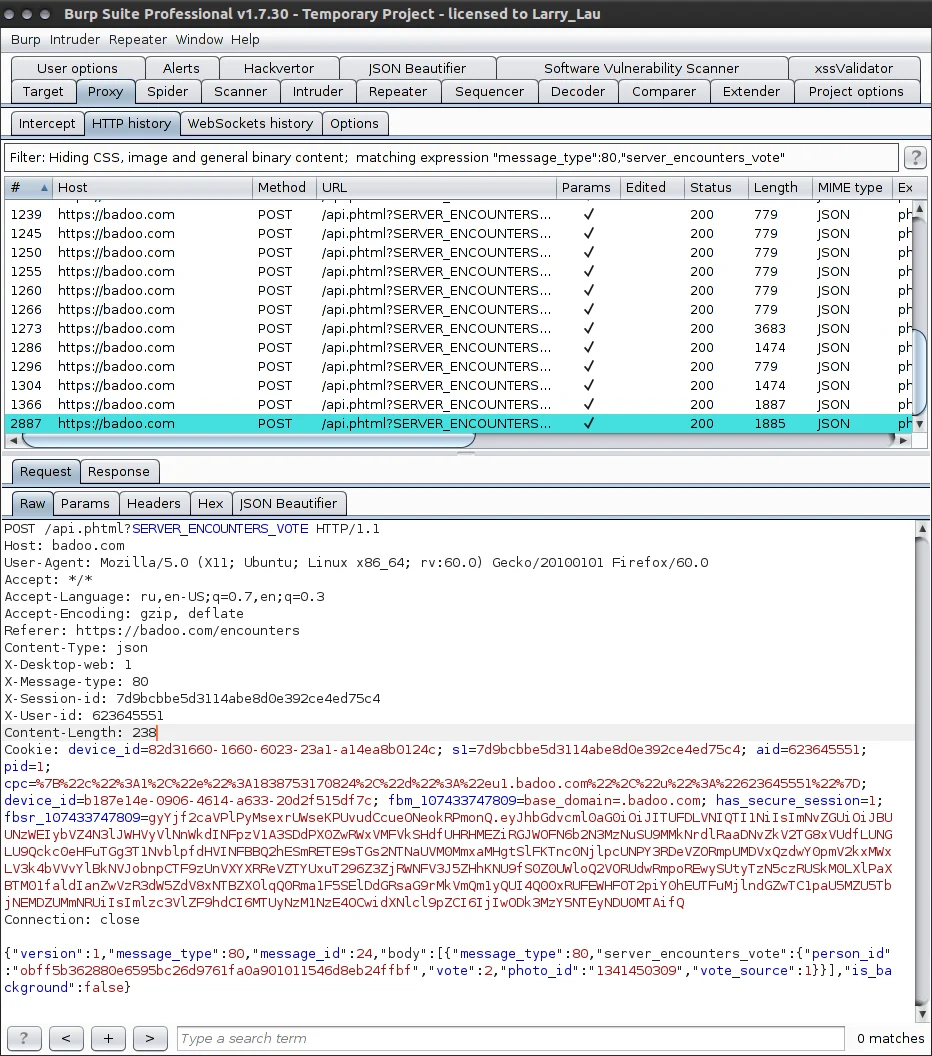
Here is the answer:
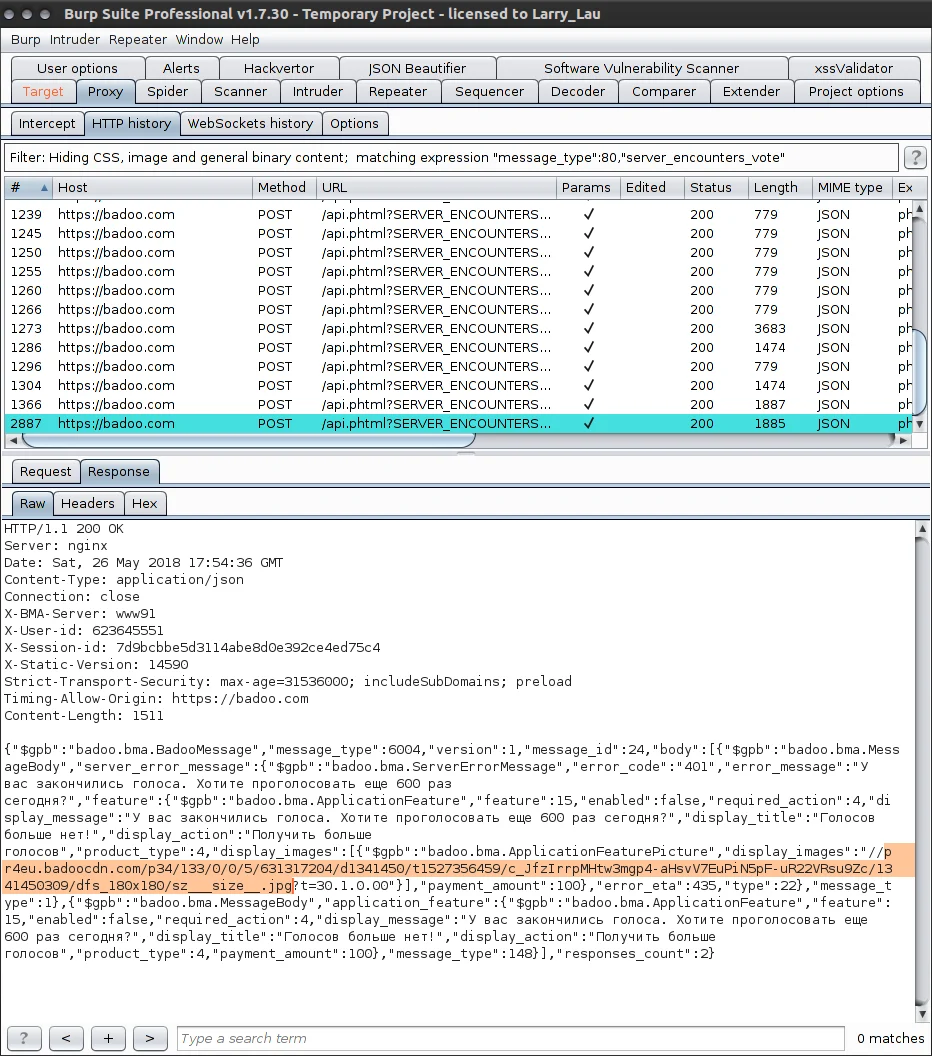
The response comes with a link:
pr4eu.badoocdn.com/p34/133/0/0/5/631317204/d1341450/t1527356459/c_JfzIrrpMHtw3mgp4-aHsvV7EuPiN5pF-uR22VRsu9Zc/1341450309/dfs_180x180/sz___size__.jpg
In the link you can find ID: 631317204
Then just go to the link
https://badoo.com/profile/631301611
And the real profile of the girl will be received.
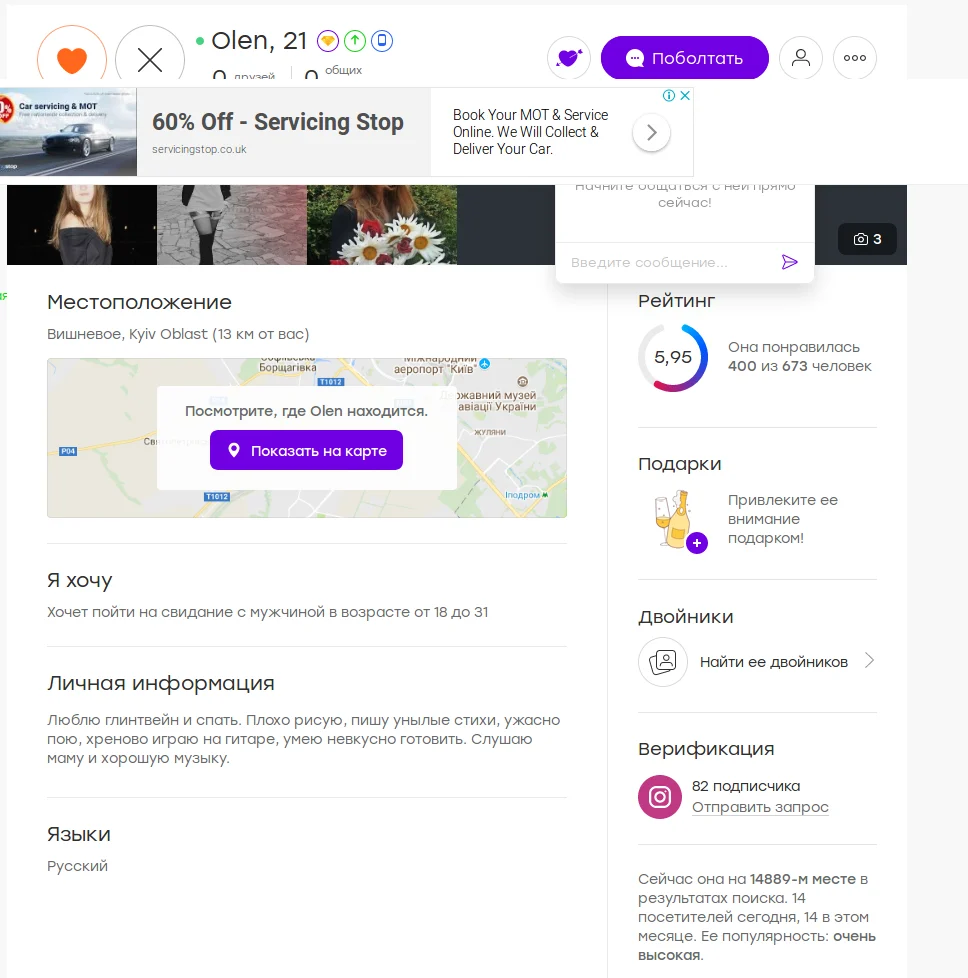
You can write her a message.
This vulnerability can be automated. To do this, you need to get a "Premium", you can use a free two-day version. You need to go to the [Settings] page (https://badoo.com/settings) and delete your profile. When deleting, several windows will be highlighted, one of which will offer Premium for 2 days. Premium status allows you to change "like" to "dislay" and vice versa. Next, you need to return toЗнакомства and click on the cross. When the next page appears, you can decide whether you like the profile of a person or not. If you like - click on "Laik", look at the query response, identify the ID, then click on the cross on the page, going to the next profile. Then go to this person's page by ID, change the "dislay" to "like" and then write a private message.
This method can be automated programmatically through python + selenium, pumping out pictures of avatars of girls in the folder, giving them names in the form {ID} .png. This will quickly select the girls you like and write them.
Impact
The attacker can scroll the profiles of users in the "Dating" menu and determine the ID of a particular user who he liked. Knowing ID, you can write to the user, without waiting until he responds with the interaction.
Context
Bumble's Dating feature (the report links to https://badoo.com/encounters, and the researcher refers to the menu as "Dating" and, in one place, "Знакомства") presents users with one profile at a time. The normal interaction model is reciprocal: a user expresses interest in a profile, and only after the other person responds reciprocally does messaging become possible. The report describes a logic flaw in that model: an attacker can learn the numeric user ID of a profile they are shown and then reach that user's real profile and message them before any reciprocal response.
The researcher classifies this as an information disclosure that violates the site's logic, rated high severity on the platform.
Setup
- A normal account on the target, used to browse the Dating menu.
- An intercepting proxy (Burp Suite is used to inspect the requests and responses).
- For the automated variant, a Premium account. The report notes a free two-day Premium can be obtained during profile deletion, and that Premium allows changing a "like" to a "dislike" and vice versa.
- Optional: Python with Selenium for automation.
No specific versions, endpoints beyond those quoted, or parameter names are given in the report.
Finding it
The report shows that a response returned while browsing the Dating menu contains a link that identifies the profile being shown. Because the profile URL is built from a numeric ID, leaking the ID in the browsing traffic is enough to jump straight to the profile page. That breaks the intended flow, where contact should follow a mutual response.
Exploitation
Step 1: Exhaust the available profiles and observe the request
Go to the Dating page at https://badoo.com/encounters and use all the profiles available to the current account. While profiles remain, a request is sent; the report shows it in the following capture.
The corresponding response is shown here.
At this point the researcher notes there is nothing interesting in the response yet.
Step 2: Finish the stack quickly
Use all remaining profiles. To do this quickly, press the "1" key repeatedly on the keyboard. When the stack is exhausted, a window is displayed.
Close this window.
Step 3: Trigger the request on a real profile
The researcher then demonstrates the vulnerability against a real profile. The following profile is displayed.
Press the "1" key, then inspect in Burp Suite which request was sent.
The response is shown next.
Step 4: Extract the ID from the response
The response contains a link:
pr4eu.badoocdn.com/p34/133/0/0/5/631317204/d1341450/t1527356459/c_JfzIrrpMHtw3mgp4-aHsvV7EuPiN5pF-uR22VRsu9Zc/1341450309/dfs_180x180/sz___size__.jpg
The numeric segment in that path, 631317204, is the user ID.
Step 5: Open the real profile and message
Navigate to the profile URL built from the ID:
https://badoo.com/profile/631301611
and the real profile of the user is returned.
At that point a message can be written to her.
Step 6: Automating the flow with Premium
The researcher states the vulnerability can be automated. The precondition is Premium, which can be obtained as a free two-day version: go to the Settings page at https://badoo.com/settings and delete your profile. During deletion several windows appear, one of which offers Premium for two days. Premium status allows changing a "like" to a "dislike" and vice versa.
Then return to the Dating page at https://badoo.com/encounters and click on the cross. When the next page appears, decide whether the profile is liked. If it is, click "Like", look at the query response, identify the ID, then click the cross on the page to move to the next profile. Then visit that person's page by ID, change the "dislike" to "like", and write a private message.
The report adds that this can be automated programmatically with Python and Selenium, saving avatar pictures of the profiles into a folder with names of the form {ID}.png. That makes it quick to select the profiles you like and write to them.
Root cause
The Dating flow returns, in the response to the browsing request, a CDN avatar URL whose path contains the numeric user ID of the profile being shown. The client-side flow treats the profile as anonymous until a mutual response, but the identifier is present in the data delivered to the browser, so the anonymity is only presentational. Because profile pages are addressable directly by that numeric ID, anyone who can read the response can bypass the reciprocity requirement. The report does not describe any server-side check that would prevent opening a profile or sending a message this way.
Impact
An attacker can scroll profiles in the Dating menu and determine the ID of any user they are shown and like. With the ID, they can write to that user without waiting for a reciprocal response. The report frames this as a violation of the site's logic and a serious issue, and states the process can be automated.
Fix
The report does not state what was changed.
Variants to test
- Identifier leakage in card responses. Inspect the JSON or HTML returned when a dating or discovery card is served. A positive result is any stable numeric or UUID value that also resolves at a public profile URL.
- CDN path disclosure. Look at avatar and media URLs in those responses for path segments that match profile identifiers. A positive result is a segment that, substituted into the profile URL pattern, returns the same person's page.
- Direct object access on profile pages. Take an identifier from one context and request the profile endpoint directly. A positive result is a full profile rendered without any match or consent state.
- Messaging before mutual consent. Attempt to send a message to an identified profile that has not responded. A positive result is a message accepted by the server rather than blocked.
- State manipulation with elevated features. Where a paid tier allows toggling an interaction (like to dislike and back), test whether the toggle plus a known ID lets you reach a profile outside the normal flow. A positive result is a profile or message action that succeeds without the reciprocal step.
What happened, in plain words
A dating app shows you one person at a time. You tap like, and only if that person likes you back are you supposed to be able to send a message. That is the whole point of the design: contact is meant to be mutual.
This report describes a way around that rule. While the app is showing you a profile, the data it sends to your browser quietly includes a number that identifies that person. The screen never shows you the number, but it is there in the traffic. Once you have the number, you can build the address of that person's real profile page and open it directly, then send a message without waiting for them to like you back.
The researcher rates this as a high severity information disclosure. "Information disclosure" simply means the system gives away information it should have kept private. Here the private thing is the user ID, the internal number that names a person on the site.
A quick word on the product: the report links to https://badoo.com/encounters, and the researcher calls that menu "Dating" in English and "Знакомства" (the Russian word for "acquaintances" or "dating") in one place. It is the screen where you are shown one profile at a time and choose whether you are interested.
Background ideas you need first
Before walking through the steps, here are the few concepts the report relies on.
- A request and a response. When you click something in a browser, the browser sends a request to a server and the server sends back a response. Think of it as posting a letter and getting a reply.
- An API. An API is the way one piece of software asks another for data. In a web app, the page you see is often built from data the browser fetches from the server behind the scenes. The Dating screen is like that: as you move through profiles, the browser keeps asking the server for the next one.
- An intercepting proxy. A tool that sits between your browser and the server and lets you read every request and response. Burp Suite is the one used here. Imagine a postal worker who lets you read every letter before it is delivered.
- A user ID. A number the site uses internally to identify each account. Profile pages are addressed by that number, so if you know someone's ID you can build the address of their page.
- A CDN. A content delivery network: a set of servers that host files such as images so they load quickly. The avatar pictures in this report are served from a CDN, and the address of an image can contain useful information.
- A logic flaw. A bug where the software does exactly what it was programmed to do, but the sequence of allowed actions breaks the intended rule. Nothing crashes; the rule is simply bypassed.
Setting up
To follow along you would need:
- A normal account on the site, used to browse the Dating menu.
- An intercepting proxy, here Burp Suite, to read the requests and responses.
- For the automated version later, a Premium account. The report says a free two-day Premium can be obtained during profile deletion, and that Premium lets you change a "like" to a "dislike" and back again.
- Optionally, Python with Selenium for automation. Selenium is a tool that drives a browser from code, so a script can click through pages for you.
The report does not give specific software versions, extra endpoints beyond the ones quoted, or parameter names.
Finding it
The report shows that a response returned while browsing the Dating menu contains a link that identifies the profile being shown. Because a profile page's address is built from a numeric ID, leaking the ID in the browsing traffic is enough to jump straight to the profile. That breaks the intended flow, where contact should only follow a mutual response.
Exploitation, step by step
Step 1: Use up the available profiles and watch the request
Go to the Dating page at https://badoo.com/encounters and go through all the profiles available to the current account. While profiles remain, a request is sent; the report shows it in the following capture.
This image shows the request that the browser sends while you are still working through profiles. The point of looking at it is to see what the browser asks the server for each time a new profile is shown.
The corresponding response is shown here.
This image shows what the server sends back. At this stage the researcher notes there is nothing interesting in the response yet. The reason to look now is to have a baseline: you want to know what a normal response looks like before you go looking for the leaked ID.
Step 2: Finish the stack quickly
Use up all the remaining profiles. To do this quickly, press the "1" key repeatedly on the keyboard. When the stack is exhausted, a window is displayed.
This image shows the window that appears once you have run out of profiles. Close this window.
Step 3: Trigger the request on a real profile
The researcher then demonstrates the vulnerability against a real profile. The following profile is displayed.
This image shows the profile being viewed. Press the "1" key, then look in Burp Suite to see which request was sent.
This image shows that request. The reason for pressing "1" and then checking the proxy is to catch the exact request that carries the profile data, so you can read the matching response.
The response is shown next.
This image shows the response to that request. This is the moment the leak appears: the response contains information that identifies the person whose profile is on screen.
Step 4: Pull the ID out of the response
The response contains a link:
pr4eu.badoocdn.com/p34/133/0/0/5/631317204/d1341450/t1527356459/c_JfzIrrpMHtw3mgp4-aHsvV7EuPiN5pF-uR22VRsu9Zc/1341450309/dfs_180x180/sz___size__.jpg
This is the address of an avatar image on the CDN. Read it as a path made of segments separated by slashes. Most segments are noise: folder names, a timestamp, a long random-looking string, a size marker. One segment is a plain number, 631317204, and that number is the user ID. The reason this matters is that the site builds profile page addresses from exactly this kind of number, so once you have it you can construct the page address yourself.
Step 5: Open the real profile and send a message
Navigate to the profile address built from the ID:
https://badoo.com/profile/631301611
Here the address is the site's profile page pattern with a number in place of the person. The server returns the real profile of the user.
This image shows the real profile page reached this way. At that point a message can be written to her. The reason this is the payoff is that the normal rule, waiting for a mutual response, has been skipped entirely: you went from a card in the Dating menu to a messageable profile using only a number that was sitting in the image address.
Step 6: Automating the flow with Premium
The researcher states the vulnerability can be automated. The precondition is Premium, which can be obtained as a free two-day version: go to the Settings page at https://badoo.com/settings and delete your profile. During deletion several windows appear, one of which offers Premium for two days. Premium status allows changing a "like" to a "dislike" and vice versa.
Then return to the Dating page at https://badoo.com/encounters and click on the cross. When the next page appears, decide whether you like the profile. If you do, click "Like", look at the query response, identify the ID, then click the cross on the page to move to the next profile. Then visit that person's page by ID, change the "dislike" to "like", and write a private message.
The report adds that this can be automated with Python and Selenium, saving avatar pictures of the profiles into a folder with names of the form {ID}.png. That makes it quick to pick out the profiles you like and write to them.
Why it works
The Dating flow returns, in the response to the browsing request, a CDN avatar address whose path contains the numeric user ID of the profile being shown. On screen the profile is treated as anonymous until there is a mutual response, but the identifier is present in the data delivered to your browser, so the anonymity is only presentational. Because profile pages can be opened directly by that number, anyone who can read the response can skip the reciprocity requirement. The report does not describe any server-side check that would stop someone opening a profile or sending a message this way.
Impact
An attacker can scroll profiles in the Dating menu and work out the ID of any user they are shown and like. With the ID, they can write to that user without waiting for a reciprocal response. The report frames this as a violation of the site's logic and a serious issue, and states the process can be automated.
Fix
Variants to test
If you are learning to look for this kind of bug, here are the same ideas in a form you can try on a site you are allowed to test.
- Identifier leakage in card responses. Look at the data returned when a dating or discovery card is served. A positive result is any stable number or unique string that also works in a public profile address.
- CDN path disclosure. Look at avatar and media addresses in those responses for path segments that match profile identifiers. A positive result is a segment that, dropped into the profile address pattern, returns the same person's page.
- Direct object access on profile pages. Take an identifier from one place and request the profile page directly. A positive result is a full profile shown without any match or consent state.
- Messaging before mutual consent. Try to send a message to an identified profile that has not responded. A positive result is a message the server accepts rather than blocks.
- State manipulation with paid features. Where a paid tier lets you toggle an interaction (like to dislike and back), test whether the toggle plus a known ID lets you reach a profile outside the normal flow. A positive result is a profile view or message action that succeeds without the reciprocal step.
Glossary
- API: the way one piece of software asks another for data; in a web app, the browser fetches data from the server through it.
- Authorisation: the check that decides whether you are allowed to do something, as opposed to authentication, which decides who you are.
- Avatar: the profile picture shown for a user.
- Burp Suite: a tool that sits between your browser and a server so you can read and edit the requests and responses.
- CDN (content delivery network): servers that host files such as images so they load quickly; the address of a file on a CDN can reveal information.
- Cookie: a small piece of data a site stores in your browser so it can recognise you on later requests.
- Endpoint: a specific address on a server that accepts requests, for example a page or an API path.
- Information disclosure: a bug where the system reveals data it should have kept private.
- Intercepting proxy: a tool placed between browser and server that lets you inspect and change traffic.
- Logic flaw: a bug where the software behaves as programmed but the allowed sequence of actions breaks an intended rule.
- Opaque reference: a value that stands in for something real (such as a user ID) without revealing it, often random and tied to one session.
- Parameter: a named value sent with a request, for example in the address or the body.
- Payload: the part of a request that carries the data you are sending.
- Premium: a paid tier of an account that unlocks extra features.
- Request: what your browser sends to a server when you do something.
- Response: what the server sends back.
- Selenium: a tool that drives a browser from code, so a script can click through pages automatically.
- Session: the period during which a site recognises you as the same logged-in user across requests.
- Token: a value, often random, that proves your identity or permission on a request; it should be kept secret.
- User ID: the internal number a site uses to identify an account, often used to build profile addresses.
- UUID: a long, effectively unique identifier string, an alternative to a plain number for naming things.



