open redirect to a remote website which can phish users
Adding extra headers to a request caused the user to be redirected to a remote website. An attacker could use this to phish credentials or plant malware on the user's computer.

- Disclosed after 12 months
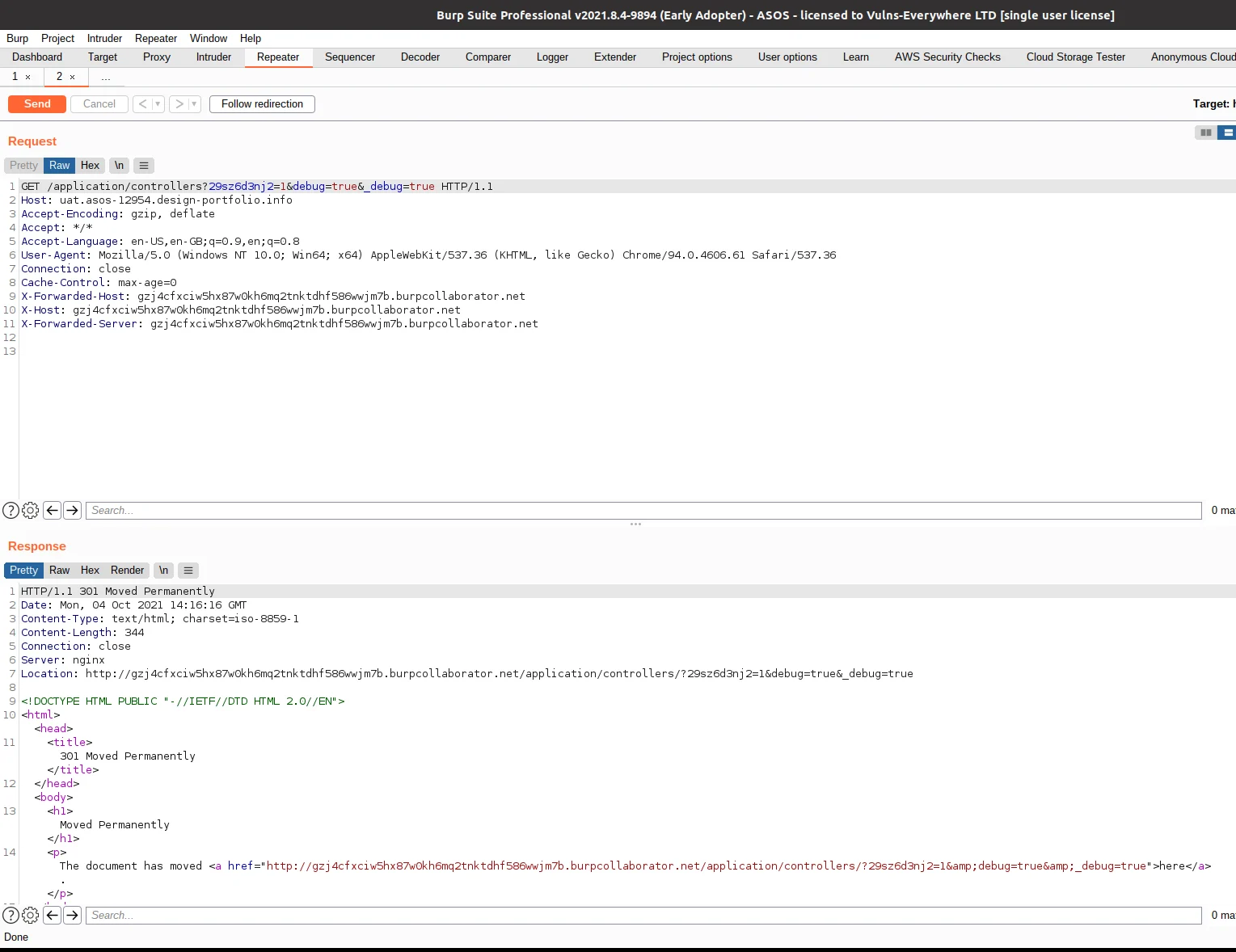
By Adding some extra headers in the request I noticed that the user is redirected to a remote website. This can lead to stealing a user credentials (phishing) on a remote server.
These headers can be added either using a MITM attack or by chaining with another vulnerability such as request smuggling, header injection more commonly abusing a reverse proxy that sits in front of the website.
ps:crayons
Impact
This can lead to stealing a user credentials (phishing) on a remote server or planting malware on the user's computer.
Attachments
Not written yet. The AI write-up for this report has not been written yet. The Original tab links to the source.
How it worked
Impact
This could lead to stealing user credentials through phishing on a remote server or planting malware on the user's computer.
What the attacker needed
Ability to add headers (MITM or chained bug)
How it was found
- Add extra headers to the request.
- Observe that the user is redirected to a remote website.
Explained by bugbounty.wiki with AI from the original and checked against quotes from it; it can still be wrong. Read the original before relying on a detail.
Not written yet. The AI write-up for this report has not been written yet. The Original tab links to the source.
An open redirect is when a website sends you to another site based on your request. Here, adding extra headers made the site redirect to a remote website. A criminal could use that to phish your credentials.
What is Open redirect?
A trusted site forwards users to any address an attacker picks; rarely paid alone, often the missing link in a chain.





