SSRF in proxy.duckduckgo.com via the image_host parameter
The image proxy endpoint accepted a user-supplied host in the image_host parameter and fetched it server-side, so an attacker could make the server request internal loopback addresses. This allowed scanning of internal ports and reaching internal web applications such as a Couchbase console.

- Triaged in 24 hours
- Fixed in 5 days
- Disclosed after 3 months
Description
https://proxy.duckduckgo.com/iur/ endpoint is vulnerable to ssrf via image_host get parameter.
Vulnerable URL:
https://proxy.duckduckgo.com/iur/?f=1&image_host=https://tudomanyok.hu/
Some internal URL:
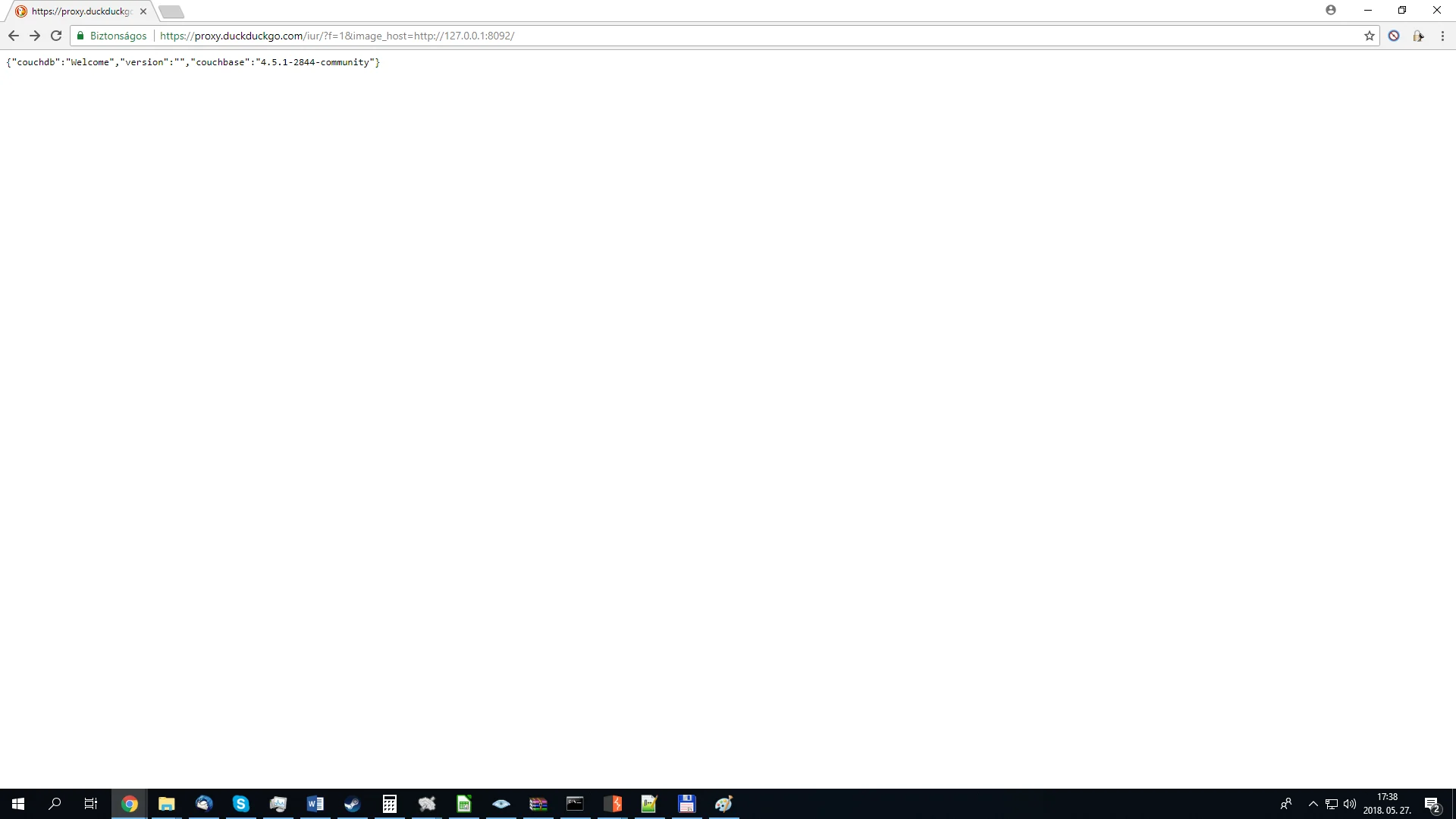
https://proxy.duckduckgo.com/iur/?f=1&image_host=https://127.0.0.1:18091/ http://127.0.0.1:9998/ http://127.0.0.1:8092/ http://127.0.0.1:8091/
The only restriction that is there must be a http:// or https:// before the URL so you can't go with ssh://
How to reporduce
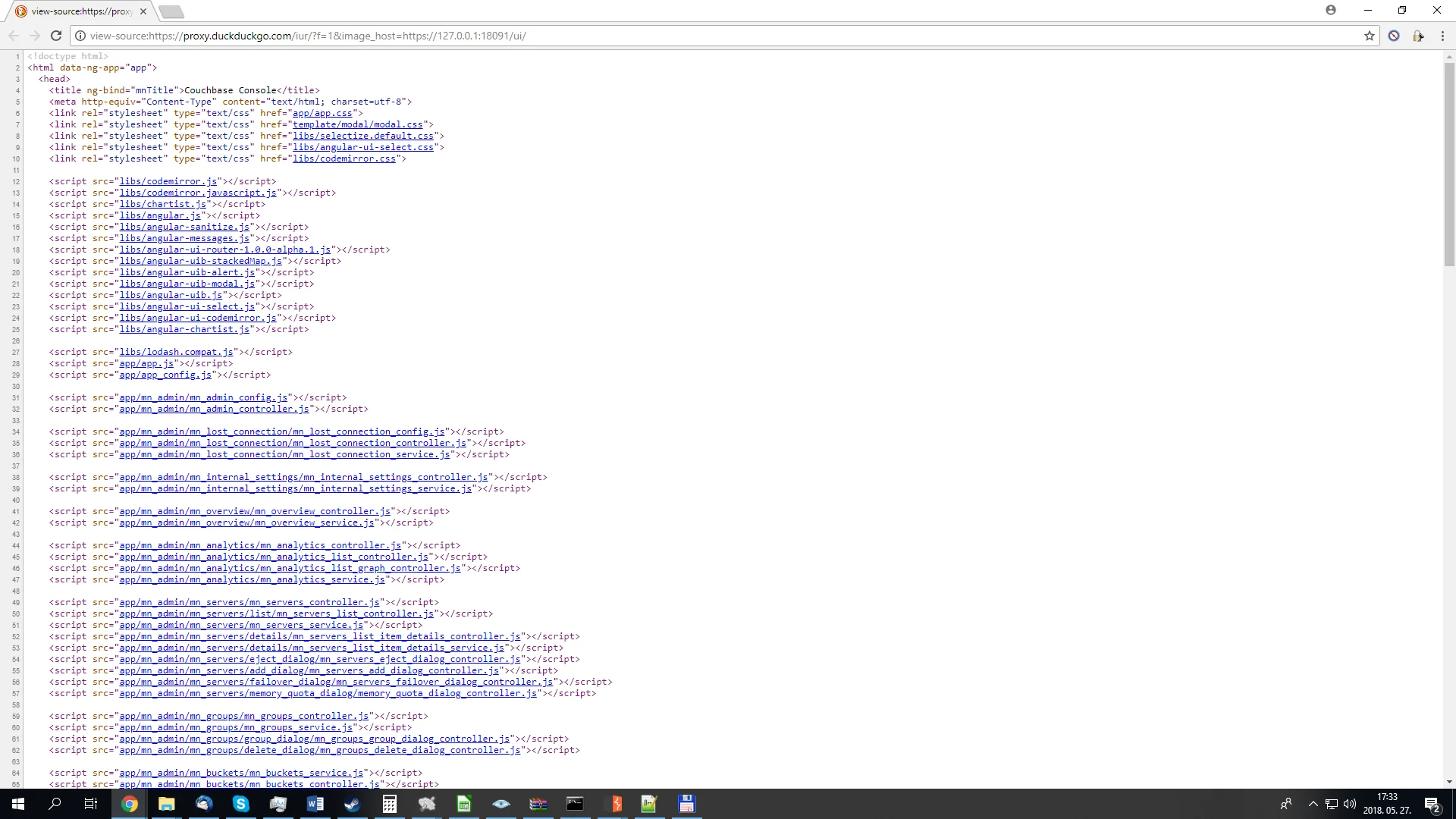
- Go to one of the internal urls and you will see that there is something (some url is only visible with view-source)
- The best example is the http://127.0.0.1:18091/ one if you will visit: view-source:https://proxy.duckduckgo.com/iur/?f=1&image_host=https://127.0.0.1:18091/ui/ that there is something called couchebase console. (only visible in view-source)
These are I think internal web ports because I wasn't able to go to these ports from the external proxy.duckduckgo.com url.
Impact
Attacker can scan your internal network, finding internal port, and internal web applications
The hacker selected the Server-Side Request Forgery (SSRF) weakness. This vulnerability type requires contextual information from the hacker. They provided the following answers:
Can internal services be reached bypassing network access control? Yes
What internal services were accessible? http://127.0.0.1:9998/ http://127.0.0.1:8092/ http://127.0.0.1:8091/ https://127.0.0.1:18091/ ...
Security Impact I was possible to reach internal services, however I didn't tested that is that important or not (because i didn't want to violate any law)
Attachments
Not written yet. The AI write-up for this report has not been written yet. The Original tab links to the source.
How it worked
Root cause
Likely the proxy fetched whatever host was supplied in image_host without restricting it to public addresses or an allowlist.
Impact
An attacker could scan the internal network and reach internal web applications, though the reporter did not test how significant those services were.
What the attacker needed
Access to the public proxy endpoint; URL must start with http:// or https://
How it was found
- Open the proxy endpoint with an internal loopback address in the image_host parameter.
- View the page source to see the response from the internal service.
- Repeat with other internal ports to find reachable services.
Explained by bugbounty.wiki with AI from the original and checked against quotes from it; it can still be wrong. Read the original before relying on a detail.
Not written yet. The AI write-up for this report has not been written yet. The Original tab links to the source.
A server-side request forgery (SSRF) bug lets an attacker make a website's server fetch a URL of the attacker's choosing. Here the image proxy took the host from a URL parameter and fetched it, so the attacker could point it at the server's own internal addresses and see what services answered.
What is SSRF?
The server can be made to fetch an address the attacker chooses, reaching internal services, cloud metadata or other customers' data.




